

- ¥720
- 翌圣生物
- 11003ES
- 中国
- 2026年10月26日

企业认证
相关产品推荐更多 >



万千商家帮你免费找货
0 人在求购买到急需产品
相关阅读
源叶生物 十万种现货试剂速发,品质稳、品类全,实验不再等!Takara 秋促来袭,提取+反转录+定量套装仅 1200 元abinScience 体内级抗体 全年锁价 低至 ¥1200阿拉丁 22万+ 科研级产品现货速发,品质严控、科研无忧- 详细信息
- 询价记录
- 文献和实验
- 技术资料
- 保存条件:
冰袋(wet ice)运输。产品-20℃保存。有效期1年。
- 保质期:
有效期1年
- 供应商:
翌圣生物
- 库存:
大量
- 英文名:
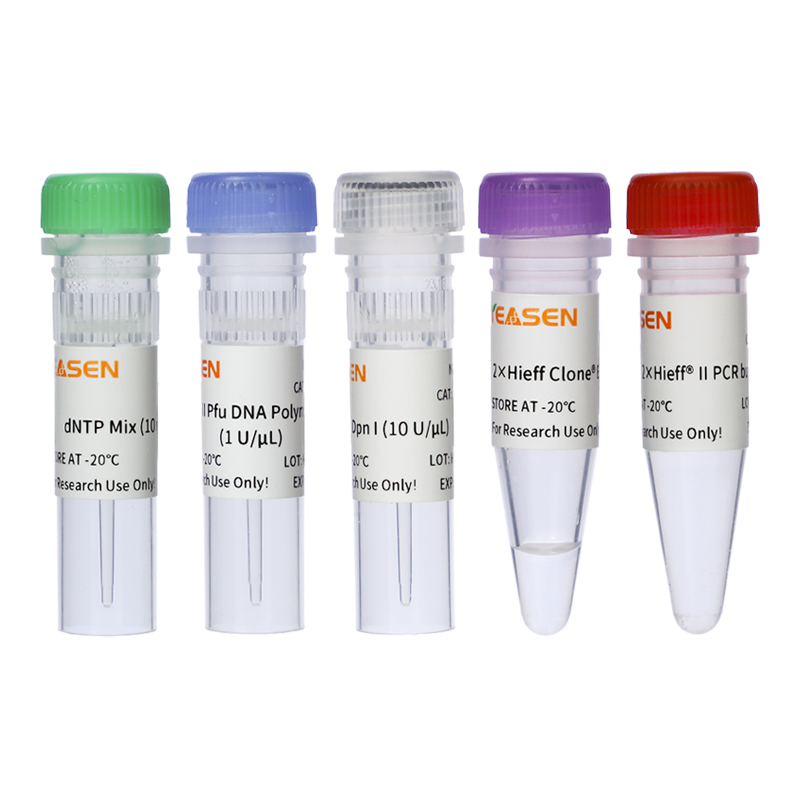
Hieff Mut® Site-Directed Mutagenesis Kit 定点突变试剂盒
- 规格:
10 T(11003ES10)
产品描述:
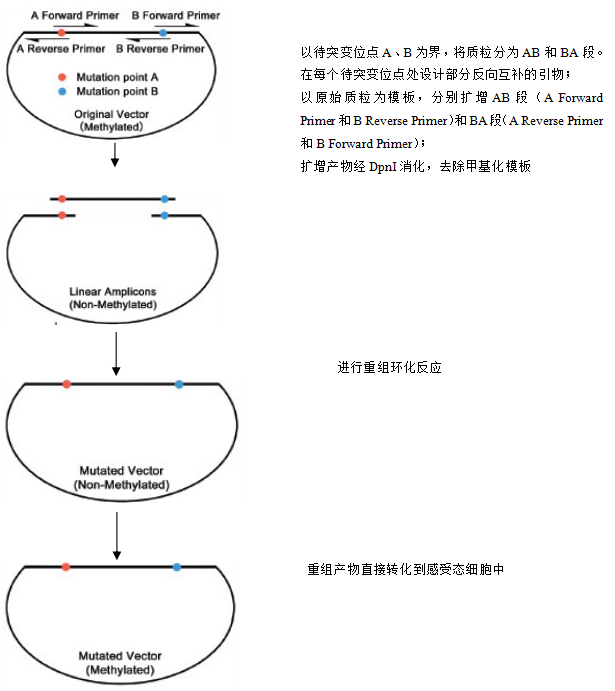
Hieff Mut™ Site-Directed Mutagenesis Kit是基于Hieff Clone™快速克隆技术的定点突变系统。使用本试剂盒,目标质粒扩增产物经DpnI消化、Hieff Clone™重组环化后直接进行转化即可完成定点突变。该试剂盒由两个模块组成:Hieff® II Pfu DNA Polymerase扩增模块和Hieff Clone®快速克隆模块。Hieff® II Pfu DNA Polymerase超高的保真度显著降低了扩增过程中引入新突变的可能性,其卓越的长片段扩增能力,广泛适用于长度小于20 kb的任何质粒扩增。Hieff Clone®快速克隆系统利用高效的同源重组反应替代传统的退火成环反应。因此使用Hieff Mut™ Site-Directed Mutagenesis Kit进行DNA定点突变时,引物设计更加灵活,且扩增反应不再需要以线性方式进行,极大减少了模板使用量,有利于原始甲基化模板的彻底降解。Hieff Clone®技术可以高效完成两个PCR产物的无缝拼接,因此该试剂盒还能以单次扩增的方式对目标质粒上不连续的两个位点同时进行突变。
Hieff Mut™ Site-Directed Mutagenesis Kit中的重组酶Exnase经过优化,专门针对单碱基、不连续双碱基定点突变。此外,如扩增产物特异,其DpnI消化产物可不进行DNA纯化而直接用于重组反应。高度优化的反应缓冲液、快捷的操作流程以及极高的成功率,使得Hieff Mut™ Site-Directed Mutagenesis Kit成为DNA定点突变试剂盒。
产品属性:
| 热启动 | 否‑ |
| 退火温度 | 60-72℃‑ |
| 保真度 | 83倍‑ |
| 产品形式 | Kit‑ |
| 应用 | DNA定点突变、单点突变‑ |
| 延伸时间 | 30-60s/kb‑ |
| 反应速度 | 20min‑ |
| 电泳指示剂 | 否‑ |
产品特色:
- 专门针对单碱基、不连续双碱基定点突变
应用案例:
- 单碱基(或连续多碱基)定点突变实验方案
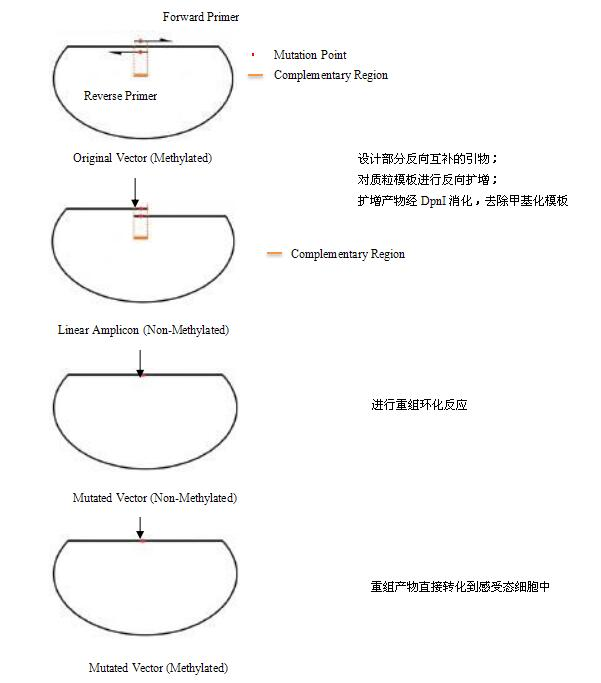
- 不连续双碱基定点突变实验方案 (两突变位点相距超过50 bp)
储存条件:
冰袋(wet ice)运输。产品-20℃保存。有效期1年。
常见问题:
Q:定点突变克隆原理是什么?
A:基于同源重组技术的定点突变系统。使用本试剂盒,目标质粒扩增产物经 DpnI 消化 同源重组环化后直接进行转化即可完成定点突变。
Q:多点突变试剂盒与定点突变试剂盒有什么区别?
多点突变试剂盒可一步实现目标质粒上 3-5 个不连续位点的定点突变,而定点突变试剂盒是适合 1 或2 个不连续位点的定点突变。如:3 个连续的碱基突变算 1 个位点的突变,故定点突变试剂盒即可(相距超过 50 bp 为 1 个不连续位点)。
Q:点突变为什么要选择甲基化的载体?
A:点突变过程需要去除模板质粒,防止假阳性。利用的原理就是限制性内切酶 DpnI 能消化甲基化的模板,若是非甲基化,则无法去除模板。
Q:质粒反向扩增时引物如何设计?
A:正反向扩增引物 5’端包含至少 20 bp 反向互补区域,各引物非互补区域长度至少为 20 bp。互补区尽量选择无重复序列,GC 含量尽量在 40%-60%范围内。
Q:质粒模板的使用量?
A:在不影响扩增产物的情况下,尽可能少的量(建议<1ng),避免DpnI 消化不完全。
Q:DpnI 处理后要进行回收吗?
A:较优进行胶回收。未消化完全的质粒或其他非特异性条带会影响后续的重组反应。
Q:对于PCR 模板质粒什么要求?
A:PCR 模板应为甲基化质粒,应使用甲基化酶无缺陷型的宿主菌扩增原始质粒(如DH5α,TOP10, JM109 等)。应尽量使用新鲜制备的质粒作为模板,因长期放置,反复冻融可能会导致模板质粒断裂,开环或降解。
Q:适合多大的质粒模板进行突变?
A:小于 20 kb。质粒越大,其他非目的碱基的突变率越高,PCR 更难,重组效率更低。
风险提示:丁香通仅作为第三方平台,为商家信息发布提供平台空间。用户咨询产品时请注意保护个人信息及财产安全,合理判断,谨慎选购商品,商家和用户对交易行为负责。对于医疗器械类产品,请先查证核实企业经营资质和医疗器械产品注册证情况。
 询价记录
 暂无询价记录
 文献和实验
C/EBPβ dictates postmenopausal FSHβ transcription and blockade of AEP/C/EBPβ pathway alleviates osteoporosis
Genome-wide screening of NEAT1 regulators reveals cross-regulation between paraspeckles and mitochondria
Liver-originated selective autophagy of BTD by alectinib underlies concurrent hepatotoxicity and dermatotoxicity
PFN1 inhibits lytic replication of Kaposi sarcoma-associated herpesvirus through SQSTM1/p62-mediated selective autophagy targeting the KSHV helicase
N6-methyladenosine regulated FGFR4 attenuates ferroptotic cell death in recalcitrant HER2-positive breast cancer
A Selective Small-Molecule c-Myc Degrader Potently Regresses Lethal c-Myc Overexpressing Tumors
Identification of Human Single-Domain Antibodies against SARS-CoV-2
PKM2 promotes pulmonary fibrosis by stabilizing TGF-β1 receptor I and enhancing TGF-β1 signaling
An ultrapotent pan-β-coronavirus lineage B (β-CoV-B) neutralizing antibody locks the receptor-binding domain in closed conformation by targeting its conserved epitope
RBD-Fc-based COVID-19 vaccine candidate induces highly potent SARS-CoV-2 neutralizing antibody response
Structural basis for the recognition of sulfur in phosphorothioated DNA
Regulatory Role of One Critical Catalytic Loop of Polypeptide N-Acetyl-Galactosaminyltransferase-2 in Substrate Binding and Catalysis during Mucin-Type O-Glycosylation
Sec8: a novel positive regulator of RIG-I in anti-RNA viral defense
MiR-1224-5p modulates osteogenesis by coordinating osteoblast/osteoclast differentiation via the Rap1 signaling target ADCY2
O-GlcNAcylation and stablization of SIRT7 promote pancreatic cancer progression by blocking the SIRT7-REGγ interaction
Inhibition of Cathepsin B protects against vandetanib-induced hepato-cardiotoxicity by restoring lysosomal damage
HMGB1 represses the anti-cancer activity of sunitinib by governing TP53 autophagic degradation via its nucleus-to-cytoplasm transport
HDAC11 negatively regulates antifungal immunity by inhibiting Nos2 expression via binding with transcriptional repressor STAT3
CsiLAC4 modulates boron flow in Arabidopsis and Citrus via high-boron-dependent lignification of cell walls
NEIL3 contributes to the Fanconi anemia/BRCA pathway by promoting the downstream double-strand break repair step
c-Src facilitates tumorigenesis by phosphorylating and activating G6PD
Blockade of β-Catenin–Induced CCL28 Suppresses Gastric Cancer Progression via Inhibition of Treg Cell Infiltration
GSDMEa-mediated pyroptosis is bi-directionally regulated by caspase and required for effective bacterial clearance in teleost
Enhancement versus neutralization by SARS-CoV-2 antibodies from a convalescent donor associates with distinct epitopes on the RBD
The VvPUB8–VvbHLH93–VvMYB15/VvMYB5a module inhibits the synthesis of anthocyanins in grape in response to MeJA
Shortened Basal Internodes Encodes a Gibberellin 2-Oxidase and Contributes to Lodging Resistance in Rice
Display of receptor-binding domain of SARS-CoV-2 Spike protein variants on the Saccharomyces cerevisiae cell surface
Hsa_circ_0110757 upregulates ITGA1 to facilitate temozolomide resistance in glioma by suppressing hsa-miR-1298-5p
Csa-miR160 targets transcriptional repressor CsARF18 and modulates auxin-mediated crocin biosynthesis in Crocus sativus L
Polystyrene nanoplastics drive neuronal senescence via PP2A-B56γ-targeted p-Ebp1Ser335 dephosphorylation-mediated ribosome biogenesis dysfunction
Deletion of Sox9 in the liver leads to hepatic cystogenesis in mice by transcriptionally downregulating Sec63
Hypermethylation of the Bmp4 promoter dampens binding of HIF-1α and impairs its cardiac protective effects from oxidative stress in prenatally GC-exposed offspring
The HNF1α-regulated lncRNA HNF1A-AS1 reverses the malignancy of hepatocellular carcinoma by enhancing the phosphatase activity of SHP-1
Structural Basis for the Binding Selectivity of Human CDY Chromodomains
Alleviating product inhibition of Trichoderma reesei cellulase complex with a product-activated mushroom endoglucanase
Functional assessment of missense variants of uncertain significance in the cancer susceptibility gene PALB2
CircRBM33 downregulation inhibits hypoxia-induced glycolysis and promotes apoptosis of breast cancer cells via a microRNA-542-3p/HIF-1α axis
Bartonella type IV secretion effector BepC induces stress fiber formation through activation of GEF-H1
Engineering Tryptophan Synthase via In Vivo Directed Evolution for High-Level l-Cysteine Production
3-Deoxysappanchalcone Inhibits Skin Cancer Proliferation by Regulating T-Lymphokine-Activated Killer Cell-Originated Protein Kinase in vitro and in vivo
Circular RNA circPHKA2 Relieves OGD-Induced Human Brain Microvascular Endothelial Cell Injuries through Competitively Binding miR-574-5p to Modulate SOD2
Prenatal LPS Exposure Promotes Allergic Airway Inflammation via Long Coding RNA NONMMUT033452.2, and Protein Binding Partner, Eef1D
Characterization of Panax ginseng UDP-Glycosyltransferases Catalyzing Protopanaxatriol and Biosyntheses of Bioactive Ginsenosides F1 and Rh1 in Metabolically Engineered Yeasts
Red blood cells release microparticles containing human argonaute 2 and miRNAs to target genes of Plasmodium falciparum
Neutralization of Zika virus by germline-like human monoclonal antibodies targeting cryptic epitopes on envelope domain III
De novo variants in MAGED1 suggest a role in intellectual disability pathogenesis
Limonin, an AMPK Activator, Inhibits Hepatic Lipid Accumulation in High Fat Diet Fed Mice
Alternate expression of CONSTANS-LIKE 4 in short days and CONSTANS in long days facilitates day-neutral response in Rosa chinensis
Antibiotics administration during weaning ameliorates intestinal mucosal inflammation in adult mice and their offspring
Loss-of-function mutations in SPEF2 cause multiple morphological abnormalities of the sperm flagella (MMAF)
IiUGT71B2 catalyzes lignan glycosylation in Isatis indigotica with substrates specificity
CircDIP2C ameliorates oxidized low-density lipoprotein-induced cell dysfunction by binding to miR-556-5p to induce TET2 in human umbilical vein endothelial cells
Sphingosine kinase 2 promotes lipotoxicity in pancreatic β-cells and the progression of diabetes
Direct regulation of the natural competence regulator gene tfoX by cyclic AMP (cAMP) and cAMP receptor protein (CRP) in Vibrios
ADAP Y571 Phosphorylation Is Required to Prime STAT3 for Activation in TLR4-Stimulated Macrophages
SUMO modification of LBD30 by SIZ1 regulates secondary cell wall formation in Arabidopsis thaliana
Salvianolate ameliorates renal tubular injury through the Keap1/Nrf2/ARE pathway in mouse kidney ischemia-reperfusion injury
Activation of CaMKIIγ potentiates T-cell acute lymphoblastic leukemia leukemogenesis via phosphorylating FOXO3a
Integrated mRNA and miRNA Expression Profile Analysis of Female and Male Gonads in Acrossocheilus fasciatus
Downregulation of hippocampal SIRT6 activates AKT/CRMP2 signaling and ameliorates chronic stress-induced depression-like behavior in mice
O-GlcNAcylation of KAT2A Enhances Bladder Cancer Proliferation by Inhibiting the KAT2A-TRIM22 Interaction
Effects of Fam83h truncation mutation on enamel developmental defects in male C57/BL6J mice
Interfering hsa_circ_0073748 alleviates caerulein-induced ductal cell injury in acute pancreatitis by inhibiting miR-132-3p/TRAF3/NF-κB pathway
Interactions between PHD3-Bromo of MLL1 and H3K4me3 Revealed by Single-Molecule Magnetic Tweezers in a Parallel DNA Circuit
Polypeptide N-acetylgalactosaminyltransferase 18 retains in endoplasmic reticulum depending on its luminal regions interacting with ER resident UGGT1, PLOD3 and LPCAT1
CircSETDB1 knockdown inhibits the malignant progression of serous ovarian cancer through miR-129-3p-dependent regulation of MAP3K3
Spotted seabass Lateolabrax maculatus GSDMEa: a pyroptosis executor activated by CASP3/7 during bacterial infection
Knockdown of lncRNA NEAT1 suppresses hypoxia-induced migration, invasion and glycolysis in anaplastic thyroid carcinoma cells through regulation of miR-206 and miR-599
circKL inhibits the growth and metastasis of kidney cancer by sponging miR‑182‑5p and upregulating FBXW7
NF-кB increases LPS-mediated procalcitonin production in human hepatocytes
A Methylation-Based Regulatory Network for MicroRNA 320a in Chemoresistant Breast Cancer
ELK1‑mediated upregulation of lncRNA LBX2‑AS1 facilitates cell proliferation and invasion via regulating miR‑491‑5p/S100A11 axis in colorectal cancer
SNHG14 Upregulation Was a Molecular Mechanism Underlying MPP+ Neurotoxicity in Dopaminergic SK-N-SH Cells via SNHG14-miR-519a-3p-ATG10 ceRNA Pathway
miR-1908 Overexpression Inhibits Proliferation, Changing Akt Activity and p53 Expression in Hypoxic NSCLC Cells
Molecular recognition between bacterial phosphorothioate DNA and sulfur-binding domain (SBD): competition between the water cage and chalcogen-hydrophobic packet
Expression of Cry1Ac toxin-binding region in Plutella xyllostella cadherin-like receptor and studying their interaction mode by molecular docking and site-directed mutagenesis
Long non-coding RNA GAS5 aggravates myocardial depression in mice with sepsis via the microRNA-449b/HMGB1 axis and the NF-κB signaling pathway
Hepatocyte nuclear factor-1β suppresses the stemness and migration of colorectal cancer cells through promoting miR-200b activity
Enterovirus A71 VP1 Variation A289T Decreases the Central Nervous System Infectivity via Attenuation of Interactions between VP1 and Vimentin In Vitro and In Vivo
Serine/arginine-rich splicing factor 1 inhibits ferroptosis and promotes glycolysis in endometrial cancer via activating mTOR and β-catenin
Circ_RPPH1 regulates glioma cell malignancy by binding to miR-627-5p/miR-663a to induce SDC1 expression
tsRNAs sequencing of FFPE tissues reveals i-tRF-Gly-GCC as a biomarker for colorectal cancer
RETRACTED ARTICLE: Long non-coding RNA SNHG7 upregulates FGF9 to alleviate oxygen and glucose deprivation-induced neuron cell injury in a miR-134-5p-dependent manner
miR-543 impairs cell proliferation, migration, and invasion in breast cancer by suppressing VCAN
Decrease in SHP-1 enhances myometrium remodeling via FAK activation leading to labor
Improving the thermostability of a GH11 xylanase by directed evolution and rational design guided by B-factor analysis
MicroRNA-140-3p represses the proliferation, migration, invasion and angiogenesis of lung adenocarcinoma cells via targeting TYMS (thymidylate synthetase)
CircRTN4IP1 regulates the malignant progression of intrahepatic cholangiocarcinoma by sponging miR-541-5p to induce HIF1A production
Chicken TBK1 interacts with STING and is involved in IFN-β signaling regulation
CircRNA PRH1-PRR4 stimulates RAB3D to regulate the malignant progression of NSCLC by sponging miR-877-5p
Tiron Inhibits UVB-Induced AP-1 Binding Sites Transcriptional Activation on MMP-1 and MMP-3 Promoters by MAPK Signaling Pathway in Human Dermal Fibroblasts
Binding Mechanism of PsauPBP3 to Sex Pheromones in Peridroma saucia: Insights from Computational and Experimental Approaches
Re-expression of circ_0043610 contributes to trophoblast dysfunction through the miR-558/RYBP pathway in preeclampsia
The CpxA/R system mediates the regulation of TolC on biofilm formation by extraintestinal pathogenic Escherichia coli in response to medium osmolarity
Circ_RBM23 knockdown suppresses chemoresistance, proliferation, migration and invasion of sorafenib-resistant HCC cells through miR-338–3p/RAB1B axis
CX3CL1 rs170364 gene polymorphism has a protective effect against major depression by enhancing its transcriptional activity
Hsa_circ_0035483 sponges hsa-miR-335 to promote the gemcitabine-resistance of human renal cancer cells by autophagy regulation
Long non-coding RNA ANRIL enhances mitochondrial function of hepatocellular carcinoma by regulating the MiR-199a-5p/ARL2 axis
LncRNA MIR4435-2HG-mediated upregulation of TGF-β1 promotes migration and proliferation of nonsmall cell lung cancer cells
MicroRNA-211 promotes non-small-cell lung cancer proliferation and invasion by targeting MxA
Multiple Site-Directed Mutagenesis In Vitro
Polymerase chain reaction (PCR)-based site-directed mutagenesis (SDM) methods are widely used in molecular biology to selectively alter gene sequences (1 ). However, common protocols allow for the introduction
Site-Directed Mutagenesis of Antibody-Variable Regions
oligonucleotide-directed mutants. Several polymerase chain reaction-based mutagenesis techniques have been described (3 –5 ). However, available thermostable polymerases are error-prone, leading to undesired sequence changes. For example, Taq polymerase
Protein Engineering: Single or Multiple Site-Directed Mutagenesis
Site-directed mutagenesis techniques are invaluable tools in molecular biology to study the structural and functional properties of a protein. To expedite the time required and simplify methods for mutagenesis, we recommend
 技术资料
暂无技术资料 索取技术资料