


- 询价
- ATCC
- ab01589
- 2026年09月20日

企业认证
相关产品推荐更多 >

万千商家帮你免费找货
0 人在求购买到急需产品
相关阅读
AJE 润色服务限时 8 折起,权威机构信任 15+ 年Cytoscape 教程来了!快速实现顶刊同款通路网络图五大应用案例:Mustang Q 膜层析应用全解析1 个小工具,一次性搞定流程图、质粒图谱和信号通路图- 详细信息
- 询价记录
- 文献和实验
- 技术资料
- 器官来源:
结肠
- 运输方式:
冻存运输
- 年限:
Dukes' type B
- 库存:
大量
- 物种来源:
人
- 是否是肿瘤细胞:
1
- 生长状态:
贴壁生长
- 细胞形态:
上皮样
- 相关疾病:
大肠癌
- ATCC Number:
CCL-228™
| Designations: | SW480 [SW-480] | ||
| Depositors: | A Leibovitz | ||
| Biosafety Level: | 1 | ||
| Shipped: | frozen | ||
| Medium & Serum: | See Propagation | ||
| Growth Properties: | adherent | ||
| Organism: | Homo sapiens | ||
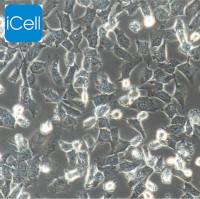
| Morphology: | epithelial |
||
| Source: | Organ: colon Tumor Stage: Dukes' type B Disease: colorectal adenocarcinoma |
||
| Cellular Products: | carcinoembryonic antigen (CEA) 0.7 ng/10 exp6 cells/10 days; keratin; transforming growth factor beta | ||
| Permits/Forms: | In addition to the MTA mentioned above, other ATCC and/or regulatory permits may be required for the transfer of this ATCC material. Anyone purchasing ATCC material is ultimately responsible for obtaining the permits. Please click here for information regarding the specific requirements for shipment to your location. | ||
| Applications: | transfection host | ||
| Receptors: | epidermal growth factor (EGF) | ||
| Virus Susceptibility: | Human immunodeficiency virus 1 | ||
| Tumorigenic: | Yes | ||
| Oncogene: | myc +; myb + ; ras +; fos +; sis +; p53 +; abl -; ros -; src - | ||
| Antigen Expression: | HLA A2, B8, B17; blood type A; Rh+ | ||
| DNA Profile (STR): | Amelogenin: X CSF1PO: 13,14 D13S317: 12 D16S539: 13 D5S818: 13 D7S820: 8 THO1: 8 TPOX: 11 vWA: 16 |
||
| Cytogenetic Analysis: | The stemline chromosome number is hypotriploid and 11-12 marker chromosomes were common. Both double minutes and dicentrics were observed in 8% of each metaphase examined. | ||
| Isoenzymes: | ES-D, 1 G6PD, B PEP-D, 1 PGD, A PGM1, 2 PGM3, 1 |
||
| Age: | 50 years | ||
| Gender: | male | ||
| Ethnicity: | Caucasian | ||
| Comments: | SW480 was established from a primary adenocarcinoma of the colon. A cell line established from a lymph node metastasis taken from the same patient one year later is available (see ATCC CCL-227). The line is negative for CSAp (CSAp-) and colon antigen 3. The cells are positive for keratin by immunoperoxidase staining. There is a G -> A mutation in codon 273 of the p53 gene resulting in an Arg -> His substitution and a C -> T mutation in codon 309 resulting in a Pro -> Ser substitution. The cells express elevated levels of p53 protein. The line is positive for expression of c-myc, K-ras, H-ras, N-ras, myb, sis and fos oncogenes. N-myc oncogene expression was not detected. Matrilysin, a metalloproteinase associated with tumor invasiveness, is not expressed. The cells have been reported to produce GM-CSF. This line has a mutation in codon 12 of the ras protooncogene, and can be used as a positive control for PCR assays of mutation in this codon. |
||
| Propagation: | ATCC complete growth medium: The base medium for this cell line is ATCC-formulated Leibovitz's L-15 Medium, Catalog No. 30-2008. To make the complete growth medium, add the following components to the base medium: fetal bovine serum to a final concentration of 10%. Atmosphere: air, 100% Temperature: 37.0°C |
||
| Subculturing: | Protocol:
Subcultivation Ratio: A subcultivation ratio of 1:2 to 1:8 is recommended Medium Renewal: 1 to 2 times per week |
||
| Preservation: | Freeze medium: Complete growth medium supplemented with 5% (v/v) DMSO Storage temperature: liquid nitrogen vapor phase |
||
| Related Products: | Recommended medium (without the additional supplements or serum described under ATCC Medium):ATCC 30-2008 recommended serum:ATCC 30-2020 derived from same individual:ATCC CCL-227 |
||
| References: | 22536: Fogh J, et al. Absence of HeLa cell contamination in 169 cell lines derived from human tumors. J. Natl. Cancer Inst. 58: 209-214, 1977. PubMed: 833871 22539: Fogh J, et al. One hundred and twenty-seven cultured human tumor cell lines producing tumors in nude mice. J. Natl. Cancer Inst. 59: 221-226, 1977. PubMed: 327080 22545: Lelbovitz A, et al. Detection and analysis of a glucose 6-phosphate dehydrogenase phenotype B cell line contamination. J. Natl. Cancer Inst. 63: 635-645, 1979. PubMed: 288927 22564: Adachi A, et al. Productive, persistent infection of human colorectal cell lines with human immunodeficiency virus. J. Virol. 61: 209-213, 1987. PubMed: 3640832 22794: Schroy PC, et al. Detection of p21ras mutations in colorectal adenomas and carcinomas by enzyme-linked immunosorbent assay. Cancer 76: 201-209, 1995. PubMed: 8625092 22861: Trainer DL, et al. Biological characterization and oncogene expression in human colorectal carcinoma cell lines. Int. J. Cancer 41: 287-296, 1988. PubMed: 3338874 22870: Weiss J, et al. Mutation and expression of the p53 gene in malignant melanoma cell lines. Int. J. Cancer 54: 693-699, 1993. PubMed: 8514460 22930: Nigro JM, et al. Mutations in the p53 gene occur in diverse human tumour types. Nature 342: 705-707, 1989. PubMed: 2531845 22996: Barnett SW, et al. Characterization of human immunodeficiency virus type 1 strains recovered from the bowel of infected individuals. Virology 182: 802-809, 1991. PubMed: 2024498 23025: Leibovitz A, et al. Classification of human colorectal adenocarcinoma cell lines. Cancer Res. 36: 4562-4569, 1976. PubMed: 1000501 23071: Geiser AG, et al. Suppression of tumorigenicity in human cell hybrids derived from cell lines expressing different activated ras oncogenes. Cancer Res. 49: 1572-1577, 1989. PubMed: 2647289 23114: Lahm H, et al. Secretion of bioactive granulocyte-macrophage colony-stimulating factor by human colorectal carcinoma cells. Cancer Res. 54: 3700-3702, 1994. PubMed: 8033086 23322: Rodrigues NR, et al. p53 mutations in colorectal cancer. Proc. Natl. Acad. Sci. USA 87: 7555-7559, 1990. PubMed: 1699228 25093: Santoro IM, Groden J. Alternative splicing of the APC gene and its association with terminal differentiation. Cancer Res. 57: 488-494, 1997. PubMed: 9012479 32265: Tsao H, et al. Novel mutations in the p16/CDKN2A binding region of the Cyclin-dependent Kinase-4 gene. Cancer Res. 58: 109-113, 1998. PubMed: 9426066 32925: Zhu X, et al. Cell cycle-dependent modulation of telomerase activity in tumor cells. Proc. Natl. Acad. Sci. USA 93: 6091-6095, 1996. PubMed: 8650224 49853: Witty JP, et al. Modulation of matrilysin levels in colon carcinoma cell lines affects tumorigenicity in vivo. Cancer Res. 54: 4805-4812, 1994. PubMed: 8062282 |
||
风险提示:丁香通仅作为第三方平台,为商家信息发布提供平台空间。用户咨询产品时请注意保护个人信息及财产安全,合理判断,谨慎选购商品,商家和用户对交易行为负责。对于医疗器械类产品,请先查证核实企业经营资质和医疗器械产品注册证情况。
 询价记录
询价记录 暂无询价记录
 文献和实验
文献和实验「外泌体 + 环状 RNA」国自然双热点助力肿瘤研究发表高分文章
的外泌体能促进 CRC 的增殖、迁移和侵袭 作者从两种 CRC 细胞系(HCT116和SW480)上清中分别分离获得外泌体,经过透射电镜、NTA 和 WB 鉴定后,确认已分离出外泌体。随后,作者用外泌体处理对应的 CRC 细胞,发现外泌体能显著促进 CRC 细胞增殖、迁移和侵袭,并减少凋亡。 WB 结果也显示,外泌体能提升 CRC 细胞中 BCL-2、 N-cadherin、Vimentin、MMP9 蛋白水平,和降低 E-cadherin、Cleaved-caspase3、Cleaved
不输L-15条件。 更换培养基时需注意:采用 1:1 混合比例逐步过渡 1-2 代,保持同一批次 FBS 以减少变量,特殊添加物(如胰岛素、谷胱甘肽)建议先按原配方添加再优化。特别提醒:SW480 细胞换 DMEM 后形态可能变差,需谨慎对待。
感激。。。 fangweibin119 蛋白定量后上样量一致吗? 内参做了没有? 一顿饭 一你可以搜索本版内有关p-ERK WB的相关帖子,相信你会找到不少可以提高阳性率的注意事项; 二是我没有用过hela系细胞株。但如果你找得到SW480(结肠癌)细胞株,是一个非常好的阳性对照,一秒钟曝光,条带强得一塌糊涂....... 祝好运! bigrabbit 不知道你是如何处理
 技术资料
技术资料暂无技术资料 索取技术资料

