

- ¥2980
- LMAI Bio
- LM-5557R-FITC
- 中国/美国/欧洲
- 2025年07月12日
- IF=1:50-200
- Mouse, Rat,
- Mouse, Rat,

企业认证
相关产品推荐更多 >

万千商家帮你免费找货
0 人在求购买到急需产品
相关阅读
香烟烟雾如何加速声带纤维化?CD44-透明质酸轴是关键通路Cytoscape 教程来了!快速实现顶刊同款通路网络图五大应用案例:Mustang Q 膜层析应用全解析1 个小工具,一次性搞定流程图、质粒图谱和信号通路图- 详细信息
- 文献和实验
- 技术资料
- 供应商:
上海联迈生物工程有限公司
- 库存:
大量
- 靶点:
详见说明书
- 级别:
1
- 目录编号:
LM-5557R-FITC
- 克隆性:
多克隆
- 抗原来源:
Rabbit
- 保质期:
1年
- 抗体英文名:
Anti-phospho-PTPN7 (Ser246)/FITC
- 抗体名:
Anti-phospho-PTPN7 (Ser246)/FITC
- 标记物:
FITC标记
- 宿主:
Mouse, Rat,
- 适应物种:
Mouse, Rat,
- 免疫原:
详见说明书
- 亚型:
IGg
- 形态:
粉末、液体、冻干粉
- 应用范围:
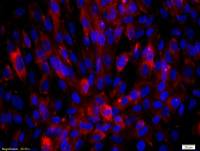
IF=1:50-200
- 浓度:
1mg/ml
- 保存条件:
-20 °C
- 规格:
100ul
| 英文名称 | Anti-phospho-PTPN7 (Ser246)/FITC |
| 中文名称 | FITC标记的磷酸化非受体型蛋白酪氨酸磷酸酶7抗体 |
| 别 名 | PTPN7(phospho S246); BPTP 4; BPTP4; Dual specificity phosphatase 1; Hematopoietic protein tyrosine phosphatase; LC PTP; LCPTP; LPTP; Protein tyrosine phoshatase non receptor type stress induced; Protein tyrosine phoshatase nonreceptor type stress induced; Protein tyrosine phosphatase LC PTP; Protein tyrosine phosphatase non receptor type 7; PTPN 7; PTPNI; Tyrosine protein phosphatase non receptor type 7; PTN7_HUMAN. |
| 规格价格 | 100ul/2980元 购买 大包装/询价 |
| 说 明 书 | 100ul |
| 产品类型 | 磷酸化抗体 |
| 研究领域 | 肿瘤 免疫学 信号转导 激酶和磷酸酶 |
| 抗体来源 | Rabbit |
| 克隆类型 | Polyclonal |
| 交叉反应 | Mouse, Rat, |
| 产品应用 | IF=1:50-200 not yet tested in other applications. optimal dilutions/concentrations should be determined by the end user. |
| 分 子 量 | 40kDa |
| 性 状 | Lyophilized or Liquid |
| 浓 度 | 1mg/ml |
| 免 疫 原 | KLH conjugated Synthesised phosphopeptide derived from human PTPN7 around the phosphorylation site of Ser246 |
| 亚 型 | IgG |
| 纯化方法 | affinity purified by Protein A |
| 储 存 液 | 0.01M TBS(pH7.4) with 1% BSA, 0.03% Proclin300 and 50% Glycerol. |
| 保存条件 | Store at -20 °C for one year. Avoid repeated freeze/thaw cycles. The lyophilized antibody is stable at room temperature for at least one month and for greater than a year when kept at -20°C. When reconstituted in sterile pH 7.4 0.01M PBS or diluent of antibody the antibody is stable for at least two weeks at 2-4 °C. |
| 产品介绍 | background: The protein encoded by this gene is a member of the protein tyrosine phosphatase (PTP) family. PTPs are known to be signaling molecules that regulate a variety of cellular processes including cell growth, differentiation, mitotic cycle, and oncogenic transformation. This gene is preferentially expressed in a variety of hematopoietic cells, and is an early response gene in lymphokine stimulated cells. The non-catalytic N-terminus of this PTP can interact with MAP kinases and suppress the MAP kinase activities. This PTP was shown to be involved in the regulation of T cell antigen receptor (TCR) signaling, which was thought to function through dephosphorylating the molecules related to MAP kinase pathway. Multiple alternatively spliced transcript variants have been found for this gene. [provided by RefSeq]. Function: Protein phosphatase that acts preferentially on tyrosine-phosphorylated MAPK1. Plays a role in the regulation of T and B-lymphocyte development and signal transduction. Subunit: Monomer. Interacts with MAPK1, MAPK3 and several other MAP kinases. Subcellular Location: Cytoplasm. Tissue Specificity: Expressed exclusively in thymus and spleen. Similarity: Belongs to the protein-tyrosine phosphatase family. Non-receptor class subfamily. Contains 1 tyrosine-protein phosphatase domain. Database links: Entrez Gene: 5778 Human Entrez Gene: 320139 Mouse Entrez Gene: 246781 Rat Omim: 176889 Human SwissProt: P35236 Human SwissProt: Q8BUM3 Mouse SwissProt: P49445 Rat Unigene: 402773 Human Unigene: 258388 Mouse Unigene: 10160 Rat Important Note: This product as supplied is intended for research use only, not for use in human, therapeutic or diagnostic applications. |
风险提示:丁香通仅作为第三方平台,为商家信息发布提供平台空间。用户咨询产品时请注意保护个人信息及财产安全,合理判断,谨慎选购商品,商家和用户对交易行为负责。对于医疗器械类产品,请先查证核实企业经营资质和医疗器械产品注册证情况。
 文献和实验
文献和实验浙江大学柯越海课题组发文解析去磷酸化修饰调控细胞外囊泡的作用机制
基础,也是药物干预的关键靶点,其中酪氨酸磷酸化是广受关注的新药靶点。 该研究首先发现一种非受体型酪氨酸磷酸酶 PTPN11/Shp2 缺失或者抑制会显著增加多种细胞的外泌体分泌,通过筛选并鉴定了磷酸酶 PTPN11/Shp2 可直接修饰外泌体生成的关键蛋白 Syntenin 第 46 位酪氨酸的去磷酸化,进而影响 Syntenin-Alix 胞内复合物,控制囊泡转运的内体分选复合体(ESCRT)形成。 该研究首次发现去磷酸化修饰是胞外囊泡的合成与分泌的一个潜在的控制因素,有多种酪氨酸磷酸酶参与
参与免疫细胞激活信号转导的蛋白磷酸酶 蛋白磷酸酶的作用和蛋白激酶相反。根据脱磷酸化的氨基酸残基的不同,蛋白磷酸酶也分成蛋白酪氨酸磷酸酶(PTP,PTPase)和丝氨酸/苏氨酸磷酸酶。参与淋巴细胞激活的蛋白磷酸酶主要有: ①CD45:该分子胞内段的两个结构域发挥PTP的作用,因而CD45属于受体型蛋白酪氨酸磷酸酶,在对抗瓢kPTK的作用和启动淋巴细胞信号转导中发挥关键作用; ②钙调磷酸酶
膜受体可将其分成非受体型和膜受体型。 1.非受体型 以src基因产物为代表,此外还有Yes、Fyn、Lck、Fgr、Lyn、Fps/Fes及Ab1等。徐后两者外,其余非受体型蛋白酪氨酸激酶src家族分子理约为60kDa的蛋白质,它们之间除了N末端80个氨基酸组成不同外,其作部分都非常相似。 2.受体型 根据它们的结构不同,受体型酪氨酸激酶可以分为9种类型,其中较常见的有4种类型(图8-5)。 (1)表皮生长因子受体(EGFR)家族:EGF-R家族成员包括EGF-R(分子量为170kDa
 技术资料
技术资料暂无技术资料 索取技术资料

