

- ¥1380 - 2200
- LMAI Bio
- LM-6941R
- 进口/国产
- 2026年01月30日
- WB=1:500-2000 ELISA=1:500-1000 IHC-P=1:400-800 IHC-F=1:400-800 Flow-Cyt=1μg/Test IF=1:100-500 (石蜡切片需做抗原修复)
- Rabbit
- Human, Mouse, Rat, Pig, Sheep,

企业认证
相关产品推荐更多 >

万千商家帮你免费找货
0 人在求购买到急需产品
- 详细信息
- 文献和实验
- 技术资料
- 供应商:
上海联迈生物工程有限公司
- 库存:
大量
- 目录编号:
LM-6941R
- 克隆性:
多克隆
- 抗原来源:
Rabbit
- 保质期:
1年
- 抗体英文名:
RNF74
- 抗体名:
环指蛋白74抗体(重组激活基因1)
- 宿主:
Rabbit
- 适应物种:
Human, Mouse, Rat, Pig, Sheep,
- 免疫原:
KLH conjugated synthetic peptide derived from human RAG1/RNF74:351-450/1043
- 亚型:
IgG
- 形态:
Lyophilized or Liquid
- 应用范围:
WB=1:500-2000 ELISA=1:500-1000 IHC-P=1:400-800 IHC-F=1:400-800 Flow-Cyt=1μg/Test IF=1:100-500 (石蜡切片需做抗原修复)
- 浓度:
1mg/ml
- 保存条件:
Store at -20 °C
- 规格:
100ul 200ul
| 英文名称 | RNF74 |
| 中文名称 | 环指蛋白74抗体(重组激活基因1) |
| 别 名 | RAG-1;E3 ubiquitin-protein ligase RAG1; RAG-1; RAG1; RAG1_HUMAN; recombination activating gene 1; recombination activating protein 1; RING finger protein 74; RNF74; V(D)J recombination-activating protein 1. |
| 规格价格 | 100ul/1380元 购买 200ul/2200元 购买 大包装/询价 |
| 说 明 书 | 100ul 200ul |
| 研究领域 | 细胞生物 信号转导 淋巴细胞 表观遗传学 |
| 抗体来源 | Rabbit |
| 克隆类型 | Polyclonal |
| 交叉反应 | Human, Mouse, Rat, Pig, Sheep, |
| 产品应用 | WB=1:500-2000 ELISA=1:500-1000 IHC-P=1:400-800 IHC-F=1:400-800 Flow-Cyt=1μg/Test IF=1:100-500 (石蜡切片需做抗原修复) not yet tested in other applications. optimal dilutions/concentrations should be determined by the end user. |
| 分 子 量 | 115kDa |
| 细胞定位 | 细胞核 |
| 性 状 | Lyophilized or Liquid |
| 浓 度 | 1mg/ml |
| 免 疫 原 | KLH conjugated synthetic peptide derived from human RAG1/RNF74:351-450/1043 |
| 亚 型 | IgG |
| 纯化方法 | affinity purified by Protein A |
| 储 存 液 | 0.01M TBS(pH7.4) with 1% BSA, 0.03% Proclin300 and 50% Glycerol. |
| 保存条件 | Store at -20 °C for one year. Avoid repeated freeze/thaw cycles. The lyophilized antibody is stable at room temperature for at least one month and for greater than a year when kept at -20°C. When reconstituted in sterile pH 7.4 0.01M PBS or diluent of antibody the antibody is stable for at least two weeks at 2-4 °C. |
| PubMed | PubMed |
| 产品介绍 | background: Catalytic component of the RAG complex, a multiprotein complex that mediates the DNA cleavage phase during V(D)J recombination. V(D)J recombination assembles a diverse repertoire of immunoglobulin and T-cell receptor genes in developing B and T lymphocytes through rearrangement of different V (variable), in some cases D (diversity), and J (joining) gene segments. In the RAG complex, RAG1 mediates the DNA-binding to the conserved recombination signal sequences (RSS) and catalyzes the DNA cleavage activities by introducing a double-strand break between the RSS and the adjacent coding segment. RAG2 is not a catalytic component but is required for all known catalytic activities. DNA cleavage occurs in 2 steps: a first nick is introduced in the top strand immediately upstream of the heptamer, generating a 3'-hydroxyl group that can attack the phosphodiester bond on the opposite strand in a direct transesterification reaction, thereby creating 4 DNA ends: 2 hairpin coding ends and 2 blunt, 5'-phosphorylated ends. The chromatin structure plays an essential role in the V(D)J recombination reactions and the presence of histone H3 trimethylated at 'Lys-4' (H3K4me3) stimulates both the nicking and haipinning steps. The RAG complex also plays a role in pre-B cell allelic exclusion, a process leading to expression of a single immunoglobulin heavy chain allele to enforce clonality and monospecific recognition by the B-cell antigen receptor (BCR) expressed on individual B lymphocytes. The introduction of DNA breaks by the RAG complex on one immunoglobulin allele induces ATM-dependent repositioning of the other allele to pericentromeric heterochromatin, preventing accessibility to the RAG complex and recombination of the second allele. In addition to its endonuclease activity, RAG1 also acts as a E3 ubiquitin-protein ligase that mediates monoubiquitination of histone H3. Histone H3 monoubiquitination is required for the joining step of V(D)J recombination. Mediates polyubiquitination of KPNA1. Function: Catalytic component of the RAG complex, a multiprotein complex that mediates the DNA cleavage phase during V(D)J recombination. V(D)J recombination assembles a diverse repertoire of immunoglobulin and T-cell receptor genes in developing B and T-lymphocytes through rearrangement of different V (variable), in some cases D (diversity), and J (joining) gene segments. In the RAG complex, RAG1 mediates the DNA-binding to the conserved recombination signal sequences (RSS) and catalyzes the DNA cleavage activities by introducing a double-strand break between the RSS and the adjacent coding segment. RAG2 is not a catalytic component but is required for all known catalytic activities. DNA cleavage occurs in 2 steps: a first nick is introduced in the top strand immediately upstream of the heptamer, generating a 3'-hydroxyl group that can attack the phosphodiester bond on the opposite strand in a direct transesterification reaction, thereby creating 4 DNA ends: 2 hairpin coding ends and 2 blunt, 5'-phosphorylated ends. The chromatin structure plays an essential role in the V(D)J recombination reactions and the presence of histone H3 trimethylated at 'Lys-4' (H3K4me3) stimulates both the nicking and haipinning steps. The RAG complex also plays a role in pre-B cell allelic exclusion, a process leading to expression of a single immunoglobulin heavy chain allele to enforce clonality and monospecific recognition by the B-cell antigen receptor (BCR) expressed on individual B-lymphocytes. The introduction of DNA breaks by the RAG complex on one immunoglobulin allele induces ATM-dependent repositioning of the other allele to pericentromeric heterochromatin, preventing accessibility to the RAG complex and recombination of the second allele. In addition to its endonuclease activity, RAG1 also acts as a E3 ubiquitin-protein ligase that mediates monoubiquitination of histone H3. Histone H3 monoubiquitination is required for the joining step of V(D)J recombination. Mediates polyubiquitination of KPNA1. Subunit: Homodimer. Component of the RAG complex composed of core components RAG1 and RAG2, and associated component HMGB1 or HMGB2. Subcellular Location: Nucleus. Tissue Specificity: Maturing lymphoid cells. Post-translational modifications: Autoubiquitinated in the presence of CDC34/UBCH3. DISEASE: Defects in RAG1 are a cause of combined cellular and humoral immune defects with granulomas (CHIDG) [MIM:233650]. CHIDG is an immunodeficiency disease with granulomas in the skin, mucous membranes, and internal organs. Other characteristics include hypogammaglobulinemia, a diminished number of T and B-cells, and sparse thymic tissue on ultrasonography. Defects in RAG1 are a cause of severe combined immunodeficiency autosomal recessive T-cell-negative/B-cell-negative/NK-cell-positive (T(-)B(-)NK(+) SCID) [MIM:601457]. A form of severe combined immunodeficiency (SCID), a genetically and clinically heterogeneous group of rare congenital disorders characterized by impairment of both humoral and cell-mediated immunity, leukopenia, and low or absent antibody levels. Patients present in infancy recurrent, persistent infections by opportunistic organisms. The common characteristic of all types of SCID is absence of T-cell-mediated cellular immunity due to a defect in T-cell development. Defects in RAG1 are a cause of Omenn syndrome (OS) [MIM:603554]. OS is a severe immunodeficiency characterized by the presence of activated, anergic, oligoclonal T-cells, hypereosinophilia, and high IgE levels. Defects in RAG1 are the cause of alpha/beta T-cell lymphopenia with gamma/delta T-cell expansion severe cytomegalovirus infection and autoimmunity (T-CMVA) [MIM:609889]. An immunological disorder characterized by oligoclonal expansion of TCR gamma/delta T-cells, TCR alpha/beta T-cell lymphopenia, severe, disseminated cytomegalovirus infection and autoimmune cytopenia. Similarity: Belongs to the RAG1 family. Contains 1 NBD (nonamer binding) DNA-binding domain. Contains 1 RAG1-type zinc finger. Contains 1 RING-type zinc finger. SWISS: P15918 Gene ID: 5896 Database links: Entrez Gene: 5896 Human Entrez Gene: 19373 Mouse Omim: 179615 Human SwissProt: P15918 Human SwissProt: P15919 Mouse Unigene: 677010 Human Unigene: 73958 Human Important Note: This product as supplied is intended for research use only, not for use in human, therapeutic or diagnostic applications. |
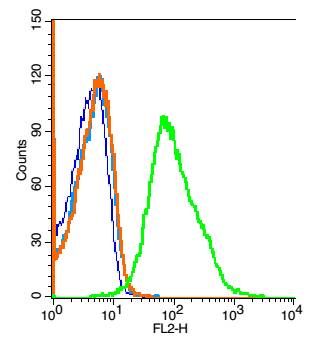
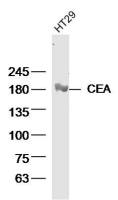
| 产品图片 | 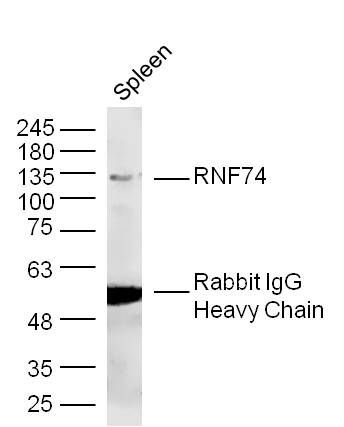 Sample: Spleen (Mouse) Lysate at 40 ug Primary: Anti-RNF74 (bs-6941R) at 1/300 dilution Secondary: IRDye800CW Goat Anti-Rabbit IgG at 1/20000 dilution Predicted band size: 115 kD Observed band size: 130 kD 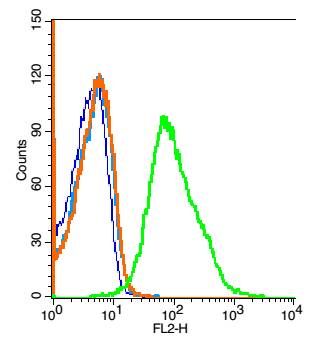 Blank control: Mouse Spleen Cells(fixed with 2% paraformaldehyde (10 min) , then permeabilized with 90% ice-cold methanol for 30 min on ice). Primary Antibody:Rabbit Anti- RNF74 antibody(bs-6941R), Dilution: 1ug in 100 uL 1X PBS containing 0.5% BSA; Isotype Control Antibody: Rabbit IgG(orange) ,used under the same conditions ); Secondary Antibody: Goat anti-rabbit IgG-PE(white blue), Dilution: 1:200 in 1 X PBS containing 0.5% BSA. |
风险提示:丁香通仅作为第三方平台,为商家信息发布提供平台空间。用户咨询产品时请注意保护个人信息及财产安全,合理判断,谨慎选购商品,商家和用户对交易行为负责。对于医疗器械类产品,请先查证核实企业经营资质和医疗器械产品注册证情况。
 文献和实验
文献和实验-1的稳定性和可溶性,是人胰岛素生长因子的重组类似物。类胰岛素生长因子-1(IGF-1)是一种分子量为7.6kD的激素,其分子结构与胰岛素类似。IGF-1的主要作用机理是通过与其特异性受体(IGF1R)结合来诱导细胞内的信号传导。IGF-1是AKT信号通路的最有效的激活因子之一,激活AKT信号通路后,刺激细胞生长及增殖,并抑制细胞凋亡。因此,IGF-1被广泛视为胰岛素的强有力替代品。IGF-1与人血清白蛋白融合表达,形成了分子量约为74.5kD的融合蛋白OsrIGF-1,使得OsrIGF-1半衰期更长
文献速递|Science 子刊 :少突胶质前体细胞调控免疫反应及多发性硬化症早期脱髓鞘新机制
因子 CCL4,而人类 MS 患者的白质病灶 OPC 中同样存在 CCL4 异常上调(图 2)。值得注意的是,特异性敲除 Ccl4基因可大大减少免疫细胞浸润并缓解脱髓鞘,提示靶向 CCL4 通路或为治疗突破口。 图 2. MS 中 Wnt 过度激活的 OPC 高度表达分泌趋化因子 CCL4 尤为关键的是,研究团队通过高维流式分析及双荧光报告小鼠鉴定出一类共表达 NK1.1、CD11b 和 Gr-1 的细胞毒性巨噬细胞亚群(cMacrophages)(图 3)。这类细胞不仅高表达促炎
物质(例如,海藻生体毒素)[48]。全细胞生物传感器可以检测污染物中生物片段(例如,片段可以进入活体细胞并激活特定的反应途径),可以获得以其它分析技术很难获得的环境和毒物学的相关信息。基于BL重组全细胞的检测方法同样可以应用到药物筛选中,可以检测待筛选药物与药物靶点的特异性结合。例如,通过监测报告基因的激活状态可以评估激动剂和对抗剂。这些检测方法为功能性检测,可以在一定的生物学背景中测量待筛选药物在特定胞内途径中的作用,而不是获得简单的结合证据。 同一细胞内可以使用两个报告基因可以单独表达并单独
 技术资料
技术资料暂无技术资料 索取技术资料

