

- ¥1380 - 2200
- 康朗生物
- kl-2168R
- 中国/美国/德国
- 2026年05月21日
- WB=1:500-2000 ELISA=1:500-1000 IHC-P=1:400-800 IHC-F=1:400-800 IF=1:100-500
- Rabbit
- Human, Mouse, Rat,

企业认证
相关产品推荐更多 >

万千商家帮你免费找货
0 人在求购买到急需产品
相关阅读
AJE 润色服务限时 8 折起,权威机构信任 15+ 年Cytoscape 教程来了!快速实现顶刊同款通路网络图五大应用案例:Mustang Q 膜层析应用全解析1 个小工具,一次性搞定流程图、质粒图谱和信号通路图- 详细信息
- 询价记录
- 文献和实验
- 技术资料
- 供应商:
上海康朗生物科技有限公司
- 库存:
大量
- 目录编号:
kl-2168R
- 克隆性:
多克隆
- 抗原来源:
Rabbit
- 保质期:
12个月
- 抗体英文名:
ADAR1 antibody
- 抗体名:
双链RNA腺苷酸脱氨基酶抗体(C端)
- 宿主:
Rabbit
- 适应物种:
Human, Mouse, Rat,
- 免疫原:
KLH conjugated synthetic peptide derived from human DRADA:1001-1226/1226
- 亚型:
IgG
- 形态:
冻干粉或液体
- 应用范围:
WB=1:500-2000 ELISA=1:500-1000 IHC-P=1:400-800 IHC-F=1:400-800 IF=1:100-500
- 浓度:
1mg/ml
- 保存条件:
-20 °C
- 规格:
100ul 200ul
| 中文名称 | 双链RNA腺苷酸脱氨基酶抗体(C端) |
| 别 名 | 136kDa double stranded RNA binding protein; Adar 1; ADAR; Adar1; Adenosine deaminase RNA specific 1; Adenosine deaminase RNA specific; Adenosine deaminase that act on RNA; AV242451; Double stranded RNA specific adenosine deaminase; Double-stranded RNA-specific editase Adar; Drada; Dsh; Dsrad; dsRNA adenosine deaminase; EC 3.5.4.-; G1P1; IFI 4; IFI4; Ifi4 protein; Interferon induced protein 4; Interferon inducible protein 4; K88dsrbp; mZaADAR; p136; Pre-mRNA adenosine deaminase; RNA adenosine deaminase 1; RNA-editing deaminase 1; RNA-editing enzyme 1. |
| 规格价格 | 100ul/1380元 购买 200ul/2200元 购买 大包装/询价 |
| 说 明 书 | 100ul 200ul |
| 研究领域 | 细胞生物 免疫学 细胞周期蛋白 |
| 抗体来源 | Rabbit |
| 克隆类型 | Polyclonal |
| 交叉反应 | Human, Mouse, Rat, |
| 产品应用 | WB=1:500-2000 ELISA=1:500-1000 IHC-P=1:400-800 IHC-F=1:400-800 IF=1:100-500 (石蜡切片需做抗原修复) not yet tested in other applications. optimal dilutions/concentrations should be determined by the end user. |
| 分 子 量 | 135kDa |
| 细胞定位 | 细胞核 细胞浆 |
| 性 状 | Lyophilized or Liquid |
| 浓 度 | 1mg/ml |
| 免 疫 原 | KLH conjugated synthetic peptide derived from human DRADA:1001-1226/1226 |
| 亚 型 | IgG |
| 纯化方法 | affinity purified by Protein A |
| 储 存 液 | 0.01M TBS(pH7.4) with 1% BSA, 0.03% Proclin300 and 50% Glycerol. |
| 保存条件 | Store at -20 °C for one year. Avoid repeated freeze/thaw cycles. The lyophilized antibody is stable at room temperature for at least one month and for greater than a year when kept at -20°C. When reconstituted in sterile pH 7.4 0.01M PBS or diluent of antibody the antibody is stable for at least two weeks at 2-4 °C. |
| PubMed | PubMed |
| 产品介绍 | background: This gene encodes the enzyme responsible for RNA editing by site-specific deamination of adenosines. This enzyme destabilizes double-stranded RNA through conversion of adenosine to inosine. Mutations in this gene have been associated with dyschromatosis symmetrica hereditaria. Alternative splicing results in multiple transcript variants. [provided by RefSeq, Jul 2010] Function: Converts multiple adenosines to inosines and creates I/U mismatched base pairs in double-helical RNA substrates without apparent sequence specificity. Has been found to modify more frequently adenosines in AU-rich regions, probably due to the relative ease of melting A/U base pairs as compared to G/C pairs. Functions to modify viral RNA genomes and may be responsible for hypermutation of certain negative-stranded viruses. Edits the messenger RNAs for glutamate receptor (GLUR) subunits by site-selective adenosine deamination. Produces low-level editing at the GLUR-B Q/R site, but edits efficiently at the R/G site and HOTSPOT1. Binds to short interfering RNAs (siRNA) without editing them and suppresses siRNA-mediated RNA interference. Binds to ILF3/NF90 and up-regulates ILF3-mediated gene expression. Subunit: Homodimer. Isoform 1 interacts with ILF2/NF45 and ILF3/NF90. Subcellular Location: Cytoplasm. Nucleus, nucleolus. Isoform 1: Cytoplasm. Note=Found predominantly in cytoplasm but appears to shuttle between the cytoplasm and nucleus. Isoform 5: Nucleus, nucleolus. Tissue Specificity: Ubiquitously expressed, highest levels were found in brain and lung. Post-translational modifications: Sumoylation reduces RNA-editing activity. DISEASE: Defects in ADAR are a cause of dyschromatosis symmetrical hereditaria (DSH) [MIM:127400]; also known as reticulate acropigmentation of Dohi. DSH is a pigmentary genodermatosis of autosomal dominant inheritance characterized by a mixture of hyperpigmented and hypopigmented macules distributed on the dorsal parts of the hands and feet. Similarity: Contains 1 A to I editase domain. Contains 2 DRADA repeats. Contains 3 DRBM (double-stranded RNA-binding) domains. SWISS: P55265 Gene ID: 103 Database links: Entrez Gene: 103 Human Entrez Gene: 56417 Mouse Omim: 146920 Human SwissProt: P55265 Human SwissProt: Q99MU3 Mouse Unigene: 12341 Human Unigene: 679967 Human Unigene: 316628 Mouse Important Note: This product as supplied is intended for research use only, not for use in human, therapeutic or diagnostic applications. |
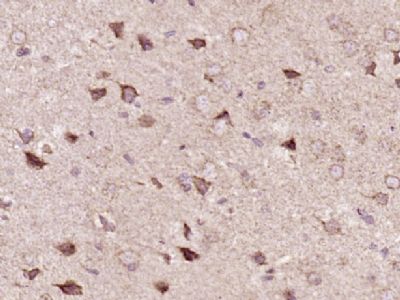
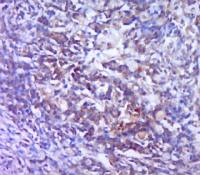
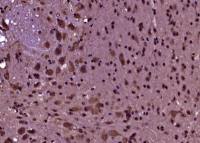
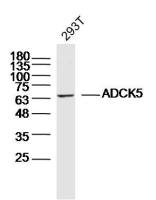
| 产品图片 | 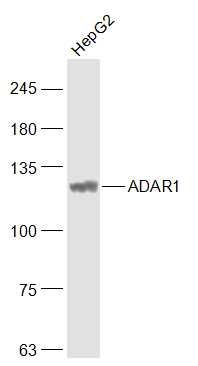 Sample: HepG2(Human) Cell Lysate at 30 ug Primary: Anti-ADAR1 (bs-2168R) at 1/1000 dilution Secondary: IRDye800CW Goat Anti-Rabbit IgG at 1/20000 dilution Predicted band size: 135 kD Observed band size: 130 kD 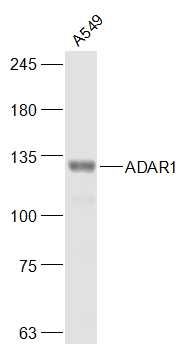 Sample: A549(Human) Cell Lysate at 30 ug Primary: Anti-ADAR1 (bs-2168R) at 1/1000 dilution Secondary: IRDye800CW Goat Anti-Rabbit IgG at 1/20000 dilution Predicted band size: 135 kD Observed band size: 131 kD 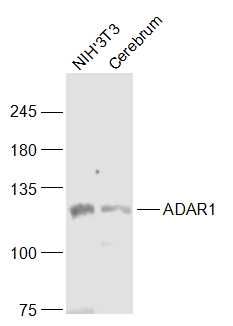 Sample: NIH/3T3(Mouse) Cell Lysate at 30 ug Cerebrum (Mouse) Lysate at 40 ug Primary: Anti-ADAR1 (bs-2168R) at 1/1000 dilution Secondary: IRDye800CW Goat Anti-Rabbit IgG at 1/20000 dilution Predicted band size: 135 kD Observed band size: 130 kD 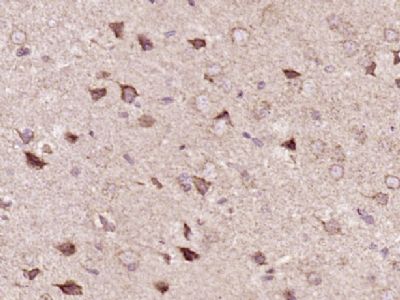 Paraformaldehyde-fixed, paraffin embedded (Rat brain); Antigen retrieval by boiling in sodium citrate buffer (pH6.0) for 15min; Block endogenous peroxidase by 3% hydrogen peroxide for 20 minutes; Blocking buffer (normal goat serum) at 37°C for 30min; Antibody incubation with (ADAR1) Polyclonal Antibody, Unconjugated (bs-2168R) at 1:400 overnight at 4°C, followed by a conjugated secondary antibody (sp-0023) for 20 minutes and DAB staining. |
风险提示:丁香通仅作为第三方平台,为商家信息发布提供平台空间。用户咨询产品时请注意保护个人信息及财产安全,合理判断,谨慎选购商品,商家和用户对交易行为负责。对于医疗器械类产品,请先查证核实企业经营资质和医疗器械产品注册证情况。
 询价记录
询价记录 暂无询价记录
 文献和实验
文献和实验Generation of Antibody Molecules Through Antibody Engineering
been overcome to a large extent using genetic-engineering techniques to produce chimeric mouse/human and completely human antibodies. Such an approach is particularly suitable because of the domain structure of the antibody molecule ( 2 ), where functional
The importance of antibody molecules was first recognized in the 1890s, when it was shown that immunity to tetanus and diphtheria was caused by antibodies against the bacterial exotoxins (1 ). Around the same time, it was shown that antisera
General comments: Antibodies, like most proteins, do not like to be freeze-thawed. Avoid repetitive freezing of your solution. The best way to store your antibody is to keep a high protein concentration (>1 mg/ml), add some protease
 技术资料
技术资料暂无技术资料 索取技术资料

