In addition to the MTA mentioned above, other ATCC and/or regulatory permits may be required for the transfer of this ATCC material. Anyone purchasing ATCC material is ultimately responsible for obtaining the permits. Please click here for information regarding the specific requirements for shipment to your location.
Receptors:
high affinity receptors for low density lipoprotein (LDL)
Tumorigenic:
Yes
Antigen Expression:
H-2 K; Factor VIII related antigen; VCAM
Age:
adult
Gender:
male
Comments:
SVEC4-10 is an endothelial cell line derived by SV40 (strain 4A) transformation of endothelial cells from axillary lymph node vessels. These fully transformed small vessel murine endothelial cells were cloned in 1987 by limiting dilution. They grow indefinitely without special additives and are well differentiated, responding like normal endothelial cells to some interleukins and to extracellular matrix signals for tube-like differentiation. When grown on a synthetic basement-like membrane, SVEC4-10 forms branching tube-like networks. They specifically bind mouse lymphocytes in vitro. The cells express the cell surface major histocompatibility complex class I antigen, H-2 k, and are susceptible to lysis by anti SV40 H-2 k CTL clones. Interferon gamma (IFN-gamma) induces expression of MHC class II antigen in a time course identical to that of normal endothelial cells. The cells express vascular cell adhesion molecule (VCAM), and stain positively for SV40 T antigen. Tumor necrosis factor alpha (TNF alpha) induces SVEC4-10 to undergo reversible transition to a spindle shaped morphology. SVEC4-10 is the parental line for a series of endothelial cell clones (ATCC CRL-2160, ATCC CRL-2161, ATCC CRL-2162, ATCC CRL-2163, ATCC CRL-2167, ATCC CRL-2168 and ATCC CRL-2171.
Propagation:
ATCC complete growth medium: Dulbecco's modified Eagle's medium with 4 mM L-glutamine adjusted to contain 1.5 g/L sodium bicarbonate and 4.5 g/L glucose, 90%; heat-inactivated fetal bovine serum, 10% Temperature: 37.0°C Atmosphere: air, 95%; carbon dioxide (CO2), 5%
Subculturing:
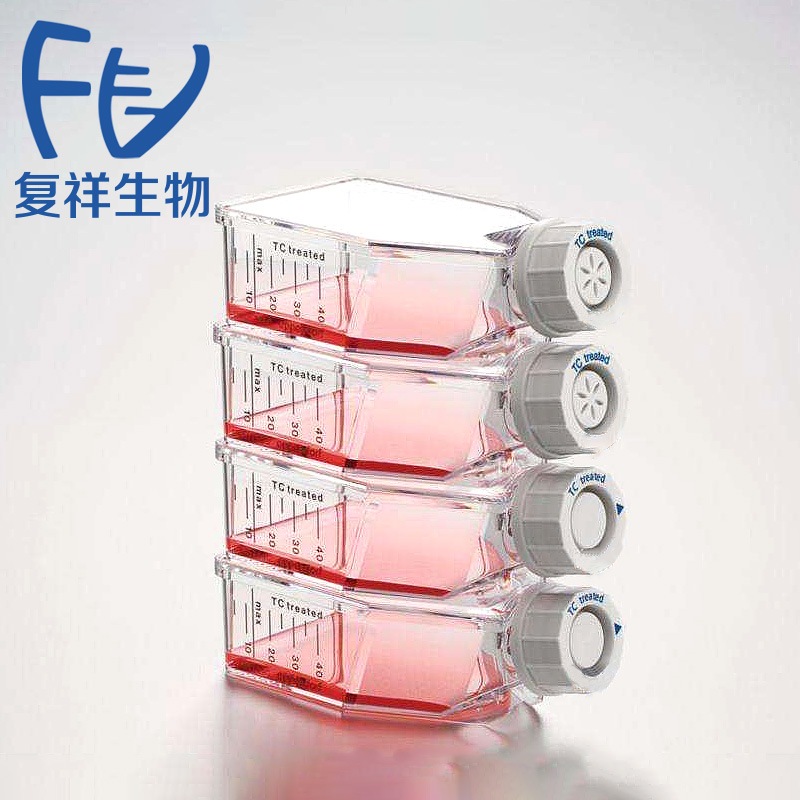
Subcultivation Ratio: A subcultivation ratio of 1:4 to 1:6 is recommended Medium Renewal: Every 2 to 3 days Remove medium, and rinse with 0.25% trypsin, 0.03% EDTA solution. Remove the solution and add an additional 1 to 2 ml of trypsin-EDTA solution. Allow the flask to sit at room temperature (or at 37C) until the cells detach. Add fresh culture medium, aspirate and dispense into new culture flasks.
Preservation:
Culture medium, 95%; DMSO, 5%
Doubling Time:
24 to 30 hrs
Related Products:
Recommended medium (without the additional supplements or serum described under ATCC Medium):ATCC 30-2002
References:
22840: O'Connell KA, Edidin M. A mouse lymphoid endothelial cell line immortalized by simian virus 40 binds lymphocytes and retains functional characteristics of normal endothelial cells. J. Immunol. 144: 521-525, 1990. PubMed: 2153170 23172: O'Connell KA, Rudmann AA. Cloned spindle and epithelioid cells from murine Kaposi's sarcoma-like tumors are of endothelial origin. J. Invest. Dermatol. 100: 742-745, 1993. PubMed: 8496612 23187: O'Connell K, et al. Endothelial cells transformed by SV40 T antigen cause Kaposi's sarcomalike tumors in nude mice. Am. J. Pathol. 139: 743-749, 1991. PubMed: 1928299




 文献和实验
文献和实验 技术资料
技术资料
