

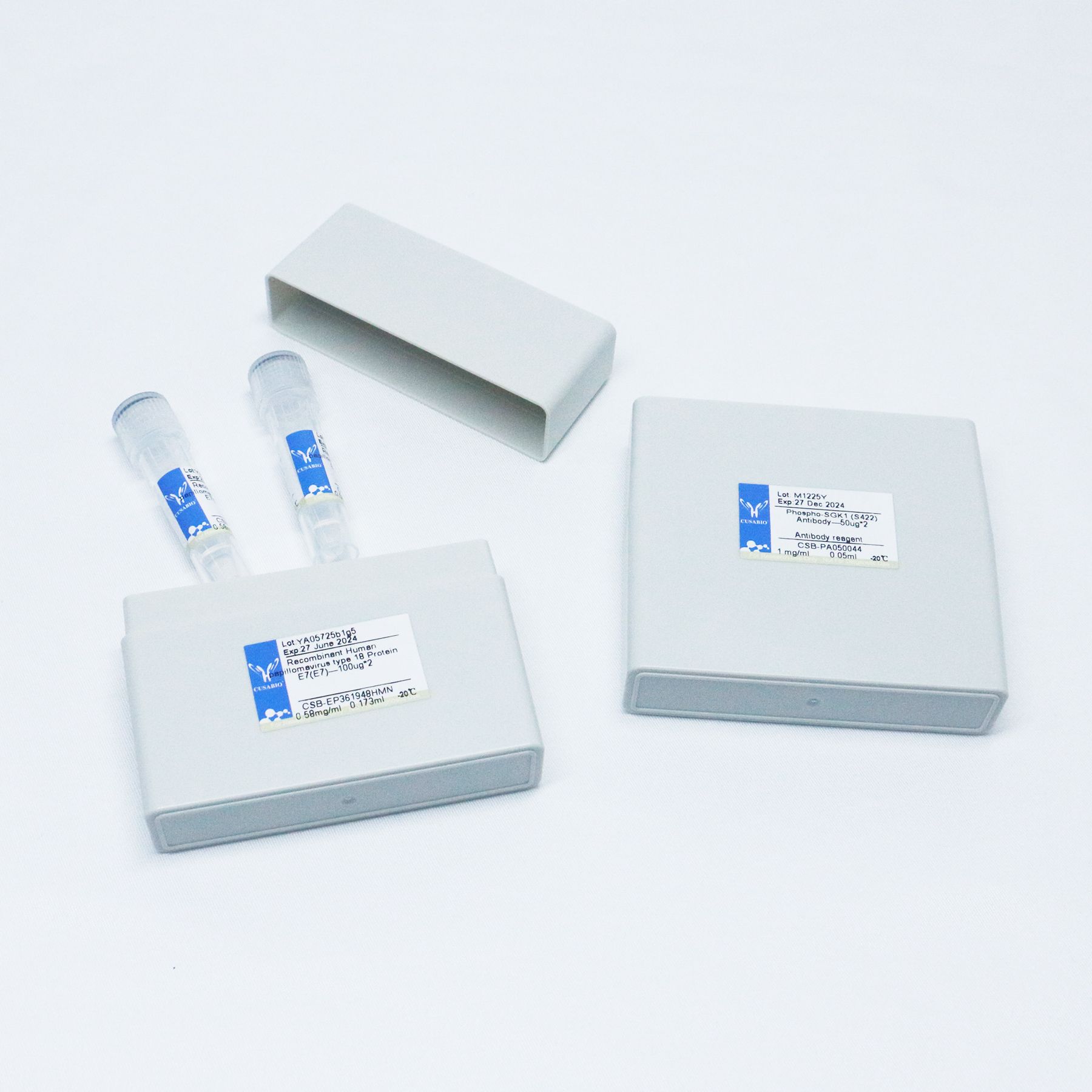
人HLA-DRB1重组蛋白MHC class II anti
gen DRB1*1Human HLA class II histocompatibility antigen, DRB1 beta chain(HLA-DRB1)蛋白- ¥1344
- CUSABIO

- CN
- CSB-EP361230HU
- 2026年01月20日

企业认证
相关产品推荐更多 >
Recombinant-Leifsonia-xyli-subsp-xyli-Protein-CrcB-homolog-1crcB1Protein CrcB homolog 1
¥9996
Recombinant-Danio-rerio-UPF0697-protein-C8orf40-homologzgc:114040UPF0697 protein C8orf40 homolog
¥9702Recombinant-Pasteurella-multocida-Fumarate-reductase-subunit-DfrdDFumarate reductase subunit D
¥9814
Recombinant-Rhizobium-leguminosarum-bv-viciae-Beta-1-->2glucan-export-ATP-bindingpermease-protein-NdvAndvABeta-(1-->2)glucan export ATP-binding/permease protein NdvA EC= 3.6.3.42
¥14000
Recombinant-Cercopithecus-sabaeus-C-C-chemokine-receptor-type-5CCR5C-C chemokine receptor type 5; C-C CKR-5; CC-CKR-5; CCR-5; CCR5 Alternative name(s): CD_antigen= CD195
¥11914
万千商家帮你免费找货
0 人在求购买到急需产品
相关阅读
香烟烟雾如何加速声带纤维化?CD44-透明质酸轴是关键通路Cytoscape 教程来了!快速实现顶刊同款通路网络图五大应用案例:Mustang Q 膜层析应用全解析1 个小工具,一次性搞定流程图、质粒图谱和信号通路图- 详细信息
- 文献和实验
- 技术资料
- 保存条件:
We recommend to add 5-50% of glycerol (final concentration) and aliquot for long-term storage at -20℃/-80℃.
- 保质期:
Generally, the shelf life of liquid form is 6 months at -20℃/-80℃. The shelf life of lyophilized form is 12 months at -20℃/-80℃.
- 英文名:
Recombinant Human HLA class II histocompatibility antigen, DRB1 beta chain (HLA-DRB1), partial
- 库存:
200
- 供应商:
武汉华美生物工程有限公司
- 规格:
20μg
英文名称:
Recombinant Human HLA class II histocompatibility antigen, DRB1 beta chain (HLA-DRB1), partial品名简称:
Recombinant Human HLA-DRB1 protein, partial货号:
CSB-EP361230HU规格:
20μg价格:
1344LC-MS/Western Blot:
/SDS-PAGE:
(Tris-Glycine gel) Discontinuous SDS-PAGE (reduced) with 5% enrichment gel and 15% separation gel.纯度:
Greater than 90% as determined by SDS-PAGE.内毒素:
Not test生物活性:
/基因名:
HLA-DRB1Uniprot No.:
P04229别名:
MHC class II antigen DRB1*1种属:
Homo sapiens (Human)蛋白长度:
Extracellular Domain来源:
E.coli分子量:
42.9 kDa表达区域:
30-227aa氨基酸序列:
GDTRPRFLWQLKFECHFFNGTERVRLLERCIYNQEESVRFDSDVGEYRAVTELGRPDAEYWNSQKDLLEQRRAAVDTYCRHNYGVGESFTVQRRVEPKVTVYPSKTQPLQHHNLLVCSVSGFYPGSIEVRWFRNGQEEKAGVVSTGLIQNGDWTFQTLVMLETVPRSGEVYTCQVEHPSVTSPLTVEWRARSESAQSK蛋白标签:
N-terminal 10xHis-SUMO-tagged and C-terminal Myc-tagged产品提供形式:
Liquid or Lyophilized powder缓冲液:
If the delivery form is liquid, the default storage buffer is Tris/PBS-based buffer, 5%-50% glycerol. If the delivery form is lyophilized powder, the buffer before lyophilization is Tris/PBS-based buffer, 6% Trehalose, pH 8.0.储存条件:
We recommend that this vial be briefly centrifuged prior to opening to bring the contents to the bottom. Please reconstitute protein in deionized sterile water to a concentration of 0.1-1.0 mg/mL.We recommend to add 5-50% of glycerol (final concentration) and aliquot for long-term storage at -20℃/-80℃. Our default final concentration of glycerol is 50%. Customers could use it as reference.保质期:
The shelf life is related to many factors, storage state, buffer ingredients, storage temperature and the stability of the protein itself. Generally, the shelf life of liquid form is 6 months at -20℃/-80℃. The shelf life of lyophilized form is 12 months at -20℃/-80℃.货期:
3-7 business days注意事项:
Repeated freezing and thawing is not recommended. Store working aliquots at 4℃ for up to one week.功能1:
Binds peptides derived from antigens that access the endocytic route of antigen presenting cells (APC) and presents them on the cell surface for recognition by the CD4 T-cells. The peptide binding cleft accommodates peptides of 10-30 residues. The peptides presented by MHC class II molecules are generated mostly by degradation of proteins that access the endocytic route; where they are processed by lysosomal proteases and other hydrolases. Exogenous antigens that have been endocytosed by the APC are thus readily available for presentation via MHC II molecules; and for this reason this antigen presentation pathway is usually referred to as exogenous. As membrane proteins on their way to degradation in lysosomes as part of their normal turn-over are also contained in the endosomal/lysosomal compartments; exogenous antigens must compete with those derived from endogenous components. Autophagy is also a source of endogenous peptides; autophagosomes constitutively fuse with MHC class II loading compartments. In addition to APCs; other cells of the gastrointestinal tract; such as epithelial cells; express MHC class II molecules and CD74 and act as APCs; which is an unusual trait of the GI tract. To produce a MHC class II molecule that presents an antigen; three MHC class II molecules (heterodimers of an alpha and a beta chain) associate with a CD74 trimer in the ER to form a heterononamer. Soon after the entry of this complex into the endosomal/lysosomal system where antigen processing occurs; CD74 undergoes a sequential degradation by various proteases; including CTSS and CTSL; leaving a small fragment termed CLIP (class-II-associated invariant chain peptide). The removal of CLIP is facilitated by HLA-DM via direct binding to the alpha-beta-CLIP complex so that CLIP is released. HLA-DM stabilizes MHC class II molecules until primary high affinity antigenic peptides are bound. The MHC II molecule bound to a peptide is then transported to the cell membrane surface. In B-cells; the interaction between HLA-DM and MHC class II molecules is regulated by HLA-DO. Primary dendritic cells (DCs) also to express HLA-DO. Lysosomal microenvironment has been implicated in the regulation of antigen loading into MHC II molecules; increased acidification produces increased proteolysis and efficient peptide loading. (Microbial infection) Acts as a receptor for Epstein-Barr virus on lymphocytes.功能2:
Binds peptides derived from antigens that access the endocytic route of antigen presenting cells (APC) and presents them on the cell surface for recognition by the CD4 T-cells. The peptide binding cleft accommodates peptides of 10-30 residues. The peptides presented by MHC class II molecules are generated mostly by degradation of proteins that access the endocytic route; where they are processed by lysosomal proteases and other hydrolases. Exogenous antigens that have been endocytosed by the APC are thus readily available for presentation via MHC II molecules; and for this reason this antigen presentation pathway is usually referred to as exogenous. As membrane proteins on their way to degradation in lysosomes as part of their normal turn-over are also contained in the endosomal/lysosomal compartments; exogenous antigens must compete with those derived from endogenous components. Autophagy is also a source of endogenous peptides; autophagosomes constitutively fuse with MHC class II loading compartments. In addition to APCs; other cells of the gastrointestinal tract; such as epithelial cells; express MHC class II molecules and CD74 and act as APCs; which is an unusual trait of the GI tract. To produce a MHC class II molecule that presents an antigen; three MHC class II molecules (heterodimers of an alpha and a beta chain) associate with a CD74 trimer in the ER to form a heterononamer. Soon after the entry of this complex into the endosomal/lysosomal system where antigen processing occurs; CD74 undergoes a sequential degradation by various proteases; including CTSS and CTSL; leaving a small fragment termed CLIP (class-II-associated invariant chain peptide). The removal of CLIP is facilitated by HLA-DM via direct binding to the alpha-beta-CLIP complex so that CLIP is released. HLA-DM stabilizes MHC class II molecules until primary high affinity antigenic peptides are bound. The MHC II molecule bound to a peptide is then transported to the cell membrane surface. In B-cells; the interaction between HLA-DM and MHC class II molecules is regulated by HLA-DO. Primary dendritic cells (DCs) also to express HLA-DO. Lysosomal microenvironment has been implicated in the regulation of antigen loading into MHC II molecules; increased acidification produces increased proteolysis and efficient peptide loading.; FUNCTION文献:
"DO beta: a new beta chain gene in HLA-D with a distinct regulation of expression."Tonnelle C., Demars R., Long E.O.EMBO J4:2839-2847(1985)研究领域:
Immunology请点击“在线询价”找客服索取产品说明书及引用文献目录,产品实时更新参数、价格信息、更多文献信息可以查看cusabio官网
风险提示:丁香通仅作为第三方平台,为商家信息发布提供平台空间。用户咨询产品时请注意保护个人信息及财产安全,合理判断,谨慎选购商品,商家和用户对交易行为负责。对于医疗器械类产品,请先查证核实企业经营资质和医疗器械产品注册证情况。
 文献和实验
文献和实验Class II MHC Antigen Processing in Phagosomes
Phagocytic antigen-presenting cells (APCs) are involved in innate and adaptive immune responses to bacteria. Adaptive responses to bacteria involve processing of bacterial antigens for presentation by class II major histocompatibility complex
Class II major histocompatibility complex (MHC-II) antigens (Ags) are integral membrane glycoproteins that have the unique capacity to bind prepro-cessed peptides, and present them to the immune system. These peptides are derived
PCR-Sequence-Specific Primer Typing of HLA Class I and Class II Alleles
The use of molecular typing methods for defining human leukocyte antigen (HLA) Class I and Class II alleles is now commonplace. Molecular methods offer a greater accuracy than traditional serological methods (1 –5 ) which is reflected
 技术资料
技术资料暂无技术资料 索取技术资料

