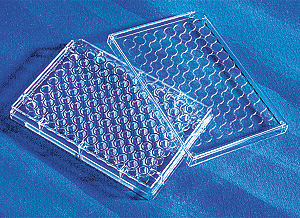
TSH ELISA试剂盒
Catalog No. RE55221
TSH ELISA
| Kit size |
12 x 8 |
| Method |
ELISA |
| Incubation time |
10min, 90 min, 20 min |
| Standard range |
0,25 - 15 mIU/L |
| Specimen / Volumes |
25 µL Serum |
| Substrate / isotope |
TMB 450 nm |
| Regulatory Status: |
EU: CE |
Details for: TSH ELISA
Measurement of the serum concentration of thyrotropin (TSH), a glycoprotein with a molecular weight of 28,000 daltons and secreted from the anterior pituitary, is generally re¬garded as the most sensitive indicator available for the diagnosis of primary and secondary (pituitary) hypothyroidism (1,2). Increase in serum concentrations of TSH, which is primarily responsible for the synthesis and release of thyroid hormones, is an early and sensitive indicator of decrease thyroid reserve and in conjunction with decreased thyroxine (T4) concentrations is diagnostic of primary hypothyroidism. The expected increase in TSH concentrations demonstrates the classical negative feedback system between the pituitary and thyroid glands. That is, primary thyroid gland failure reduces secretion of the thyroid hormones, which in turn stimulates the release of TSH from the pituitary. Additionally, TSH measurements are equally useful in differentiating secondary and tertiary (hypothalamic) hypothyroidism from the primary thyroid disease. TSH release from the pituitary is regulated by thyrotropin releasing factor (TRH), which is secreted by the hypothalamus, and by direct action of T4 and triiodothyronine (T3), the thyroid hormones, at the pituitary. Increase levels of T3 and T4 reduces the response of the pituitary to the stimulatory effects of TRH. In secondary and tertiary hypothyroidism, concentrations of T4 are usually low and TSH levels are generally low or normal. Either pituitary TSH deficiency (secondary hypothyroidism) or insufficiency of stimulation of the pituitary by TRH (tertiary hypothyroidism) causes this. The TRH stimulation test differentiates these conditions. In secondary hypothyroidism, TSH response to TRH is blunted while a normal or delayed response is obtained in tertiary hypothyroidism. Further, the advent of immunoenzymometric assays has provided the laboratory with sufficient sensitivity to enable the differentiating of hyperthyroidism from euthyroid population and extending the usefulness of TSH measurements. This method is a second-generation assay, which provide the means for discrimination in the hyperthyroid-euthyroid range.
For concrete data please consult the Instruction for Use in the download box on the right side.
风险提示:丁香通仅作为第三方平台,为商家信息发布提供平台空间。用户咨询产品时请注意保护个人信息及财产安全,合理判断,谨慎选购商品,商家和用户对交易行为负责。对于医疗器械类产品,请先查证核实企业经营资质和医疗器械产品注册证情况。




 文献和实验
文献和实验 技术资料
技术资料
