

- ¥2536
- millipore
- MABS82
- 美国
- 2025年07月07日
- 小鼠


相关产品推荐更多 >
![FITC Anti-Mouse IL-10 Antibody流式抗体[JES5-16E3]](https://img1.dxycdn.com/p/s14/2025/0609/471/0481799173518002391.png!wh200)
![PE Anti-Rat CD44H Antibody流式抗体[OX-49]_货号:E-AB-F1225D](https://img1.dxycdn.com/p/s14/2025/0609/225/4260564364057002391.png!wh200)
万千商家帮你免费找货
0 人在求购买到急需产品
- 详细信息
- 技术资料
- 保存条件:
2-8°C
- 抗体英文名:
Anti-phospho-p70 S6 Kinase (Thr389) Antibody, clone 10G7.1
- 是否单克隆:
单克隆
- 保质期:
1-2年
- 抗原来源:
人
- 宿主:
小鼠
- 规格:
0.1mg/100ug
| 规格: | 0.1mg | 产品价格: | ¥2536 |
|---|---|---|---|
| 规格: | 100ug | 产品价格: | ¥2536 |
Description: ;电话:010-62018455,13810710415韩小姐
Anti-phospho-p70 S6 Kinase (Thr389) Antibody, clone 10G7.1 | MABS82
Replaces:
04-392
Promotional Text:
Specificity:
This antibody recognizes p70 S6 Kinase phosphorylated at (Thr389). This antibody also recognizes isoforms Alpha I and Alpha II.
Molecular Weight:
~70/85 kDa observed. This protein recognizes isoforms Alpha I and Alpha II. Uncharacterized bands appear at ~18 and 200 kDa in some lysates depending on treatment conditions.
Epitope:
Phosphorylated (Thr389)
Immunogen:
KLH-conjugated linear peptide corresponding to mouse p70 S6 Kinase phosphorylated at (Thr389).
Clone:
10G7.1
Isotype:
IgG2aκ
Background Information:
The p70 S6 kinase is a ubiquitous cytoplasmic protein that is activated in response to cytokines, and growth factors including the epidermal growth factor and fibroblast growth factor. It lies downstream of the mTOR/PI3K pathway and is phosphorylated on multiple residues: Thr389, Thr229, Thr421, Ser371, Ser404, Ser411, Ser418, and Ser424. Thr389, Ser371, and Ser404 are located in the linker domain; whereas Thr421, Ser411, Ser418, Ser424 are located in the autoinhibitory domain, and Thr229 is found in the catalytic domain. These sites may be phosphorylated in a hierarchical sequence leading to the activation of the p70 S6 kinase. The p70 S6 kinase phosphorylates the S6 protein on the 40S ribosomal protein (rpS6), and plays a role in multiple processes including regulation of mRNA molecules with 5’-terminal oligopyrimidine tracts, protein synthesis, cell growth, proliferation, and cell survival. The activity of this kinase may be important in diabetes, cancer, and aging.
Species Reactivity:
- Human
- Mouse
Application Notes:
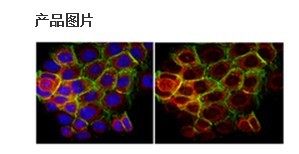
Immunocytochemistry Analysis: A 1:500 dilution from a representative lot detected p70 S6 Kinase in A431 cells.
Control:
Untreated and serum treated NIH/3T3 cell lysates
Quality Assurance:
Evaluated by Western Blot in untreated and serum treated NIH/3T3 cell lysates.
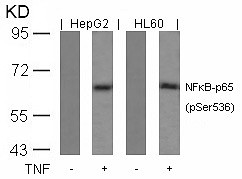
Western Blot Analysis: 1 µg/mL of this antibody detected p70 S6 Kinase on 10 µg of untreated and serum treated NIH/3T3 cell lysates.
Western Blot Analysis: 1 µg/mL of this antibody detected p70 S6 Kinase on 10 µg of untreated and serum treated NIH/3T3 cell lysates.
Purification Method:
Protein G purified
Presentation:
Purified mouse monoclonal IgG2aκ in buffer containing 0.1 M Tris-Glycine (pH 7.4), 150 mM NaCl with 0.05% sodium azide.
Storage Conditions:
Stable for 1 year at 2-8°C from date of receipt.
UniProt Number:
Entrez Gene Number:
Gene Symbol:
- RPS6KB1
- STK14A
Alternate Names:
- Ribosomal protein S6 kinase beta-1
- S6K-beta-1
- S6K1
- 70 kDa ribosomal protein S6 kinase 1
- Short name=P70S6K1
- p70-S6K 1
- Ribosomal protein S6 kinase I
- Serine/threonine-protein kinase 14A
- p70 ribosomal S6 kinase alpha
- p70 S6 kinase alpha
- p70 S6K-alpha
- p70 S6KA
Usage Statement:
Unless otherwise stated in our catalog or other company documentation accompanying the product(s), our products are intended for research use only and are not to be used for any other purpose, which includes but is not limited to, unauthorized commercial uses, in vitro diagnostic uses, ex vivo or in vivo therapeutic uses or any type of consumption or application to humans or animals.
Entrez Gene Summary:
This gene encodes a member of the RSK (ribosomal S6 kinase) family of serine/threonine kinases. This kinase contains 2 non-identical kinase catalytic domains and phosphorylates several residues of the S6 ribosomal protein. The kinase activity of this protein leads to an increase in protein synthesis and cell proliferation. Amplification of the region of DNA encoding this gene and overexpression of this kinase are seen in some breast cancer cell lines. Alternate translational start sites have been described and alternate transcriptional splice variants have been observed but have not been thoroughly characterized. [provided by RefSeq, Jul 2008].
Key Applications:
- Western Blotting
- Immunocytochemistry
UniProt Summary:
FUNCTION: Serine/threonine-protein kinase that acts downstream of mTOR signaling in response to growth factors and nutrients to promote cell proliferation, cell growth and cell cycle progression. Regulates protein synthesis through phosphorylation of EIF4B, RPS6 and EEF2K, and contributes to cell survival by repressing the pro-apoptotic function of BAD. Under conditions of nutrient depletion, the inactive form associates with the EIF3 translation initiation complex. Upon mitogenic stimulation, phosphorylation by the mammalian target of rapamycin complex 1 (mTORC1) leads to dissociation from the EIF3 complex and activation. The active form then phosphorylates and activates several substrates in the preinitiation complex, including the EIF2B complex and the cap-binding complex component EIF4B. Also controls translation initiation by phosphorylating a negative regulator of EIF4A, PDCD4, targeting it for ubiquitination and subsequent proteolysis. Promotes initiation of the pioneer round of protein synthesis by phosphorylating POLDIP3/SKAR. In response to IGF1, activates translation elongation by phosphorylating EEF2 kinase (EEF2K), which leads to its inhibition and thus activation of EEF2. Also plays a role in feedback regulation of mTORC2 by mTORC1 by phosphorylating RICTOR, resulting in the inhibition of mTORC2 and AKT1 signaling. Mediates cell survival by phosphorylating the pro-apoptotic protein BAD and suppressing its pro-apoptotic function. Phosphorylates mitochondrial URI1 leading to dissociation of a URI1-PPP1CC complex. The free mitochondrial PPP1CC can then dephosphorylate RPS6KB1 at 'Thr-412', which is proposed to be a negative feedback mechanism for the RPS6KB1 anti-apoptotic function. Mediates TNF-alpha-induced insulin resistance by phosphorylating IRS1 at multiple serine residues, resulting in accelerated degradation of IRS1. In cells lacking functional TSC1-2 complex, constitutively phosphorylates and inhibits GSK3B. May be involved in cytoskeletal rearrangement through binding to neurabin.
CATALYTIC ACTIVITY: ATP + a protein = ADP + a phosphoprotein.
ENZYME REGULATION: Inactivated by binding to URI1. Activation requires multiple phosphorylation events on serine/threonine residues. Activation appears to be first mediated by phosphorylation of multiple sites in the autoinhibitory domain, which facilitates phosphorylation at Thr-412, disrupting the autoinhibitory mechanism and allowing phosphorylation of Thr-252 by PDPK1. The active conformation of the kinase is believed to be stabilized by a mechanism involving three conserved phosphorylation sites located in the kinase domain activation loop (Thr-252) and in the AGC-kinase C-terminal domain (Ser-394 in the middle of the tail/linker region and Thr-412 within a hydrophobic motif at its end). Activated by mTORC1; isoform Alpha I and isoform Alpha II are sensitive to rapamycin, which inhibits activating phosphorylation at Thr-412. Activated by PDPK1.
SUBUNIT STRUCTURE: Interacts with PPP1R9A/neurabin-1 (By similarity). Interacts with RPTOR. Interacts with IRS1. Interacts with EIF3B and EIF3C. Interacts with POLDIP3 and TRAF4. SUBCELLULAR LOCATION: Cell junction › synapse › synaptosome (By similarity). Mitochondrion outer membrane. Mitochondrion. Note: Colocalizes with URI1 at mitochondrion.
Isoform Alpha I: Nucleus. Cytoplasm
Isoform Alpha II: Cytoplasm
TISSUE SPECIFICITY; Widely expressed.
DOMAIN: The autoinhibitory domain is believed to block phosphorylation within the AGC-kinase C-terminal domain and the activation loop.
The TOS (TOR signaling) motif is essential for activation by mTORC1 (By similarity).
PTM: Phosphorylation at Thr-412 is regulated by mTORC1. The phosphorylation at this site is maintained by an agonist-dependent autophosphorylation mechanism (By similarity). Activated by phosphorylation at Thr-252 by PDPK1. Dephosphorylation by PPP1CC at Thr-412 in mitochondrion.
SEQUENCE SIMILARITIES: Belongs to the protein kinase superfamily. AGC Ser/Thr protein kinase family. S6 kinase subfamily.
Contains 1 AGC-kinase C-terminal domain.
Contains 1 protein kinase domain.
CATALYTIC ACTIVITY: ATP + a protein = ADP + a phosphoprotein.
ENZYME REGULATION: Inactivated by binding to URI1. Activation requires multiple phosphorylation events on serine/threonine residues. Activation appears to be first mediated by phosphorylation of multiple sites in the autoinhibitory domain, which facilitates phosphorylation at Thr-412, disrupting the autoinhibitory mechanism and allowing phosphorylation of Thr-252 by PDPK1. The active conformation of the kinase is believed to be stabilized by a mechanism involving three conserved phosphorylation sites located in the kinase domain activation loop (Thr-252) and in the AGC-kinase C-terminal domain (Ser-394 in the middle of the tail/linker region and Thr-412 within a hydrophobic motif at its end). Activated by mTORC1; isoform Alpha I and isoform Alpha II are sensitive to rapamycin, which inhibits activating phosphorylation at Thr-412. Activated by PDPK1.
SUBUNIT STRUCTURE: Interacts with PPP1R9A/neurabin-1 (By similarity). Interacts with RPTOR. Interacts with IRS1. Interacts with EIF3B and EIF3C. Interacts with POLDIP3 and TRAF4. SUBCELLULAR LOCATION: Cell junction › synapse › synaptosome (By similarity). Mitochondrion outer membrane. Mitochondrion. Note: Colocalizes with URI1 at mitochondrion.
Isoform Alpha I: Nucleus. Cytoplasm
Isoform Alpha II: Cytoplasm
TISSUE SPECIFICITY; Widely expressed.
DOMAIN: The autoinhibitory domain is believed to block phosphorylation within the AGC-kinase C-terminal domain and the activation loop.
The TOS (TOR signaling) motif is essential for activation by mTORC1 (By similarity).
PTM: Phosphorylation at Thr-412 is regulated by mTORC1. The phosphorylation at this site is maintained by an agonist-dependent autophosphorylation mechanism (By similarity). Activated by phosphorylation at Thr-252 by PDPK1. Dephosphorylation by PPP1CC at Thr-412 in mitochondrion.
SEQUENCE SIMILARITIES: Belongs to the protein kinase superfamily. AGC Ser/Thr protein kinase family. S6 kinase subfamily.
Contains 1 AGC-kinase C-terminal domain.
Contains 1 protein kinase domain.
Product Name:
Anti-phospho-p70 S6 Kinase (Thr389), clone 10G7.1
Concentration:
1 mg/mL
Antibody Type:
Monoclonal Antibody
Qty/Pk:
100 μg
Format:
Purified
Host:
Mouse
风险提示:丁香通仅作为第三方平台,为商家信息发布提供平台空间。用户咨询产品时请注意保护个人信息及财产安全,合理判断,谨慎选购商品,商家和用户对交易行为负责。对于医疗器械类产品,请先查证核实企业经营资质和医疗器械产品注册证情况。

一级代理millipore货号MABS82现货,www,huameibio.com
¥2536

