

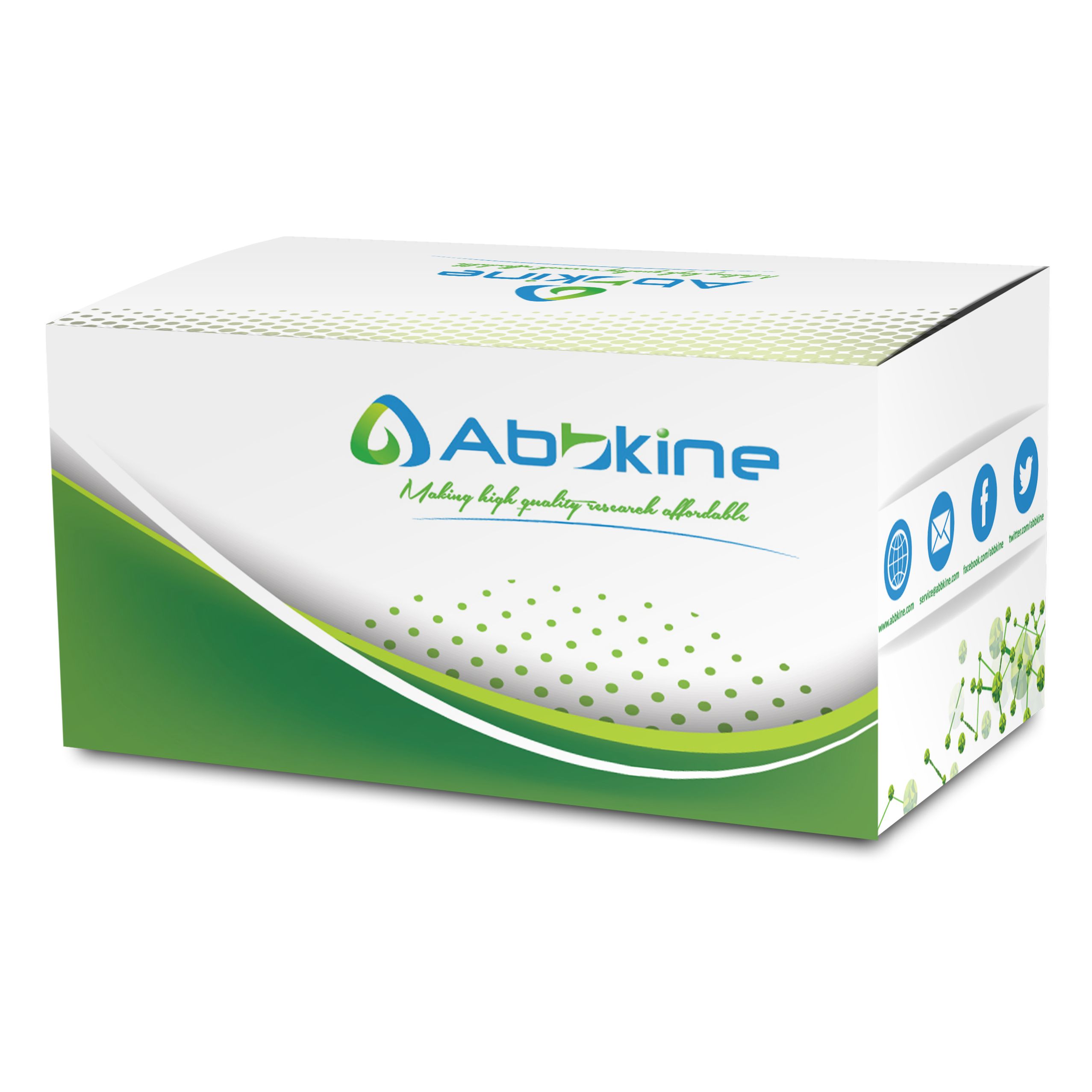
- ¥588 - 4698
- 亚科因(Abbkine)

- PRP1114-2
- 湖北武汉
- 2025年12月31日

企业认证
相关产品推荐更多 >
万千商家帮你免费找货
0 人在求购买到急需产品
- 详细信息
- 文献和实验
- 技术资料
- 库存:
999
- 供应商:
亚科因(Abbkine)
- 英文名:
Mouse RANKL protein
- 规格:
5 μg/20 μg/100 μg/1 mg
| 规格: | 5 μg | 产品价格: | ¥588.0 |
|---|---|---|---|
| 规格: | 20 μg | 产品价格: | ¥1498.0 |
| 规格: | 100 μg | 产品价格: | ¥4698.0 |
| 规格: | 1 mg | 产品价格: | 询价 |
产品详情:重组小鼠 RANKL 蛋白 (无标签)
货号:PRP1114
产品类型:细胞因子
种属来源:小鼠
产品概述
本产品为高纯度、无标签的重组小鼠 RANKL (Receptor Activator of NF-κB Ligand) 蛋白。该蛋白是通过大肠杆菌表达系统制备的冻干粉,氨基酸序列来源于小鼠 RANKL (UniProt: O35235) 的 Pro143-Asp316 片段。其预测分子量为 19 kDa,在还原性 SDS-PAGE 中表观分子量约为 19 kDa。本品经严格质控,纯度经 SDS-PAGE 检测 ≥ 98%,且内毒素 (LAL 法) 水平低,每 1μg 蛋白质中 EU 含量 < 1.0,旨在为您的细胞培养与研究应用提供可靠的支持。
关键特性
- 高纯度:经 SDS-PAGE 检测,纯度 ≥ 98%
- 无标签:尽可能减少了因标签干扰实验结果的潜在风险
- 生物活性已验证:通过功能性 ELISA 检测其与受体 OPG 的结合能力,人 OPG 的 EC50 值为 55 ng/mL
- 低内毒素:LAL 法检测,每 1μg 蛋白质中 EU 含量 < 1.0
- 应用广泛:适用于多种细胞生物学研究,特别是在破骨细胞分化、免疫调节等研究领域
产品信息
| 表达宿主 | 大肠杆菌 |
| 蛋白长度 | 174个氨基酸 (N-Met) |
| 预测分子量 | 19 kDa |
| 表观分子量 | ~19 kDa (还原性 SDS-PAGE) |
| 产品形式 | 冻干粉 |
| 冻干缓冲液 | 无菌 PBS, pH 7.4 |
活性检测
通过功能性 ELISA 方法检测其生物活性。包被 1 μg/mL (100μl/孔) 的小鼠 sRANKL 可有效结合人 OPG (C-Fc),计算得出人 OPG 的 EC50 值为 55 ng/mL。
使用注意事项
- 开盖前请先离心,以避免粉末损失。
- 推荐使用产品配套的复溶缓冲液进行复溶,复溶浓度建议不低于 100 µg/mL。
- 复溶后可根据具体的实验需求进行进一步稀释。
- 复溶后的蛋白溶液可在 4℃ 下短期保存 2-7 天。
- 如需长期保存,建议添加载体蛋白 (如 0.1% HSA 或 BSA),分装后置于 -20℃ 以下环境,并避免反复冻融。
保存与运输
- 保存建议:冻干粉应保存于 -20℃ 以下的干燥环境中。复溶后,若需长期保存请置于 -20℃ 以下。
- 运输条件:常温运输。
背景介绍
RANKL (TNFSF11) 是肿瘤坏死因子 (TNF) 配体超家族成员,作为核因子 κB 受体激活因子 (RANK) 的配体,在免疫调节、破骨细胞分化及骨吸收等关键生物学过程中扮演着核心角色。它由成骨细胞、基质细胞和活化的 T 淋巴细胞等多种细胞表达,通过与受体 RANK 结合或与诱骗受体 OPG (骨保护素) 相互作用,精密调控树突状细胞存活、T 细胞激活以及骨代谢平衡。
规格与价格
| 规格 | 价格 (人民币) | 货期 |
|---|---|---|
| 5 μg | 588 | 现货 (次日发货) |
| 20 μg | 1498 | 请咨询 |
| 100 μg | 4698 | 现货 (次日发货) |
| 1 mg | 请咨询 | 请咨询 |
警告:本品仅供研究使用,不适用于人类或临床诊断。
注意:以上信息可能随着产品优化升级等因素产生变动,具体信息请咨询亚科因公司。

Product Details: Recombinant Mouse RANKL Protein (Tag-Free)
Catalog Number: PRP1114
Product Type: Cytokine
Species: Mouse
Product Overview
This product is a high-purity, tag-free recombinant mouse RANKL (Receptor Activator of NF-κB Ligand) protein. It is produced as a lyophilized powder using an E. coli expression system and corresponds to amino acids Pro143-Asp316 of mouse RANKL (UniProt: O35235). The predicted molecular weight is 19 kDa, and the apparent molecular weight is approximately 19 kDa as determined by reducing SDS-PAGE. Rigorous quality control confirms a purity of ≥98% by SDS-PAGE and low endotoxin levels (<1.0 EU/μg protein, LAL method), ensuring reliable support for your cell culture and research applications.
Key Features
- High Purity: ≥98% purity as determined by SDS-PAGE.
- Tag-Free: Minimizes potential interference from tags in experimental outcomes.
- Biologically Active: Binding activity to its receptor OPG verified by functional ELISA, with an EC50 value of 55 ng/mL for human OPG.
- Low Endotoxin: <1.0 EU/μg protein as determined by the LAL method.
- Broad Applications: Suitable for various cell biology studies, particularly in osteoclast differentiation, immunoregulation, and related research fields.
Product Information
| Expression Host | E. coli |
| Protein Length | 174 amino acids (N-Met) |
| Predicted Molecular Weight | 19 kDa |
| Apparent Molecular Weight | ~19 kDa (Reducing SDS-PAGE) |
| Form | Lyophilized powder |
| Lyophilization Buffer | Sterile PBS, pH 7.4 |
Activity Assay
Biological activity was measured by functional ELISA. Coating with 1 μg/mL (100μl/well) of mouse sRANKL effectively binds human OPG (C-Fc), yielding an EC50 value of 55 ng/mL for human OPG.
Handling Instructions
- Centrifuge the vial before opening to avoid powder loss.
- Reconstitution using the provided buffer is recommended to a concentration not less than 100 μg/mL.
- Further dilution can be performed according to specific experimental requirements after reconstitution.
- The reconstituted protein solution can be stored at 4°C for short-term use (2-7 days).
- For long-term storage, it is advisable to add a carrier protein (e.g., 0.1% HSA or BSA), aliquot, and store below -20°C, avoiding repeated freeze-thaw cycles.
Storage and Shipping
- Storage: Lyophilized powder should be stored dry below -20°C. After reconstitution, for long-term storage, store below -20°C.
- Shipping: Ambient temperature.
Background
RANKL (TNFSF11), a member of the tumor necrosis factor (TNF) ligand superfamily, acts as the ligand for the receptor activator of nuclear factor κB (RANK). It plays a central role in key biological processes such as immunoregulation, osteoclast differentiation, and bone resorption. Expressed by various cells including osteoblasts, stromal cells, and activated T lymphocytes, RANKL precisely regulates dendritic cell survival, T cell activation, and bone metabolism balance through binding to its receptor RANK or interacting with the decoy receptor OPG (osteoprotegerin).
Specifications & Pricing
| Size | Price (RMB) | Availability |
|---|---|---|
| 5 μg | 588 | In Stock (Ships Next Day) |
| 20 μg | 1498 | Please Inquire |
| 100 μg | 4698 | In Stock (Ships Next Day) |
| 1 mg | Please Inquire | Please Inquire |
Warning: This product is for research use only. It is not intended for human or diagnostic use.
Note: The above information is subject to change due to product optimization and upgrades. Please contact YaKeyin Company for specific details.
风险提示:丁香通仅作为第三方平台,为商家信息发布提供平台空间。用户咨询产品时请注意保护个人信息及财产安全,合理判断,谨慎选购商品,商家和用户对交易行为负责。对于医疗器械类产品,请先查证核实企业经营资质和医疗器械产品注册证情况。
 文献和实验
文献和实验RANKL-Based Osteoclastogenic Assays from Murine Bone Marrow Cells
Osteoclasts are the only cell type in the body to resorb bone. Osteoclasts play a critical role in physiologic and pathologic bone remodeling. Many genetic mouse models affect the skeleton by regulating osteoclast function directly
Osteoclast Formation in the Mouse Coculture Assay
) to stimulate RANKL and macrophage colony-stimulating factor (M-CSF) expression. These factors then stimulate early osteoclast precursors present in the spleen or bone marrow cell populations to differentiate into mature osteoclasts. At the end of the culture
Generation of Osteoclasts In Vitro, and Assay of Osteoclast Activity
Osteoclasts are bone-resorbing multinucleated cells derived from the monocytemacrophage lineage. The authors have developed a mouse marrow culture system and a coculture system of mouse osteoblasts and hemopoietic cells, in which osteoclasts
 技术资料
技术资料暂无技术资料 索取技术资料

