

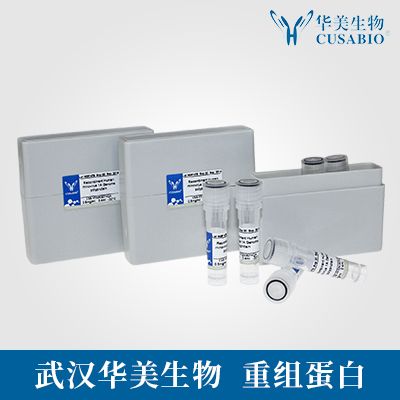
MAPK3/MAPK3蛋白Recombinant Human
Mitogen-activated protein kinase 3 (MAPK3)重组蛋白ERT2Extracellular domain signal-regulated kinase 1 ;ERK-1Insulin-stimulated MAP2 kinase;MAP kinase isoform p44 ;p44-MAPKMicrotubule-associated protein 2 kinasep44-ERK1蛋白- ¥1344 - 10872
- CUSABIO

- CN
- CSB-EP013456HU
- 2025年07月15日

企业认证
相关产品推荐更多 >
Recombinant-Bovine-Peroxisome-assembly-protein-12PEX12Peroxisome assembly protein 12 Alternative name(s): Peroxin-12
¥11970
人TTC1重组蛋白FLJ46404;Tetratricopeptide repeat domain 1;Tetratricopeptide repeat protein 1;TPR repeat protein 1;TPR1;Ttc1;TTC1_HUMANHuman Tetratricopeptide repeat protein 1(TTC1)蛋白
¥1344
/gC重组蛋白/Human herpesvirus 2 Envelope glycoprotein C(gC)蛋白
¥9720人PLA2R1重组蛋白180KDA secretory phospholipase A2 receptorC-type lectin domain family 13 member CM-type receptorHuman Secretory phospholipase A2 receptor(PLA2R1)蛋白
¥1344
Recombinant-Cucumis-sativus-Ethylene-receptor-1ETR1Ethylene receptor 1 EC= 2.7.13.3 Alternative name(s): CS-ETR1
¥15358
万千商家帮你免费找货
0 人在求购买到急需产品
相关阅读
Dove 医学期刊 APC 折后约 1.95w,中国大陆作者专享Cytoscape 教程来了!快速实现顶刊同款通路网络图五大应用案例:Mustang Q 膜层析应用全解析1 个小工具,一次性搞定流程图、质粒图谱和信号通路图- 详细信息
- 文献和实验
- 技术资料
- 保存条件:
Store at -20°C/-80°C upon receipt, aliquoting is necessary for mutiple use. Avoid repeated freeze-thaw cycles.
- 保质期:
Generally, the shelf life of liquid form is 6 months at -20℃/-80℃. The shelf life of lyophilized form is 12 months at -20℃/-80℃.
- 英文名:
Recombinant Human Mitogen-activated protein kinase 3 (MAPK3), partial
- 库存:
200
- 供应商:
武汉华美生物工程有限公司
- 规格:
1mg/100μg/20μg
| 规格: | 1mg | 产品价格: | ¥10872.0 |
|---|---|---|---|
| 规格: | 100μg | 产品价格: | ¥2514.0 |
| 规格: | 20μg | 产品价格: | ¥1344.0 |
纯度:
Greater than 90% as determined by SDS-PAGE.基因名:
MAPK3Uniprot No.:
P27361别名:
ERT2Extracellular domain signal-regulated kinase 1 ;ERK-1Insulin-stimulated MAP2 kinase;MAP kinase isoform p44 ;p44-MAPKMicrotubule-associated protein 2 kinasep44-ERK1种属:
Homo sapiens (Human)蛋白长度:
Partial来源:
E.coli分子量:
46.3 kDa表达区域:
11-379aa氨基酸序列:
GGEPRRTEGVGPGVPGEVEMVKGQPFDVGPRYTQLQYIGEGAYGMVSSAYDHVRKTRVAIKKISPFEHQTYCQRTLREIQILLRFRHENVIGIRDILRASTLEAMRDVYIVQDLMETDLYKLLKSQQLSNDHICYFLYQILRGLKYIHSANVLHRDLKPSNLLINTTCDLKICDFGLARIADPEHDHTGFLTEYVATRWYRAPEIMLNSKGYTKSIDIWSVGCILAEMLSNRPIFPGKHYLDQLNHILGILGSPSQEDLNCIINMKARNYLQSLPSKTKVAWAKLFPKSDSKALDLLDRMLTFNPNKRITVEEALAHPYLEQYYDPTDEPVAEEPFTFAMELDDLPKERLKELIFQETARFQPGVLEAP蛋白标签:
N-terminal 6xHis-tagged产品提供形式:
Liquid or Lyophilized powder缓冲液:
If the delivery form is liquid, the default storage buffer is Tris/PBS-based buffer, 5%-50% glycerol. If the delivery form is lyophilized powder, the buffer before lyophilization is Tris/PBS-based buffer, 6% Trehalose, pH 8.0.货期:
3-7 business days注意事项:
Repeated freezing and thawing is not recommended. Store working aliquots at 4℃ for up to one week.功能:
Serine/threonine kinase which acts as an essential component of the MAP kinase signal transduction pathway. MAPK1/ERK2 and MAPK3/ERK1 are the 2 MAPKs which play an important role in the MAPK/ERK cascade. They participate also in a signaling cascade initiated by activated KIT and KITLG/SCF. Depending on the cellular context, the MAPK/ERK cascade mediates diverse biological functions such as cell growth, adhesion, survival and differentiation through the regulation of transcription, translation, cytoskeletal rearrangents. The MAPK/ERK cascade plays also a role in initiation and regulation of meiosis, mitosis, and postmitotic functions in differentiated cells by phosphorylating a number of transcription factors. About 160 substrates have already been discovered for ERKs. Many of these substrates are localized in the nucleus, and se to participate in the regulation of transcription upon stimulation. However, other substrates are found in the cytosol as well as in other cellular organelles, and those are responsible for processes such as translation, mitosis and apoptosis. Moreover, the MAPK/ERK cascade is also involved in the regulation of the endosomal dynamics, including lysosome processing and endosome cycling through the perinuclear recycling compartment (PNRC); as well as in the fragmentation of the Golgi apparatus during mitosis. The substrates include transcription factors (such as ATF2, BCL6, ELK1, ERF, FOS, HSF4 or SPZ1), cytoskeletal elents (such as CANX, CTTN, GJA1, MAP2, MAPT, PXN, SORBS3 or STMN1), regulators of apoptosis (such as BAD, BTG2, CASP9, DAPK1, IER3, MCL1 or PPARG), regulators of translation (such as EIF4EBP1) and a variety of other signaling-related molecules (like ARHGEF2, FRS2 or GRB10). Protein kinases (such as RAF1, RPS6KA1/RSK1, RPS6KA3/RSK2, RPS6KA2/RSK3, RPS6KA6/RSK4, SYK, MKNK1/MNK1, MKNK2/MNK2, RPS6KA5/MSK1, RPS6KA4/MSK2, MAPKAPK3 or MAPKAPK5) and phosphatases (such as DUSP1, DUSP4, DUSP6 or DUSP16) are other substrates which enable the propagation the MAPK/ERK signal to additional cytosolic and nuclear targets, thereby extending the specificity of the cascade.内毒素:
Not test.SDS-PAGE:
(Tris-Glycine gel) Discontinuous SDS-PAGE (reduced) with 5% enrichment gel and 15% separation gel.LC-MS Image Description/Western Blot:
/Product types:
In Stock ProteinBiological_Activity:
/Research Areas:
Cell CycleReconstitution:
We recommend that this vial be briefly centrifuged prior to opening to bring the contents to the bottom. Please reconstitute protein in deionized sterile water to a concentration of 0.1-1.0 mg/mL.We recommend to add 5-50% of glycerol (final concentration) and aliquot for long-term storage at -20℃/-80℃. Our default final concentration of glycerol is 50%. Customers could use it as reference.Reference:
Properties of human ERK1b.Aebersold D.M., Yung Y., Seger R.Identification of dominant negative Erk1/2 variants in cancer cells.Cheng H., Ren S., Qiu R., Wang M., Feng Y.H.SeattleSNPs variation discovery resourceThe sequence and analysis of duplication-rich human chromosome 16.Martin J., Han C., Gordon L.A., Terry A., Prabhakar S., She X., Xie G., Hellsten U., Chan Y.M., Altherr M., Couronne O., Aerts A., Bajorek E., Black S., Blumer H., Branscomb E., Brown N.C., Bruno W.J. , Buckingham J.M., Callen D.F., Campbell C.S., Campbell M.L., Campbell E.W., Caoile C., Challacombe J.F., Chasteen L.A., Chertkov O., Chi H.C., Christensen M., Clark L.M., Cohn J.D., Denys M., Detter J.C., Dickson M., Dimitrijevic-Bussod M., Escobar J., Fawcett J.J., Flowers D., Fotopulos D., Glavina T., Gomez M., Gonzales E., Goodstein D., Goodwin L.A., Grady D.L., Grigoriev I., Groza M., Hammon N., Hawkins T., Haydu L., Hildebrand C.E., Huang W., Israni S., Jett J., Jewett P.B., Kadner K., Kimball H., Kobayashi A., Krawczyk M.-C., Leyba T., Longmire J.L., Lopez F., Lou Y., Lowry S., Ludeman T., Manohar C.F., Mark G.A., McMurray K.L., Meincke L.J., Morgan J., Moyzis R.K., Mundt M.O., Munk A.C., Nandkeshwar R.D., Pitluck S., Pollard M., Predki P., Parson-Quintana B., Ramirez L., Rash S., Retterer J., Ricke D.O., Robinson D.L., Rodriguez A., Salamov A., Saunders E.H., Scott D., Shough T., Stallings R.L., Stalvey M., Sutherland R.D., Tapia R., Tesmer J.G., Thayer N., Thompson L.S., Tice H., Torney D.C., Tran-Gyamfi M., Tsai M., Ulanovsky L.E., Ustaszewska A., Vo N., White P.S., Williams A.L., Wills P.L., Wu J.-R., Wu K., Yang J., DeJong P., Bruce D., Doggett N.A., Deaven L., Schmutz J., Grimwood J., Richardson P., Rokhsar D.S., Eichler E.E., Gilna P., Lucas S.M., Myers R.M., Rubin E.M., Pennacchio L.A.Nature 432:988-994(2004)Function:
Serine/threonine kinase which acts as an essential component of the MAP kinase signal transduction pathway. MAPK1/ERK2 and MAPK3/ERK1 are the 2 MAPKs which play an important role in the MAPK/ERK cascade. They participate also in a signaling cascade initiated by activated KIT and KITLG/SCF. Depending on the cellular context, the MAPK/ERK cascade mediates diverse biological functions such as cell growth, adhesion, survival and differentiation through the regulation of transcription, translation, cytoskeletal rearrangements. The MAPK/ERK cascade plays also a role in initiation and regulation of meiosis, mitosis, and postmitotic functions in differentiated cells by phosphorylating a number of transcription factors. About 160 substrates have already been discovered for ERKs. Many of these substrates are localized in the nucleus, and seem to participate in the regulation of transcription upon stimulation. However, other substrates are found in the cytosol as well as in other cellular organelles, and those are responsible for processes such as translation, mitosis and apoptosis. Moreover, the MAPK/ERK cascade is also involved in the regulation of the endosomal dynamics, including lysosome processing and endosome cycling through the perinuclear recycling compartment (PNRC); as well as in the fragmentation of the Golgi apparatus during mitosis. The substrates include transcription factors (such as ATF2, BCL6, ELK1, ERF, FOS, HSF4 or SPZ1), cytoskeletal elements (such as CANX, CTTN, GJA1, MAP2, MAPT, PXN, SORBS3 or STMN1), regulators of apoptosis (such as BAD, BTG2, CASP9, DAPK1, IER3, MCL1 or PPARG), regulators of translation (such as EIF4EBP1) and a variety of other signaling-related molecules (like ARHGEF2, FRS2 or GRB10). Protein kinases (such as RAF1, RPS6KA1/RSK1, RPS6KA3/RSK2, RPS6KA2/RSK3, RPS6KA6/RSK4, SYK, MKNK1/MNK1, MKNK2/MNK2, RPS6KA5/MSK1, RPS6KA4/MSK2, MAPKAPK3 or MAPKAPK5) and phosphatases (such as DUSP1, DUSP4, DUSP6 or DUSP16) are other substrates which enable the propagation the MAPK/ERK signal to additional cytosolic and nuclear targets, thereby extending the specificity of the cascade.风险提示:丁香通仅作为第三方平台,为商家信息发布提供平台空间。用户咨询产品时请注意保护个人信息及财产安全,合理判断,谨慎选购商品,商家和用户对交易行为负责。对于医疗器械类产品,请先查证核实企业经营资质和医疗器械产品注册证情况。
 文献和实验
Analysis of Mitogen-Activated Protein Kinase Activity in Yeast
Mitogen-activated protein (MAP) kinases play central roles in transmitting extracellular and intracellular information in a wide variety of situations in eukaryotic cells. Their activities are perturbed in a large number of diseases
Mitogen-Activated Protein Kinase Signaling in Drug-Resistant Neuroblastoma Cells
with altered response to growth factor signals. The ubiquitous mitogen-activated protein kinase (MAPk) cascade, which transmits growth factor signals from the cell membrane to the nucleus, provides a principal mechanism for regulation of cell cycle progression
Detection of DNA-Dependent Protein Kinase in Extracts from Human and Rodent Cells
The DNA-dependent protein kinase, DNA-PK, is required for DNA double-strand break repair and V(D)J recombination (1 –3 ). DNA-PK is composed of a large catalytic subunit of approx 460 kDa (DNA-PKcs) and a heterodimeric DNA targeting subunit
 技术资料
暂无技术资料 索取技术资料