


- 询价
- 西格
- XGK2320
- 进口、国产
- 2025年12月18日
- WB=1:100-500 ELISA=1:500-1000 IHC-P=1:100-500 IHC-F=1:100-500 ICC=1:100-500 IF=1:100-500
- 详见说明书
- 详见说明书

企业认证
相关产品推荐更多 >


万千商家帮你免费找货
0 人在求购买到急需产品
- 详细信息
- 文献和实验
- 技术资料
- 供应商:
上海西格
- 库存:
45
- 靶点:
详见说明书
- 级别:
详见说明书
- 目录编号:
详见说明书
- 克隆性:
多克隆
- 抗原来源:
Rabbit
- 保质期:
详见说明书
- 抗体英文名:
Anti-IGF2BP1/IMP1
- 抗体名:
胰岛素样生长因子ⅡmRNA结合蛋白1抗体
- 标记物:
详见说明书
- 宿主:
详见说明书
- 适应物种:
详见说明书
- 免疫原:
KLH conjugated synthetic peptide derived from human IGF2BP1/IMP1
- 亚型:
IgG
- 形态:
详见说明书
- 应用范围:
WB=1:100-500 ELISA=1:500-1000 IHC-P=1:100-500 IHC-F=1:100-500 ICC=1:100-500 IF=1:100-500
- 浓度:
1mg/1ml
- 保存条件:
详见说明书
- 规格:
0.1ml/100μg 0.2ml/200μg

| 产品名称 | Anti-IGF2BP1/IMP1抗体 |
| 英文名称 | Anti-IGF2BP1/IMP1 |
| 货号 | XGK2320 |
中文名称 胰岛素样生长因子ⅡmRNA结合蛋白1抗体
别 名 CRD BP; Coding region determinant-binding protein; CRD-BP; CRDBP; IF2B1; IF2B1_HUMAN; IGF II mRNA binding protein 1; IGF-II mRNA-binding protein 1; IGF2 mRNA binding protein 1; IGF2 mRNA-binding protein 1; IGF2BP1; IMP 1; IMP-1; IMP1; Insulin like growth factor 2 mRNA binding protein 1; Insulin-like growth factor 2 mRNA-binding protein 1; VICKZ family member 1; VICKZ1; ZBP 1; ZBP-1; ZBP1; Zip code binding protein 1; Zip code-binding protein 1; Zipcode binding protein 1; Zipcode-binding protein 1.
浓 度 1mg/1ml
规 格 0.2ml/200μg
抗体来源 Rabbit
克隆类型 polyclonal
交叉反应 Human, Mouse, Rat, Chicken, Dog, Pig, Cow, Horse, Rabbit, Zebrafish, Sheep
产品类型 一抗
研究领域 肿瘤 细胞生物 信号转导 表观遗传学
蛋白分子量 predicted molecular weight: 63kDa
性 状 Lyophilized or Liquid
免 疫 原 KLH conjugated synthetic peptide derived from human IGF2BP1/IMP1
亚 型 IgG
纯化方法 affinity purified by Protein A
储 存 液 Preservative: 15mM Sodium Azide, Constituents: 1% BSA, 0.01M PBS, pH 7.4
产品应用 WB=1:100-500 ELISA=1:500-1000 IHC-P=1:100-500 IHC-F=1:100-500 ICC=1:100-500 IF=1:100-500
(石蜡切片需做抗原修复)
not yet tested in other applications.
optimal dilutions/concentrations should be determined by the end user.
保存条件 Store at -20 °C for one year. Avoid repeated freeze/thaw cycles. The lyophilized antibody is stable at room temperature for at least one month and for greater than a year when kept at -20°C. When reconstituted in sterile pH 7.4 0.01M PBS or diluent of antibody the antibody is stable for at least two weeks at 2-4 °C.
Important Note This product as supplied is intended for research use only, not for use in human, therapeutic or diagnostic applications.
产品介绍 IGF-II mRNA-binding proteins (IMP) bind RNA and influence RNA synthesis and metabolism. IMPs, IMP-1 (coding region determinant-binding protein/insulin-like growth factor II mRNA-binding protein, CRD-BP, VICKZ1), IMP-2 (IMP2, VICKZ2, p62) and IMP-3 (KOC1, VICKZ3), contain a unique combination of RNA recognition motifs and four hnRNP K homology domains. IMP-1 is abundant in embryonal tissues and in 81% of colon cancers, 58.5% of breast cancers and 73% of sarcomas. IMP-1 recognizes c-Myc, IGF-II and tau mRNAs, and H19 RNA and plays a major role in proliferation of K-562 cells by an IGF-II-dependent mechanism. IMP-2 binds the 5' UTR of IGF-II mRNA and influences tumor cell growth, in which IMP-2 is associated with apoptosis induced by tretinoin. IMP-3 knock down by RNA interference decreases levels of IGF-II protein without affecting IGF-II, c-Myc, or b Actin mRNA and H19 RNA levels. IMP-3 is a marker for carcinomas and high-grade dysplastic lesions of pancreatic ductal epithelium.
Function : RNA-binding factor that affects mRNA nuclear export, localization, stability and translation. Component of the CRD-mediated complex that promotes MYC mRNA stabilization. Regulates mRNA stability during the integrated cellular stress response (ISR) in stress granules (SGs). Stabilizes the BTRC/FBW1A mRNA from degradation by disrupting miRNA-dependent interaction with AGO2. Identified in a HCV IRES-mediated translation complex, that enhances translation at the Hepatitis C virus (HCV) RNA-replicon via the internal ribosome entry site (IRES), but does not affect 5'cap-dependent translation. Acts as a HIV-1 retrovirus restriction factor that reduces HIV-1 assembly by inhibiting viral RNA packaging, assembly and processing of HIV-1 GAG protein on cellular membranes. Binds to mRNAs in stress granules (SGs). Binds to the stem-loop IV of the 5'-UTR and to the variable region and the poly(U-C) motif of the 3'-UTR of the HCV RNA-replicon. Binds to the 5'-UTR of the insulin-like growth factor 2 (IGF2) mRNA and regulates its subcellular localization and translation. Binds both to the coding region mRNA stability determinant (CRD) and to AU-rich sequences in the 3'-UTR of the MYC and CD44 mRNAs and stabilizes these mRNAs. Binds to the fourth and fifth exons of the oncofetal H19 and neuron-specific TAU mRNAs and regulates their localizations. Binds to the adenine-rich autoregulatory sequence (ARS) 5'-UTR of the PABPC1 mRNA and is involved in its translational repression. The RNA-binding activity to ARS is stimulated by PABPC1. Binds to the coding sequence region of BTRC/FBW1A mRNA and mediates stabilization of BTRC/FBW1A and MYC mRNAs in response to beta-catenin signaling. Binding to RNA employs a cooperative, sequential mechanism of homo- or heterodimerisation. Also involved in growth or survival of lung-cancer cells. Protects the MYC and MDR-1 mRNAs from cleavage by a endoribonuclease, thus prolonging their stabilities (By similarity). Binds to the 3'-UTR axonal localization signal (ALS) of TAU mRNA (By similarity). Binds to a conserved 54-nucleotide element in the 3'-UTR of the beta actin mRNA known as the 'zipcode' (By similarity). Promotes translocation of the beta-actin mRNA to dendrites (By similarity). May act as a regulator of mRNA transport to activated synapses in response to synaptic activity (By similarity).
Subunit : Can form homodimers and heterodimers with IGF2BP1 or IGF2BP3. Component of the coding region determinant (CRD)-mediated complex, composed of DHX9, HNRNPU, IGF2BP1, SYNCRIP and YBX1. Identified in a HCV IRES-mediated translation complex, at least composed of EIF3C, IGF2BP1, RPS3 and HCV RNA-replicon. Interacts (via the KH domains) with HIV-1 GAG (via the second zinc finger motif of NC). Associates (via the RRM domains and KH domains) with HIV-1 particles. Identified in a mRNP complex, at least composed of DHX9, DDX3X, ELAVL1, HNRNPU, IGF2BP1, ILF3, PABPC1, PCBP2, PTBP2, STAU1, STAU2, SYNCRIP and YBX1. Identified in a mRNP granule complex, at least composed of ACTB, ACTN4, DHX9, ERG, HNRNPA1, HNRNPA2B1, HNRNPAB, HNRNPD, HNRNPL, HNRNPR, HNRNPU, HSPA1, HSPA8, IGF2BP1, ILF2, ILF3, NCBP1, NCL, PABPC1, PABPC4, PABPN1, RPLP0, RPS3, RPS3A, RPS4X, RPS8, RPS9, SYNCRIP, TROVE2, YBX1 and untranslated mRNAs. Interacts with DHX9, ELAVL2, HNRNPA2B1, HNRNPC, HNRNPH1, HNRNPU, IGF2BP2, IGF2BP3, ILF2, PABPC1 and YBX1. Found in a RNP granule complex with FMR1. Interacts with FMR1. Component of a multi subunit autoregulatory ribonucleoprotein complex (ARC), at least composed of IGF2BP1, PABPC1 and CSDE1. Interacts through the third and fourth KH domains with PABPC1 in a RNA-independent manner. Component of a TAU mRNP complex, at least composed of IGF2BP1, ELAVL4 and G3BP (By similarity). Interacts with ELAVL4 in a RNA-dependent manner (By similarity). Associates with microtubules and polysomes (By similarity). Interacts with EIF2C1 and EIF2C2.
Subcellular Location : Nucleus. Cytoplasm. Cell projection, lamellipodium. Cell projection, dendrite (By similarity). Cell projection, dendritic spine (By similarity). Note=Localized in cytoplasmic mRNP granules containing untranslated mRNAs. Targeted to stress granules (SGs), but not processing bodies (PBs), during cellular stress. Colocalizes with G3BP1 and TIAL1 in SGs. Colocalizes with HIV-1 GAG at the cell edges. Found in lamellipodia of the leading edge, in the perinuclear region, and beneath the plasma membrane. The subcytoplasmic localization is cell specific and regulated by cell contact and growth. Colocalized with H19 RNA at lamellipodia. Colocalized with CD44 mRNA in RNP granules. Nuclear export is mediated by XPO1/CRM1. In motile cells, is transported towards the leading edge into the cortical region of the lamellipodia where it is connected to microfilaments (By similarity). Present in the form of granules and into F-actin-rich protrusion of dendrites, spines and subsynaptic sites (By similarity). Colocalizes with beta-actin mRNA in dendrites and spines (By similarity). Exhibited rapid, bidirectional movements in dendrites and spines (By similarity). Neuronal depolarization by KCl induces its rapid efflux from the cell body into dendrites (By similarity).
Tissue Specificity : Expressed in fetal liver, fetal lung, fetal kidney, fetal thymus, fetal placenta, fetal follicles of ovary, gonocytes of testis, oocytes, spermatogonia and semen (at protein level). Expressed in testicular and lung cancer (at protein level). Expressed in kidney, prostate, trachea, testis and lung cancer.
DISEASE : Phosphorylated. Phosphorylation may influence mRNA translation (By similarity).
Similarity : Belongs to the RRM IMP/VICKZ family.
Contains 4 KH domains.
Contains 2 RRM (RNA recognition motif) domains.
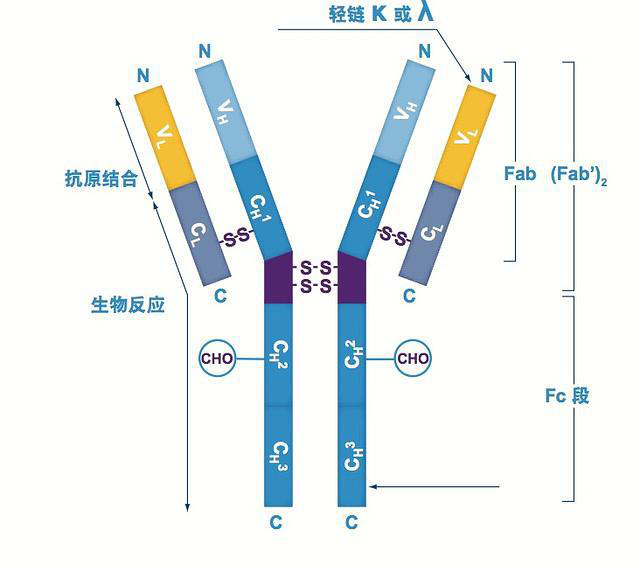
实验原理 :
(1)特异性结合抗原:抗体本身不能直接溶解或杀伤带有特异抗原的靶细胞,通常需要补体或吞噬细胞等共同发挥效应以清除病原微生物或导致病理损伤。然而,抗体可通过与病毒或毒素的特异性结合,直接发挥中和病毒的作用。
(2)活补体:IgM、IgG1、IgG2和IgG3可通过经典途径激活补体,凝聚的IgA、IgG4和IgE可通过替代途径激活补体。
(3)结合细胞:不同类别的免疫球蛋白,可结合不同种的细胞,参与免疫应答。
(4)可通过胎盘及粘膜:免疫球蛋白G(IgG)能通过胎盘进入胎儿血流中,使胎儿形成自然被动
免疫。免疫球蛋白A(IgA)可通过消化道及呼吸道粘膜,是粘膜局部抗感染免疫的主要因素。
(5)具有抗原性:抗体分子是一种蛋白质,也具有刺机体产生免疫应答的性能。不同的免疫球蛋白分子,各具有不同的抗原性。
(6)抗体对理化因子的抵抗力与一般球蛋白相同:不耐热,60~70℃即被破坏。各种酶及能使蛋白质凝固变性的物质,均能破坏抗体的作用。抗体可被中性盐类沉淀。在上常可用硫酸铵或硫酸钠从免疫血清中沉淀出含有抗体的球蛋白,再经透析法将其纯化。
抗体制备过程:
1.材料与试剂
a.提取的动物 Ig
b.弗氏完全佐剂和弗氏不完全佐剂
c.青霉素和链霉素
d.实验动物 兔
e.其它材料及试剂
2、选择实验活体。
3、进行动物免疫实验。
4、试取血样进行测试,查看免疫效果。
5、如果免疫成功,杀死实验活体,采集全部血清。
6、纯化出抗体。
7、鉴定抗体。胎牛血清(无菌采制)
我司提供以下技术外包服务:
1. Anti-IGF2BP1/IMP1抗体分子生物学:质粒抽提、PCR、Q-PCR、RT-PCR、分子生物学:基因合成、引物合成、基因测序、载体构建等
2.蛋白工程:原核、哺乳动物蛋白表达系统等
3.病毒包装:腺病毒、慢病毒等
4.抗体工程:磁珠分选、病理染色、WB、ELISA、IP、IF、IHC、FACS、Confocal等等
5.细胞工程:细胞表型分析(凋亡、增殖、周期、迁移、侵袭、修复、克隆形成)、细胞培养、细胞膜制备、稳定细胞株构建、细胞RNAi技术等等。
抗体的鉴定:
1)抗体的效价鉴定:鉴定效价的方法很多,包括有试管凝集反应,琼脂扩散试验,酶联免疫吸附试验等。常用的抗原所制备的抗体一般都有约成的鉴定效价的方法,以资比较。如制备抗抗体的效价,一般就采用琼脂扩散试验来鉴定。
2)抗体的特异性鉴定:抗体的特异性是指与相应抗原或近似抗原物质的识别能力。抗体的特异性高,它的识别能力就强。衡量特异性通常以交叉反应率来表示。交叉反应率可用竞争抑制试验测定。以不同浓度抗原和近似抗原分别做竞争抑制曲线,计算各自的结合率,求出各自在IC50时的浓度,并按公式计算交叉反应率。
3)真核翻译起始因子2C2抗体的亲和力:是指抗体和抗原结合的牢固程度。亲和力的高低是由抗原分子的大小,抗体分子的结合位点与抗原决定簇之间立体构型的合适度决定的。有助于维持抗原抗体复合物稳定的分子间力有氢键,疏水键,侧链相反电荷基因的库仑力,范德华力和空间斥力。亲和力常以亲和常数K表示,K的单位是L/mol。
布氏肉汤27387250g用于空肠弯曲菌培养及运动性观察。(GB、ISO)
1111-prf SMCM-sf-prf 平滑肌细胞培养基 500 ml incubation media 1111-prf SMCM-sf-prf 平滑肌细胞培养基 500 ml
总状毛霉 支/瓶
M-EnterococcusAgar
溶血(0.1%)赫氏琼脂 250g 用于鼠疫杆菌的分离培养。
气单胞菌培养基基础250g用于气单胞菌分离培养
Rogosa agar Lactobacillus selective agar Rogosa琼脂/乳酸菌选择琼脂 1.05413.0500 MERCK默克 incubation media Rogosa agar Lactobacillus selective agar Rogosa琼脂/乳酸菌选择琼脂 1.05413.0500 MERCK默克
改良CCD琼脂基础 250g 用于空肠弯曲菌的选择分离培养(GB、ISO),每100mL基础培养基需添加1支配套试剂
缓冲蛋白胨水(BPW)225ml/袋*阪崎杆菌前增菌培养(GB标准)
脑-心浸萃琼脂培养基 250g 用于粪链球菌的化培养
PolymyxinB
艾格LT100肉汤 用于多种微生物的增菌培养
碳酸氢琼脂基础 250 用于炭疽杆菌的荚膜培养
Littman琼脂基础250g/瓶用于真菌的分离培养,每培养基中添加0.3g链霉素incubationmediaLittman琼脂基础250g/瓶用于真菌的分离培养,每培养基中添加0.3g链霉素
标准II号营养琼脂 250g 细菌计数、不含糖,可作血琼脂基础和传代用(MERCK方法)
Maleicacid马来酸25克USP级,50万u/g
23山梨酸钾;清凉茶酸钾;山梨酸钾盐potewwium Sorbate (AS)
RT2,3,5三本基录化四氮唑1毫克生物技术级,%
钠 Sodium tartrate dibasic dihydrate (ACS... 61062 50G 通用试剂
紫丁香酚甙 Syringin (≥98%,HPLC) 1343 20MG 标准品
Anti-IGF2BP1/IMP1抗体糖元二型,英文名或英文缩写:Glycogen from oyster,级别:超,98%,规格:1克
3610胆酸钠wo7ium cholate;3α,7α,αTrixy7noxy5βcholanic acid wo7ium salt;
HISTOCHOICETISSUEFIXATIVEWITHOUTALCOHOL组织固定剂组织学级微黄无混浊液体RTsigma
葡萄糖酸钾 Potassium Dgluconate,≥99% 29 50G 通用试剂
2(2乙基)1,3... 2(2Bromoethyl)1,3dioxane,98% 384434 10G 通用试剂
风险提示:丁香通仅作为第三方平台,为商家信息发布提供平台空间。用户咨询产品时请注意保护个人信息及财产安全,合理判断,谨慎选购商品,商家和用户对交易行为负责。对于医疗器械类产品,请先查证核实企业经营资质和医疗器械产品注册证情况。
 文献和实验
文献和实验于细胞阳选,也能用于细胞阴选中。 为了评估 Strep-Tactin®TACS 琼脂糖柱细胞阴选的效率,实验从外周血单个核细胞(PBMC)样品中富集了 CD3- CD56+自然杀伤细胞(NK)。材料为Strep-Tactin®TACS 琼脂糖柱以及生物素化的抗体,仅 10 分钟,便完成了细胞阴选(图 1)。 流程如下: 阴选流程:生物素化抗体与 PBMC 孵育标记非目的细胞,加入至亲和层析柱后,即可收集目的细胞 实验方案 CD3- CD56+ NK 的细胞阴选 · 将 1 x
Nat. Commun. | 北大刘涛与杨兴团队在蛋白质药物定点多修饰领域取得重要进展
红外荧光分子定点引入到抗体片段 anti-PSMA-Fab 中,由于不同 PEG 大小的调节,可使得该偶联物的半衰期在全抗体与抗体片段 Fab 之间,在缩短成像周期的前提下,产生了更优的成像效果(图 2)。 图 2:抗体片段偶联荧光与 PEG 实现高信噪比肿瘤成像 2 抗体片段偶联荧光与核素——实现肿瘤一体化治疗 目前蛋白药物分子 (如抗体) 进行治疗过程中结合显像剂进行实时监测的新型治疗策略在临床治疗领域具有较大需求空间。针对这一问题,他们将近红外荧光与核素分子引入到抗体片段中,构建了小鼠双模态成像
液的 pH、盐离子浓度、添加剂(如 5% 甘油、1mM DTT) 等。 原因三 HIS 标签没有表达或丢失或暴露不充分。 建议 1 用 anti-HIS 的抗体进行 WB,检测 HIS 标签是否存在。 建议 2 将蛋白用 4-6M 盐酸胍或 4-8M 尿素变性后,让 HIS 标签充分暴露出来,看是否能与填料结合。 建议 3 改变 HIS 标签的位置或者增加其数目(常用 6-12 个 HIS),增加暴露和结合机会。 建议 4 改变金属结合离子,除了 Ni2+,Cu2+、Zn2+、Co2+ 也可以用来进
 技术资料
技术资料暂无技术资料 索取技术资料

