

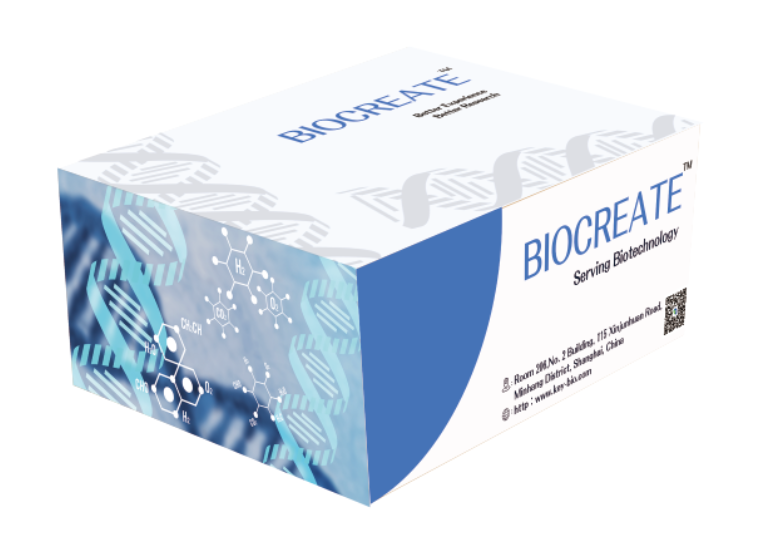
- ¥1999
- BIOCREATE
- Anti-GFP
- 中国
- 2026年02月28日

企业认证
相关产品推荐更多 >

万千商家帮你免费找货
0 人在求购买到急需产品
- 详细信息
- 询价记录
- 文献和实验
- 技术资料
- 库存:
98瓶
- 保质期:
12个月
- 供应商:
上海科渊生物技术有限公司
- 保存条件:
2-8℃
- 规格:
1ml
Product Description
Anti- GFP magnetic beads are based on carboxyl magnetic beads, with 200 nm particle size, covalently coupling with high quality mouse IgG monoclonal antibody that recognizes the GFP tag (Green Fluorenscent Protein).
Product Features
Composition mouse IgG monoclonal Ab Magnetization Superparamagnetic Particle size 200 nm Concentration 10 mg/mL Binding Capacity ≥ 0.6 mg GFP-tagged fusion protei n/mL of bead Application IP,CoIP Storage Condition Store at 4°C for 2 years.
Protocol
1. Cell lysis Cells may be lysed using any standard cell lysis protocol compatible with your starting material. We recommend the use of Cell Extraction Buffer or NP-40 Cell Lysis Buffer. 2. Preparation of Magnetic Beads 2.1 Resuspend the Magnetic Beads in the vial (tilt and rotate for 2 minutes or gently pipette for 10 times). 2.2 Transfer 10-20 μL of Anti- GFP Magnetic Beads into a 1.5 mL tube (Transfer amount may be adjusted as required). 2.3 Add 500 μL of binding/wash buffer to the beads and gently pipette to mix. Place the tube into a magnetic stand to collect the beads against the side of the tube (Hereinafter referred to as magnetic separation). Remove and discard the supernatant. Repeat this step for 2 times. 3. Immunoprecipitation 3.1 Remove the tubes from the magnetic separator and add your sample containing GFP-tagged protein to the pre-washed magnetic beads and incubate at room temperature for 2h or overnight at 4°C with mixing. 3.2 Collect the beads with a magnetic stand, remove the unbound sample and save for analysis.
3.3 Add 500μL of TBST to the tube and gently mix. Collect the beads and discard the supernatant. Repeat this wash twice. 3.4 Add 500μL of ultrapure water to the tube and gently mix. Collect the beads on a magnetic stand and discard the supernatant. 4. Elution Chemical Elution Protocols • Basic Elution 1. Add 100μL of 1x SDS-PAGE loading buffer to the tube. 2. Boil for 5 minutes on a dry bath. 3. Magnetically separate the beads and save the supernatant containing the target antigen. • Acidic Elution 1. Add 100μL of 0.1M glycine, pH 3.0. 2. Gently vortex to mix and incubate the sample at room temperature on a rotator for 5-10 minutes. 3. Magnetically separate the beads and save the supernatant containing the target antigen. 4. To neutralize the low pH, add 15μL of Neutralization Buffer (1 M Tris pH 8.0) for each 100μL of eluate. The final solution can be used as samples for denaturing SDS-PAGE. Or the elution can be adjusted to neutral pH with neutralization buffer immediately and used for further analysis.
风险提示:丁香通仅作为第三方平台,为商家信息发布提供平台空间。用户咨询产品时请注意保护个人信息及财产安全,合理判断,谨慎选购商品,商家和用户对交易行为负责。对于医疗器械类产品,请先查证核实企业经营资质和医疗器械产品注册证情况。
- 作者
- 内容
- 询问日期
 文献和实验
文献和实验Mouse B cell isolation with magnetic beads
and incubate on ice for 15min; l Negative : 1.Resuspend cells with MACS to 400 ul and 80 ul B cell Biotin each spleen,incubate on ice for 15 min; 2. Add 300 MACS and 200 anti-biotin Beads each spleen, incubate on ice for 15 min.
Immobilization of Enzymes on Magnetic Beads Through Affinity Interactions
in analytical assay because magnetic beads provide a relative large numbers of binding sites for biochemical reactions resulting in faster assay kinetics. This chapter describes immobilization procedures of tagged enzymes onto various magnetic
Subtractive cDNA Cloning Using Magnetic Beads and PCR
Subtractive cloning is a method that facilitates the isolation of nucleotide sequences present in a test sample but absent or present at much lower levels, in a reference sample. A variety of situations lend themselves to this methodology


