


- ¥5200
- invitrogen
- 18080-051
- USA
- 2026年05月29日


相关产品推荐更多 >

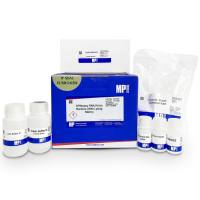
万千商家帮你免费找货
0 人在求购买到急需产品
- 详细信息
- 询价记录
- 文献和实验
- 技术资料
- 供应商:
上海研卉生物
- 英文名:
SuperScript III First-Strand Synthesis System for RT-PCR
- 库存:
大量
- 保质期:
现货
- 规格:
50 reactions
Cat. No: 18080-051 Size: 50 reactions
Store at -20°C
Description
The SuperScript III First-Strand Synthesis System for RT-PCR is optimized to synthesize first-strand cDNA from purified poly(A)+ or total
RNA. RNA targets from 100 bp to >12 kb can be detected with this system. The amount of starting material can vary from 1 pg to 5 μg of total
RNA. SuperScript III Reverse Transcriptase is a version of M-MLV RT that has been engineered to reduce RNase H activity and provide
increased thermal stability. The enzyme is used to synthesize cDNA at a temperature range of 4255°C, providing increased specificity, higher
yields of cDNA, and more full-length product than other reverse transcriptases. Because SuperScript III RT is not significantly inhibited by
ribosomal and transfer RNA, it may be used to synthesize first-strand cDNA from a total RNA preparation.
cDNA synthesis is performed in the first step using either total RNA or poly(A)+-selected RNA primed with oligo(dT), random primers, or a
gene-specific primer. In the second step, PCR is performed in a separate tube using primers specific for the gene of interest. For the PCR
reaction, we recommend one of the following DNA polymerases: Platinum® Taq DNA Polymerase provides automatic hot-start conditions for
increased specificity up to 4 kb, Platinum® Taq DNA Polymerase High Fidelity provides increased yield and high fidelity for targets up to
15 kb, and Platinum® Pfx DNA Polymerase provides maximum fidelity for targets up to 12 kb.
System Component Amount
Oligo(dT)20 (50 μM) 50 μl
Random hexamers (50 ng/μl) 250 μl
10X RT buffer* 1 ml
25 mM MgCl2 500 μl
0.1 M DTT 250 μl
10 mM dNTP mix 250 μl
SuperScript III RT (200 U/μl) 50 μl
RNaseOUT (40 U/μl) 100 μl
E. coli RNase H (2 U/μl) 50 μl
DEPC-treated water 1.2 ml
Total HeLa RNA (10 ng/μl) 20 μl
Sense Control Primer (10 μM) 25 μl
Antisense Control Primer (10 μM) 25 μl
*200 mM Tris-HCl (pH 8.4), 500 mM KCl
Related products Amount Catalog No.
Platinum® Taq DNA Polymerase 100 units 10966-018
250 units 10966-026
500 units 10966-034
Platinum® Taq DNA Polymerase High Fidelity 100 units 11304-011
500 units 11304-029
Platinum® Pfx DNA Polymerase 100 units 11708-013
250 units 11708-021
500 units 11708-039
PCRx Enhancer System 250 rxns 11495-017
Micro-to-Midi Total RNA Purification System 50 rxns 12183-018
TRIzol® Reagent 100 ml 15596-026
200 ml 15596-018
DNase I, Amplification Grade 100 units 18068-015
Custom Primers to order, visit www.invitrogen.com
Quality Control
A minimum of 25 ng of a 353-bp RT-PCR product was obtained from 100 pg of total HeLa RNA and human β-actin primers. A minimum of
25 ng of a 6.8-kb RT-PCR product was obtained from 500 ng of total HeLa RNA and human Pol ε primers.
Summary of Procedure
18080051.pps Rev. date: 3 Oct 2003
Page 2 of 4
Recommendations and Guidelines for First-Strand Synthesis
RNA
• High-quality, intact RNA is essential for full-length, high-quality
cDNA synthesis. This kit is designed for use with 1 pg to 5 μg of
total RNA or 1 pg to 500 ng of poly(A)+ RNA. For >5 μg total RNA,
increase reaction volumes and amount of SuperScript III RT
proportionally.
• RNaseOUT Recombinant RNase Inhibitor has been added to the
system to safeguard against degradation of target RNA due to
ribonuclease contamination of the RNA preparation.
• To isolate total RNA, we recommend the Micro-to-Midi Total RNA
Purification System (Cat. no. 12183-018), TRIzol® Reagent
(Cat. Nos. 15596-026/-018), or the Chomczynski and Sacchi
method. Oligo (dT)-selection for poly(A)+ RNA is typically not
necessary, although it may improve the yield of specific cDNAs.
• Small amounts of genomic DNA in the RNA preparation may be
amplified along with the target cDNA. If your application requires
removal of all genomic DNA from your RNA preparation, we
recommend using DNase I, Amplification Grade (Catalog no.
18068-015). DNase I, Amplification Grade, has been extensively
purified to remove trace ribonuclease activities commonly
associated with other RNase-free enzyme preparations, and does
not require the addition of placental RNase inhibitor.
RNase H Digestion
The sensitivity of the PCR step can be increased (especially for long
templates) by removing the RNA template from the cDNA:RNA hybrid
molecule by digestion with RNase H after first-strand synthesis. Presence
of RNase H during first-strand synthesis will degrade the template
mRNA, resulting in decreased full-length cDNA synthesis and decreased
yields of first-strand cDNA. The SuperScript III First-Strand Synthesis
System introduces RNase H activity only when it is beneficial, and thus
offers a unique procedural advantage over other methods.
Primers
The first-strand cDNA synthesis reaction can be primed using random
hexamers, oligo(dT), or gene-specific primers (GSPs):
• Random hexamers are the most nonspecific priming method, and are
typically used when the mRNA is difficult to copy in its entirety. With
this method, all RNAs in a population are templates for first-strand
cDNA synthesis, and PCR primers confer specificity during PCR. To
maximize the size of cDNA, you should determine the ratio of random
hexamers to RNA empirically for each RNA preparation.
Note: For most RT-PCR applications, 50 ng of random hexamers per
5 μg of total RNA is adequate. Increasing hexamers to 250 ng per 5 μg
of RNA may increase yield of small PCR products (<500 bp), but may
decrease the yield of longer PCR products and full-length transcripts.
• Oligo(dT), a more specific priming method, is used to hybridize to
3´ poly(A) tails, which are found in the vast majority of eukaryotic
mRNAs. Since poly(A)+ RNA constitutes approximately 1% to 2% of
total RNA, the amount and complexity of cDNA is considerably less
than with random hexamers. We recommend using oligo(dT)20
(provided in the kit).
Note: Oligo(dT) is recommended over random hexamers or GSPs
when performing RT-PCR with new mRNA targets. Oligo(dT)
produces an RT-PCR product more consistently than random
hexamers or GSPs.
• The most specific priming method uses a gene-specific primer for the
sequence of interest. First-strand synthesis can be primed with the
PCR primer that hybridizes nearest to the 3´ terminus of the mRNA.
Note that some GSPs fail to prime cDNA synthesis even though they
work in PCR on DNA templates. If gene-specific priming fails in RTPCR,
repeat first-strand synthesis using oligo(dT) as the primer.
First-Strand cDNA Synthesis
The following procedure is designed to convert 1 pg to 5 μg of total RNA
or 1 pg to 500 ng of poly(A)+ RNA into first-strand cDNA:
1. Mix and briefly centrifuge each component before use.
2. Combine the following in a 0.2- or 0.5-ml tube:
Component Amount
up to 5 μg total RNA n μl
Primer* 1 μl
*50 μM oligo(dT)20, or
2 μM gene-specific primer (GSP), or
50 ng/μl random hexamers
10 mM dNTP mix 1 μl
DEPC-treated water to 10 μl
3. Incubate at 65°C for 5 min, then place on ice for at least 1 min.
4. Prepare the following cDNA Synthesis Mix, adding each
component in the indicated order.
Component 1 Rxn 10 Rxns
10X RT buffer 2 μl 20 μl
25 mM MgCl2 4 μl 40 μl
0.1 M DTT 2 μl 20 μl
RNaseOUT (40 U/μl) 1 μl 10 μl
SuperScript III RT (200 U/μl) 1 μl 10 μl
5. Add 10 μl of cDNA Synthesis Mix to each RNA/primer mixture,
mix gently, and collect by brief centrifugation. Incubate as follows.
Oligo(dT)20 or GSP primed: 50 min at 50°C
Random hexamer primed: 10 min at 25°C, followed by
50 min at 50°C
6. Terminate the reactions at 85°C for 5 min. Chill on ice.
7. Collect the reactions by brief centrifugation. Add 1 μl of RNase H to
each tube and incubate for 20 min at 37°C.
8. cDNA synthesis reaction can be stored at -20°C or used for PCR
immediately.
Amplification of Target cDNA
The first-strand cDNA obtained in the synthesis reaction may be amplified
directly using PCR. We recommend using 10% of the first-strand reaction
(2 μl) for PCR. However, for some targets, increasing the amount of firststrand
reaction up to 10 μl in PCR may result in increased product yield.
We recommend the following DNA polymerases (for ordering information,
see page 1):
• Platinum® Taq DNA Polymerase provides automatic hot-start
conditions for increased specificity and sensitivity. It is
recommended for targets up to 4 kb.
• Platinum® Taq DNA Polymerase High Fidelity provides
increased fidelity and higher yields for targets up to 15 kb.
• Platinum® Pfx DNA Polymerase possesses a proofreading 3´ to 5´
exonuclease activity and provides maximum fidelity for PCR. It is
recommended for targets up to 12 kb.
Consult the product documentation provided with each DNA polymerase for
recommended protocols and optimization guidelines. Documentation is also
available on our Web site at www.invitrogen.com.
Page 3 of 4
Control Reactions
The control RNA provided with this system consists of total HeLa RNA
(10 ng/μl). The sense and antisense control primers provided with this kit
are designed from the human β-actin gene and produce a 353-bp RT-PCR
product.
Sense primer: 5’-GCTCG TCGTC GACAA CGGCT C-3’
Antisense primer: 5’-CAAAC ATGAT CTGGG TCATC TTCTC-3’
Use the following protocol for both plus and minus RT control reactions:
1. Dilute the total HeLa RNA to 100pg/μl with DEPC-treated water.
2. Prepare the RNA/primer mixtures in sterile 0.2- or 0.5-ml tubes as
follows:
Component + RT Control RT Control
Diluted total HeLa RNA (100 pg/μl) 1 μl 1 μl
Oligo(dT)20 1 μl 1 μl
10 mM dNTP mix 1 μl 1 μl
DEPC-treated water 7 μl 7 μl
3. Incubate samples at 65°C for 5 min, then place on ice for at least 1 min.
Collect by brief centrifugation and add the following:
Component + RT Control RT Control
10X RT buffer 2 μl 2 μl
25 mM MgCl2 4 μl 4 μl
0.1 M DTT 2 μl 2 μl
RNaseOUT (40 U/μl) 1 μl 1 μl
SuperScript III RT (200 U/μl) 1 μl
DEPC-treated water 1 μl
4. Mix gently and collect the reactions by brief centrifugation.
5. Incubate at 50°C for 50 min.
6. Terminate the reactions at 85°C for 5 min. Chill on ice.
7. Collect the reactions by brief centrifugation. Add 1 μl of RNase H to
each tube and incubate for 20 min at 37°C.
8. Prepare a PCR mixture for each control reaction. For each control
reaction, add the following to a 0.2-ml tube sitting on ice:
Component Volume
DEPC-treated water 38.1 μl
10X PCR buffer minus Mg++ 5 μl
50 mM MgCl2 1.5 μl
10 mM dNTP mix 1 μl
Control sense primer (10 μM) 1 μl
Control antisense primer (10 μM) 1 μl
cDNA from control RNA 2 μl
Taq DNA polymerase (5 units/μl) 0.4 μl
final volume 50 μl
9. Mix the contents of the tube. Centrifuge briefly to collect the reaction
components.
10. Place reaction mixture in preheated (94°C) thermal cycler. Perform an
initial denaturation step: 94°C for 2 min.
11. Perform 40 cycles of PCR:
Denature 94°C for 15 sec
Anneal 55°C for 30 sec
Extend 6872°C for 1 min
Note: For slow-ramping thermal cyclers, follow manufacturers directions.
12. Upon completion, maintain reactions at 4°C.
13. Analyze 10 μl of each sample, using agarose gel electrophoresis and
ethidium bromide staining. A 353-bp band, corresponding to at least
25 ng of product, should be visible for the + RT Control sample. No
band should be visible for the RT Control sample.
First Strand cDNA Synthesis of Transcripts with
High GC Content
High-GC content mRNAs often contain stable intrinsic secondary
structures that can inhibit reverse transcriptase and/or primer
annealing. Problems with RT-PCR due to this secondary structure
often can be overcome by increasing the volume and temperature of
the RT reaction.
Note: For templates that require cDNA synthesis temperatures above
55°C, we recommend the ThermoScript RT-PCR System (Catalog no.
11146-024). ThermoScript RT supports cDNA synthesis up to 70°C.
This protocol is suitable for gene-specific or oligo(dT) primers, but not
random hexamers.
1. Mix and briefly centrifuge each component before use.
2. Prepare the RNA/primer mixture in a sterile 0.5-ml tube as follows:
Component Sample Control RNA
1 to 5 μg total RNA n μl
Control total HeLa RNA (10 ng/μl) 1 μl
Oligo(dT) 20 (50 μM) or 2 μM GSP 1 μl 1 μl
10 mM dNTP mix 2.5 μl 2.5 μl
DEPC-treated water to 25 μl to 25 μl
3. Incubate each sample at 65°C for 5 min and immediately transfer to
55°C.
4. Prepare the cDNA Synthesis Mix, adding each component in the
indicated order.
Component 1 Reaction 10 Reactions
DEPC-treated water 3 μl 30 μl
10X RT buffer 5 μl 50 μl
25 mM MgCl2 10 μl 100 μl
0.1 M DTT 5 μl 50 μl
RNaseOUT Recombinant RNase Inhibitor 1 μl 10 μl
SuperScript III RT 1 μl 10 μl
Note: For a minus RT control reaction, substitute 1 μl of DEPC-treated
water for 1 μl of SuperScript III RT, and assemble reaction as
described above.
5. Prewarm the cDNA Synthesis Mix to 55°C.
6. To each sample incubating at 55°C, add 25 μl of prewarmed cDNA
Synthesis Mix. Mix gently, and incubate at 55°C for 50 min.
7. Terminate the reactions at 85°C for 5 min. Chill on ice.
8. Collect the reactions by brief centrifugation. Add 1 μl of RNase H to
each tube and incubate for 20 min at 37°C before proceeding to PCR.
Note: Frequently, problems associated with RT-PCR of GC-rich cDNA
are related to PCR as well as first-strand synthesis. We recommend
using the PCRx Enhancer System (Catalog no. 11495-017) to facilitate
amplification of GC-rich sequences.
Page 4 of 4
Troubleshooting Guide
Problem Possible Cause Probable Solution
No bands after
electrophoretic analysis of
amplified products
Procedural error in first-strand cDNA
synthesis
Use the total HeLa RNA provided as a control to verify the efficiency of the
first-strand reaction (see page 3).
RNase contamination Add control RNA to sample to determine if RNase is present in the first-strand
reaction.
Maintain aseptic conditions to prevent RNase contamination.
Use RNaseOUT Recombinant RNase Inhibitor in the first-strand reaction.
Polysaccharide coprecipitation of RNA Precipitate RNA with lithium chloride to remove polysaccharides, as described
in Sambrook et al.
Target mRNA contains strong
transcriptional pauses
Use random hexamers instead of oligo(dT) in the first-strand reaction.
Maintain an elevated temperature after the annealing step, as described in the
protocol for cDNA synthesis from high-GC content transcripts, page 3.
Increase the temperature of first-strand reaction (up to 55°C).
Use PCR primers closer to the 3´ terminus of the target cDNA.
Too little first-strand product was used in
PCR
Use up to 10 μl of the first-strand reaction.
GSP was used for first-strand synthesis Try another GSP or switch to oligo(dT). Make sure the GSP is the antisense
sequence.
Inhibitors of RT present Remove inhibitors by ethanol precipitation of mRNA preparation before the
first-strand reaction. Include a 70% (v/v) ethanol wash of the mRNA pellet.
Note: Inhibitors of RT include sodium dodecyl sulfate (SDS), EDTA,
guanidinium salts, formamide, sodium pyrophosphate, and spermidine.
Unexpected bands after
electrophoretic analysis
Contamination by genomic DNA Pretreat RNA with DNase I, Amplification Grade (Cat. no. 18068-015), as
described in the DNase I documentation.
Design primers that anneal to sequence in exons on both sides of an intron or at
the exon/exon boundary of the mRNA to differentiate between amplified
cDNA and potential contaminating genomic DNA.
To test if products were derived from DNA, perform the minus RT control.
Nonspecific annealing of primers Vary the annealing conditions. Use Platinum® Taq DNA Polymerase for
automatic hot-start PCR.
Optimize magnesium concentration for each template and primer combination.
Primers formed dimers Design primers without complementary sequences at the 3´ ends.
References
Berger, S.L. and Kimmel, A.R. (1987) Methods Enzymol 152, 316.
Bracete, A.M., Mertz, L.M., Fox, D.K. (1999) Focus® 21, 38.
Chomczynski, P. (1993) Biotechniques Vol. 15, 532.
Chomczynski, P. and Sacchi, N. (1987) Anal. Biochem. 162, 156.
Compton, T. (1990) in PCR Protocols: A Guide to Methods and Applications (Innis, M., Gelfand, D., Sninsky, J., and White, T., eds.), p. 39, Academic Press, Inc.
Frohman, M.A., Dush, M.K, and Martin, G.R. (1988) Proc. Nat. Acad. Sci USA 85, 8998.
Gerard, G.F. (1994) Focus® 16, 102.
Sambrook J., Fritsch, E.F., and Maniatis, T. (1989) Molecular Cloning: A Laboratory Manual, Cold Spring Harbor Laboratory Press, Cold Spring Harbor.
Simms, D., Cizdziel, P.E., and Chomczynski, P. (1993) Focus® 15, 99.
Westfall, B., Sitaraman, K., Solus, J., Hughes, J., and Rashtchian, A. (1997) Focus® 19, 46.
Westfall, B., Sitaraman, K., Lee, J., Borman, J. and Rashtchian, A. (1999) Focus® 21, 49.
Takagi, M., Nishioka, M., Kakihara, H., Kitabayashi, M., Inoue, H., Kawakami, B., Oka, M., and Imanaka, T. (1997) Appl. Environ. Microbiol. 63, 4504.
Sitaraman, K., Darfler, M., and Westfall, B. (1999) Focus® 21, 10.
Nathan, M., Mertz, L., Fox, D. (1995) Focus® 17, 78.
Schwabe, W., Lee, J.E., Nathan, M., Xu, R.H., Sitaraman, K., Smith, M., Potter, R.J., Rosenthal, K., Rashtchian, A., Gerard, G.F. (1998) Focus® 20, 30.
Limited Use Label License No. 4: Products for PCR that include no rights to perform PCR
This product is optimized for use in the Polymerase Chain Reaction (PCR) covered by patents owned by Roche Molecular Systems, Inc. and F. Hoffmann-La Roche, Ltd. (Roche). No license under these patents to use the PCR
process is conveyed expressly or by implication to the purchaser by the purchase of this product. A license to use the PCR process for certain research and development activities accompanies the purchase of certain reagents from
licensed suppliers such as Invitrogen, when used in conjunction with an Authorized Thermal Cycler, or is available from Applied Biosystems. Further information on purchasing licenses to practice the PCR process may be obtained
by contacting the Director of Licensing at Applied Biosystems, 850 Lincoln Centre Drive, Foster City, California 94404 or at Roche Molecular Systems, Inc., 1145 Atlantic Avenue, Alameda, California 94501.
Limited Use Label License No. 138: SuperScript III Reverse Transcriptase
The purchase of this product conveys to the buyer the non-transferable right to use the purchased amount of the product and components of the product in research conducted by the buyer (whether the buyer is an academic or forprofit
entity). The buyer cannot sell or otherwise transfer (a) this product (b) its components or (c) materials made using this product or its components to a third party or otherwise use this product or its components or materials
made using this product or its components for Commercial Purposes. The buyer may transfer information or materials made through the use of this product to a scientific collaborator, provided that such transfer is not for any
Commercial Purpose, and that such collaborator agrees in writing (a) not to transfer such materials to any third party, and (b) to use such transferred materials and/or information solely for research and not for Commercial
Purposes. Commercial Purposes means any activity by a party for consideration and may include, but is not limited to: (1) use of the product or its components in manufacturing; (2) use of the product or its components to provide
a service, information, or data; (3) use of the product or its components for therapeutic, diagnostic or prophylactic purposes; or (4) resale of the product or its components, whether or not such product or its components are resold for
use in research. Invitrogen Corporation will not assert a claim against the buyer of infringement of patents owned by Invitrogen Corporation and claiming this product based upon the manufacture, use or sale of a therapeutic,
clinical diagnostic, vaccine or prophylactic product developed in research by the buyer in which this product or its components was employed, provided that neither this product nor any of its components was used in the
manufacture of such product. If the purchaser is not willing to accept the limitations of this limited use statement, Invitrogen is willing to accept return of the product with a full refund. For information on purchasing a license to
this product for purposes other than research, contact Licensing Department, Invitrogen Corporation, 1600 Faraday Avenue, Carlsbad, California 92008. Phone (760) 603-7200. Fax (760) 602-6500.
Limited Use Label License No. 18: RNaseOUT Ribonuclease Inhibitor
This product is the subject of U.S. Patent No. 5,965,399 owned by Invitrogen Corporation. The purchase of this product conveys to the buyer the non-transferable right to use the purchased amount of the product and components of
the product in research conducted by the buyer (whether the buyer is an academic or for-profit entity). The buyer cannot sell or otherwise transfer (a) this product (b) its components or (c) materials made using this product or its
components to a third party or otherwise use this product or its components or materials made using this product or its components for Commercial Purposes. The buyer may transfer information or materials made through the use
of this product to a scientific collaborator, provided that such transfer is not for any Commercial Purpose, and that such collaborator agrees in writing (a) to not transfer such materials to any third party, and (b) to use such
transferred materials and/or information solely for research and not for Commercial Purposes. Commercial Purposes means any activity by a party for consideration and may include, but is not limited to: (1) use of the product or
its components in manufacturing; (2) use of the product or its components to provide a service, information, or data; (3) use of the product or its components for therapeutic, diagnostic or prophylactic purposes; or (4) resale of the
风险提示:丁香通仅作为第三方平台,为商家信息发布提供平台空间。用户咨询产品时请注意保护个人信息及财产安全,合理判断,谨慎选购商品,商家和用户对交易行为负责。对于医疗器械类产品,请先查证核实企业经营资质和医疗器械产品注册证情况。
- 作者
- 内容
- 询问日期
 文献和实验
文献和实验SuperScript III One-Step RT-PCR System with Platinum® Taq High Fidelity
for 25 or 100 amplification reactions of 50 µl each. Note: This kit has been optimized for end-point RT-PCR. For quantitative real-time RT-PCR, use the SuperScript™ III Platinum® One-Step Quantitative RT-PCR System. 实验
性,因而即使是最具挑战性的模板也可以进行有效的RT-PCR.。 通过SuperMix形式快速合成cDNA SuperScript™ III First—Strand Synthesis SuperMix将所有进行强大的、灵敏的第一链cDNA合成所必须的组分组合成快速、易于使用的 SuperMix形式。SuperMix形式包含 2x RT缓冲反应混合物、dNTPs、MgCl2、 以及由SuperScript™ III RT和RNaseOUT™.组成的酶混合物。也提供优化的退火缓冲
Reverse Transcription is carried out with the SuperScript First-Strand Synthesis System for RT-PCR. The following procedure is based on Invitrogen’s protocol. 1. Prepare the following RNA/primer mixture in each tube: Total
 技术资料
技术资料暂无技术资料 索取技术资料

