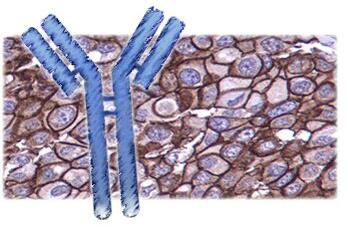
- ¥2980
- LMAI Bio
- LM-10327R-FITC
- 中国/美国/欧洲
- 2025年07月11日
- ICC=1:50-200 IF=1:50-200
- Human, Mouse, Rat, Chicken, Cow, Horse, Rabbit,
- Human, Mouse, Rat, Chicken, Cow, Horse, Rabbit,

9 年钻石会员
企业认证
相关产品推荐更多 >
万千商家帮你免费找货
0 人在求购买到急需产品
- 详细信息
- 技术资料
- 供应商:
上海联迈生物工程有限公司
- 库存:
大量
- 靶点:
详见说明书
- 级别:
1
- 目录编号:
LM-10327R-FITC
- 克隆性:
多克隆
- 抗原来源:
Rabbit
- 保质期:
1年
- 抗体英文名:
Anti-Phospho-HDAC7(Ser155)/FITC
- 抗体名:
Anti-Phospho-HDAC7(Ser155)/FITC
- 标记物:
FITC标记
- 宿主:
Human, Mouse, Rat, Chicken, Cow, Horse, Rabbit,
- 适应物种:
Human, Mouse, Rat, Chicken, Cow, Horse, Rabbit,
- 免疫原:
详见说明书
- 亚型:
IGg
- 形态:
粉末、液体、冻干粉
- 应用范围:
ICC=1:50-200 IF=1:50-200
- 浓度:
1mg/ml
- 保存条件:
-20 °C
- 规格:
100ul
FITC标记的磷酸化组蛋白去乙酰化酶7抗体
| 英文名称 | Anti-Phospho-HDAC7(Ser155)/FITC |
| 中文名称 | FITC标记的磷酸化组蛋白去乙酰化酶7抗体 |
| 别 名 | HDAC7 (phospho S155); HDAC7 (phospho Ser155); p-HDAC7 (Ser155); HD 7a; HD7a; HDAC 7; HDAC 7A; HDAC7; HDAC7A; Histone deacetylase 7; Histone deacetylase 7A; DKFZP586J0917; OTTHUMP00000202813; OTTHUMP00000202814; FLJ99588; HDAC7_HUMAN. |
| 规格价格 | 100ul/2980元 购买 大包装/询价 |
| 说 明 书 | 100ul |
| 产品类型 | 磷酸化抗体 |
| 研究领域 | 肿瘤 细胞生物 神经生物学 信号转导 细胞凋亡 |
| 抗体来源 | Rabbit |
| 克隆类型 | Polyclonal |
| 交叉反应 | Human, Mouse, Rat, Chicken, Cow, Horse, Rabbit, |
| 产品应用 | ICC=1:50-200 IF=1:50-200 not yet tested in other applications. optimal dilutions/concentrations should be determined by the end user. |
| 分 子 量 | 119kDa |
| 性 状 | Lyophilized or Liquid |
| 浓 度 | 1mg/ml |
| 免 疫 原 | KLH conjugated synthesised phosphopeptide derived from human HDAC7 around the phosphorylation site of Ser155 |
| 亚 型 | IgG |
| 纯化方法 | affinity purified by Protein A |
| 储 存 液 | 0.01M TBS(pH7.4) with 1% BSA, 0.03% Proclin300 and 50% Glycerol. |
| 保存条件 | Store at -20 °C for one year. Avoid repeated freeze/thaw cycles. The lyophilized antibody is stable at room temperature for at least one month and for greater than a year when kept at -20°C. When reconstituted in sterile pH 7.4 0.01M PBS or diluent of antibody the antibody is stable for at least two weeks at 2-4 °C. |
| 产品介绍 | background: Histones play a critical role in transcriptional regulation, cell cycle progression, and developmental events. Histone acetylation/deacetylation alters chromosome structure and affects transcription factor access to DNA. The protein encoded by this gene belongs to the class II histone deacetylase/acuc/apha family. It possesses histone deacetylase activity and represses transcription when tethered to a promoter. It coimmunoprecipitates only with HDAC3 family member and might form multicomplex proteins. It also interacts with myocyte enhancer factor-2 (MEF2) proteins, resulting in repression of MEF2-dependent genes. This gene is thought to be associated with colon cancer. Two transcript variants encoding different isoforms have been found for this gene. [provided by RefSeq]. Histones play a critical role in transcriptional regulation, cell cycle progression, and developmental events. Histone acetylation/deacetylation alters chromosome structure and affects transcription factor access to DNA. The protein encoded by this gene belongs to the class II histone deacetylase/acuc/apha family. It possesses histone deacetylase activity and represses transcription when tethered to a promoter. It coimmunoprecipitates only with HDAC3 family member and might form multicomplex proteins. It also interacts with myocyte enhancer factor-2 (MEF2) proteins, resulting in repression of MEF2-dependent genes. This gene is thought to be associated with colon cancer. Two transcript variants encoding different isoforms have been found for this gene. [provided by RefSeq]. Function: Responsible for the deacetylation of lysine residues on the N-terminal part of the core histones (H2A, H2B, H3 and H4). Histone deacetylation gives a tag for epigenetic repression and plays an important role in transcriptional regulation, cell cycle progression and developmental events. Histone deacetylases act via the formation of large multiprotein complexes. Involved in muscle maturation by repressing transcription of myocyte enhancer factors such as MEF2A, MEF2B and MEF2C. During muscle differentiation, it shuttles into the cytoplasm, allowing the expression of myocyte enhancer factors (By similarity). May be involved in Epstein-Barr virus (EBV) latency, possibly by repressing the viral BZLF1 gene. Subunit: Interacts with HDAC1, HDAC2, HDAC3, HDAC4, HDAC5, NCOR1, NCOR2, SIN3A, SIN3B, RBBP4, RBBP7, MTA1L1, SAP30 and MBD3. Interacts with the 14-3-3 protein YWHAE, MEF2A, MEF2B and MEF2C. Interacts with KAT5 and EDNRA. Interacts with KDM5B. Interacts with ZMYND15. Interacts with PML (isoform PML-4). Subcellular Location: Nucleus. Cytoplasm. Note=In the nucleus, it associates with distinct subnuclear dot-like structures. Shuttles between the nucleus and the cytoplasm. Treatment with EDN1 results in shuttling from the nucleus to the perinuclear region. The export to cytoplasm depends on the interaction with the 14-3-3 protein YWHAE and is due to its phosphorylation. Post-translational modifications: May be phosphorylated by CaMK1. Phosphorylated by the PKC kinases PKN1 and PKN2, impairing nuclear import. Phosphorylation at Ser-155 by MARK2, MARK3 and PRKD1 promotes interaction with 14-3-3 proteins and export from the nucleus. Phosphorylation at Ser-155 is a prerequisite for phosphorylation at Ser-181. Similarity: Belongs to the histone deacetylase family. HD type 2 subfamily. Database links: Entrez Gene: 51564 Human Entrez Gene: 56233 Mouse Entrez Gene: 84582 Rat Omim: 606542 Human SwissProt: Q8WUI4 Human SwissProt: Q8C2B3 Mouse SwissProt: Q99P96 Rat Unigene: 200063 Human Unigene: 384027 Mouse Unigene: 203327 Rat Important Note: This product as supplied is intended for research use only, not for use in human, therapeutic or diagnostic applications. |
风险提示:丁香通仅作为第三方平台,为商家信息发布提供平台空间。用户咨询产品时请注意保护个人信息及财产安全,合理判断,谨慎选购商品,商家和用户对交易行为负责。对于医疗器械类产品,请先查证核实企业经营资质和医疗器械产品注册证情况。
 技术资料
技术资料暂无技术资料 索取技术资料
FITC标记的磷酸化组蛋白去乙酰化酶7抗体
¥2980