

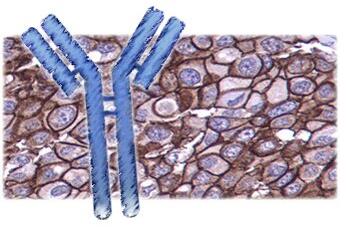
- ¥2980
- LMAI Bio
- LM-13082R-FITC
- 中国/美国/欧洲
- 2025年07月16日
- ICC=1:50-200 IF=1:50-200
- Human, Mouse, Rat, Chicken, Dog, Pig, Cow, Rabbit, Zebrafish, Sheep, Xenopus laevis
- Human, Mouse, Rat, Chicken, Dog, Pig, Cow, Rabbit, Zebrafish, Sheep, Xenopus laevis

企业认证
相关产品推荐更多 >

万千商家帮你免费找货
0 人在求购买到急需产品
- 详细信息
- 文献和实验
- 技术资料
- 供应商:
上海联迈生物工程有限公司
- 库存:
大量
- 靶点:
详见说明书
- 级别:
1
- 目录编号:
LM-13082R-FITC
- 克隆性:
多克隆
- 抗原来源:
Rabbit
- 保质期:
1年
- 抗体英文名:
Anti-phospho-EphB1 (Tyr928)/FITC
- 抗体名:
Anti-phospho-EphB1 (Tyr928)/FITC
- 标记物:
FITC标记
- 宿主:
Human, Mouse, Rat, Chicken, Dog, Pig, Cow, Rabbit, Zebrafish, Sheep, Xenopus laevis
- 适应物种:
Human, Mouse, Rat, Chicken, Dog, Pig, Cow, Rabbit, Zebrafish, Sheep, Xenopus laevis
- 免疫原:
详见说明书
- 亚型:
IGg
- 形态:
粉末、液体、冻干粉
- 应用范围:
ICC=1:50-200 IF=1:50-200
- 浓度:
1mg/ml
- 保存条件:
-20 °C
- 规格:
100ul
| 英文名称 | Anti-phospho-EphB1 (Tyr928)/FITC |
| 中文名称 | FITC标记的磷酸化酪氨酸蛋白激酶受体B1抗体 |
| 别 名 | Eph receptor B1 (phospho Tyr928); Eph receptor B1(phospho Y928); p-EphB1(Y928); p-EphB1(Tyr928); Cek 6; Elkh; Eph tyrosine kinase 2; EPH2; EphB1; Ephrin receptor Eph B1 precursor; Ephrin type B receptor 1; HEK 6; NET; Neuronally expressed EPH related tyrosine kinase; Tyrosine protein kinase receptor EPH 2; EPHB1_HUMAN. |
| 规格价格 | 100ul/2980元 购买 大包装/询价 |
| 说 明 书 | 100ul |
| 产品类型 | 磷酸化抗体 |
| 研究领域 | 心血管 细胞生物 神经生物学 信号转导 激酶和磷酸酶 细胞膜受体 |
| 抗体来源 | Rabbit |
| 克隆类型 | Polyclonal |
| 交叉反应 | Human, Mouse, Rat, Chicken, Dog, Pig, Cow, Rabbit, Zebrafish, Sheep, Xenopus laevis |
| 产品应用 | ICC=1:50-200 IF=1:50-200 not yet tested in other applications. optimal dilutions/concentrations should be determined by the end user. |
| 分 子 量 | 108kDa |
| 细胞定位 | 细胞膜 |
| 性 状 | Lyophilized or Liquid |
| 浓 度 | 1mg/ml |
| 免 疫 原 | KLH conjugated synthesised phosphopeptide derived from human Eph receptor B1 around the phosphorylation site of Tyr928 |
| 亚 型 | IgG |
| 纯化方法 | affinity purified by Protein A |
| 储 存 液 | 0.01M TBS(pH7.4) with 1% BSA, 0.03% Proclin300 and 50% Glycerol. |
| 保存条件 | Store at -20 °C for one year. Avoid repeated freeze/thaw cycles. The lyophilized antibody is stable at room temperature for at least one month and for greater than a year when kept at -20°C. When reconstituted in sterile pH 7.4 0.01M PBS or diluent of antibody the antibody is stable for at least two weeks at 2-4 °C. |
| 产品介绍 | background: Ephrin receptors and their ligands, the ephrins, mediate numerous developmental processes, particularly in the nervous system. Based on their structures and sequence relationships, ephrins are divided into the ephrin-A (EFNA) class, which are anchored to the membrane by a glycosylphosphatidylinositol linkage, and the ephrin-B (EFNB) class, which are transmembrane proteins. The Eph family of receptors are divided into 2 groups based on the similarity of their extracellular domain sequences and their affinities for binding ephrin-A and ephrin-B ligands. Ephrin receptors make up the largest subgroup of the receptor tyrosine kinase (RTK) family. The protein encoded by this gene is a receptor for ephrin-B family members. [provided by RefSeq, Jul 2008] Function: Receptor tyrosine kinase which binds promiscuously transmembrane ephrin-B family ligands residing on adjacent cells, leading to contact-dependent bidirectional signaling into neighboring cells. The signaling pathway downstream of the receptor is referred to as forward signaling while the signaling pathway downstream of the ephrin ligand is referred to as reverse signaling. Cognate/functional ephrin ligands for this receptor include EFNB1, EFNB2 and EFNB3. During nervous system development, regulates retinal axon guidance redirecting ipsilaterally ventrotemporal retinal ganglion cells axons at the optic chiasm midline. This probably requires repulsive interaction with EFNB2. In the adult nervous system together with EFNB3, regulates chemotaxis, proliferation and polarity of the hippocampus neural progenitors. Beside its role in axon guidance plays also an important redundant role with other ephrin-B receptors in development and maturation of dendritic spines and synapse formation. May also regulate angiogenesis. More generally, may play a role in targeted cell migration and adhesion. Upon activation by EFNB1 and probably other ephrin-B ligands activates the MAPK/ERK and the JNK signaling cascades to regulate cell migration and adhesion respectively. Subunit : Heterotetramer upon binding of the ligand. The heterotetramer is composed of an ephrin dimer and a receptor dimer. Oligomerization is probably required to induce biological responses. Interacts with EPHB6; transphosphorylates EPHB6 to form an active signaling complex. Interacts with PICK1. Interacts (through Tyr-594) with NCK1 (via SH2 domain); activates the JUN cascade to regulate cell adhesion. The ligand-activated form interacts (through Tyr-928) with GRB7 and GRB10 (via SH2 domains). The ligand-activated form interacts (residues within the catalytic domain) with GRB2 (via SH2 domain). Interacts with GRB2, SHC1 and SRC; activates the MAPK/ERK cascade to regulate cell migration. Interacts with CBL; regulates receptor degradation through ubiquitination. Interacts with ACP1 Subunit: Heterotetramer upon binding of the ligand. The heterotetramer is composed of an ephrin dimer and a receptor dimer. Oligomerization is probably required to induce biological responses (By similarity). Interacts with EPHB6; transphosphorylates EPHB6 to form an active signaling complex. Interacts with PICK1 (By similarity). Interacts (through Tyr-594) with NCK1 (via SH2 domain); activates the JUN cascade to regulate cell adhesion (By similarity). The ligand-activated form interacts (through Tyr-928) with GRB7 and GRB10 (via SH2 domains). The ligand-activated form interacts (residues within the catalytic domain) with GRB2 (via SH2 domain). Interacts with GRB2, SHC1 and SRC; activates the MAPK/ERK cascade to regulate cell migration. Interacts with CBL; regulates receptor degradation through ubiquitination. Interacts with ACP1. Subcellular Location: Cell membrane; Single-pass type I membrane protein. Early endosome membrane. Cell projection, dendrite. Tissue Specificity: Preferentially expressed in brain. Post-translational modifications: Phosphorylated. Autophosphorylation is stimulated by the ligand EFNB1. Required for interaction with SH2 domain-containing interactors, for activation of the MAPK/ERK and JUN signaling cascades and for ubiquitination by CBL. Similarity: Belongs to the protein kinase superfamily. Tyr protein kinase family. Ephrin receptor subfamily. Contains 1 Eph LBD (Eph ligand-binding) domain. Contains 2 fibronectin type-III domains. Contains 1 protein kinase domain. Contains 1 SAM (sterile alpha motif) domain. Database links: Entrez Gene: 2047 Human Entrez Gene: 270190 Mouse Entrez Gene: 24338 Rat Omim: 600600 Human SwissProt: P54762 Human SwissProt: Q8CBF3 Mouse SwissProt: P09759 Rat Unigene: 116092 Human Unigene: 22897 Mouse Unigene: 46606 Rat Important Note: This product as supplied is intended for research use only, not for use in human, therapeutic or diagnostic applications. |
风险提示:丁香通仅作为第三方平台,为商家信息发布提供平台空间。用户咨询产品时请注意保护个人信息及财产安全,合理判断,谨慎选购商品,商家和用户对交易行为负责。对于医疗器械类产品,请先查证核实企业经营资质和医疗器械产品注册证情况。
 文献和实验
文献和实验网络 第二节 蛋白酪氨酸激酶 蛋白酷氨酸激酶(protein tyrosine kinase,PTK)是一类催化ATP上γ-磷酸转移到蛋白酪氨酸残基上的激酶,能催化多种底物蛋白质酪氨酸残基磷酸化,在细胞生长、增殖、分化中具有重要作用。迄今发现的蛋白酪氨酸激酶中多数是属于致癌RNA病毒的癌基因产物,也可由脊椎动物的原癌基因产。根据PTK是否存在于细胞膜受体
的信号分 子 小分子物质,有助于信号向胞内进行传递,比如环磷腺苷 cAMP,环磷鸟苷 cGMP,以及钙离子等等,主要的作用就是活化蛋白激酶。常见信号通路总结1. NF-κB signaling pathwayNF-κB 通路作用机制当处于激活状态时,NF-κB 位于细胞质中且与抑制蛋白 IκBα 形成复合体。通过内在膜受体的介导,一些胞外信号物质可激活一种称为 IκB 激酶(IKK)的酶。IKK 转而磷酸化 IκBα 蛋白,这将导致后者的泛素化,使得 IκBα 从 NF-κB 上脱离下来,最终
胰岛素受体是一个四聚体,由两个α亚基和两个β亚基通过二硫键连接。两个α亚基位于细胞质膜的外侧,其上有胰岛素的结合位点;两个β亚基是跨膜蛋白,起信号转导作用。无胰岛素结合时,受体的酪氨酸蛋白激酶没有活性。当胰岛素与受体的α亚基结合并改变了β亚基的构型后,酪氨酸蛋白激酶才被激活,激活后可催化两个反应∶①使四聚体复合物中β亚基特异位点的酪氨酸残基磷酸化,这种过程称为自我磷酸化(autophosphorylation);②将胰岛素受体底物(insulin receptor substrate
 技术资料
技术资料暂无技术资料 索取技术资料

