

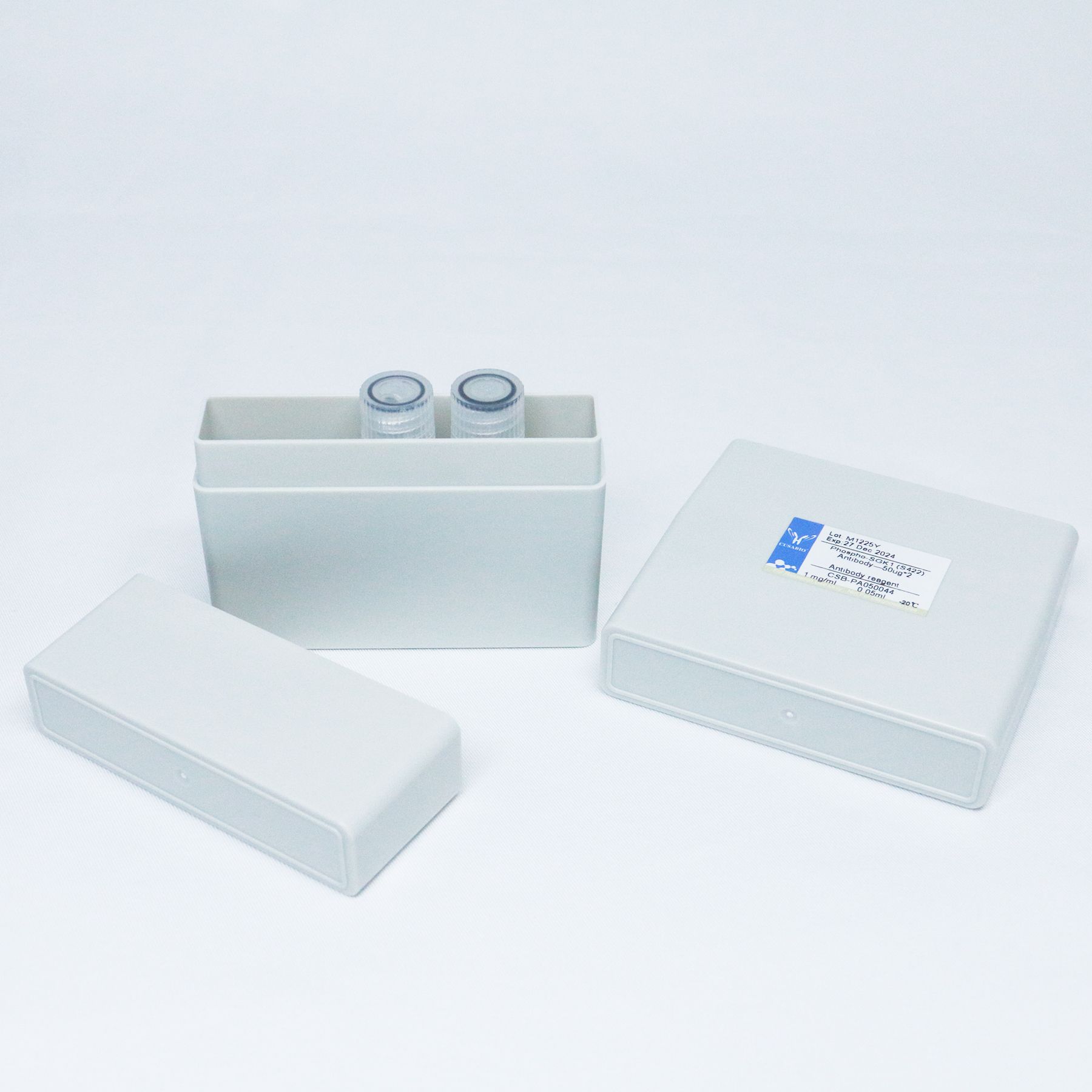
THEMIS2抗体THEMIS2兔多抗抗体Thymocyte
-expressed molecule involved in selection protein 2 antibody抗体THEMIS2 Antibody抗体- ¥440 - 1320
- CUSABIO

- CN
- CSB-PA735984LA01HU
- 2025年07月13日
- ELISA, WB, IHC, IF; Recommended dilution: WB:1:500-1:5000, IHC:1:200-1:500, IF:1:50-1:200
- Rabbit
- Human

企业认证
相关产品推荐更多 >
PLA2G16抗体PLA2G16兔多抗抗体Renal carcinoma antigen NY-REN-65抗体PLA2G16 Antibody, FITC conjugated抗体
¥880
EPS8抗体EPS8兔多抗抗体EPS8_HUMAN antibody抗体EPS8 Antibody, Biotin conjugated抗体
¥880
RNF11抗体RNF11一抗抗体SID1669 antibody抗体RNF11 Antibody抗体
¥1100MYOM3抗体MYOM3一抗抗体RP11-293P20.1 antibody抗体MYOM3 Antibody抗体
¥3900FICD抗体FICD兔多抗抗体Huntingtin-interacting protein E抗体FICD Antibody, HRP conjugated抗体
¥880
万千商家帮你免费找货
0 人在求购买到急需产品
相关阅读
香烟烟雾如何加速声带纤维化?CD44-透明质酸轴是关键通路Cytoscape 教程来了!快速实现顶刊同款通路网络图五大应用案例:Mustang Q 膜层析应用全解析1 个小工具,一次性搞定流程图、质粒图谱和信号通路图- 详细信息
- 文献和实验
- 技术资料
- 免疫原:
Recombinant Human Protein THEMIS2 protein (62-177AA)
- 亚型:
IgG
- 形态:
Liquid
- 保存条件:
Upon receipt, store at -20℃ or -80℃. Avoid repeated freeze.
- 克隆性:
Polyclonal
- 标记物:
Non-conjugated
- 适应物种:
Human
- 保质期:
6个月
- 抗原来源:
Homo sapiens (Human)
- 目录编号:
Q5TEJ8
- 级别:
优
- 库存:
200
- 供应商:
武汉华美生物工程有限公司
- 宿主:
Rabbit
- 应用范围:
ELISA, WB, IHC, IF; Recommended dilution: WB:1:500-1:5000, IHC:1:200-1:500, IF:1:50-1:200
- 浓度:
>95%,Protein G purified
- 靶点:
THEMIS2
- 抗体英文名:
THEMIS2 Antibody
- 抗体名:
Thymocyte-expressed molecule involved in selection protein 2 antibody
- 规格:
100μg/50μg/20μg
| 规格: | 100μg | 产品价格: | ¥1320.0 |
|---|---|---|---|
| 规格: | 50μg | 产品价格: | ¥880.0 |
| 规格: | 20μg | 产品价格: | ¥440.0 |
保存缓冲液
Preservative: 0.03% Proclin 300Constituents: 50% Glycerol, 0.01M PBS, pH 7.4
功能
May constitute a control point in macrophage inflammatory response, promoting LPS-induced TNF production.风险提示:丁香通仅作为第三方平台,为商家信息发布提供平台空间。用户咨询产品时请注意保护个人信息及财产安全,合理判断,谨慎选购商品,商家和用户对交易行为负责。对于医疗器械类产品,请先查证核实企业经营资质和医疗器械产品注册证情况。
 文献和实验
文献和实验Identifying Small‐Molecule Modulators of Protein‐Protein Interactions
of Small‐Molecule Inhibitors of In Vivo Protein‐Protein Interactions by Genetic Selection Support Protocol 1: Construction and Optimization of a Strain for Inhibitor Selection Support Protocol 2: Construction
Selection on the Protein-Coding Genome
. Regions of genes where new mutations are beneficial, rather than neutral or deleterious, tend to evolve more rapidly due to positive selection. Genes involved in immunity and defense are a well-known example; rapid evolution in these genes presumably
Small molecule-immobilized affinity matrices are indispensable tools in chemical genomics to screen and purify protein targets for biologically active small molecules. Usually, prior to immobilization, small �molecules have to be derivatized
 技术资料
技术资料暂无技术资料 索取技术资料

