

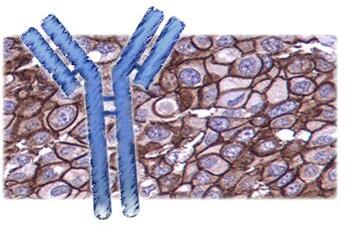
- ¥2980
- LMAI Bio
- LM-0103R-FITC
- 中国/美国/欧洲
- 2025年07月11日
- IF=1:50-200
- Human, Mouse,
- Human, Mouse,

企业认证
相关产品推荐更多 >

万千商家帮你免费找货
0 人在求购买到急需产品
- 详细信息
- 文献和实验
- 技术资料
- 供应商:
上海联迈生物工程有限公司
- 库存:
大量
- 靶点:
详见说明书
- 级别:
1
- 目录编号:
LM-0103R-FITC
- 克隆性:
多克隆
- 抗原来源:
Rabbit
- 保质期:
1年
- 抗体英文名:
Anti-TGF Beta 1/FITC
- 抗体名:
Anti-TGF Beta 1/FITC
- 标记物:
FITC标记
- 宿主:
Human, Mouse,
- 适应物种:
Human, Mouse,
- 免疫原:
详见说明书
- 亚型:
IGg
- 形态:
粉末、液体、冻干粉
- 应用范围:
IF=1:50-200
- 浓度:
1mg/ml
- 保存条件:
-20 °C
- 规格:
100ul
| 英文名称 | Anti-TGF Beta 1/FITC |
| 中文名称 | FITC标记的转化生长因子β1抗体 |
| 别 名 | CED; DPD1; LAP; Latency-associated peptide; TGF beta 1; TGF beta; TGF-beta 1; TGF beta 1 protein; TGF-beta 1 protein; TGF-beta-1; TGF-beta-5; TGF-beta1; TGFB; Tgfb-1; tgfb1; TGFB1_HUMAN; TGFbeta; TGFbeta1; Transforming Growth Factor b1; Transforming Growth Factor beta 1; Transforming growth factor beta 1a; transforming growth factor beta-1; transforming growth factor, beta 1. |
| 规格价格 | 100ul/2980元 购买 大包装/询价 |
| 说 明 书 | 100ul |
| 研究领域 | 细胞生物 神经生物学 信号转导 生长因子和激素 转录调节因子 细胞因子 新陈代谢 |
| 抗体来源 | Rabbit |
| 克隆类型 | Polyclonal |
| 交叉反应 | Human, Mouse, |
| 产品应用 | IF=1:50-200 not yet tested in other applications. optimal dilutions/concentrations should be determined by the end user. |
| 分 子 量 | 44kDa |
| 性 状 | Lyophilized or Liquid |
| 浓 度 | 1mg/ml |
| 免 疫 原 | KLH conjugated synthetic peptide derived from human TGF beta 1 |
| 亚 型 | IgG |
| 纯化方法 | affinity purified by Protein A |
| 储 存 液 | 0.01M TBS(pH7.4) with 1% BSA, 0.03% Proclin300 and 50% Glycerol. |
| 保存条件 | Store at -20 °C for one year. Avoid repeated freeze/thaw cycles. The lyophilized antibody is stable at room temperature for at least one month and for greater than a year when kept at -20°C. When reconstituted in sterile pH 7.4 0.01M PBS or diluent of antibody the antibody is stable for at least two weeks at 2-4 °C. |
| 产品介绍 | background: This gene encodes a member of the transforming growth factor beta (TGFB) family of cytokines, which are multifunctional peptides that regulate proliferation, differentiation, adhesion, migration, and other functions in many cell types. Many cells have TGFB receptors, and the protein positively and negatively regulates many other growth factors. The secreted protein is cleaved into a latency-associated peptide (LAP) and a mature TGFB1 peptide, and is found in either a latent form composed of a TGFB1 homodimer, a LAP homodimer, and a latent TGFB1-binding protein, or in an active form composed of a TGFB1 homodimer. The mature peptide may also form heterodimers with other TGFB family members. This gene is frequently upregulated in tumor cells, and mutations in this gene result in Camurati-Engelmann disease. Function: Multifunctional protein that controls proliferation, differentiation and other functions in many cell types. Many cells synthesize TGFB1 and have specific receptors for it. It positively and negatively regulates many other growth factors. It plays an important role in bone remodeling as it is a potent stimulator of osteoblastic bone formation, causing chemotaxis, proliferation and differentiation in committed osteoblasts. Subunit: Homodimer; disulfide-linked, or heterodimer with TGFB2. Secreted and stored as a biologically inactive form in the extracellular matrix in a 290 kDa complex (large latent TGF-beta1 complex) containing the TGFB1 homodimer, the latency-associated peptide (LAP), and the latent TGFB1 binding protein-1 (LTBP1). The complex without LTBP1 is known as the'small latent TGF-beta1 complex'. Dissociation of the TGFB1 from LAP is required for growth factor activation and biological activity. Release of the large latent TGF-beta1 complex from the extracellular matrix is carried out by the matrix metalloproteinase MMP3 (By similarity). May interact with THSD4; this interaction may lead to sequestration by FBN1 microfibril assembly and attenuation of TGFB signaling. Interacts with the serine proteases, HTRA1 and HTRA3: the interaction with either inhibits TGFB1-mediated signaling. The HTRA protease activity is required for this inhibition (By similarity). Interacts with CD109, DPT and ASPN. Subcellular Location: Secreted, extracellular space, extracellular matrix. Tissue Specificity: Highly expressed in bone. Abundantly expressed in articular cartilage and chondrocytes and is increased in osteoarthritis (OA). Co-localizes with ASPN in chondrocytes within OA lesions of articular cartilage. Post-translational modifications: Glycosylated. The precursor is cleaved into mature TGF-beta-1 and LAP, which remains non-covalently linked to mature TGF-beta-1 rendering it inactive. DISEASE: Defects in TGFB1 are the cause of Camurati-Engelmann disease (CE) [MIM:131300]; also known as progressive diaphyseal dysplasia 1 (DPD1). CE is an autosomal dominant disorder characterized by hyperostosis and sclerosis of the diaphyses of long bones. The disease typically presents in early childhood with pain, muscular weakness and waddling gait, and in some cases other features such as exophthalmos, facial paralysis, hearing difficulties and loss of vision. Similarity: Belongs to the TGF-beta family. Database links: Entrez Gene: 7040 Human Entrez Gene: 21803 Mouse Entrez Gene: 59086 Rat Omim: 190180 Human SwissProt: P01137 Human SwissProt: P04202 Mouse SwissProt: P17246 Rat Unigene: 645227 Human Unigene: 248380 Mouse Unigene: 40136 Rat Important Note: This product as supplied is intended for research use only, not for use in human, therapeutic or diagnostic applications. 生长因子和激素( Growth Factor and Hormones) TGF是一种多效生长因子,对上皮细胞增值有潜在抑制作用,可抑制肿瘤生长用于许多恶性肿瘤如:胃癌、肺癌、膀胱癌、肾癌、前列腺癌、结肠癌等多种恶性肿瘤的研究。 TGFβ超级家族由为数众多的生长的分化因子组成,包括转移生长因子β1,2和3(TGF β1,TGF β2,TGF β3);胎盘生长因子(PTGF-β);生长/分化因子(GDFs);缪氏抑制物(MIS);骨形态形成蛋白(BMPs);交织细胞元神经生长因子(GDNF);抑制素和活化素(α, β-A,和β-C),Lefty和Nodal。 TGF超级家族成员参与胚胎发育和成体组织体内平衡。TGF-β1抗体与TGF-β2和TGF-β3没有交叉反应。与豚鼠有大部分交叉. |
风险提示:丁香通仅作为第三方平台,为商家信息发布提供平台空间。用户咨询产品时请注意保护个人信息及财产安全,合理判断,谨慎选购商品,商家和用户对交易行为负责。对于医疗器械类产品,请先查证核实企业经营资质和医疗器械产品注册证情况。
 文献和实验
文献和实验一、转化生长因子-β(TGF-β) 转化生长因子-β(transforming growth factor-β,TGF-β)是属于一组新近发现的调节细胞生长和分化的TGF-β超家族。这一家族除TGF-β外,还有活化素(activins)、抑制素(inhibins)、缪勒氏管抑制质(Mullerian inhibitor substance,MIS)和骨形成蛋白(bone morpho-genetic proteins,BMPs
a (TGF- a ), 再与HRP 标记的 TGF- a 抗体结合,形成抗体- 抗原 - 酶标抗体复合物 ,经过彻底洗涤后 加 底物TMB 显色。 TMB 在 HRP 酶的催化下转化成蓝色,并在酸的作用下转化成最终的黄色。颜色的深浅和样品中的 转化生长因子 a (TGF- a ) 呈正相关。用酶标仪在 450 nm波长下测定吸光度( OD 值), 通过标准曲线 计算样品 中人 转化生长因子 a (TGF- a ) 浓度。 试剂盒组成
上海西唐生物科技有限公司 021-55229872, 65333639 www.westang.com 人转化生长因子- a ( TGF - a )ELISA 试剂盒 原理 本实验采用双抗体夹心 ABC-ELISA 法。用抗人 TGF- a 单抗包被于酶标板上,标准品和样品中的 TGF- a 与单抗结合,加入生物素化的抗人TGF- a ,形成免疫复合物连接在板上,辣根过氧化物酶标记
 技术资料
技术资料暂无技术资料 索取技术资料

