

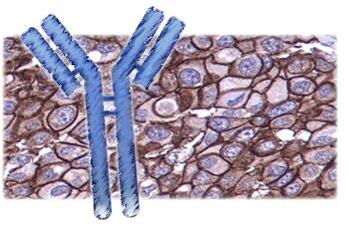
- ¥2980
- LMAI Bio
- LM-1519R-FITC
- 中国/美国/欧洲
- 2025年07月12日
- Flow-Cyt=1:50-200 ICC=1:50-200 IF=1:50-200
- Human, Mouse, Rat, Chicken, Dog, Pig, Cow, Horse,
- Human, Mouse, Rat, Chicken, Dog, Pig, Cow, Horse,

企业认证
相关产品推荐更多 >

万千商家帮你免费找货
0 人在求购买到急需产品
- 详细信息
- 文献和实验
- 技术资料
- 供应商:
上海联迈生物工程有限公司
- 库存:
大量
- 靶点:
详见说明书
- 级别:
1
- 目录编号:
LM-1519R-FITC
- 克隆性:
多克隆
- 抗原来源:
Rabbit
- 保质期:
1年
- 抗体英文名:
Anti-E cadherin/FITC
- 抗体名:
Anti-E cadherin/FITC
- 标记物:
FITC标记
- 宿主:
Human, Mouse, Rat, Chicken, Dog, Pig, Cow, Horse,
- 适应物种:
Human, Mouse, Rat, Chicken, Dog, Pig, Cow, Horse,
- 免疫原:
详见说明书
- 亚型:
IGg
- 形态:
粉末、液体、冻干粉
- 应用范围:
Flow-Cyt=1:50-200 ICC=1:50-200 IF=1:50-200
- 浓度:
1mg/ml
- 保存条件:
-20 °C
- 规格:
100ul
| 英文名称 | Anti-E cadherin/FITC |
| 中文名称 | FITC标记的上皮钙粘附分子抗体 |
| 别 名 | E-cadherin; anion exchanger protein 3; Arc 1; Cadherin 1; cadherin 1 type 1 E-cadherin; Cadherin1; CAM 120/80; CD 234; CD324; CD324 antigen; CDH1; CDHE; ECAD; Epithelial cadherin; epithelial calcium dependant adhesion protein; LCAM; Liver cell adhesion molecule; UVO; Uvomorulin; CADH1_HUMAN. |
| 规格价格 | 100ul/2980元 购买 大包装/询价 |
| 说 明 书 | 100ul |
| 研究领域 | 肿瘤 细胞生物 免疫学 细胞粘附分子 细胞表面分子 上皮细胞 |
| 抗体来源 | Rabbit |
| 克隆类型 | Polyclonal |
| 交叉反应 | Human, Mouse, Rat, Chicken, Dog, Pig, Cow, Horse, |
| 产品应用 | Flow-Cyt=1:50-200 ICC=1:50-200 IF=1:50-200 not yet tested in other applications. optimal dilutions/concentrations should be determined by the end user. |
| 分 子 量 | 20/80kDa |
| 细胞定位 | 细胞膜 |
| 性 状 | Lyophilized or Liquid |
| 浓 度 | 1mg/ml |
| 免 疫 原 | KLH conjugated synthetic peptide derived from human E-cadherin (841-882aa) |
| 亚 型 | IgG |
| 纯化方法 | affinity purified by Protein A |
| 储 存 液 | 0.01M TBS(pH7.4) with 1% BSA, 0.03% Proclin300 and 50% Glycerol. |
| 保存条件 | Store at -20 °C for one year. Avoid repeated freeze/thaw cycles. The lyophilized antibody is stable at room temperature for at least one month and for greater than a year when kept at -20°C. When reconstituted in sterile pH 7.4 0.01M PBS or diluent of antibody the antibody is stable for at least two weeks at 2-4 °C. |
| 产品介绍 | background: This gene is a classical cadherin from the cadherin superfamily. The encoded protein is a calcium dependent cell-cell adhesion glycoprotein comprised of five extracellular cadherin repeats, a transmembrane region and a highly conserved cytoplasmic tail. Mutations in this gene are correlated with gastric, breast, colorectal, thyroid and ovarian cancer. Loss of function is thought to contribute to progression in cancer by increasing proliferation, invasion, and/or metastasis. The ectodomain of this protein mediates bacterial adhesion to mammalian cells and the cytoplasmic domain is required for internalization. Identified transcript variants arise from mutation at consensus splice sites. [provided by RefSeq, Jul 2008] Function: Cadherins are calcium-dependent cell adhesion proteins. They preferentially interact with themselves in a homophilic manner in connecting cells; cadherins may thus contribute to the sorting of heterogeneous cell types. CDH1 is involved in mechanisms regulating cell-cell adhesions, mobility and proliferation of epithelial cells. Has a potent invasive suppressor role. It is a ligand for integrin alpha-E/beta-7. E-Cad/CTF2 promotes non-amyloidogenic degradation of Abeta precursors. Has a strong inhibitory effect on APP C99 and C83 production. Subunit: Homodimer. Subcellular Location: Cell junction. Cell membrane; Single-pass type I membrane protein. Tissue Specificity: Non-neural epithelial tissues. Post-translational modifications: During apoptosis or with calcium influx, cleaved by a membrane-bound metalloproteinase (ADAM10), PS1/gamma-secretase and caspase-3 to produce fragments of about 38 kDa (E-CAD/CTF1), 33 kDa (E-CAD/CTF2) and 29 kDa (E-CAD/CTF3), respectively. Processing by the metalloproteinase, induced by calcium influx, causes disruption of cell-cell adhesion and the subsequent release of beta-catenin into the cytoplasm. The residual membrane-tethered cleavage product is rapidly degraded via an intracellular proteolytic pathway. Cleavage by caspase-3 releases the cytoplasmic tail resulting in disintegration of the actin microfilament system. The gamma-secretase-mediated cleavage promotes disaaaembly of adherens junctions. DISEASE: Defects in CDH1 are involved in dysfunction of the cell-cell adhesion system, triggering cancer invasion (gastric, breast, ovary, endometrium and thyroid) and metastasis. Defects in CDH1 are a cause of gastric cancer [MIM:137215]; also known as hereditary familial diffuse gastric cancer (HDGC). Defects in CDH1 are a cause of susceptibility to endometrial cancer [MIM:608089]. Defects in CDH1 are associated with ovarian cancer [MIM:167000]. Ovarian cancer is the leading cause of death from gynecologic malignancy. It is characterized by advanced presentation with loco-regional dissemination in the peritoneal cavity and the rare incidence of visceral metastases. These typical features relate to the biology of the disease, which is a principal determinant of outcome. Similarity: Contains 5 cadherin domains. Database links: Entrez Gene: 999 Human Entrez Gene: 12550 Mouse Entrez Gene: 83502 Rat Omim: 192090 Human SwissProt: P12830 Human SwissProt: P09803 Mouse SwissProt: Q9R0T4 Rat Unigene: 461086 Human Unigene: 35605 Mouse Unigene: 1303 Rat Important Note: This product as supplied is intended for research use only, not for use in human, therapeutic or diagnostic applications. 细胞粘附蛋白(Call Adhesion Protein) E-chaherin是研究较多的同质粘附分子。E-cadherin的表达与恶性肿瘤的分化程度、侵袭力、转移负相关与预后正相关,E-cadherin的低表达和不稳定表达可促进转移的发生。近年来已成为肿瘤细胞侵袭和转移研究的热点之一。 |
风险提示:丁香通仅作为第三方平台,为商家信息发布提供平台空间。用户咨询产品时请注意保护个人信息及财产安全,合理判断,谨慎选购商品,商家和用户对交易行为负责。对于医疗器械类产品,请先查证核实企业经营资质和医疗器械产品注册证情况。
 文献和实验
文献和实验当FITC在碱性溶液中与抗体蛋白反应时,主要是蛋白质上赖氨酸的r氨基与荧光素的硫碳胺键(thiocarbmide)结合,形成FITC-蛋白质结合物,即荧光抗体或荧光结合物。一个IgG分子中有86个赖氨酸残基,一般最多能结合15~20个,一个IgG分子可结合2~8个分子的FITC,其反应式如下FITC-N=C=S + N-H2-蛋白质 → FITC-NS-C-N-H2-蛋白质常用Marsshall(1958)法标记荧光抗体,也可以根据条件采用Chadwick等标记法或Clark
ml三蒸水中即成; 方法与步骤: 根据Marshall氏法高效价的抗人球蛋白兔免疫血清,分离球蛋白。 1. 用0.15 mol/L NaCl的盐水及0.15 mol/L pH9.0的NaHCO3-Na2CO3缓冲液稀释使每毫升内含抗体10mg,缓冲液为总量的10%; 2. 将以上溶液降温至4℃,按蛋白:荧光素=50—80mg:1mg的比例加入异硫氰酸荧光素,在0—4℃下电磁搅拌12—14h; 3.用半饱和硫酸铵将标记球蛋白
5. 过柱。取透析过夜的标记物,过葡萄糖凝胶G-25或G-50柱,分离出游离荧光素,收集标记的荧光抗体进行鉴定。
 技术资料
技术资料暂无技术资料 索取技术资料

