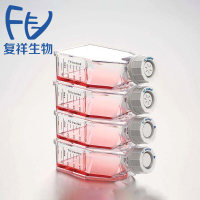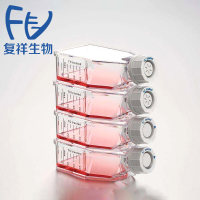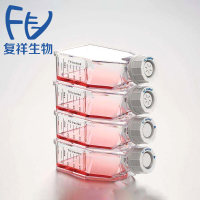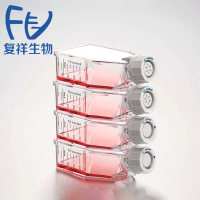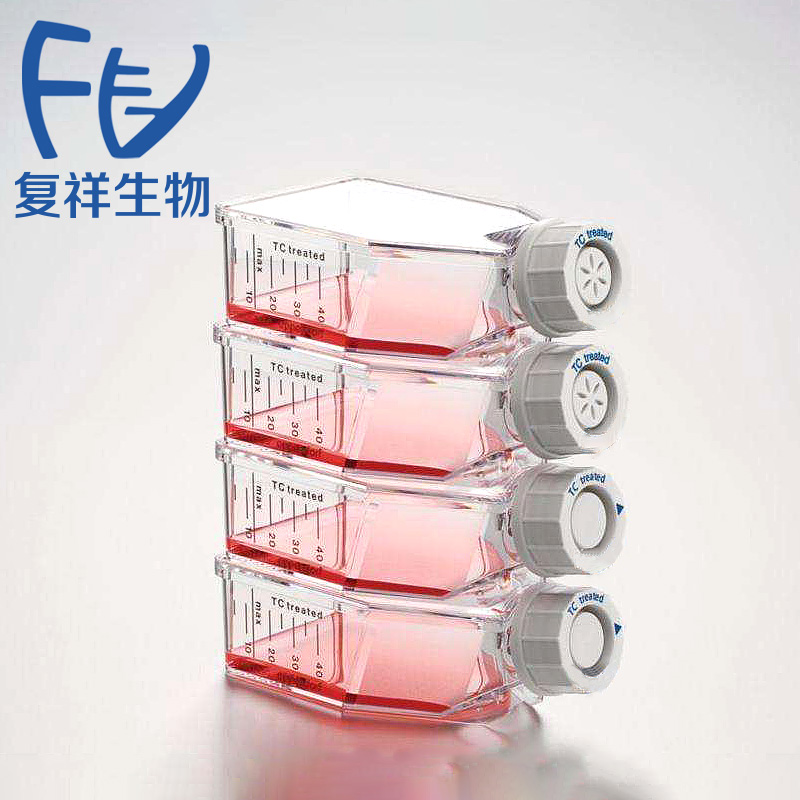
产品封面图

SW1116 结肠腺癌细胞

收藏
  • 询价
  • ATCC
  • 美国
  • SW1116
  • 2025年12月19日
    avatar
  • 企业认证

    点击 QQ 联系

    • 详细信息
    • 文献和实验
    • 技术资料
    • 供应商

      复祥生物

    • 是否是肿瘤细胞

      0

    • 库存

      大量

    CCL-233 SW1116 人结肠腺癌细胞,原代细胞|细胞系|细胞株|菌种;细胞库管理规范,提供的细胞株背景清楚,提供参考文献和养条件!

    CCL-233 SW1116 人结肠腺癌细胞 的详细介绍
    CCL-233 SW1116 人结肠腺癌细胞
    ATCC® Number: CCL-233™
    Designations: SW1116 [SW 1116, SW-1116]
    Depositors: A Leibovitz
    Biosafety Level: 1
    Shipped: frozen
    Medium & Serum: See Propagation
    Growth Properties: adherent
    Organism: Homo sapiens (human)
    Morphology: epithelial
    CCL-233 SW1116 人结肠腺癌细胞
    :
    Cytogenetic Analysis: modal number = 60; range = 50 to 62
    The stemline chromosome number is hypotriploid with 2S component occurring at 2.8% and 9 markers were common to S metaphases. Neither HSR chromosomes nor DM were seen. Karyotypes were less variable between cells.
    Ethnicity: Caucasian
    Comments: CSAp negative (CSAp-).
    Colon antigen 3, negative.
    The cells are positive for keratin by immunoperoxidase staining.
    The line is positive for expression of c-myc, K-ras, H-ras, myb, sis and fos oncogenes.
    N-myc and N-ras oncogene expression were not detected.
    Tumor specific nuclear matrix proteins CC-4, CC-5 and CC-6 are expressed.
    Propagation: ATCC complete growth medium: The base medium for this cell line is ATCC-formulated Leibovitz's L-15 Medium, Catalog No. 30-2008. To make the complete growth medium, add the following components to the base medium: fetal bovine serum to a final concentration of 10%.
    Temperature: 37.0°C
    Subculturing: Cells must be subcultured at about 80% confuency , before they reach 90%.
    Protocol: 1. Remove and discard culture medium.

    2. Briefly rinse the cell layer with 0.25% (w/v) Trypsin- 0.53 mM EDTA solution to remove all traces of serum which contains trypsin inhibitor.

    3. Add 2.0 to 3.0 ml of Trypsin-EDTA solution to flask and observe cells under an inverted microscope until cell layer is dispersed (usually within 5 to 15 minutes).

    Note: To avoid clumping do not agitate the cells by hitting or shaking the flask while waiting for the cells to detach. Cells that are difficult to detach may be placed at 37°C to facilitate dispersal.

    4. Add 6.0 to 8.0 ml of complete growth medium and aspirate cells by gently pipetting.

    5. Add appropriate aliquots of the cell suspension to new culture vessels.

    6. Incubate cultures at 37°C.
    Subcultivation Ratio: A subcultivation ratio of 1:3 to 1:6 is recommended
    Medium Renewal: 1 to 2 times per week
    : CCL-233 SW1116 人结肠腺癌细胞
    CCL-233 SW1116 人结肠腺癌细胞

    风险提示:丁香通仅作为第三方平台,为商家信息发布提供平台空间。用户咨询产品时请注意保护个人信息及财产安全,合理判断,谨慎选购商品,商家和用户对交易行为负责。对于医疗器械类产品,请先查证核实企业经营资质和医疗器械产品注册证情况。

    图标文献和实验
    相关实验
    • 常用的细胞类型及其在细胞治疗中的应用

      细胞治疗是细胞和基因治疗的重要组成部分,它通过使用特定类型的细胞来修复、替换或调节受损的组织和器官。在细胞治疗中,不同类型的细胞因其独特的生物学特性而被广泛应用于多种疾病的治疗。以下是一些常用的细胞类型及其在细胞治疗中的应用。 (1)免疫细胞 免疫细胞细胞治疗中最重要且研究最多的细胞类型之一,主要包括 T 细胞、自然杀伤细胞(NK 细胞)和树突状细胞(DC 细胞)。 T 细胞:T 细胞是人体免疫系统的核心细胞,具有强大的抗肿瘤能力。CAR-T 细胞疗法是目前最成功的免疫细胞治疗技术

    • 轻松准确测定细胞增殖和细胞毒性

      简介 细胞增殖/细胞毒性测定是涉及培养细胞的研究中最常用的测试之一。 其是检查用于治疗的药物浓度的基本初步测试,也是确定各种研究领域(如肿瘤学和细胞死亡)药物疗效和安全性的非常重要的测试。   传统上,WST-8 或 ATP 检测(使用代谢活性作为指标)和 BrdU 或胸腺嘧啶核苷检测(使用 DNA 合成水平作为指标)已用于细胞生长特性的定量评估。 尽管这些检测由于其简易性和吞吐量而对我们有益,但这些检测都是间接评估方法,因此结果可能与实际细胞数无关。 在许多情况下,这些检测是终点评估,有时会

    • 细胞污染挽救

      对于贴壁生长的细胞,相对来说比较简单但也很麻烦。以下我主要讨论贴壁生长的细胞。 在讨论之前,大家首先要有一个概念,即洁净区,并不是没有细菌,而是细菌的数量非常少,国家标准100级的洁净标准是浮游菌数不得超过5个每立方米,沉降菌数不得超过1个每培养皿.而国外的标准比我国的还要高一点,要求的数量更少。 所以在我们的洁净操作台里,并不是真正一个细菌都没有的,所以在操作的时候还是要尽量利索迅速地完成操作。尽量减少进入培养体系细菌的数量。 所以处理细菌污染的重要原则就是:无限地稀释细菌的浓度,无限地减少

    图标技术资料

    暂无技术资料 索取技术资料

    同类产品报价

    产品名称
    产品价格
    公司名称
    报价日期
    ¥1400
    上海酶研生物科技有限公司
    2025年07月16日询价
    ¥888
    蒂科(上海)生物科技有限公司
    2025年07月05日询价
    询价
    上海沪震实业有限公司
    2025年07月08日询价
    ¥1200
    厦门逸漠生物科技有限公司
    2025年10月22日询价
    SW1116 结肠腺癌细胞
    询价