


- ¥1380 - 2200
- LMAI Bio
- LM-19466R
- 进口/国产
- 2026年09月16日
- WB=1:500-2000 ELISA=1:500-1000 IHC-P=1:400-800 IHC-F=1:400-800 ICC=1:100-500 IF=1:100-500 (石蜡切片需做抗原修复)
- Rabbit
- Human, Mouse, Rat, Chicken, Dog, Cow, Horse, Rabbit, Zebrafish, Guinea Pig, Cat,

企业认证
相关产品推荐更多 >


万千商家帮你免费找货
0 人在求购买到急需产品
相关阅读
细胞污染识别与处理全攻略:5 种常见类型+关键误区Cytoscape 教程来了!快速实现顶刊同款通路网络图五大应用案例:Mustang Q 膜层析应用全解析1 个小工具,一次性搞定流程图、质粒图谱和信号通路图- 详细信息
- 文献和实验
- 技术资料
- 供应商:
上海联迈生物工程有限公司
- 库存:
大量
- 目录编号:
LM-19466R
- 克隆性:
多克隆
- 抗原来源:
Rabbit
- 保质期:
1年
- 抗体英文名:
PSMD11
- 抗体名:
26S蛋白酶体非ATP酶调节亚基11抗体
- 宿主:
Rabbit
- 适应物种:
Human, Mouse, Rat, Chicken, Dog, Cow, Horse, Rabbit, Zebrafish, Guinea Pig, Cat,
- 免疫原:
KLH conjugated synthetic peptide derived from human PSMD11:301-400/422
- 亚型:
IgG
- 形态:
Lyophilized or Liquid
- 应用范围:
WB=1:500-2000 ELISA=1:500-1000 IHC-P=1:400-800 IHC-F=1:400-800 ICC=1:100-500 IF=1:100-500 (石蜡切片需做抗原修复)
- 浓度:
1mg/ml
- 保存条件:
Store at -20 °C
- 规格:
100ul 200ul
| 英文名称 | PSMD11 |
| 中文名称 | 26S蛋白酶体非ATP酶调节亚基11抗体 |
| 别 名 | 26S proteasome non-ATPase regulatory subunit 11; 26S proteasome regulatory subunit 9; 26S proteasome regulatory subunit p44.5; 26S proteasome regulatory subunit RPN6; 26S proteasome regulatory subunit S9; MGC3844; p44.5; protease 26S, subunit, 9; proteasome (prosome, macropain) 26S subunit, non-ATPase, 11; proteasome 26S subunit, non-ATPase, 11; PSD11_HUMAN; PSMD 11; PSMD11; Rpn6; S9. |
| 规格价格 | 100ul/1380元 购买 200ul/2200元 购买 大包装/询价 |
| 说 明 书 | 100ul 200ul |
| 研究领域 | 细胞生物 泛素 |
| 抗体来源 | Rabbit |
| 克隆类型 | Polyclonal |
| 交叉反应 | Human, Mouse, Rat, Chicken, Dog, Cow, Horse, Rabbit, Zebrafish, Guinea Pig, Cat, |
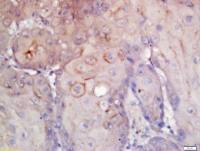
| 产品应用 | WB=1:500-2000 ELISA=1:500-1000 IHC-P=1:400-800 IHC-F=1:400-800 ICC=1:100-500 IF=1:100-500 (石蜡切片需做抗原修复) not yet tested in other applications. optimal dilutions/concentrations should be determined by the end user. |
| 分 子 量 | 38kDa |
| 细胞定位 | 细胞核 细胞浆 |
| 性 状 | Lyophilized or Liquid |
| 浓 度 | 1mg/ml |
| 免 疫 原 | KLH conjugated synthetic peptide derived from human PSMD11:301-400/422 |
| 亚 型 | IgG |
| 纯化方法 | affinity purified by Protein A |
| 储 存 液 | 0.01M TBS(pH7.4) with 1% BSA, 0.03% Proclin300 and 50% Glycerol. |
| 保存条件 | Store at -20 °C for one year. Avoid repeated freeze/thaw cycles. The lyophilized antibody is stable at room temperature for at least one month and for greater than a year when kept at -20°C. When reconstituted in sterile pH 7.4 0.01M PBS or diluent of antibody the antibody is stable for at least two weeks at 2-4 °C. |
| PubMed | PubMed |
| 产品介绍 | background: The 26S proteasome is a multicatalytic proteinase complex with a highly ordered structure composed of 2 complexes, a 20S core and a 19S regulator. The 20S core is composed of 4 rings of 28 non-identical subunits; 2 rings are composed of 7 alpha subunits and 2 rings are composed of 7 beta subunits. The 19S regulator is composed of a base, which contains 6 ATPase subunits and 2 non-ATPase subunits, and a lid, which contains up to 10 non-ATPase subunits. Proteasomes are distributed throughout eukaryotic cells at a high concentration and cleave peptides in an ATP/ubiquitin-dependent process in a non-lysosomal pathway. This gene encodes a member of the proteasome subunit S9 family that functions as a non-ATPase subunit of the 19S regulator and is phosphorylated by AMP-activated protein kinase. Alternatively spliced transcript variants have been observed for this gene. [provided by RefSeq, Jul 2012] Function: Component of the lid subcomplex of the 26S proteasome, a multiprotein complex involved in the ATP-dependent degradation of ubiquitinated proteins. In the complex, PSMD11 is required for proteasome assembly. Plays a key role in increased proteasome activity in embryonic stem cells (ESCs): its high expression in ESCs promotes enhanced assembly of the 26S proteasome, followed by higher proteasome activity. Subcellular Location: Nucleus. Cytoplasm > cytosol. Tissue Specificity: Highly expressed in embryonic stem cells (ESCs). Expression decreases as ESCs differentiate. Post-translational modifications: Phosphorylated by AMPK. Similarity: Belongs to the proteasome subunit S9 family. Contains 1 PCI domain. SWISS: O00231 Gene ID: 5717 Database links: Entrez Gene: 513461 Cow Entrez Gene: 480610 Dog Entrez Gene: 5717 Human Entrez Gene: 69077 Mouse Entrez Gene: 303353 Rat Entrez Gene: 322265 Zebrafish Omim: 604449 Human SwissProt: Q2KI42 Cow SwissProt: O00231 Human SwissProt: Q8BG32 Mouse SwissProt: F1LMZ8 Rat Unigene: 443379 Human Unigene: 260539 Mouse Unigene: 11861 Rat Important Note: This product as supplied is intended for research use only, not for use in human, therapeutic or diagnostic applications. |
风险提示:丁香通仅作为第三方平台,为商家信息发布提供平台空间。用户咨询产品时请注意保护个人信息及财产安全,合理判断,谨慎选购商品,商家和用户对交易行为负责。对于医疗器械类产品,请先查证核实企业经营资质和医疗器械产品注册证情况。
 文献和实验
文献和实验【求助】P53的翻译后修饰都有哪些? 怎样验证其修饰后与靶标启动子的结合活性的变化?
可通过p53结合蛋白PRMT1和CARM1(辅助活化因子相关的精氨酸甲基转移酶)相互作用获得。当靶基因的转录激活不再需要p53时去乙酰化作用可以作为一种快速的调节机制来抑制p53的功能。 泛素化修饰 正常细胞中降解是消除p53功能的唯一机制,这种降解部分是由泛素-26S蛋白酶体系统完成的(其它途径是非泛素依赖性的)。泛素是一种高度保守的蛋白质,靶向作用于底物蛋白,使其被26S蛋白酶体降解成多肽。泛素连接酶实现了泛素化修饰的最后一步,这些酶显示出一种高水平的靶向特异性。正常
蛋白质组是动态的,随着大量刺激的变化而变化,翻译后修饰常用于调节细胞活性。PTM 发生在不同的氨基酸侧链或肽键上,它们通常由酶活性介导。事实上,据估计,5% 的蛋白质组包含 200 多种类型翻译后修饰的酶。这些酶包括激酶、磷酸酶、转移酶和连接酶,它们在氨基酸侧链上添加或移除功能组、蛋白质、脂质或糖;以及蛋白酶,它们切割肽键以移除特定序列或调节亚基。许多蛋白质也可以利用自催化结构域,如自激酶和自蛋白分解结构域进行自我修饰。翻译后修饰可以发生在蛋白质生命周期的任何阶段。例如,许多蛋白质在翻译完成后不久就被修饰
。这对类囊体膜内外建立质子梯度起着重要的作用。3.Cyt b6/f 复合体 Cyt b6/f 复合体作为连接PSⅡ与PSⅠ两个光系统的中间电子载体系统,含有Cyt f、Cyt b6(2个,为电子传递循环剂)和Rieske铁-硫蛋白(又称〔Fe-S〕R,是由Rieske发现的非血红素的Fe蛋白质),主要催化PQH2的氧化和PC的还原,并把质子从类囊体膜外间质中跨膜转移到膜内腔中。因此Cyt b6/f 复合体又称PQH2·PC氧还酶。PQH2+2PC(Cu2+) PQ + 2PC(Cu+) + 2H
 技术资料
技术资料暂无技术资料 索取技术资料

