

- ¥1380 - 2200
- 康朗生物
- kl-6194R
- 中国/美国/德国
- 2026年09月30日
- WB=1:500-2000 ELISA=1:500-1000 IHC-P=1:400-800 IHC-F=1:400-800 IF=1:100-500
- Rabbit
- Human, Mouse, Rat, Dog, Pig, Horse, Rabbit,

企业认证
相关产品推荐更多 >

万千商家帮你免费找货
0 人在求购买到急需产品
相关阅读
香烟烟雾如何加速声带纤维化?CD44-透明质酸轴是关键通路Takara 秋促来袭,提取+反转录+定量套装仅 1200 元abinScience 体内级抗体 全年锁价 低至 ¥1200阿拉丁 22万+ 科研级产品现货速发,品质严控、科研无忧- 详细信息
- 文献和实验
- 技术资料
- 供应商:
上海康朗生物科技有限公司
- 库存:
大量
- 目录编号:
kl-6194R
- 克隆性:
多克隆
- 抗原来源:
Rabbit
- 保质期:
12个月
- 抗体英文名:
Sclerostin antibody
- 抗体名:
骨形态发生抑制蛋白SOST抗体
- 宿主:
Rabbit
- 适应物种:
Human, Mouse, Rat, Dog, Pig, Horse, Rabbit,
- 免疫原:
KLH conjugated synthetic peptide derived from human Sclerostin:151-213/213
- 亚型:
IgG
- 形态:
冻干粉或液体
- 应用范围:
WB=1:500-2000 ELISA=1:500-1000 IHC-P=1:400-800 IHC-F=1:400-800 IF=1:100-500
- 浓度:
1mg/ml
- 保存条件:
-20 °C
- 规格:
100ul 200ul
| 中文名称 | 骨形态发生抑制蛋白SOST抗体 |
| 别 名 | BEER; Cortical hyperostosis with syndactyly; Sclerosteosis; Sclerostin; SOST; SOST_HUMAN; VBCH. |
| 规格价格 | 100ul/1380元 购买 200ul/2200元 购买 大包装/询价 |
| 说 明 书 | 100ul 200ul |
| 研究领域 | 信号转导 干细胞 |
| 抗体来源 | Rabbit |
| 克隆类型 | Polyclonal |
| 交叉反应 | Human, Mouse, Rat, Dog, Pig, Horse, Rabbit, |
| 产品应用 | WB=1:500-2000 ELISA=1:500-1000 IHC-P=1:400-800 IHC-F=1:400-800 IF=1:100-500 (石蜡切片需做抗原修复) not yet tested in other applications. optimal dilutions/concentrations should be determined by the end user. |
| 分 子 量 | 21kDa |
| 细胞定位 | 分泌型蛋白 |
| 性 状 | Lyophilized or Liquid |
| 浓 度 | 1mg/ml |
| 免 疫 原 | KLH conjugated synthetic peptide derived from human Sclerostin:151-213/213 |
| 亚 型 | IgG |
| 纯化方法 | affinity purified by Protein A |
| 储 存 液 | 0.01M TBS(pH7.4) with 1% BSA, 0.03% Proclin300 and 50% Glycerol. |
| 保存条件 | Store at -20 °C for one year. Avoid repeated freeze/thaw cycles. The lyophilized antibody is stable at room temperature for at least one month and for greater than a year when kept at -20°C. When reconstituted in sterile pH 7.4 0.01M PBS or diluent of antibody the antibody is stable for at least two weeks at 2-4 °C. |
| PubMed | PubMed |
| 产品介绍 | background: Negative regulator of bone growth.Sclerostin (SOST) is a bone morphogenetic protein (BMP) antagonist, leading to the activation of BMP signaling. It negatively regulates the formation of bone by repressing the differentiation and/or function of osteoblasts induced by BMPs. It has been shown that Sclerostin binds BMP-5, -6, and -7 with high affinity and BMP-2 and -4 with low affinity. The noggin-sclerostin protein complex represents a novel mechanism for the fine-tuning of BMP activity in bone homeostasis. Evidence is accumulating that one of the important mechanisms of bone regulation by sclerostin is the modulation of Wnt/Beta-catenin signaling. Sclerostin also rapidly activated ERK-1/2 MAPK signaling, indicating the involvement of additional signaling pathways. Function: Negative regulator of bone growth that acts through inhibition of Wnt signaling and bone formation. Subunit: Interacts with LRP4 (via the extracellular domain); the interaction facilitates the inhibition of Wnt signaling. Interacts with LRP5 (via the first two YWTD-EGF repeat domains); the interaction inhibits Wnt-mediated signaling. Interacts with LRP6. Subcellular Location: Secreted. Tissue Specificity: Widely expressed at low levels with highest levels in bone, cartilage, kidney, liver, bone marrow and primary osteeoblasts differentiated for 21 days. DISEASE: Defects in SOST are the cause of sclerosteosis type 1 (SOST1) [MIM:269500]. An autosomal recessive sclerosing bone dysplasia characterized by a generalized hyperostosis and sclerosis leading to a markedly thickened skull, with mandible, ribs, clavicles and all long bones also being affected. Due to narrowing of the foramina of the cranial nerves, facial nerve palsy, hearing loss and atrophy of the optic nerves can occur. Sclerosteosis is clinically and radiologically very similar to van Buchem disease, mainly differentiated by hand malformations and a large stature in sclerosteosis patients. Defects in SOST are a cause of van Buchem disease (VBCH) [MIM:239100]. An autosomal recessive sclerosing bone dysplasia characterized by endosteal hyperostosis of the mandible, skull, ribs, clavicles, and diaphyses of the long bones. Affected patients present a symmetrically increased thickness of bones, most frequently found as an enlarged jawbone, but also an enlargement of the skull, ribs, diaphysis of long bones, as well as tubular bones of hands and feet. The clinical consequence of increased thickness of the skull include facial nerve palsy causing hearing loss, visual problems, neurological pain, and, very rarely, blindness as a consequence of optic atrophy. Serum alkaline phosphatase levels are elevated. Note=A 52 kb deletion downstream of SOST results in SOST transcription suppression causing van Buchem disease. Defects in SOST are a cause of craniodiaphyseal dysplasia autosomal dominant (CDD) [MIM:122860]. A severe bone dysplasia characterized by massive generalized hyperostosis and sclerosis, especially involving the skull and facial bones. The sclerosis is so severe that the resulting facial distortion is referred to as 'leontiasis ossea' (leonine faces) and the bone deposition results in progressive stenosis of craniofacial foramina. Respiratory obstruction due to choanal stenosis compromises the clinical outcomes of affected patients. Note=Heterozygous mutations located in the secretion signal of the SOST gene prevent sclerostin secretion and can be responsible for craniodiaphyseal dysplasia. Similarity: Belongs to the sclerostin family. Contains 1 CTCK (C-terminal cystine knot-like) domain. SWISS: Q9BQB4 Gene ID: 50964 Database links: Entrez Gene: 50964 Human Entrez Gene: 74499 Mouse Omim: 605740 Human SwissProt: Q9BQB4 Human SwissProt: Q99P68 Mouse Unigene: 349204 Human Unigene: 265602 Mouse Important Note: This product as supplied is intended for research use only, not for use in human, therapeutic or diagnostic applications. |
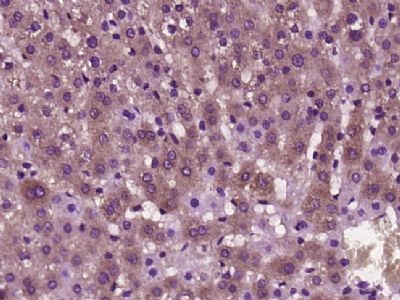
| 产品图片 | 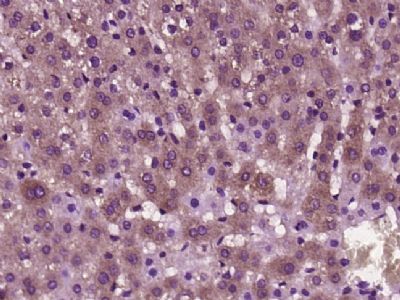 Paraformaldehyde-fixed, paraffin embedded (Rat liver); Antigen retrieval by boiling in sodium citrate buffer (pH6.0) for 15min; Block endogenous peroxidase by 3% hydrogen peroxide for 20 minutes; Blocking buffer (normal goat serum) at 37°C for 30min; Antibody incubation with (Sclerostin) Polyclonal Antibody, Unconjugated (bs-6194R) at 1:400 overnight at 4°C, followed by operating according to SP Kit(Rabbit) (sp-0023) instructionsand DAB staining. |
风险提示:丁香通仅作为第三方平台,为商家信息发布提供平台空间。用户咨询产品时请注意保护个人信息及财产安全,合理判断,谨慎选购商品,商家和用户对交易行为负责。对于医疗器械类产品,请先查证核实企业经营资质和医疗器械产品注册证情况。
 文献和实验
文献和实验Generation of Antibody Molecules Through Antibody Engineering
been overcome to a large extent using genetic-engineering techniques to produce chimeric mouse/human and completely human antibodies. Such an approach is particularly suitable because of the domain structure of the antibody molecule ( 2 ), where functional
The importance of antibody molecules was first recognized in the 1890s, when it was shown that immunity to tetanus and diphtheria was caused by antibodies against the bacterial exotoxins (1 ). Around the same time, it was shown that antisera
General comments: Antibodies, like most proteins, do not like to be freeze-thawed. Avoid repetitive freezing of your solution. The best way to store your antibody is to keep a high protein concentration (>1 mg/ml), add some protease
 技术资料
技术资料暂无技术资料 索取技术资料

