

- ¥1380 - 2200
- 康朗生物
- kl-1973R
- 中国/美国/德国
- 2026年05月21日
- WB=1:500-2000 ELISA=1:500-1000 IHC-P=1:400-800 IHC-F=1:400-800 Flow-Cyt=0.2μg /test IF=1:100-500
- Rabbit
- Human, Mouse, Rat, Pig, Cow, Rabbit, Sheep, Guinea Pig,

企业认证
相关产品推荐更多 >

万千商家帮你免费找货
0 人在求购买到急需产品
相关阅读
细胞污染识别与处理全攻略:5 种常见类型+关键误区Cytoscape 教程来了!快速实现顶刊同款通路网络图五大应用案例:Mustang Q 膜层析应用全解析1 个小工具,一次性搞定流程图、质粒图谱和信号通路图- 详细信息
- 文献和实验
- 技术资料
- 供应商:
上海康朗生物科技有限公司
- 库存:
大量
- 目录编号:
kl-1973R
- 克隆性:
多克隆
- 抗原来源:
Rabbit
- 保质期:
12个月
- 抗体英文名:
Lipoprotein lipase antibody
- 抗体名:
脂蛋白脂酶抗体
- 宿主:
Rabbit
- 适应物种:
Human, Mouse, Rat, Pig, Cow, Rabbit, Sheep, Guinea Pig,
- 免疫原:
KLH conjugated synthetic peptide derived from human LPL:401-475/475
- 亚型:
IgG
- 形态:
冻干粉或液体
- 应用范围:
WB=1:500-2000 ELISA=1:500-1000 IHC-P=1:400-800 IHC-F=1:400-800 Flow-Cyt=0.2μg /test IF=1:100-500
- 浓度:
1mg/ml
- 保存条件:
-20 °C
- 规格:
100ul 200ul
| 中文名称 | 脂蛋白脂酶抗体 |
| 别 名 | Lipoprotein lipase; LIPD; LIPL_HUMAN; LPL; LPL protein; EC 3.1.1; EC 3.1.1.34; HDLCQ11; LPL; LPL protein; MGC137861. |
| 规格价格 | 100ul/1380元 购买 200ul/2200元 购买 大包装/询价 |
| 说 明 书 | 100ul 200ul |
| 研究领域 | 心血管 细胞生物 免疫学 细胞粘附分子 |
| 抗体来源 | Rabbit |
| 克隆类型 | Polyclonal |
| 交叉反应 | Human, Mouse, Rat, Pig, Cow, Rabbit, Sheep, Guinea Pig, |
| 产品应用 | WB=1:500-2000 ELISA=1:500-1000 IHC-P=1:400-800 IHC-F=1:400-800 Flow-Cyt=0.2μg /test IF=1:100-500 (石蜡切片需做抗原修复) not yet tested in other applications. optimal dilutions/concentrations should be determined by the end user. |
| 分 子 量 | 52kDa |
| 细胞定位 | 细胞浆 细胞膜 分泌型蛋白 |
| 性 状 | Lyophilized or Liquid |
| 浓 度 | 1mg/ml |
| 免 疫 原 | KLH conjugated synthetic peptide derived from human LPL:401-475/475 |
| 亚 型 | IgG |
| 纯化方法 | affinity purified by Protein A |
| 储 存 液 | 0.01M TBS(pH7.4) with 1% BSA, 0.03% Proclin300 and 50% Glycerol. |
| 保存条件 | Store at -20 °C for one year. Avoid repeated freeze/thaw cycles. The lyophilized antibody is stable at room temperature for at least one month and for greater than a year when kept at -20°C. When reconstituted in sterile pH 7.4 0.01M PBS or diluent of antibody the antibody is stable for at least two weeks at 2-4 °C. |
| PubMed | PubMed |
| 产品介绍 | background: Lipoprotein lipase (LPL) is the central enzyme in plasma triglyceride hydrolysis and is secreted by macrophages in the subendothelial space. Evidence has been provided that LPL produced by macrophages in the vessel wall exerts proatherogenic effects. The atherogenic effects of LPL have been mainly attributed to its ability to favor lipid accumulation within macrophages present in the atherosclerotic lesion. Recently, it has also been shown that LPL promote the development of atherosclerosis through facilitation of monocyte adhesion to endothelial cells, stimulation of tumor necrosis factor alpha (TNF ) secretion and induction of vascular smooth muscle cell proliferation. Function: Actin-binding protein. Plays a role in the activation of T-cells in response to costimulation through TCR/CD3 and CD2 or CD28. Modulates the cell surface expression of IL2RA/CD25 and CD69. Subunit: Homodimer. Interacts with APOC2; the interaction activates LPL activity in the presence of lipids. Interacts with GPIHBP1. Subcellular Location: Cell membrane; Lipid-anchor, GPI-anchor. Secreted. Note=Locates to the plasma membrane of microvilli of hepatocytes with triacyl-glycerol-rich lipoproteins (TRL). Some of the bound LPL is then internalized and located inside non-coated endocytic vesicles. Tissue Specificity: Detected in intestinal microvilli, hair cell stereocilia, and fibroblast filopodia, in spleen and other lymph node-containing organs. Expressed in peripheral blood T lymphocytes, neutrophils, monocytes, B lymphocytes, and myeloid cells. Post-translational modifications: Tyrosine nitration after lipopolysaccharide (LPS) challenge down-regulates the lipase activity. DISEASE: Defects in LPL are the cause of lipoprotein lipase deficiency (LPL deficiency) [MIM:238600]; also known as familial chylomicronemia or hyperlipoproteinemia type I. LPL deficiency chylomicronemia is a recessive disorder usually manifesting in childhood. On a normal diet, patients often present with abdominal pain, hepatosplenomegaly, lipemia retinalis, eruptive xanthomata, and massive hypertriglyceridemia, sometimes complicated with acute pancreatitis. Similarity: Belongs to the AB hydrolase superfamily. Lipase family. Contains 1 PLAT domain. SWISS: P06858 Gene ID: 4023 Database links: Entrez Gene: 280843 Cow Entrez Gene: 4023 Human Entrez Gene: 16956 Mouse Omim: 238600 Human SwissProt: P11151 Cow SwissProt: P06858 Human SwissProt: P11152 Mouse Unigene: 180878 Human Unigene: 1514 Mouse Important Note: This product as supplied is intended for research use only, not for use in human, therapeutic or diagnostic applications. 脂蛋白脂酶(lipoprteinlipase,LPL)是甘油三酯降解为甘油和游离脂肪酸 (FFA)反应的限速酶,是脂肪细胞、心肌细胞、骨骼肌细胞、乳腺细胞以及巨噬细胞等实质细胞合成和分泌的一种糖蛋白与机体的脂质代谢及肥胖与否密切相关. 近年来研究认为:LPL可通过粘附作用,促进了单核细胞血管内皮细胞及肿瘤坏死因子(TNF)的分泌、血管平滑肌细胞增殖等因素,导致动脉粥样硬化的加重。 |
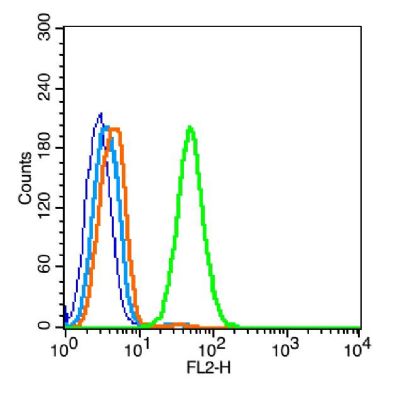
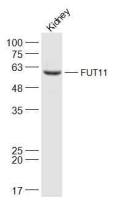
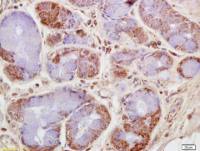
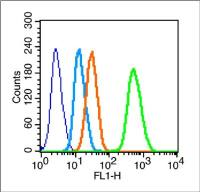
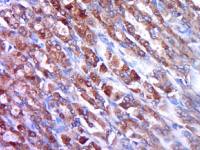
| 产品图片 | 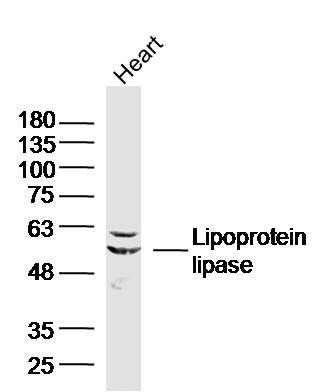 Sample: Heart (Mouse) Lysate at 40 ug Primary: Anti-Lipoprotein lipase (bs-1973R) at 1/300 dilution Secondary: IRDye800CW Goat Anti-Rabbit IgG at 1/20000 dilution Predicted band size: 52kD Observed band size: 55kD 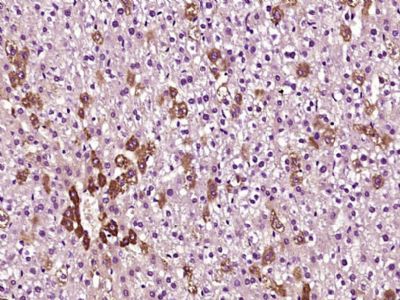 Paraformaldehyde-fixed, paraffin embedded (Rat liver); Antigen retrieval by boiling in sodium citrate buffer (pH6.0) for 15min; Block endogenous peroxidase by 3% hydrogen peroxide for 20 minutes; Blocking buffer (normal goat serum) at 37°C for 30min; Antibody incubation with (Lipoprotein lipase) Polyclonal Antibody, Unconjugated (bs-1973R) at 1:400 overnight at 4°C, followed by operating according to SP Kit(Rabbit) (sp-0023) instructionsand DAB staining. 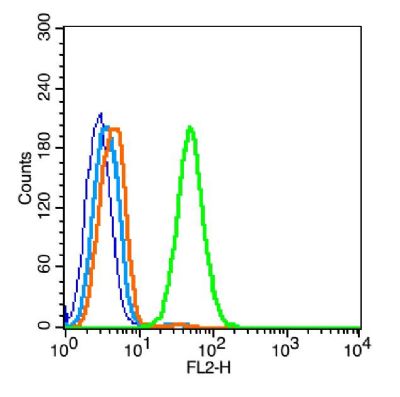 Blank control (blue line): raji (fixed with pre-warmed 4% paraformaldehyde for 30min at 37℃ and then permeabilized with 90% ice-cold methanol for 30 min on ice) Primary Antibody (green line): Rabbit Anti-Lipoprotein lipase antibody (bs-1973R); Dilution: 0.2μg /10^6 cells; Isotype Control Antibody (orange line): Rabbit IgG . Secondary Antibody (white blue line): Goat anti-rabbit IgG-PE; Dilution: 1μg /test. |
风险提示:丁香通仅作为第三方平台,为商家信息发布提供平台空间。用户咨询产品时请注意保护个人信息及财产安全,合理判断,谨慎选购商品,商家和用户对交易行为负责。对于医疗器械类产品,请先查证核实企业经营资质和医疗器械产品注册证情况。
 文献和实验
文献和实验Lipoprotein lipase (LPL) is an N -inked glycoprotein of approximately 57 kDa that is synthesized by a numbel of tissues, including white and brown adipose tissue, heart, skeletal muscle, neonatal liver and brain (1 ,2 ). In these tissues
Detecting Ligands Interacting with Lipoprotein Lipase
The primary role for lipoprotein lipase (LPL) is hydrolysis of triglycerides in chylomicrons and very low density lipoproteins (VLDL). This enzyme has also been implicated in the process of atherogenesis (for reviews see refs
In Vitro Transcription and Translation of Lipoprotein Lipase
LPL is regulated post-transcriptionally in response to several hormones. Post-translational regulation occurs in response to feeding (1 ,2 ). Glycosylation of LPL at the first N-linked glycosylation site is essential for catalytic activity
 技术资料
技术资料暂无技术资料 索取技术资料

