

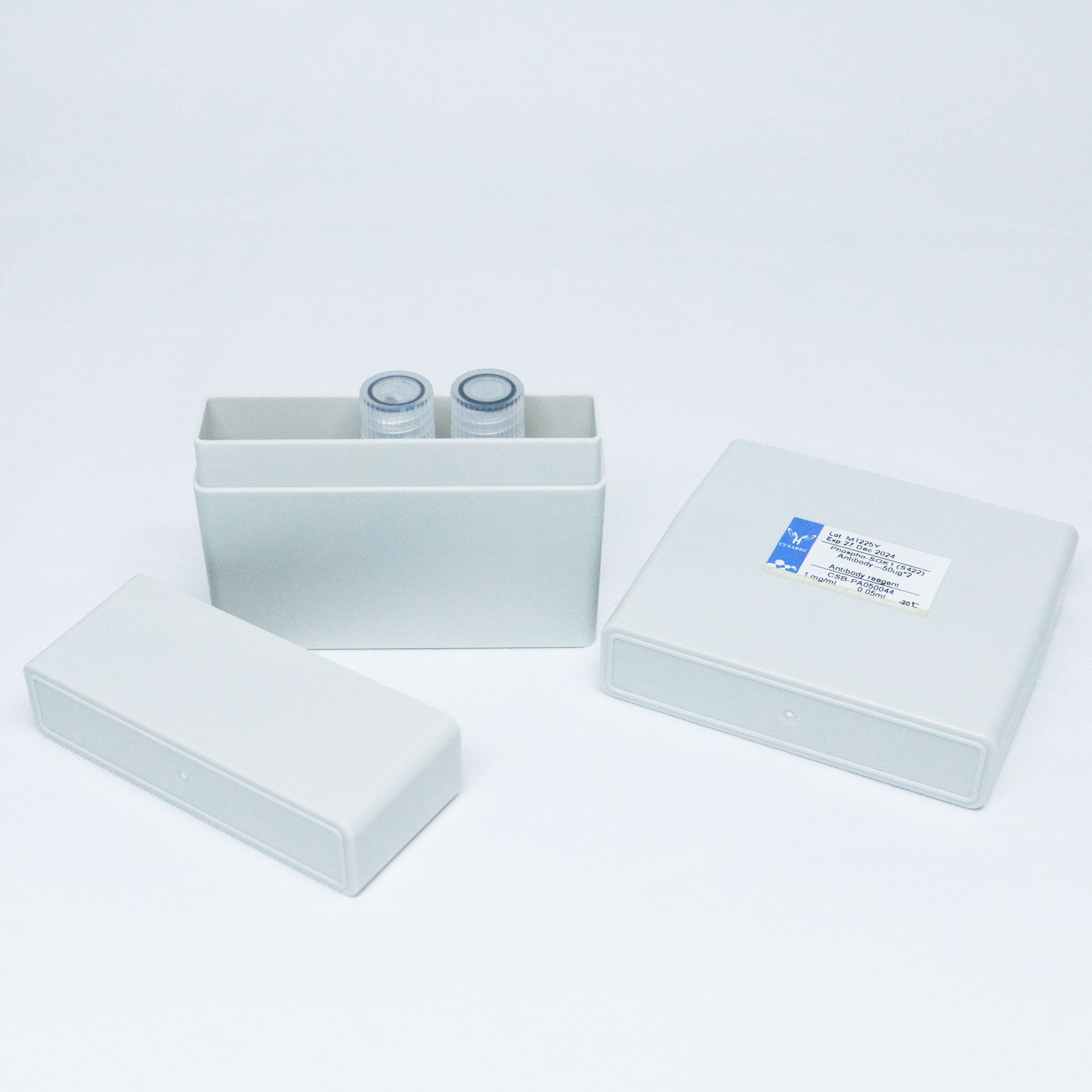
DSCR9抗体DSCR9兔多抗抗体DSCR9Down syn
drome critical region protein 9 antibody抗体DSCR9 Antibody抗体- ¥440 - 1320
- CUSABIO

- CN
- CSB-PA007200LA01HU
- 2025年07月13日
- ELISA, IHC; Recommended dilution: IHC:1:20-1:200
- Rabbit
- Human

企业认证
相关产品推荐更多 >
ARHGAP1抗体ARHGAP1兔多抗抗体RHOGAP1 antibody抗体ARHGAP1 Antibody抗体
¥440
EMD抗体EMD一抗抗体Emerin抗体EMD Antibody抗体
¥1100
STK4抗体STK4兔多抗抗体YSK3 antibody抗体STK4 Antibody, FITC conjugated抗体
¥880
RAD9B抗体RAD9B兔多抗抗体hRAD9B antibody抗体RAD9B Antibody, HRP conjugated抗体
¥880KY抗体KY兔多抗抗体Kyphoscoliosis peptidase antibody抗体KY Antibody, FITC conjugated抗体
¥880
万千商家帮你免费找货
0 人在求购买到急需产品
相关阅读
细胞污染识别与处理全攻略:5 种常见类型+关键误区Cytoscape 教程来了!快速实现顶刊同款通路网络图五大应用案例:Mustang Q 膜层析应用全解析1 个小工具,一次性搞定流程图、质粒图谱和信号通路图- 详细信息
- 文献和实验
- 技术资料
- 免疫原:
Recombinant Human Down syndrome critical region protein 9 protein (1-149AA)
- 亚型:
IgG
- 形态:
Liquid
- 保存条件:
Upon receipt, store at -20℃ or -80℃. Avoid repeated freeze.
- 克隆性:
Polyclonal
- 标记物:
Non-conjugated
- 适应物种:
Human
- 保质期:
6个月
- 抗原来源:
Homo sapiens (Human)
- 目录编号:
P59020
- 级别:
优
- 库存:
200
- 供应商:
武汉华美生物工程有限公司
- 宿主:
Rabbit
- 应用范围:
ELISA, IHC; Recommended dilution: IHC:1:20-1:200
- 浓度:
>95%,Protein G purified
- 靶点:
DSCR9
- 抗体英文名:
DSCR9 Antibody
- 抗体名:
DSCR9Down syndrome critical region protein 9 antibody
- 规格:
100μg/50μg/20μg
| 规格: | 100μg | 产品价格: | ¥1320.0 |
|---|---|---|---|
| 规格: | 50μg | 产品价格: | ¥880.0 |
| 规格: | 20μg | 产品价格: | ¥440.0 |
保存缓冲液
Preservative: 0.03% Proclin 300Constituents: 50% Glycerol, 0.01M PBS, PH 7.4
功能
/风险提示:丁香通仅作为第三方平台,为商家信息发布提供平台空间。用户咨询产品时请注意保护个人信息及财产安全,合理判断,谨慎选购商品,商家和用户对交易行为负责。对于医疗器械类产品,请先查证核实企业经营资质和医疗器械产品注册证情况。
 文献和实验
文献和实验Protein Components of the microRNA Pathway and Human Diseases
and function, such as the ribonucleases III (RNases III) Drosha and Dicer as well as Argonaute 2 (Ago2), appear to be essential. However, the accessory proteins of the miRNA pathway, such as the DiGeorge syndrome critical region gene 8 (DGCR8) protein
of many disease states, including metabolic syndrome, cardiovascular and Alzheimer's disease. Paraoxonase-1 also plays a critical role in the metabolism and detoxification of insecticides and pesticides (1). The aim of this study was to express a biologically
MicroRNA Biogenesis: Isolation and Characterization of the Microprocessor Complex
syndrome critical region 8 gene (DGCR8), which is deleted in DiGeorge syndrome (15 ,16 ). In this chapter, we detail the methods used for the biochemical isolation and identification of the Microprocessor complex from human cells. We include a protocol
 技术资料
技术资料暂无技术资料 索取技术资料

