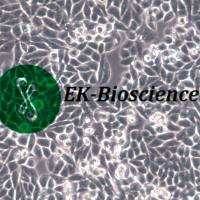
产品封面图
文献支持

BEAS-2B细胞系、BEAS-2B细胞株、BEAS-2B、

BEAS-2B 人正常肺上皮细胞
收藏
  • ¥500 - 1800
  • ATCC
  • Y-00805
  • USA
  • 2026年01月07日
    avatar
  • 企业认证

    点击 QQ 联系

    • 详细信息
    • 询价记录
    • 文献和实验
    • 技术资料
    • 物种来源

      详询

    • 相关疾病

      详询

    • 组织来源

      详询

    • 品系

      详询

    • ATCC Number

      详询

    • 细胞类型

      详询

    • 肿瘤类型

      详询

    • 供应商

      ATCC

    • 库存

      100万细胞数

    • 免疫类型

      详询

    • 细胞形态

      上皮细胞样

    • 是否是肿瘤细胞

      详询

    • 生长状态

      贴壁生长

    • 年限

      无限

    • 运输方式

      干冰

    • 器官来源

      皮肤

    • 英文名

      详询

    BEAS-2B细胞系、BEAS-2B细胞株、BEAS-2B、BEAS-2B 人正常肺上皮细胞
    产品细节图片1
    产品细节图片2 产品细节图片3
    产品细节图片4
    ATCC Number: CRL-9609™
    相关疾病: 正常
    细胞形态: 上皮样
    细胞类型: 其他细胞类型
    器官来源:
    是否是肿瘤细胞: 0
    物种来源:
    数量: 大量
    运输方式: 复苏运输
    组织来源: bronchus
    生长状态: 贴壁生长
    规格:
    Designations: BEAS-2B
    Depositors: The United States of America
    Biosafety Level: 2 [Cells contain polyomavirus DNA sequences ]
    Shipped: frozen
    Medium & Serum: See Propagation
    Growth Properties: adherent
    Organism: Homo sapiens
    Morphology: epithelial
    Source: Organ: lung
    Tissue: bronchus
    Disease: normal
    Cell Type: epithelialvirus transformed
    Permits/Forms: In addition to the MTA mentioned above, other ATCC and/or regulatory permits may be required for the transfer of this ATCC material. Anyone purchasing ATCC material is ultimately responsible for obtaining the permits. Please click here for information regarding the specific requirements for shipment to your location.
    Applications: transfection host
    Tumorigenic: No
    DNA Profile (STR): Amelogenin: XY
    CSF1PO: 9, 12
    D13S317: 13
    D16S539: 12
    D5S818: 12,13
    D7S820: 10, 13
    THO1: 7, 9.3
    TPOX: 6, 11
    vWA: 17, 18
    Comments: Epithelial cells were isolated from normal human bronchial epithelium obtained from autopsy of non-cancerous individuals.
    The cells were infected with an adenovirus 12-SV40 virus hybrid (Ad12SV40) and cloned.
    The cells retain the ability to undergo squamous differentiation in response to serum, and can be used to screen chemical and biological agents for ability to induce or affect differentiation and/or carcinogenesis.
    The cells stain positively for keratins and SV40 T antigen.
    Propagation: ATCC complete growth medium: The base medium for this cell line (BEBM) along with all the additives can be obtained from Lonza/Clonetics Corporation as a kit: BEGM, Kit Catalog No. CC-3170. ATCC does not use the GA-1000 (gentamycin-amphotericin B mix) provided with the BEGM kit. Note: Do not filter complete medium.
    Atmosphere: air, 95%; carbon dioxide (CO2), 5%
    Temperature: 37.0°C
    Growth Conditions: The flasks used should be precoated with with a mixture of 0.01 mg/ml fibronectin, 0.03 mg/ml bovine collagen type I and 0.01 mg/ml bovine serum albumin dissolved in BEBM medium .
    Subculturing: Protocol:
    1. Remove and discard culture medium.
    2. Add 2.0 to 3.0 ml of 0.25% Trypsin - 0.53mM EDTA solution containing 0.5% polyvinylpyrrolidone (PVP) to flask and observe cells under an inverted microscope until cell layer is dispersed (usually with 5 to 10 minutes).
      Note: To avoid clumping do not agitate the cells by hitting or shaking the flask while waiting for the cells to detach. Cells that are difficult to detach may be placed at 37C to facilitate dispersal.
    3. Add 6.0 to 8.0 ml of complete growth medium and aspirate cells by gently pipetting.
    4. Transfer cell suspension to centrifuge tube and spin at approximately 125 x g for 5 to 10 minutes.
    5. Discard supernatant and resuspend cells in fresh growth medium. Inoculate new flasks at 1500 to 3000 cells per sq. cm. The culture flasks used should be pre-coated with a mixture of 0.01mg/ml fibronectin, 0.03 mg/ml bovine collagen type I and 0.01mg/ml bovine serum albumin dissolved in BEBM medium (see reference below).
    6. Place culture flasks in incubators at 37C.

    Interval: Subcultured before reaching confluence.
    Medium Renewal: Every 2 to 3 days
    Preservation: Freeze medium: Complete growth medium supplemented with 1% PVP and 7.5% DMSO
    Storage temperature: liquid nitrogen vapor phase
    Related Products: 0.25% (w/v) Trypsin - 0.53 mM EDTA in Hank' BSS (w/o Ca++, Mg++):ATCC 30-2101
    Cell culture tested DMSO:ATCC 4-X
    References: 21937: Reddel RR, et al. Immortalized human bronchial epitherial mesothelial cell lines. US Patent 4,885,238 dated Dec 5 1989
    22301: Lechner JF, LaVeck MA. A serum-free method for culturing normal human bronchial epithelial cells at clonal density. J. Tissue Culture Methods 9: 43-48, 1985.
    30067: Sakamoto O, et al. Role of macrophage-stimulating protein and its receptor, RON tyrosine kinase, in ciliary motility. J. Clin. Invest. 99: 701-709, 1997. PubMed: 9045873

    让支原体远离你的细胞
    酶研生物质量保证


    据粗略估计,大约三分之一的细胞培养物都感染了支原体。这些小东西神不知鬼不觉,侵入你的细胞。由于它们体积小,生长缓慢,所以难以察觉。但是,它们的存在又确实改变了细胞的代谢过程,继而干扰你的实验结果,或造成无法解释的差异。更糟的是,拯救被感染的细胞几乎是不可能的任务。因此,就支原体污染而言,预防是第一要务。下面介绍了一些简单的预防措施,也许对你有用。

    细胞来源是关键

    支原体污染的最常见原因之一是引入的培养物已经被感染。一旦进入实验室,这些小东西会蔓延到每个角落,让你崩溃。要避免这种情况,最简单的办法就是不从其他实验室要细胞,上海酶研生物公司细胞来源正规,这些细胞经过严格检测,确保不含有支原体。

    定期检测很重要

    即使实验室没有新来的细胞,支原体也可能通过操作人员传递到现有的培养物。当然,操作人员并不知道。支原体污染的另一条路线是通过你的细胞培养试剂。培养基、酶这些常用试剂,也有可能被支原体污染。
    尽管无法完全避免人或试剂的污染,但常规检测也能避免情况恶化。也许,当支原体初次感染时,我们未必能检测到,但尽早发现,就能防止这种微生物的传播,避免大的损失。
    支原体检测有很多种。直接培养方法虽然准确率高,但需要三到四周的时间。因此,我们在常规检测中使用间接检测方法已足够,若发现阳性,则后续可采用较为繁琐的直接检测。常见的间接检测方法有基于酶活性的荧光和生化分析、PCR分析、免疫分析等。

    无菌操作要做好

    支原体污染的另一个主要源头是无菌操作不佳。尽管良好的操作可能是最简单的预防措施,但说起来容易,做起来难。每个人都会犯错,特别是在重复劳动时。因此,实验室应不定期开展培训和监督,以便让每个人都充分认识到支原体的破坏性。
    许多实验室目前仍使用抗生素,但细胞培养人员逐渐认识到这是不负责任的,因为它带来了耐药微生物的问题。相反,最好依赖自身的无菌操作来预防支原体,而只有在怀疑或确认感染的时候才使用抗生素。

    保藏细胞防万一

    最后,通过低温保藏储备一些细胞,以防支原体大面积来袭。如果支原体有抬头的迹象,或常规检测呈阳性结果,那么最可靠的补救措施是扔掉所有培养物,清洁培养箱和超净台,一切从头开始。当然,你得确保储备的细胞是不含支原体的。


    ★★★★★希望这些培养的方法可以帮到您★★★★★

    上海酶研生物ATCC细胞特点:
    1.传代情况:P2
    2.活性好、稳定性高、适应性强,易培养
    3.传代快、多:2-3天传一代,普通可传10代以上 肿瘤细胞无限制
    4.纯度高达95% 无污染和其他杂细胞
    5.有技术疑问可以提供一对一的解答:专业,及时,耐心
    6.货期短,一般冻存管5-7个工作日,复苏7-15个工作日。
    7.如有非人为质量问题,收到细胞后十个工作日内包退换

    我库细胞近3000种,来源于美国ATCC.细胞都是经过严格质量控制。
    冻存细胞时间为5-7个工作日,活细胞为7-15个工作日。

    由于细胞库现有细胞类目多,为了不出现混乱错误,需要了解相关细胞价格及详细资料请老师联系我们,对您造成的不便还请见谅!


    注:如运输过程中导致细胞污染或者死亡,我们将无条件补发
    收货后十个工作日内有其他问题提供照片可半价重发

    风险提示:丁香通仅作为第三方平台,为商家信息发布提供平台空间。用户咨询产品时请注意保护个人信息及财产安全,合理判断,谨慎选购商品,商家和用户对交易行为负责。对于医疗器械类产品,请先查证核实企业经营资质和医疗器械产品注册证情况。

    • 作者
    • 内容
    • 询问日期
    图标文献和实验
    该产品被引用文献

    *发表【中文论文】请标注:由上海酶研生物科技有限公司提供;

    *发表【英文论文】请标注:From Shanghai EK-Bioscience Biotechnology Co., Ltd.

    相关实验
    • Methods to Detect Protein Glutathionylation

      Figure 6.17.1 Detection of global protein glutathionylation in GSSG‐treated BEAS‐2B cells by immunoblotting. BEAS‐2B cells in serum‐free DMEM/F12 medium were treated with 10 mM GSSG for 1 hr. Whole‐cell extracts were prepared using NP‐40 cell lysis

    • 柱状上皮细胞简介

      柱状上皮主要被覆于鼻腔、鼻咽、支气管树、胃肠、子宫颈管、子宫内膜及输卵管等部位。柱状上皮脱落细胞主要包括涂片纤毛柱状细胞、粘液柱状细胞和储备细胞。 (1)纤毛柱状细胞:细胞呈锥形,顶端宽平,其表面有密集的纤毛,纤毛巴氏染色呈亮红色;胞质泡沫状,巴氏染色染蓝色,HE染淡红色;核圆形位于细胞中部,染色质细颗粒状。在涂片中的常见排列形式: 1)蜂房状排列:细胞成群或呈片医学教育|网搜集整理,排列紧密,不重叠。 2)栅栏状:细胞紧密排列,医学教育|网搜集整理可有重叠

    • 鳞状上皮细胞简介

      复层鳞状上皮,一般有10多层细胞。被覆于全身皮肤、口腔、喉部、鼻咽的一部分、食道、阴道的全部以及子宫颈。鳞状上皮细胞分为基底层细胞、中层细胞和表层细胞。 (1)基底层细胞 1)内底层细胞:细胞呈圆形或卵圆形,直径12~15μm;胞质巴氏染色呈深蓝、暗绿和灰蓝色,HE染色呈暗红色;胞核圆形或卵圆形,居中,染色质细颗粒状;核与胞质比(即核的直径与细胞质幅缘之比,简称核胞质比)约1:(0.5~1)。 2)外底层细胞:细胞呈圆形或椭圆形,直径15~30μm;胞质较丰富

    图标技术资料

    资料下载:

    BEAS-2B.pdf 附 (下载 6 次)

    同类产品报价

    产品名称
    产品价格
    公司名称
    报价日期
    ¥1000
    上海和序生物科技有限公司
    2025年11月17日询价
    ¥1680
    吉奥蓝图(广东)生命科学技术中心
    2025年09月26日询价
    ¥1600
    上海匹拓生物科技有限公司
    2025年12月19日询价
    询价
    上海雅吉生物科技有限公司
    2025年07月15日询价
    ¥800
    上海西格生物科技有限公司
    2025年07月15日询价
    文献支持
    BEAS-2B细胞系、BEAS-2B细胞株、BEAS-2B、BEAS-2B 人正常肺上皮细胞
    ¥500 - 1800