

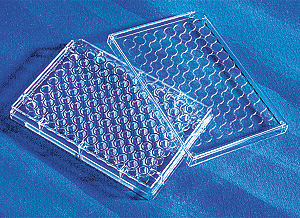
- ¥5600
- 康宁
- 美国
- BE0241
- 2025年12月05日

12 年金牌会员
企业认证
相关产品推荐更多 >

万千商家帮你免费找货
0 人在求购买到急需产品
- 详细信息
- 技术资料
- 克隆性:
多克隆
- 抗体英文名:
InVivoMAb anti-mouse IFNAR-1
- 抗体名:
小鼠 体内IFNAR-1阻断抗体,体外IFNAR-1阻断抗体
- 规格:
5mg
小鼠 体内IFNAR-1阻断抗体,体外IFNAR-1阻断抗体

Bio X Cell抗体优势:
✔ 通过大规模的组织培养生产抗体,亲和层析法纯化抗体,
✔ 所有抗体均具有高纯度(>95%)、低内毒素(<2EU/mg),无防腐剂和稳定剂的特性,适用于体内临床前研究。
✔ 所有抗体可提供100mg甚至50g的大包装,性价比非常高。
■ Bio X Cell抗体应用
■ 热销抗体
| 抗原 | 应用 | 克隆号 | InVivoMab 目录号 |
InVivoPlus 目录号 |
| PD-1 | 体内PD-1/PD-L1信号封闭 | RMP1-14 | BE0146 | BP0146 |
| 体内PD-1/PD-L1信号封闭,体外PD-1中和,IHC(冰冻),IF,WB,FC | 29F.1A12 | BE0273 | BP0273 | |
| 体内PD-1/PD-L1信号封闭,体外PD-1中和,WB | J43 | BE0033-2 | BP0033-2 | |
| InVivo rat IgG2a isotype control, PD-1同型对照,排除Fc段与抗原的非特异性结合 | 2A3 | BE0089 | BP0089 | |
| PD-L1(B7-H1) | 体内PD-L1信号封闭,IF,IHC(冰冻),FC,WB | 10F.9G2 | BE0101 | BP0101 |
| InVivo rat IgG2b isotype control, PD-L1同型对照,排除Fc段与抗原的非特异性结合 | LTF-2 | BE0090 | BP0090 | |
| CTLA-4 | 体内 CTLA-4 中和,WB | 9D9 | BE0164 | BP0164 |
| 体内和体外中和CTLA-4,WB | 9H10 | BE0131 | BP0131 | |
| 体内和体外中和CTLA-4,FC,WB | UC10- 4F10-11 |
BE0032 | BP0032 | |
| NK1.1 | 体内NK细胞去除,FC | PK136 | BE0036 | BP0036 |
| CD3ε | 体内T细胞去除,体外T细胞刺激/激活,IF,FC,WB, | 145-2C11 | BE0001-1 | BP0001-1 |
| CD4 | 体内CD4+T细胞去除,FC,WB | GK1.5 | BE0003-1 | BP0003-1 |
| CD8α | 体内CD8+T细胞去除,IF,FC,WB | 53-6.7 | BE0004-1 | BP0004-1 |
| CD25 (IL-2Rα) | 体内调节T细胞去除,FC | PC-61.5.3 | BE0012 | BP0012 |
| CD28 | 体内CD8封闭,体外T细胞刺激/激活 | 37.51 | BE0015-1 | / |
| 体外T细胞刺激/激活 | PV-1 | BE0015-5 | / | |
| CSF1R (CD115) | 体内巨噬细胞去除,体外CSF-R1中和,体内单核细胞去除, FC,WB | AFS98 | BE0213 | BP0213 |
| IL-4 | 体内IL-4中和,体外IL-4中和,体内IL-4受体刺激(as a complex with IL-4) FC,WB |
11B11 | BE0045 | BP0045 |
| IFNγ (interferon gamma) |
体内IFNγ中和,体外IFNγ中和,ELISPOT,FC,WB | XMG1.2 | BE0055 | BP0055 |
| Ly6G | 体内中性粒细胞耗竭,体内MDSC耗尽, IF,IHC(石蜡或冰冻),FC | 1A8 | BE0075-1 | BP0075-1 |
| Ly6G/Ly6C (Gr-1) | 体内Gr-1+骨髓细胞去除,IHC(石蜡或冰冻),FC | RB6-8C5 | BE0075 | BP0075 |
| IFNAR-1 | 体内IFNAR-1阻断,体外IFNAR-1阻断,WB | MAR1-5A3 | BE0241 | BP0241 |
■ InVivoMab VS InVivoPlus
| - | InVivoMab | InVivoPlus |
| 纯度 | >95% | >95% |
| 蛋白完整性 | √(SDS-PAGE) | √(SDS-PAGE) |
| 内毒素浓度 | <2EU/mg | <1EU/mg |
| 有效性验证(WB/FC/ELISA) | √ | |
| 蛋白聚集物<5% | √ | |
| 小鼠病原体测试 | √ | |
| 无叠氮化物和载体蛋白 | √ | √ |
| 大批量生产 | √ | √ |
| 适用体内研究 | √ | √ |
| 目录号 | 以BE开头 | 以BP开头 |
InVivoPlusTM 系列抗体非常适用于高灵敏性实验以及用活细胞或整个动物进行各种功能测定的体内研究,可加快您的研究进展。
■ 热销同型对照和InVivoPure抗体稀释Buffer
| 产品类型 | 品名 | 用途 | InVivoMab 目录号 |
InVivoPlus 目录号 |
| 部分热卖同型 对照 |
InVivoMab rat IgG2a isotype control | 排除一抗的Fc段与 抗原的非特异性结合, 使实验结果更加严谨, 有助于您发表高分论文 |
BE0089 | BP0089 |
| InVivoMab rat IgG2b isotype control | BE0090 | BP0090 | ||
| InVivoMab mouse IgG1 isotype control | BE0083 | BP0083 | ||
| InVivoMAb human IgG1 isotype control | BE0297 | BP0297 | ||
| InVivoPlus rat IgG2a isotype control | BE0089 | BP0089 | ||
| InVivoMab mouse IgG2a isotype control | BE0085 | BP0085 | ||
| InVivoMabrat IgG1 isotype control | BE0088 | BP0088 | ||
| InVivoPlus mouse IgG1 isotype control | BE0083 | BP0083 | ||
| InVivoMAb polyclonal Armenian hamster IgG | BE0091 | BP0091 | ||
| 抗体稀释Buffer | InVivoPure pH 7.0 Dilution Buffer | 官方指定抗体稀释 buffer,确保抗体使用 性能,加快您的实验进展 |
IP0070 | / |
| InVivoPure pH 6.5 Dilution Buffer | IP0065 | / |
✔ 为了加快您实验进度,确保实验结果的准确性,建议您搭配使用Bio X Cell一抗对应的同型对照(排除一抗的非特异性结合)和InVivoPure抗体稀释缓冲液。
About InVivoMAb anti-mouse IFNAR-1
The MAR1-5A3 monoclonal antibody reacts with mouse IFNAR-1 (IFN alpha/beta receptor subunit 1). IFNAR-1 is coexpressed with IFNAR-2 on nearly all cell types and together these two subunits make up the heterodimeric Type I IFN Receptor complex. Type I IFNs (IFN-α/β) bind to the Type I IFN Receptor complex to induce cellular responses including induction of anti-viral, anti-microbial, anti-tumor, and autoimmune responses as well as to regulate the activation, proliferation, and differentiation of many cell types. The MAR1-5A3 antibody has been shown to inhibit Type I IFN receptor signaling in vitro and in vivo.InVivoMAb anti-mouse IFNAR-1 Specifications
| Isotype | Mouse IgG1, κ |
| Recommended Isotype Control(s) | InVivoMAb mouse IgG1 isotype control, unknown specificity(BE0083) |
| Recommended InVivoPure Dilution Buffer | InVivoPure pH 7.0 Dilution Buffer(IP0070) |
| Immunogen | Extracellular domain of mouse IFNAR-1 |
| Reported Applications |
|
| Endotoxin |
|
| Purity |
|
| Formulation |
|
| Sterility | 0.2 μM filtered |
| Production | Purified from tissue culture supernatant in an animal free facility |
| Purification | Protein G |
| Storage | The antibody solution should be stored at the stock concentration at 4°C. Do not freeze. |
| RRID | AB_2687723 |
| Molecular Weight | 150 kDa |
Application References
InVivoMAb anti-mouse IFNAR-1 (Clone: MAR1-5A3)
Macal, M., et al. (2018). "Self-Renewal and Toll-like Receptor Signaling Sustain Exhausted Plasmacytoid Dendritic Cells during Chronic Viral Infection." Immunity 48(4): 730-744 e735. PubMed Although characterization of T cell exhaustion has unlocked powerful immunotherapies, the mechanisms sustaining adaptations of short-lived innate cells to chronic inflammatory settings remain unknown. During murine chronic viral infection, we found that concerted events in bone marrow and spleen mediated by type I interferon (IFN-I) and Toll-like receptor 7 (TLR7) maintained a pool of functionally exhausted plasmacytoid dendritic cells (pDCs). In the bone marrow, IFN-I compromised the number and the developmental capacity of pDC progenitors, which generated dysfunctional pDCs. Concurrently, exhausted pDCs in the periphery were maintained by self-renewal via IFN-I- and TLR7-induced proliferation of CD4(-) subsets. On the other hand, pDC functional loss was mediated by TLR7, leading to compromised IFN-I production and resistance to secondary infection. These findings unveil the mechanisms sustaining a self-perpetuating pool of functionally exhausted pDCs and provide a framework for deciphering long-term exhaustion of other short-lived innate cells during chronic inflammation. Liu, X., et al. (2015). "CD47 blockade triggers T cell-mediated destruction of immunogenic tumors." Nat Med 21(10): 1209-1215. PubMed Macrophage phagocytosis of tumor cells mediated by CD47-specific blocking antibodies has been proposed to be the major effector mechanism in xenograft models. Here, using syngeneic immunocompetent mouse tumor models, we reveal that the therapeutic effects of CD47 blockade depend on dendritic cell but not macrophage cross-priming of T cell responses. The therapeutic effects of anti-CD47 antibody therapy were abrogated in T cell-deficient mice. In addition, the antitumor effects of CD47 blockade required expression of the cytosolic DNA sensor STING, but neither MyD88 nor TRIF, in CD11c(+) cells, suggesting that cytosolic sensing of DNA from tumor cells is enhanced by anti-CD47 treatment, further bridging the innate and adaptive responses. Notably, the timing of administration of standard chemotherapy markedly impacted the induction of antitumor T cell responses by CD47 blockade. Together, our findings indicate that CD47 blockade drives T cell-mediated elimination of immunogenic tumors. Schliehe, C., et al. (2015). "The methyltransferase Setdb2 mediates virus-induced susceptibility to bacterial superinfection." Nat Immunol 16(1): 67-74. PubMed Immune responses are tightly regulated to ensure efficient pathogen clearance while avoiding tissue damage. Here we report that Setdb2 was the only protein lysine methyltransferase induced during infection with influenza virus. Setdb2 expression depended on signaling via type I interferons, and Setdb2 repressed expression of the gene encoding the neutrophil attractant CXCL1 and other genes that are targets of the transcription factor NF-kappaB. This coincided with occupancy by Setdb2 at the Cxcl1 promoter, which in the absence of Setdb2 displayed diminished trimethylation of histone H3 Lys9 (H3K9me3). Mice with a hypomorphic gene-trap construct of Setdb2 exhibited increased infiltration of neutrophils during sterile lung inflammation and were less sensitive to bacterial superinfection after infection with influenza virus. This suggested that a Setdb2-mediated regulatory crosstalk between the type I interferons and NF-kappaB pathways represents an important mechanism for virus-induced susceptibility to bacterial superinfection. Welten, S. P., et al. (2015). "The viral context instructs the redundancy of costimulatory pathways in driving CD8(+) T cell expansion." Elife 4. doi: 10.7554/eLife.07486. PubMed风险提示:丁香通仅作为第三方平台,为商家信息发布提供平台空间。用户咨询产品时请注意保护个人信息及财产安全,合理判断,谨慎选购商品,商家和用户对交易行为负责。对于医疗器械类产品,请先查证核实企业经营资质和医疗器械产品注册证情况。
 技术资料
技术资料暂无技术资料 索取技术资料
小鼠 体内IFNAR-1阻断抗体,体外IFNAR-1阻断抗体
¥5600

