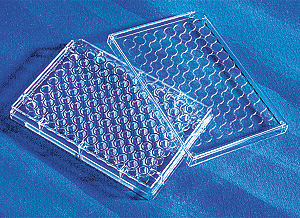
- ¥5600
- bioXCELL
- 美国
- BE0045-5mg
- 2026年01月14日

企业认证
相关产品推荐更多 >

万千商家帮你免费找货
0 人在求购买到急需产品
- 详细信息
- 询价记录
- 文献和实验
- 技术资料
- 克隆性:
多克隆
- 抗体英文名:
InVivoMAb anti-mouse IL-4
- 抗体名:
小鼠体内用IL-4抗体,体内IL-4中和,体外IL-4中和,体内IL-4受体刺激
- 规格:
5mg

| 抗原 | 应用 | 克隆号 | InVivoMab 目录号 |
InVivoPlus 目录号 |
| PD-1 | 体内PD-1/PD-L1信号封闭 | RMP1-14 | BE0146 | BP0146 |
| 体内PD-1/PD-L1信号封闭,体外PD-1中和,IHC(冰冻),IF,WB,FC | 29F.1A12 | BE0273 | BP0273 | |
| 体内PD-1/PD-L1信号封闭,体外PD-1中和,WB | J43 | BE0033-2 | BP0033-2 | |
| InVivo rat IgG2a isotype control, PD-1同型对照,排除Fc段与抗原的非特异性结合 | 2A3 | BE0089 | BP0089 | |
| PD-L1(B7-H1) | 体内PD-L1信号封闭,IF,IHC(冰冻),FC,WB | 10F.9G2 | BE0101 | BP0101 |
| InVivo rat IgG2b isotype control, PD-L1同型对照,排除Fc段与抗原的非特异性结合 | LTF-2 | BE0090 | BP0090 | |
| CTLA-4 | 体内 CTLA-4 中和,WB | 9D9 | BE0164 | BP0164 |
| 体内和体外中和CTLA-4,WB | 9H10 | BE0131 | BP0131 | |
| 体内和体外中和CTLA-4,FC,WB | UC10- 4F10-11 |
BE0032 | BP0032 | |
| NK1.1 | 体内NK细胞去除,FC | PK136 | BE0036 | BP0036 |
| CD3ε | 体内T细胞去除,体外T细胞刺激/激活,IF,FC,WB, | 145-2C11 | BE0001-1 | BP0001-1 |
| CD4 | 体内CD4+T细胞去除,FC,WB | GK1.5 | BE0003-1 | BP0003-1 |
| CD8α | 体内CD8+T细胞去除,IF,FC,WB | 53-6.7 | BE0004-1 | BP0004-1 |
| CD25 (IL-2Rα) | 体内调节T细胞去除,FC | PC-61.5.3 | BE0012 | BP0012 |
| CD28 | 体内CD8封闭,体外T细胞刺激/激活 | 37.51 | BE0015-1 | / |
| 体外T细胞刺激/激活 | PV-1 | BE0015-5 | / | |
| CSF1R (CD115) | 体内巨噬细胞去除,体外CSF-R1中和,体内单核细胞去除, FC,WB | AFS98 | BE0213 | BP0213 |
| IL-4 | 体内IL-4中和,体外IL-4中和,体内IL-4受体刺激(as a complex with IL-4) FC,WB |
11B11 | BE0045 | BP0045 |
| IFNγ (interferon gamma) |
体内IFNγ中和,体外IFNγ中和,ELISPOT,FC,WB | XMG1.2 | BE0055 | BP0055 |
| Ly6G | 体内中性粒细胞耗竭,体内MDSC耗尽, IF,IHC(石蜡或冰冻),FC | 1A8 | BE0075-1 | BP0075-1 |
| Ly6G/Ly6C (Gr-1) | 体内Gr-1+骨髓细胞去除,IHC(石蜡或冰冻),FC | RB6-8C5 | BE0075 | BP0075 |
| IFNAR-1 | 体内IFNAR-1阻断,体外IFNAR-1阻断,WB | MAR1-5A3 | BE0241 | BP0241 |
| - | InVivoMab | InVivoPlus |
| 纯度 | >95% | >95% |
| 蛋白完整性 | √(SDS-PAGE) | √(SDS-PAGE) |
| 内毒素浓度 | <2EU/mg | <1EU/mg |
| 有效性验证(WB/FC/ELISA) | √ | |
| 蛋白聚集物<5% | √ | |
| 小鼠病原体测试 | √ | |
| 无叠氮化物和载体蛋白 | √ | √ |
| 大批量生产 | √ | √ |
| 适用体内研究 | √ | √ |
| 目录号 | 以BE开头 | 以BP开头 |
| 产品类型 | 品名 | 用途 | InVivoMab 目录号 |
InVivoPlus 目录号 |
| 部分热卖同型 对照 |
InVivoMab rat IgG2a isotype control | 排除一抗的Fc段与 抗原的非特异性结合, 使实验结果更加严谨, 有助于您发表高分论文 |
BE0089 | BP0089 |
| InVivoMab rat IgG2b isotype control | BE0090 | BP0090 | ||
| InVivoMab mouse IgG1 isotype control | BE0083 | BP0083 | ||
| InVivoMAb human IgG1 isotype control | BE0297 | BP0297 | ||
| InVivoPlus rat IgG2a isotype control | BE0089 | BP0089 | ||
| InVivoMab mouse IgG2a isotype control | BE0085 | BP0085 | ||
| InVivoMabrat IgG1 isotype control | BE0088 | BP0088 | ||
| InVivoPlus mouse IgG1 isotype control | BE0083 | BP0083 | ||
| InVivoMAb polyclonal Armenian hamster IgG | BE0091 | BP0091 | ||
| 抗体稀释Buffer | InVivoPure pH 7.0 Dilution Buffer | 官方指定抗体稀释 buffer,确保抗体使用 性能,加快您的实验进展 |
IP0070 | / |
| InVivoPure pH 6.5 Dilution Buffer | IP0065 | / |
About InVivoMAb anti-mouse IL-4
The 11B11 monoclonal antibody reacts with mouse IL-4 (interleukin-4) a multifunctional 14 kDa cytokine. IL-4 is expressed primarily by activated Th2 cells and NK cells, and at lower levels by mast cells, and basophils. IL-4 signals through the IL-4Rα. Upon receptor binding IL-4 stimulates activated B and T lymphocyte proliferation, and the differentiation of B cells into plasma cells. It also induces B cell class switching to IgE, and up-regulates MHC class II production while decreasing the production of Th1 cells, macrophages, IFNγ, and dendritic cell IL-12. Like other Th2 associated cytokines, IL-4 is involved in the airway inflammation observed in the lungs of patients with allergic asthma. The 11B11 monoclonal antibody has been shown to neutralize the bioactivity of natural or recombinant IL-4.InVivoMAb anti-mouse IL-4 Specifications
| Isotype | Rat IgG1, κ |
| Recommended Isotype Control(s) | InVivoMAb rat IgG1 isotype control, anti-horseradish peroxidase(BE0088) |
| Recommended InVivoPure Dilution Buffer | InVivoPure pH 7.0 Dilution Buffer(IP0070) |
| Immunogen | Partially purified native mouse IL-4 |
| Reported Applications |
|
| Endotoxin |
|
| Purity |
|
| Formulation |
|
| Sterility | 0.2 μM filtered |
| Production | Purified from tissue culture supernatant in an animal free facility |
| Purification | Protein G |
| Storage | The antibody solution should be stored at the stock concentration at 4°C. Do not freeze. |
| RRID | AB_1107707 |
| Molecular Weight | 150 kDa |
Application References
InVivoMAb anti-mouse IL-4 (Clone: 11B11)
Gaya, M., et al. (2018). "Initiation of Antiviral B Cell Immunity Relies on Innate Signals from Spatially Positioned NKT Cells." Cell 172(3): 517-533 e520. PubMed B cells constitute an essential line of defense from pathogenic infections through the generation of class-switched antibody-secreting cells (ASCs) in germinal centers. Although this process is known to be regulated by follicular helper T (TfH) cells, the mechanism by which B cells initially seed germinal center reactions remains elusive. We found that NKT cells, a population of innate-like T lymphocytes, are critical for the induction of B cell immunity upon viral infection. The positioning of NKT cells at the interfollicular areas of lymph nodes facilitates both their direct priming by resident macrophages and the localized delivery of innate signals to antigen-experienced B cells. Indeed, NKT cells secrete an early wave of IL-4 and constitute up to 70% of the total IL-4-producing cells during the initial stages of infection. Importantly, the requirement of this innate immunity arm appears to be evolutionarily conserved because early NKT and IL-4 gene signatures also positively correlate with the levels of neutralizing antibodies in Zika-virus-infected macaques. In conclusion, our data support a model wherein a pre-TfH wave of IL-4 secreted by interfollicular NKT cells triggers the seeding of germinal center cells and serves as an innate link between viral infection and B cell immunity. Clever, D., et al. (2016). "Oxygen Sensing by T Cells Establishes an Immunologically Tolerant Metastatic Niche." Cell 166(5): 1117-1131 e1114. PubMed Cancer cells must evade immune responses at distant sites to establish metastases. The lung is a frequent site for metastasis. We hypothesized that lung-specific immunoregulatory mechanisms create an immunologically permissive environment for tumor colonization. We found that T-cell-intrinsic expression of the oxygen-sensing prolyl-hydroxylase (PHD) proteins is required to maintain local tolerance against innocuous antigens in the lung but powerfully licenses colonization by circulating tumor cells. PHD proteins limit pulmonary type helper (Th)-1 responses, promote CD4(+)-regulatory T (Treg) cell induction, and restrain CD8(+) T cell effector function. Tumor colonization is accompanied by PHD-protein-dependent induction of pulmonary Treg cells and suppression of IFN-gamma-dependent tumor clearance. T-cell-intrinsic deletion or pharmacological inhibition of PHD proteins limits tumor colonization of the lung and improves the efficacy of adoptive cell transfer immunotherapy. Collectively, PHD proteins function in T cells to coordinate distinct immunoregulatory programs within the lung that are permissive to cancer metastasis. Choi, Y. S., et al. (2015). "LEF-1 and TCF-1 orchestrate TFH differentiation by regulating differentiation circuits upstream of the transcriptional repressor Bcl6." Nat Immunol 16(9): 980-990. PubMed Follicular helper T cells (TFH cells) are specialized effector CD4(+) T cells that help B cells develop germinal centers (GCs) and memory. However, the transcription factors that regulate the differentiation of TFH cells remain incompletely understood. Here we report that selective loss of Lef1 or Tcf7 (which encode the transcription factor LEF-1 or TCF-1, respectively) resulted in TFH cell defects, while deletion of both Lef1 and Tcf7 severely impaired the differentiation of TFH cells and the formation of GCs. Forced expression of LEF-1 enhanced TFH differentiation. LEF-1 and TCF-1 coordinated such differentiation by two general mechanisms. First, they established the responsiveness of naive CD4(+) T cells to TFH cell signals. Second, they promoted early TFH differentiation via the multipronged approach of sustaining expression of the cytokine receptors IL-6Ralpha and gp130, enhancing expression of the costimulatory receptor ICOS and promoting expression of the transcriptional repressor Bcl6. Gu, A. D., et al. (2015). "A critical role for transcription factor Smad4 in T cell function that is independent of transforming growth factor beta receptor signaling." Immunity 42(1): 68-79. PubMed风险提示:丁香通仅作为第三方平台,为商家信息发布提供平台空间。用户咨询产品时请注意保护个人信息及财产安全,合理判断,谨慎选购商品,商家和用户对交易行为负责。对于医疗器械类产品,请先查证核实企业经营资质和医疗器械产品注册证情况。
- 作者
- 内容
- 询问日期
 文献和实验
文献和实验病毒刺突蛋白(Spike)受体结构域(RBD)的环状 RNA 疫苗。 实验证明,该疫苗可以在小鼠和恒河猴体内诱导产生高水平的新冠病毒中和抗体以及特异性 T 细胞免疫反应,并可以有效降低新冠病毒感染的恒河猴肺部的病毒载量,显著缓解新冠病毒感染引起的肺炎症状。 CircRNA 疫苗接种在小鼠和恒河猴体内提供了显著性保护 二、环状 RNA 疫苗的优势 一系列的对比评估表明,与 mRNA 疫苗相比,circRNA 疫苗具有以下特点或优势: 1)circRNA 具有更高的稳定性,可以在体内
与性别会影响到感染效率,一般会选择雄性小鼠做实验。 ② AAV2/3B 载体对人肝脏的感染效率明显,对 NHPS 也有效,但不能有效地转导 MOUSE 肝脏。 AAV 在肝脏应用中的局限及解决方式 肝细胞的自我更新会稀释体内 AAV 导致降低转导效率 重新注射新的血清型 使用药物阻断免疫应答重新注射同种血清型 AAV 基因整合到小鼠基因组上 体内预存的抗 AAV 中和抗体降低转导效率 实验前做中和抗体预筛,选择无中和抗体的小鼠 使用不同的血清型进行小鼠实验 预先处理小鼠来抑制其免疫应答再进行
Cancer Cell:曹雪涛院士团队揭示肿瘤相关巨噬细胞中葡萄糖代谢的增加可促进癌症转移
缺失 OGT 时不能进一步降低肿瘤细胞的侵袭;而在条件培养液中补充重组 CTSB 则可以挽救巨噬细胞中 OGT 缺乏导致的肿瘤细胞侵袭率的降低。 图片来源:Cancer Cell 然后,他们研究了 OGT 在小鼠体内促进肿瘤生长和转移的作用。他们发现巨噬细胞特异性缺乏 OGT 对体内肿瘤生长没有显著影响。然而,与对照组相比,巨噬细胞中 OGT 的缺失则可显著抑制肺转移,并可导致荷瘤小鼠的生存时间延长。此外,在切除原发肿瘤后,OGT 缺乏的荷瘤小鼠比对照组小鼠的生存率更高。这些结果表明,巨噬
 技术资料
技术资料暂无技术资料 索取技术资料