


- ¥1380 - 2200
- 康朗生物
- kl-10755R
- 中国/美国/德国
- 2026年03月19日
- WB=1:500-2000 ELISA=1:500-1000 IHC-P=1:400-800 IHC-F=1:400-800 ICC=1:100-500 IF=1:100-500
- Rabbit
- Human, Mouse, Rat, Dog, Pig, Cow, Rabbit, Sheep,

企业认证
相关产品推荐更多 >
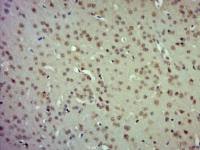
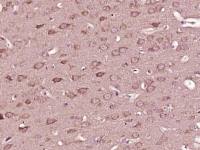

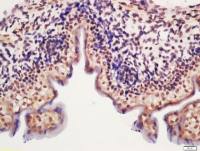
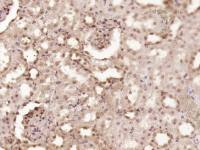
万千商家帮你免费找货
0 人在求购买到急需产品
- 详细信息
- 文献和实验
- 技术资料
- 供应商:
上海康朗生物科技有限公司
- 库存:
大量
- 目录编号:
kl-10755R
- 克隆性:
多克隆
- 抗原来源:
Rabbit
- 保质期:
12个月
- 抗体英文名:
CaIPLA2 antibody
- 抗体名:
胞浆钙独立磷脂酶A2抗体
- 宿主:
Rabbit
- 适应物种:
Human, Mouse, Rat, Dog, Pig, Cow, Rabbit, Sheep,
- 免疫原:
KLH conjugated synthetic peptide derived from human CaIPLA2:251-350/806
- 亚型:
IgG
- 形态:
冻干粉或液体
- 应用范围:
WB=1:500-2000 ELISA=1:500-1000 IHC-P=1:400-800 IHC-F=1:400-800 ICC=1:100-500 IF=1:100-500
- 浓度:
1mg/ml
- 保存条件:
-20 °C
- 规格:
100ul 200ul
| 中文名称 | 胞浆钙独立磷脂酶A2抗体 |
| 别 名 | 85 kDa calcium independent phospholipase A2; 85 kDa calcium-independent phospholipase A2; CaI PLA2; CaI-PLA2; CaIPLA2; Calcium independent phospholipase A2; Cytosolic calcium independent phospholipase A2; Group VI phospholipase A2; GVI; GVI PLA2; INAD1; iPLA(2)beta; iPLA2; IPLA2 VIA; iPLA2beta; NBIA2A; NBIA2B; PA2G6_HUMAN; PARK14; Patatin like phospholipase domain containing 9; Patatin like phospholipase domain containing protein 9; Phospholipase A2 calcium independent; Phospholipase A2 calcium independent group VI A; Phospholipase A2 group VI; Phospholipase A2 group VI cytosolic calcium independent; PLA2; PLA2G6; PNPLA9; PLPL9_HUMAN. |
| 规格价格 | 100ul/1380元 购买 200ul/2200元 购买 大包装/询价 |
| 说 明 书 | 100ul 200ul |
| 研究领域 | |
| 抗体来源 | Rabbit |
| 克隆类型 | Polyclonal |
| 交叉反应 | Human, Mouse, Rat, Dog, Pig, Cow, Rabbit, Sheep, |
| 产品应用 | WB=1:500-2000 ELISA=1:500-1000 IHC-P=1:400-800 IHC-F=1:400-800 ICC=1:100-500 IF=1:100-500 (石蜡切片需做抗原修复) not yet tested in other applications. optimal dilutions/concentrations should be determined by the end user. |
| 分 子 量 | 90kDa |
| 细胞定位 | 细胞浆 细胞膜 |
| 性 状 | Lyophilized or Liquid |
| 浓 度 | 1mg/ml |
| 免 疫 原 | KLH conjugated synthetic peptide derived from human CaIPLA2:251-350/806 |
| 亚 型 | IgG |
| 纯化方法 | affinity purified by Protein A |
| 储 存 液 | 0.01M TBS(pH7.4) with 1% BSA, 0.03% Proclin300 and 50% Glycerol. |
| 保存条件 | Store at -20 °C for one year. Avoid repeated freeze/thaw cycles. The lyophilized antibody is stable at room temperature for at least one month and for greater than a year when kept at -20°C. When reconstituted in sterile pH 7.4 0.01M PBS or diluent of antibody the antibody is stable for at least two weeks at 2-4 °C. |
| PubMed | PubMed |
| 产品介绍 | background: The protein encoded by this gene is an A2 phospholipase, a class of enzyme that catalyzes the release of fatty acids from phospholipids. The encoded protein may play a role in phospholipid remodelling, arachidonic acid release, leukotriene and prostaglandin synthesis, fas-mediated apoptosis, and transmembrane ion flux in glucose-stimulated B-cells. Several transcript variants encoding multiple isoforms have been described, but the full-length nature of only three of them have been determined to date. [provided by RefSeq, Dec 2010]. Function: Catalyzes the release of fatty acids from phospholipids. It has been implicated in normal phospholipid remodeling, nitric oxide-induced or vasopressin-induced arachidonic acid release and in leukotriene and prostaglandin production. May participate in fas mediated apoptosis and in regulating transmembrane ion flux in glucose-stimulated B-cells. Has a role in cardiolipin (CL) deacylation. Required for both speed and directionality of monocyte MCP1/CCL2-induced chemotaxis through regulation of F-actin polymerization at the pseudopods. Isoform ankyrin-iPLA2-1 and isoform ankyrin-iPLA2-2, which lack the catalytic domain, are probably involved in the negative regulation of iPLA2 activity. Subunit: Forms large oligomeric 270-350 kDa structures. Subcellular Location: Isoform LH-iPLA2: Membrane; Peripheral membrane protein. Note=Recruited to the membrane-enriched pseudopod upon MCP1/CCL2 stimulation in monocytes. Isoform SH-iPLA2: Cytoplasm. Tissue Specificity: Four different transcripts were found to be expressed in a distinct tissue distribution. DISEASE: Defects in PLA2G6 are the cause of neurodegeneration with brain iron accumulation type 2B (NBIA2B) [MIM:610217]. A neurodegenerative disorder associated with iron accumulation in the brain, primarily in the basal ganglia. It is characterized by progressive extrapyramidal dysfunction leading to rigidity, dystonia, dysarthria and sensorimotor impairment. Defects in PLA2G6 are the cause of neurodegeneration with brain iron accumulation type 2A (NBIA2A) [MIM:256600]; also known as Seitelberger disease. NBIA2A is a neurodegenerative disease characterized by pathologic axonal swelling and spheroid bodies in the central nervous system. Onset is within the first 2 years of life with death by age 10 years. Defects in PLA2G6 are the cause of Parkinson disease type 14 (PARK14) [MIM:612953]. An adult-onset progressive neurodegenerative disorder characterized by parkinsonism, dystonia, severe cognitive decline, cerebral and cerebellar atrophy and absent iron in the basal ganglia on magnetic resonance imaging. Similarity: Contains 7 ANK repeats. Contains 1 patatin domain. SWISS: O60733 Gene ID: 8398 Database links: Entrez Gene: 8398 Human Entrez Gene: 53357 Mouse Entrez Gene: 360426 Rat Omim: 603604 Human SwissProt: O60733 Human SwissProt: P97819 Mouse SwissProt: P97570 Rat Unigene: 170479 Human Unigene: 155620 Mouse Unigene: 44692 Rat Important Note: This product as supplied is intended for research use only, not for use in human, therapeutic or diagnostic applications. |
风险提示:丁香通仅作为第三方平台,为商家信息发布提供平台空间。用户咨询产品时请注意保护个人信息及财产安全,合理判断,谨慎选购商品,商家和用户对交易行为负责。对于医疗器械类产品,请先查证核实企业经营资质和医疗器械产品注册证情况。
 文献和实验
文献和实验Generation of Antibody Molecules Through Antibody Engineering
been overcome to a large extent using genetic-engineering techniques to produce chimeric mouse/human and completely human antibodies. Such an approach is particularly suitable because of the domain structure of the antibody molecule ( 2 ), where functional
The importance of antibody molecules was first recognized in the 1890s, when it was shown that immunity to tetanus and diphtheria was caused by antibodies against the bacterial exotoxins (1 ). Around the same time, it was shown that antisera
General comments: Antibodies, like most proteins, do not like to be freeze-thawed. Avoid repetitive freezing of your solution. The best way to store your antibody is to keep a high protein concentration (>1 mg/ml), add some protease
 技术资料
技术资料暂无技术资料 索取技术资料

