

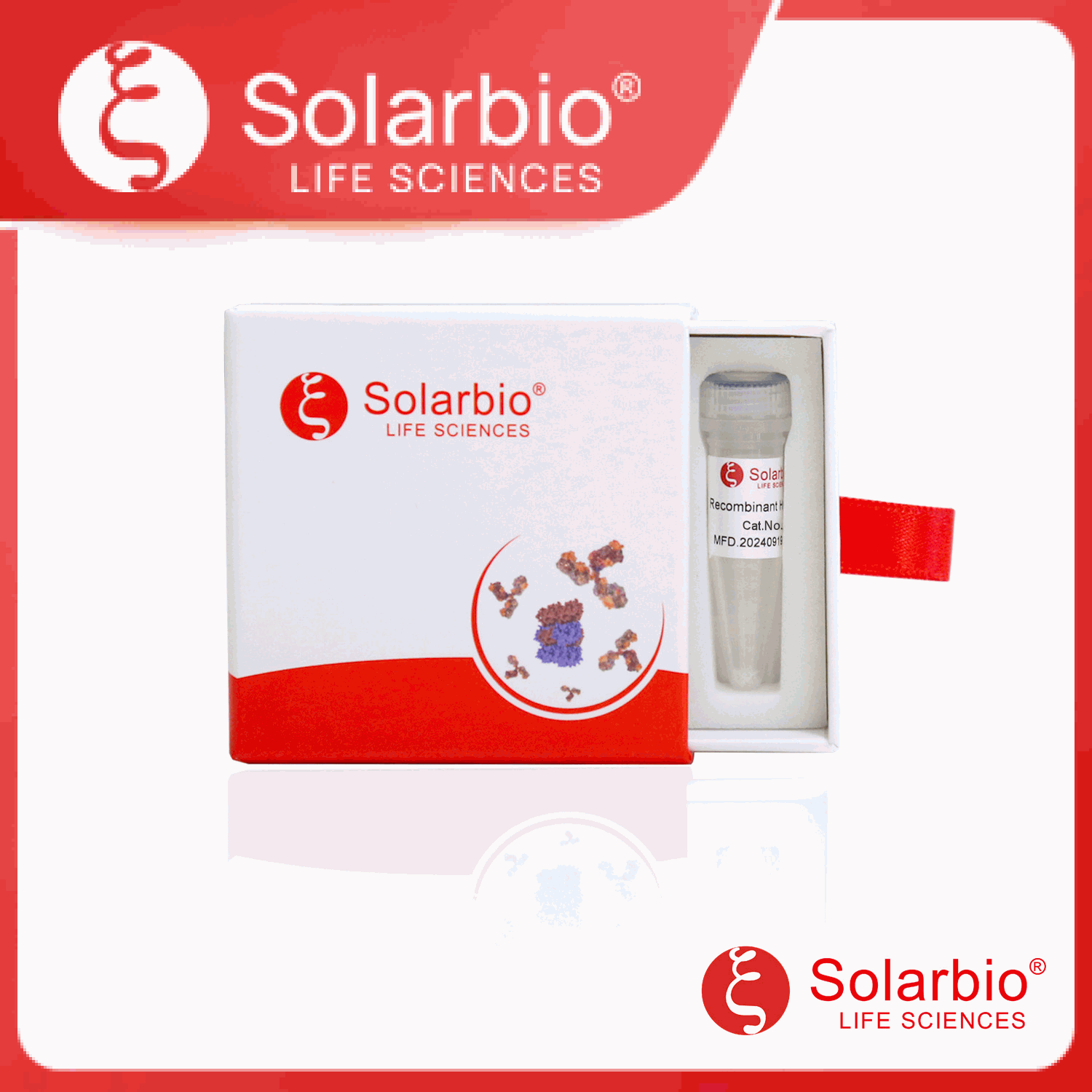
- ¥520 - 15360
- Solarbio

- 北京
- P00434
- 2026年08月13日

企业认证
相关产品推荐更多 >
万千商家帮你免费找货
0 人在求购买到急需产品
相关阅读
从原料到标记,打造属于中国自己的流式抗体品牌Cytoscape 教程来了!快速实现顶刊同款通路网络图五大应用案例:Mustang Q 膜层析应用全解析1 个小工具,一次性搞定流程图、质粒图谱和信号通路图- 详细信息
- 文献和实验
- 技术资料
- 保质期:
Upon receipt, store it immediately at -20°C or lower for long term storage. Please avoid repeated freeze-thaw cycles. This product is stable after storage at: <br>2-8°C for 2-7 days under sterile conditions after redissolves; <br>-20°C for 1 months and -70℃ for 3 months under sterile conditions after redissolves; <br>-20°C to -70℃ for 12 months in lyophilized state.
- 保存条件:
Upon receipt, store it immediately at -20°C or lower for long term storage. Please avoid repeated freeze-thaw cycles. This product is stable after storage at: <br>2-8°C for 2-7 days under sterile conditions after redissolves; <br>-20°C for 1 months and -70℃ for 3 months under sterile conditions after redissolves; <br>-20°C to -70℃ for 12 months in lyophilized state.
- 英文名:
FABP2
- 库存:
999
- 供应商:
北京索莱宝科技有限公司
- 规格:
10ug/50ug/500ug/1mg
| 规格: | 10ug | 产品价格: | ¥520.00 |
|---|---|---|---|
| 规格: | 50ug | 产品价格: | ¥1560.00 |
| 规格: | 500ug | 产品价格: | ¥10752.00 |
| 规格: | 1mg | 产品价格: | ¥15360.00 |
| 基因名 | FABP2 |
| 别名 | Fatty Acid-Binding Protein Intestinal; Fatty Acid-Binding Protein 2; Intestinal-Type Fatty Acid-Binding Protein; I-FABP; FABP2; FABPI |
| 蛋白号 | P12104 |
| 种属 | Human |
| 宿主 | E.coli |
| 产品描述 | Recombinant Human Fatty Acid-Binding Protein 2 is produced by our E.coli expression system and the target gene encoding Met1-Asp132 is expressed with a 6His tag at the N-terminus, 6His tag at the C-terminus. |
| 区间范围 | Met1-Asp132 |
| 标签信息 | C-6His,N-6His |
| 预测分子量 | 17 kDa |
| 表观分子量 | 17 KDa, reducing conditions |
| 纯度 | ≥95% by SDS‐PAGE. |
| 内毒素 | <1EU/ug as determined by LAL test. |
| 溶剂 | Lyophilized from a 0.2 μm filtered solution of 20 mM PB, 50 mM NaCl, 8% Trehalose, 0.05% Tween80, pH6.0. |
| 复溶 | Reconstituted protein solution can be diluted with distilled water. Always centrifuge tubes before opening. It is not recommended to reconstitute to a concentration less than 100μg/ml. |
| 储存条件 | Upon receipt, store it immediately at -20°C or lower for long term storage. Please avoid repeated freeze-thaw cycles. This product is stable after storage at: 2-8°C for 2-7 days under sterile conditions after redissolves; -20°C for 1 months and -70℃ for 3 months under sterile conditions after redissolves; -20°C to -70℃ for 12 months in lyophilized state. |
| 运输条件 | 冷冻运输 |
| 背景说明 | Fatty Acid-Binding Protein 2 (FABP2) is a cytoplasm protein that belongs to the Fatty-acid binding protein (FABP) family of calycin superfamily. Fatty acid binding proteins are a family of small, highly conserved, cytoplasmic proteins that bind long-chain fatty acids. FABP2 is expressed in the small intestine and at much lower levels in the large intestine, the highest expression levels in the jejunum. FABP2 binds saturated long-chain fatty acids with a high affinity, but binds with a lower affinity to unsaturated long-chain fatty acids. FABP2 is probably involved in triglyceride-rich lipoprotein synthesis and may also help maintain energy homeostasis by functioning as a lipid sensor. |
| 细胞活性 | No activity experimental data, to be verified. |
| ELISA活性 | No activity experimental data, to be verified. |
| SPR/BLI活性 | No activity experimental data, to be verified. |
| 研究领域 | 生物制药相关研究 |
| 英文名称 | FABP2 |
| 中文名称 | FABP2蛋白 |
| 单位 | 支 |
| 规格 | 10ug ; 50ug ; 500ug ; 1mg |

风险提示:丁香通仅作为第三方平台,为商家信息发布提供平台空间。用户咨询产品时请注意保护个人信息及财产安全,合理判断,谨慎选购商品,商家和用户对交易行为负责。对于医疗器械类产品,请先查证核实企业经营资质和医疗器械产品注册证情况。
 文献和实验
文献和实验The N-terminal and C-terminal portions of the heavy chain fragment C from botulinum neurotoxin serotype C [rBoNT(HC )] were expressed in Pichia pastoris and purified by ion-exchange chromotography (IEC). The N-terminal fragment, rBoNTC(Hc )-N
Expression of Recombinant Proteins with Uniform N-Termini
that recombinant proteins produced in this expression system contain homogeneous, unprocessed N-termini.
N-Glycosylation of Plant Recombinant Pharmaceuticals
N -glycosylation is a maturation event necessary for the correct function, efficiency, and stability of a high number of biopharmaceuticals. This chapter presented here proposes various methods to determine whether, how, and where a plant
 技术资料
技术资料暂无技术资料 索取技术资料

