

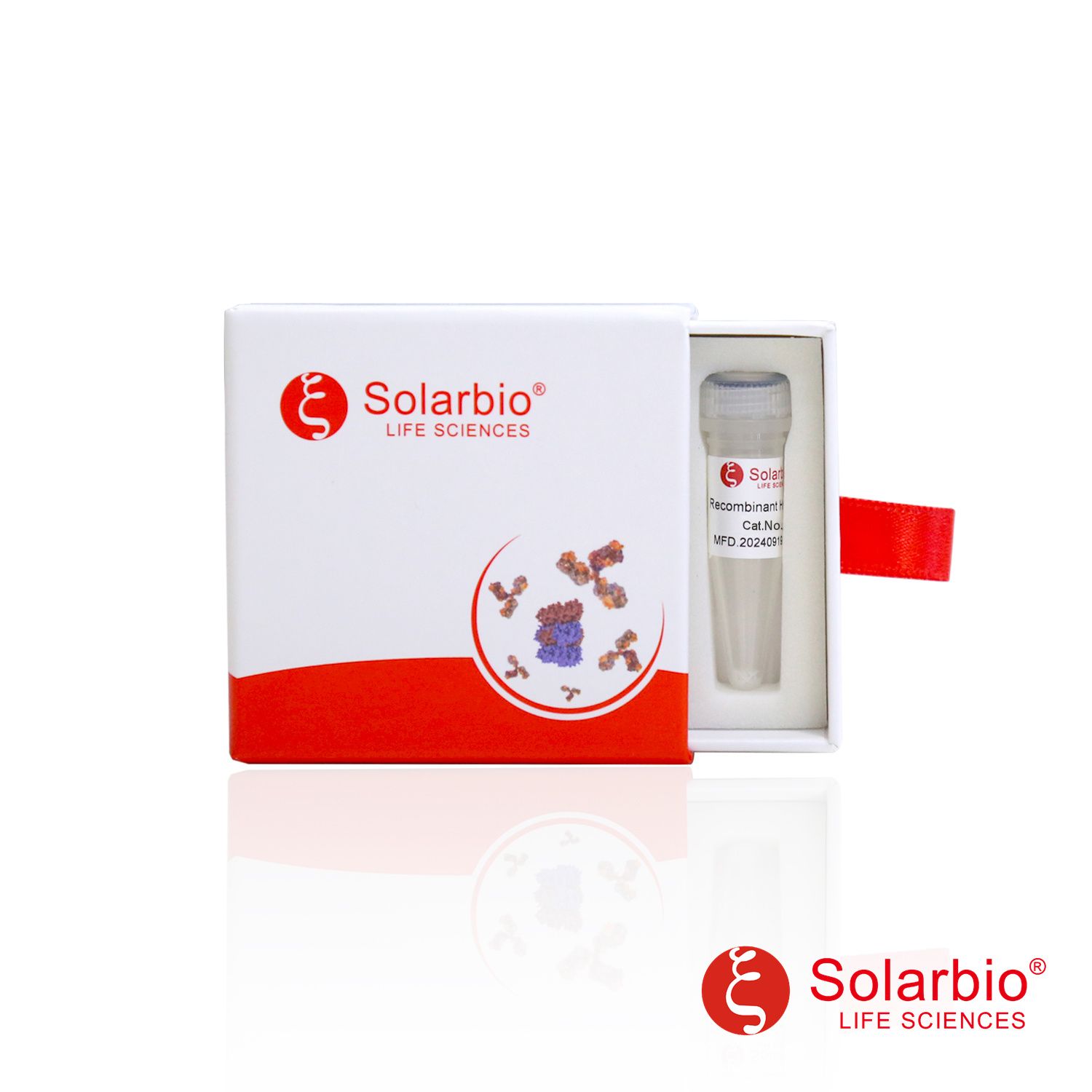
- ¥676 - 15360
- Solarbio

- P00219
- 北京
- 2025年07月25日

企业认证
相关产品推荐更多 >
P00938 Recombinant Human MAP1LC3A/Apg8p3 细胞因子/蛋白
¥988P00823 Recombinant Human Microtubule-associated Proteins 1A/1B Light Chain 3B/MAP1LC3B 细胞因子/蛋白
¥936P00928 Recombinant Mouse LAIR1/CD305 细胞因子/蛋白
¥936P01039 Recombinant Mouse TIM-3/Havcr2 细胞因子/蛋白
¥988P01081 Recombinant Human Neural Cell Adhesion Molecule 1/NCAM-1/CD56 细胞因子/蛋白
¥988
万千商家帮你免费找货
0 人在求购买到急需产品
- 详细信息
- 文献和实验
- 技术资料
- 库存:
现询
- 供应商:
北京索莱宝科技有限公司
- 规格:
1mg/500ug/50ug/10ug
| 规格: | 1mg | 产品价格: | ¥15360.0 |
|---|---|---|---|
| 规格: | 500ug | 产品价格: | ¥10752.0 |
| 规格: | 50ug | 产品价格: | ¥1560.0 |
| 规格: | 10ug | 产品价格: | ¥676.0 |
【本资料源自公开渠道,如需(此处)屏蔽,请联系删除】
标题:Extracellular vesicle surface display of αPD-L1 and αCD3 antibodies via engineered late domain-based scaffold to activate T-cell anti-tumor immunity
成员:Rui Chen, Ziqin Kang, Wenhao Li, Tianshu Xu, Yongqiang Wang, Qiming Jiang, Yuepeng Wang, Zixian Huang, Xiaoding Xu, Zhiquan Huang
论文因子:15.5 发表期刊:Journal of Extracellular Vesicles pmid:39051742
| 基本信息 | |
| 基因名 | |
| 别名 | Programmed Cell Death 1 Ligand 1;PD-L1;PDCD1 Ligand 1;Programmed Death Ligand 1;B7 Homolog 1;B7-H1;CD274;B7H1;PDCD1L1;PDCD1LG1;PDL1 |
| 外观(性状) | Lyophilized from a 0.2 μm filtered solution of 20mM PB, 150mM NaCl, pH7.4. |
| 纯度 | ≥95% as determined by reducing SDS-PAGE. |
| 储存条件 | Lyophilized protein should be stored at ≤ -20°C, stable for one year after receipt. Reconstituted protein solution can be stored at 2-8°C for 2-7 days. Aliquots of reconstituted samples are stable at ≤ -20°C for 3 months. |
| 运输条件 | The product is shipped at 2-8°C temperature. Upon receipt, store it immediately at the temperature listed below. |
| 背景说明 | CD274,also known as B7-H1 or programmed death ligand 1 (PD-L1),is a 40 kD type I transmembrane protein and a member of the B7 family within the immunoglobulin receptor superfamily.Programmed death-1 ligand-1 (PD-L1,CD274,B7-H1) has been identified as the ligand for the immunoinhibitory receptor programmed death-1(PD1/PDCD1) and has been demonstrated to play a role in the regulation of immune responses and peripheral tolerance.By binding to PD1 on activated T-cells and B-cells,PD-L1 may inhibit ongoing T-cell responses by inducing apoptosis and arresting cell-cycle progression.Accordingly,it leads to growth of immunogenic tumor growth by increasing apoptosis of antigen specific T cells and may contribute to immune evasion by cancers.PD-L1 thus is regarded as promising therapeutic target for human autoimmune disease and malignant cancers. |
| 来源 | Human cells |
| 溶剂 | Always centrifuge tubes before opening.Do not mix by vortex or pipetting. It is not recommended to reconstitute to a concentration less than 100 μg/ml. Dissolve the lyophilized protein in ddH2O. Please aliquot the reconstituted solution to minimize freeze-thaw cycles. |
| 内毒素 | Less than 0.1 ng/ug(1 IEU/ug)as determined by LAL test. |
| 单位 | 支 |
风险提示:丁香通仅作为第三方平台,为商家信息发布提供平台空间。用户咨询产品时请注意保护个人信息及财产安全,合理判断,谨慎选购商品,商家和用户对交易行为负责。对于医疗器械类产品,请先查证核实企业经营资质和医疗器械产品注册证情况。
 文献和实验
文献和实验【本资料源自公开渠道,如需(此处)屏蔽,请联系删除】
标题:Extracellular vesicle surface display of αPD-L1 and αCD3 antibodies via engineered late domain-based scaffold to activate T-cell anti-tumor immunity
成员:Rui Chen, Ziqin Kang, Wenhao Li, Tianshu Xu, Yongqiang Wang, Qiming Jiang, Yuepeng Wang, Zixian Huang, Xiaoding Xu, Zhiquan Huang
论文因子:15.5 发表期刊:Journal of Extracellular Vesicles pmid:39051742
Quantification of Human IgG and Related Fc Fusion Proteins by a Human IgG/Fc Capture ELISA
of recombinant human IgGs after production and purification for further assays. Here, we describe a human IgG/Fc capture enzyme linked immunosorbent assay (ELISA) which is simple, robust, inexpensive and specific for all types of human IgGs and related Fc fusion
human E-cadherin-IgG Fc domain fusion protein (E-cad-Fc) has recently been shown to be extremely efficient in facilitating the culture of human embryonic stem (ES) cells and induced pluripotent stem (iPS) cells under completely defined conditions
Preparation of Recombinant RNase Single-Chain Antibody Fusion Proteins
a major obstacle to the successful application of this technology. Although development of humanized antibodies have alleviated some of these effects (8 , and references therein), the toxins themselves remain a problem. Consequently, the identification of human
 技术资料
技术资料暂无技术资料 索取技术资料

