

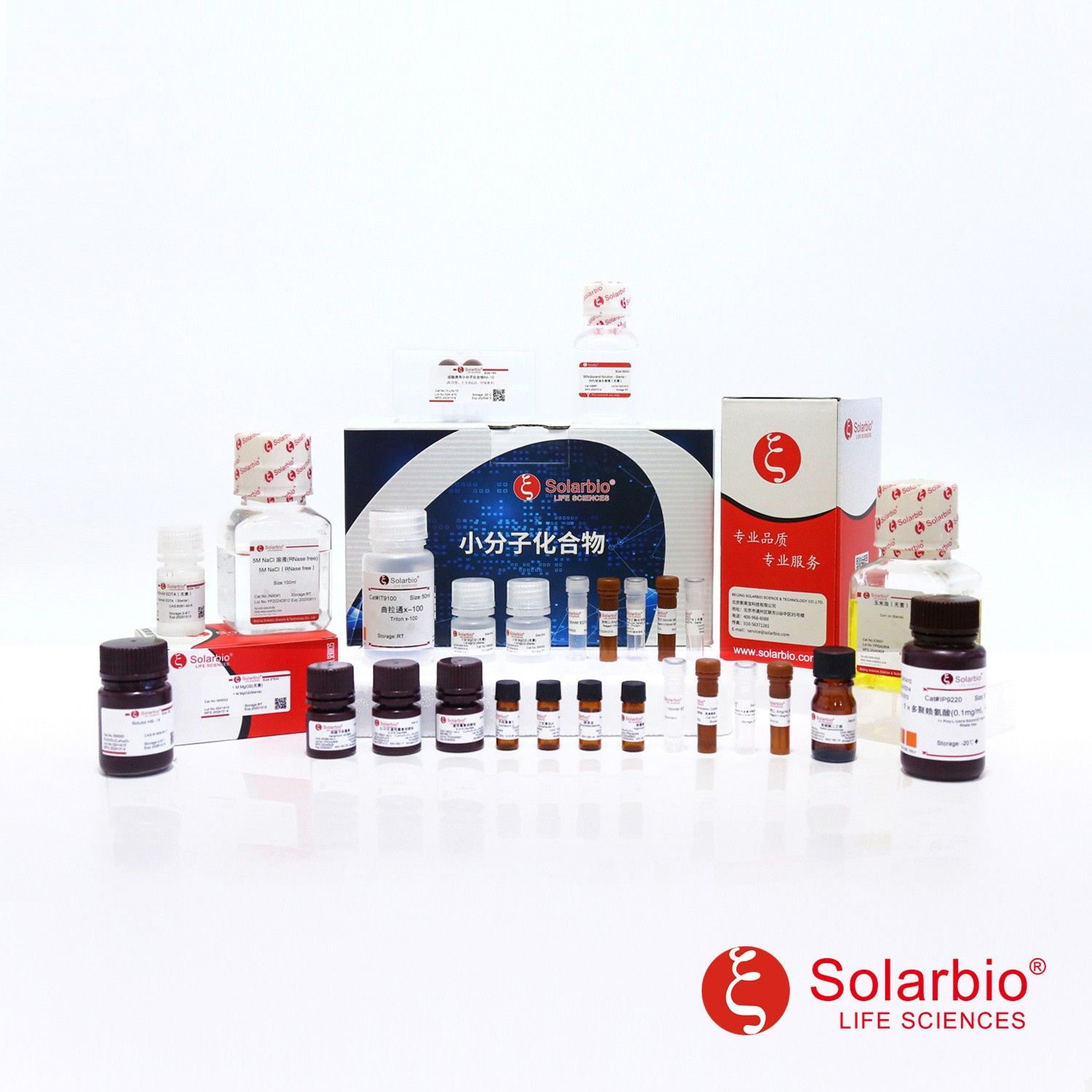
- ¥283 - 1828
- Solarbio

- 北京
- IC2420
- 2025年07月23日

企业认证
相关产品推荐更多 >
万千商家帮你免费找货
0 人在求购买到急需产品
- 详细信息
- 文献和实验
- 技术资料
- 保存条件:
Powder:-20℃,2 years;Insolvent(母液):-20℃,6 months;-80℃,1 year
- 保质期:
Powder:-20℃,2 years;Insolvent(母液):-20℃,6 months;-80℃,1 year
- 英文名:
Cariprazine Hydrochloride
- 库存:
现询
- 供应商:
北京索莱宝科技有限公司
- CAS号:
1083076-69-0
- 规格:
100mg/50mg/5mg/25mg/10mg
| 规格: | 100mg | 产品价格: | ¥1828.0 |
|---|---|---|---|
| 规格: | 50mg | 产品价格: | ¥1190.0 |
| 规格: | 5mg | 产品价格: | ¥283.0 |
| 规格: | 25mg | 产品价格: | ¥740.0 |
| 规格: | 10mg | 产品价格: | ¥460.0 |
| 基本信息 | |
| CAS | No.1083076-69-0 |
| 中文名称 | 盐酸卡利拉嗪 |
| 英文名称 | Cariprazine Hydrochloride |
| 别名 | ;Cariprazinehydrochloride;Cariprazinehydrochloride[USAN];RGH-188HCL;CariprazineHCl;UNII-KQD7C255YG; |
| 分子式 | C21H33Cl3N4O |
| 分子量 | 463.87 |
| 溶解性 | Soluble in DMSO ≥1mg/mL(Need ultrasonic) |
| 纯度 | ≥98% |
| 外观(性状) | White to off-white Solid |
| 储存条件 | Powder:-20℃,2 years;Insolvent(母液):-20℃,6 months;-80℃,1 year |
| MDL | MFCD26142670 |
| SMILES | O=C(N[C@H]1CC[C@H](CCN2CCN(C3=CC=CC(Cl)=C3Cl)CC2)CC1)N(C)C.[H]Cl |
| 靶点 | Dopamine Receptor |
| 通路 | Neuronal Signaling;GPCR & G Protein |
| 背景说明 | 是dopamine D2/D3 receptor部分激动剂,可用于精神病的相关研究。 |
| 生物活性 | Cariprazine hydrochloride is a novel antipsychotic agent candidate that exhibits high affinity for the D3 (Ki=0.085 nM) and D2 (Ki=0.49 nM) receptors, and moderate affinity for the 5-HT1A receptor (Ki=2.6 nM).[1-5] |
| In Vitro | Cariprazine stimulates inositol phosphate (IP) formation with a high potency (pEC50 8.5) with relatively low efficacy (Emax 30%)[2]. Cariprazine, a novel candidate antipsychotic, demonstrated approximately 10-fold higher affinity for human D3 versus human D2L and human D2S receptors (pKi 10.07, 9.16, and 9.31, respectively). Cariprazine displays high affinity at human serotonin (5-HT) type 2B receptors (pKi 9.24) with pure antagonism. Cariprazine has lower affinity at human and rat hippocampal 5-HT1A receptors (pKi 8.59 and 8.34, respectively) and demonstrates low intrinsic efficacy. Cariprazine displays low affinity at human 5-HT2A receptors (pKi 7.73). Moderate or low affinity for histamine H1 and 5-HT2C receptors (pKi 7.63 and 6.87, respectively) suggest Cariprazines reduced propensity for adverse events related to these receptors[2]. Cariprazine is over sixfold more potent (EC50=1.4 nM) than Aripiprazole (EC50=9.2 nM) in inhibiting isoproterenol-induced cAMP production in HEK-293 cells[4]. |
| 细胞实验 | Administration of Cariprazine (30 μg/kg) reduces the striatal uptake of both radioligands to the level of nonspecific binding compared with baseline PET measurements. Cariprazine has negligible effect on the time-activity curves in the cerebellum. At doses of 5.0 and 30 μg/kg, Cariprazine causes a dose-dependent dopamine D2/D3 receptor occupancy of ~45% and ~80% for both antagonist [11C] raclopride and agonist radioligand [11C]MNPA. Receptor occupancy of dopamine D2/D3 receptors calculated using the transient equilibrium and the MRTM2 methods ranged from 5% at the lowest dose (1.0 μg/kg) to 94% at the highest dose (300 μg/kg)[1]. The effects of 5 doses of Cariprazine (ranging from 0.005 to 0.15 mg/kg) are examined on EPM behavior of wild-type mice. Whereas lower doses of Cariprazine (0.005 to 0.02 mg/kg) do not alter the time spent in open arms, the two higher doses (0.08 and 0.15 mg/kg) lead to a significant decline of this measure (ANOVA, (F(5,52)=4.20; p=0.0032)). Moreover, the two higher doses of Cariprazine also lead to a significant decrease in the total number of arm entries (F(5,52)=7.21; p=0.0001)) but this decrease in the total number of arm entries is largely accounted for by a significant decrease in the number of closed arm entries (F(5,52)=11.75; p=0.0001)). The two highest doses of Cariprazine (0.08 and 0.15 mg/kg) have significant effects on locomotor activity, but doses ranging from 0.005 to 0.02 mg/kg do not affect anxiety-like behavior or locomotor activity in the EPM test[3]. A significant (P[4]. |
| 细胞实验 | Cells are seeded on a 24-well tissue culture plate in 500 μL of medium. Fifty microliters of medium containing 0.55 μCi myo-[3H]inositol is added (final concentration 1 μCi/mL) and incubated for 18-20 h. Cells are then washed three times with buffer containing 140 mM NaCl, 5 mM KCl, 2 mM CaCl2, 5 mM HEPES, 5 mM Na-HEPES, 20 mM glucose, and 10 mM LiCl (pH 7.4). Cells are then incubated for an additional 60 min (37°C) in medium with test compounds alone (agonist test) or alongside 1000 nM (±)-Quinpirole (antagonist test). Medium is then aspirated off, cells are lysed by adding 400 μL of 0.1 M HCl/2 mM CaCl2, and supernatants are frozen at ?72°C. After thawing and centrifugation at 1000g for 10 min, 200 μL of each supernatant is loaded on 250 μL of AG1-X8 (formate form) anion exchange column. Effluent is discarded, and columns are washed twice in 1.5 mL of distilled water. IPs are eluted with 2.5 mL of 1 M ammonium formate/0.1 M formic acid directly into scintillation vials, 10 mL of Optiphase HiSafe 3 is added, and the radioactivity is determined in a TriCarb 4900 scintillation counter[2]. |
| 动物实验 | Mice[3] Experiments are performed on wild-type C57Bl/6J mice. In tests of cognitive functions, it is essential to employ concentrations of drugs that have no effects on emotional behavior and that do not impair locomotor activity. Whether Cariprazine (administered at a dose range of 0.005 to 0.15 mg/kg) is first tested affected the behavior of mice in the EPM, a test of anxiety-related behavior that is also critically dependent upon normal locomotor activity. Animals are exposed to an EPM apparatus designed for mice (leg height: 45 cm, arm length: 35 cm, lane width: 5 cm, wall height: 15 cm). Testing (under 100 lux lighting) is performed between 1 and 4 PM. Mice are placed in the center of the maze and their time spent in open arms and the number of closed and open arm entries during a 5 min test period is recorded. Measures of the time spent in open arms and the number of open arm entries served as a measure of anxiety-like behavior. The number of closed arm entries served as a measure of locomotor activity. Rats[4] Adult male Sprague-Dawley rats (150-300 g) are used. Cariprazine is dissolved in 0.9% saline and administered at 0.06, 0.25, 0.5, and 1.0 mg/kg via intraperitoneal (i.p.) injection 1 h before i.c.v. injection of ouabain and daily thereafter for 7 days. Open field activity is assessed immediately following the i.c.v. injection and again after 7 days (the activity is noted 10-14 h after the last i.p. injection of Cariprazine). |
| 激酶实验 | These assays are done in 50 mM Tris (pH 7.4), 100 mM NaCl, 7 mM MgCl2, 1 mM EDTA, and 1 mM DTT. Assay tubes (final volume 250 μL) contain 50 μM (striatum and hippocampus) or 1 μM (D2 and D3 cell membrane) GDP, the ligand to be examined, and membrane suspension (250 μg tissue/tube for the striatum and hippocampus and 20 μg protein/tube for hD2 and hD3 membranes). Samples are preincubated for 10 min at 30°C. After the addition of 50 pM [35S]GTPγS, membranes are incubated for an additional 60 min at 30°C. Nonspecific binding is determined in the presence of 10 μM GTPγS; basal binding is determined in the presence of buffer only. The assay is terminated by rapid filtration through UniFilter GF/B using a harvester, and the membranes washed four times with 1 mL of ice-cold buffer. After drying (40°C for 1 h), 40 μL of Microscint is added to the filters, and the bound radioactivity is determined by a TopCount NXT counter[2]. |
| 数据来源文献 | [1]. Seneca N, et al. Occupancy of dopamine D2 and D3 and serotonin 5-HT1A receptors by the novel antipsychotic drug candidate, cariprazine (RGH-188), in monkey brain measured using positron emission tomography. Psychopharmacology (Berl). 2011 Dec;218(3):579-8 [2]. Kiss B, et al. Cariprazine (RGH-188), a dopamine D(3) receptor-preferring, D(3)/D(2) dopamine receptor antagonist-partial agonist antipsychotic candidate: in vitro and neurochemical profile. J Pharmacol Exp Ther. 2010 Apr;333(1):328-40. [3]. Zimnisky R, et al. Cariprazine, a dopamine D(3)-receptor-preferring partial agonist, blocks phencyclidine-induced impairments of working memory, attention set-shifting, and recognition memory in the mouse. Psychopharmacology (Berl). 2013 Mar;226(1):91-100. [4]. Gao Y, et al. Cariprazine exerts antimanic properties and interferes with dopamine D2 receptor β-arrestin interactions. Pharmacol Res Perspect. 2015 Feb;3(1):e00073. [5]. Citrome L. Cariprazine in schizophrenia: clinical efficacy, tolerability, and place in therapy. Adv Ther. 2013 Feb;30(2):114-26. |
| 单位 | 瓶 |
风险提示:丁香通仅作为第三方平台,为商家信息发布提供平台空间。用户咨询产品时请注意保护个人信息及财产安全,合理判断,谨慎选购商品,商家和用户对交易行为负责。对于医疗器械类产品,请先查证核实企业经营资质和医疗器械产品注册证情况。
 文献和实验
文献和实验亦称脏器感觉。系饥饿、食欲、渴、恶心、便意、尿意、性欲乃至性感、饱感、疲劳感、畏寒、眩晕等定位(投射)不明确的内感觉之总称。与特殊感觉和体感觉不同,是一种纯粹感受体内的内感受性感觉,在要求特定器官或全身活动时,以及正处于兴奋和活动时或身体异常时发生。伴随有满足、不满足,快意、不快等强烈的感觉,具有告知肉体本身的情况,控制其行为,反射性地促进或抑制运动和分泌的功能。畏寒和热感与皮肤的温度觉并无关系,而是由调节失去平衡所直接引起的。作为器官感觉的感受器,可列举游离神经末梢、帕氏小体、血管
兴奋性突触后电位 excitatory postsynapt-ic potential
兴奋性突触后电位 excitatory postsynapt-ic potential 略称 EPSP。是指由兴奋性突触的活动,在突触后神经元中所产生的去极化性质的膜电位变化。这种去极化超过阈值时,就产生突触后神经元的兴奋,亦即产生动作电位。在猫脊髓运动神经元中,刺激对应 Ia 群的向中纤维时所产生的 EPSP在 1 1.5毫秒内达顶点,以后则大致按指数函数下降, 10 20毫秒内回到静息电位水平。这时,突触下膜在化学递质作用下,增大了钠离子或许还有钙离子的透性,而产生
抑制性突触后电位 inhibitory postsynapt- ic potential
抑制性突触后电位 inhibitory postsynapt- ic potential 略称为 IPSP。由抑制性突触的活动在突触后神经元中所引起的膜电位变化。在脊椎动物中是超极化性的变化,例如由猫脊髓运动神经元的 Ia群抑制而产生的 IPSP,表现为与由 Ia群纤维所引起的兴奋性突触后电位( EPSP)的去极化大致构成镜象的时间过程,具有快速的上升相和缓慢的恢复相。化学传递物质作用于突触下膜,主要使对氯离子的透性增大(设想有钾离子参与的情况,也有只依靠钾离子的情况)。其作用
 技术资料
技术资料暂无技术资料 索取技术资料

