

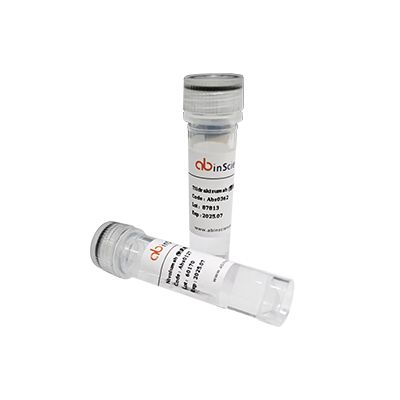
- ¥2588 - 9188
- abinScience
- France
- JN072010
- 2026年04月26日
- Human
- Escherichia coli

企业认证
相关产品推荐更多 >


万千商家帮你免费找货
0 人在求购买到急需产品
相关阅读
阿拉丁试剂,充足现货,稳定批间差Cytoscape 教程来了!快速实现顶刊同款通路网络图五大应用案例:Mustang Q 膜层析应用全解析1 个小工具,一次性搞定流程图、质粒图谱和信号通路图- 详细信息
- 文献和实验
- 技术资料
- 亚型:
IgG1, kappa
- 形态:
Liquid
- 保存条件:
-20°C
- 克隆性:
单克隆
- 适应物种:
Escherichia coli
- 保质期:
twelve months
- 级别:
一抗
- 供应商:
武汉益普生物科技有限公司
- 宿主:
Human
- 抗体英文名:
InVivoMAb Anti-Escherichia coli shiga toxin type 1/stx1B Antibody (Iv0193)
- 规格:
100μg/1mg
| 规格: | 100μg | 产品价格: | ¥2588.0 |
|---|---|---|---|
| 规格: | 1mg | 产品价格: | ¥9188.0 |
| 产品名 | InVivoMAb Anti-Escherichia coli shiga toxin type 1/stx1B Antibody (Iv0193) |
| 货号 | JN072010 |
| 宿主 | Human |
| 种属反应性 | Escherichia coli |
| 克隆类型 | Monoclonal |
| 克隆号 | Iv0193 |
| Accession号 | Q47641 |
| 靶标 | SLT-I B Subunit, Shiga toxin 1 B-subunit, Shiga toxin 1c subunit B, Shiga toxin Stx1 subunit B, Shiga toxin Stx1c subunit B, Shiga-like toxin 1B-subunit, Sxt1B, stx1vB, stx1 B-subunit, stx1B, stx1b, stxB1c, Escherichia coli |
| 同种型 | IgG1, kappa |
| 应用 | ELISA, Neutralization |
| 内毒素水平 | Please contact with the lab for this information. |
| 纯化方式 | Protein A/G purified from cell culture supernatant. |
| 纯度 | >95% as determined by SDS-PAGE. |
| 状态 | Liquid |
| 保存溶液 | 0.01M PBS, pH 7.4. |
| 稳定性和存储 | Use a manual defrost freezer and avoid repeated freeze-thaw cycles. Store at 4°C short term (1-2 weeks). Store at -20°C 12 months. Store at -80°C long term. |
| 说明 | For research use only. Not suitable for clinical or therapeutic use. |

风险提示:丁香通仅作为第三方平台,为商家信息发布提供平台空间。用户咨询产品时请注意保护个人信息及财产安全,合理判断,谨慎选购商品,商家和用户对交易行为负责。对于医疗器械类产品,请先查证核实企业经营资质和医疗器械产品注册证情况。
 文献和实验
文献和实验Protocols to Study Effects of Shiga Toxin on Mononuclear Leukocytes
Endothelial cells are regarded as the main targets of the Shiga toxins (Stxs) during infections caused by Stx-producing Escherichia coli (STEC). However, several investigations also confirmed an effect of these toxins on immune cell functions
Shiga Toxin Interactions with the Intestinal Epithelium
in patients infected with Shiga toxin-producing E. coli (STEC). Although the majority of STEC infected patients have non-life-threatening diarrhea, STEC infection can result in serious gastrointestinal and systemic complications such as hemorrhagic colitis
Detection and Subtyping of ShigaToxin-Producing Escherichia coli (STEC)
When the Japanese microbiologist Shiga discovered a bacterium causing dysentery in humans in 1898, the organism was designated Shigella dysenteriae type 1. The toxin produced by the germ was found to have enterotoxic and neurotoxic properties
 技术资料
技术资料暂无技术资料 索取技术资料

