

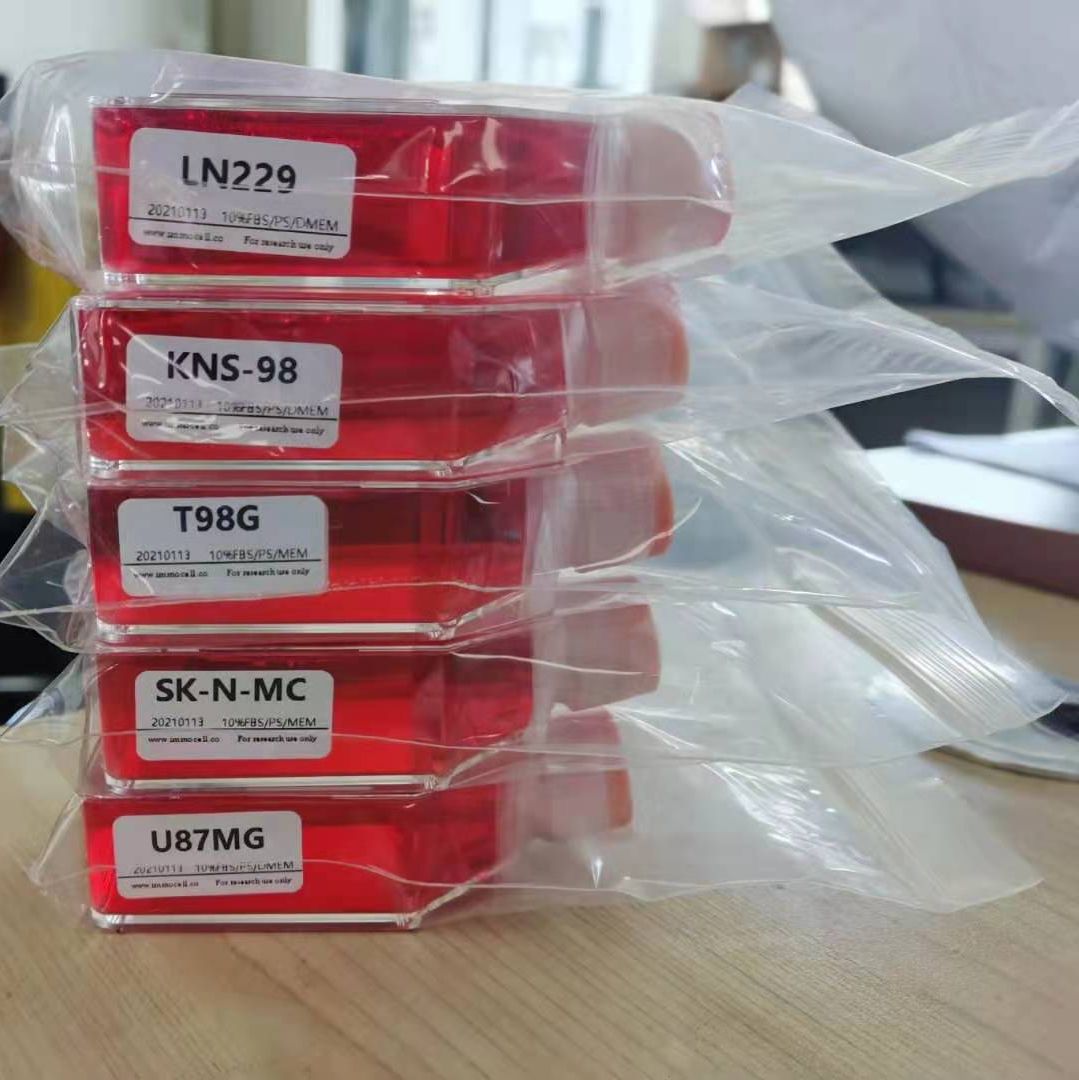
- ¥5460
- 南京万木春生物
- 进口/国产
- WM-24JY597
- 2026年09月01日

企业认证
相关产品推荐更多 >
万千商家帮你免费找货
0 人在求购买到急需产品
相关阅读
源叶生物 十万种现货试剂速发,品质稳、品类全,实验不再等!Takara 秋促来袭,提取+反转录+定量套装仅 1200 元abinScience 体内级抗体 全年锁价 低至 ¥1200阿拉丁 22万+ 科研级产品现货速发,品质严控、科研无忧- 详细信息
- 文献和实验
- 技术资料
- 英文名:
/
- 库存:
现货库存
- 供应商:
/
- 肿瘤类型:
/
- 细胞类型:
/
- 品系:
/
- 组织来源:
ATCC/DSMZ/ECACC
- 相关疾病:
/
- 物种来源:
人或动物
- 免疫类型:
/
- 细胞形态:
/
- 是否是肿瘤细胞:
/
- 器官来源:
/
- 运输方式:
常温或干冰
- 年限:
/
- 生长状态:
/
- 规格:
T25
|
种属 |
小鼠 |
|
组织来源 |
正常肝脏组织 |
|
传代比例 |
1:2传代 |
|
完全培养基配置 |
基础培养基500ml ;生长添加剂5ml ;胎牛血清10ml ;双抗5ml |
|
简介 |
胆管 ,输送胆汁的管道。由肝分泌的胆汁 ,经肝左、右管、肝总管、胆囊管进入胆囊贮存 ,肝内胆管的部分包括 : 左、右肝管;左内叶、左外叶、右前叶、右后叶胆管;各肝段胆管;小叶间胆管;毛细胆管 ,常见的胆管病变如胆道 闭塞、原发性硬化性胆管炎、胆管癌等 ,都是以胆管上皮为病变靶位 ,因此研究胆管上皮细胞的生物学特性和病理变 化有重要意义。在这些病变过程中 ,肝内胆管上皮常暴露于常暴露于较高炎症因子中 ,会表现细胞损伤和继发性增值 为特征的病理变化。 |
|
形态 |
上皮细胞样 ,多角形细胞样 |
|
生长特征 |
贴壁生长 |
|
细胞检测 |
细胞角蛋白19( CK-19 )免疫荧光染色为阳性免疫荧光鉴定 ,细胞纯度可达90%以上 ,不含有HIV-1、HBV、 HCV、支原体、细菌、酵母和真菌等。 |
|
倍增时间 |
每周 2 至 3 次 |
|
换液频率 |
2-3天换液一次 |
|
培养条件 |
气相 :空气 ,95% ;二氧化碳 ,5%。 温度 :37摄氏度 ,培养箱湿度为70%-80%。 |
|
冻存条件 |
冻存液 :90%FBS ,DMSO 10%, 或使用非程序冻存液 :官网货号JY-H040 |
|
产品使用 |
仅限于科学研究 ,不可作为动物或人类疾病的治疗产品使用。 |
significantly down-regulated in OV compared with normal tissues. Moreover, the signatures of the TIME were validated using ICGC cohort and the ArrayExpress cohort. Our study clustered the OV patients into an immune-activated subtype, immune-suppressed subtype, and non-Immune The carrier could reactivate TAMs and reprogram their functions, reverse the immunosuppressive tumor microenvironment, and inhibit tumor growth in a tumor-bearing mouse model. In summary, redirecting the polarization of TAMs is a potential therapeutic associated with PD-1 inhibitors. No toxicity above grade III was owdtrved. The objective response rate was 38.5%. The median PFS was 5.6 months and median OS was not reached at a median follow-up of 11.7 months.epithelial cancer cells. Tumour microenvironment comprises not only stromal cells, mainly Bone is the most frequent site of breast cancer and prostate cancer metastasis, and one of the most common sites of metastasis for many solid tumors. Once cancer cells colonize in the bone, it imposes a major clinical challenge for the treatment of the disease, and fatality rates increase drastically. Bone, the largest organ in the body, provides a fertile microenvironment enriched with nutrients, growth factors and hormones, a generous reward for cancer cells. Dependent on cancer type, cancer cells can cause osteoblastic (bone forming) or osteolytic lesions to promote the net resorption and/or release of growth factors from the bone extracellular matrix. These processes activate a 'vicious cycle', leading to disruption of bone integrity and promoting cancer cell growth and migration. Cancer cells influence the bone microenvironment favoring their colonization and growth. In order to metastasize to the bone, cancer cells must first migrate from the site of origin, and once established within the bone, they must overcome the dormant inducing effects of resident cells. If successful, cancer cells can then colonize and continually disrupt bone homeostasis that is primarily maintained by osteocytes, the most abundant bone cell type. For example, it has been shown that exercise induces osteocytes to release anabolic factors that inhibit osteoclast resorptive activity, promote dormancy and the release of anti-cancer factors that inhibit breast cancer cell metastasis. In this review, we will summarize recent research findings and provide mechanistic insights related to the role of osteocytes in osteolytic metastasis.
风险提示:丁香通仅作为第三方平台,为商家信息发布提供平台空间。用户咨询产品时请注意保护个人信息及财产安全,合理判断,谨慎选购商品,商家和用户对交易行为负责。对于医疗器械类产品,请先查证核实企业经营资质和医疗器械产品注册证情况。
 文献和实验
文献和实验/Class and provided potential clues for further research on the molecular mechanisms and immunotherapy strategies of OV.Recent progress in deciphering the mechanisms underlying the concepts of tumor immunosurveillance and immunoevasion has opened new opportunities for
PriCells: 小鼠乳腺上皮细胞培养 实验材料: 1. 10-12周龄妊娠小鼠乳腺组织 2. 不含Ca 2+ 和Mg 2+ 的1×PBS,添加200000IU/L青霉素、200mg/L链霉素和200000U/L庆大霉素,pH7.4 3. FBS、含5%牛血清白蛋白(BSA)的PBS
小鼠色素上皮细胞衍生因子(PEDF)ELISA试剂盒 说明书
上海西唐生物科技有限公司 021-55229872, 65333639 www.westang.com 小鼠 色素上皮细胞衍生因子 ( PEDF )ELISA 试剂盒 ( 用于血清、血浆、细胞培养上清液和唾液等其它生物体液内 ) 原理 本实验采用双抗体夹心 ABC-ELISA 法。用抗小鼠 PEDF 单抗包被于酶标板上,标准品和样品中的 PEDF与单抗结合,加入生物
三句话读懂一篇 CNS:这一常见氨基酸竟会激活肿瘤生长?尿液可用于诊断新冠轻重症……
6:来源 Nature Ecology & Evolution 7. Cancer Cell:多组学研究联合绘制肝内胆管癌的分子特征图谱 肝内胆管癌是世界第二高发的肝脏类恶性肿瘤。 2021 年 12 月 30 日,复旦大学附属中山医院樊嘉院士等多个课题组联合在 Cancer Cell 杂志上发表研究论文 Proteogenomic characterization identifies clinically relevant subgroups of intrahepatic
 技术资料
技术资料暂无技术资料 索取技术资料

