- 询价
- Corning Biocoat
- 356235
- 美国
- 2025年09月08日

企业认证
相关产品推荐更多 >


万千商家帮你免费找货
0 人在求购买到急需产品
- 详细信息
- 文献和实验
- 技术资料
- 库存:
Corning Biocoat产品目录 2023
- 英文名:
Corning Biocoat产品目录 2023
- CAS号:
Corning Biocoat产品目录 2023
- 保质期:
Corning Biocoat产品目录 2023
- 供应商:
上海辅泽商贸有限公司
- 保存条件:
-20℃
- 规格:
356235
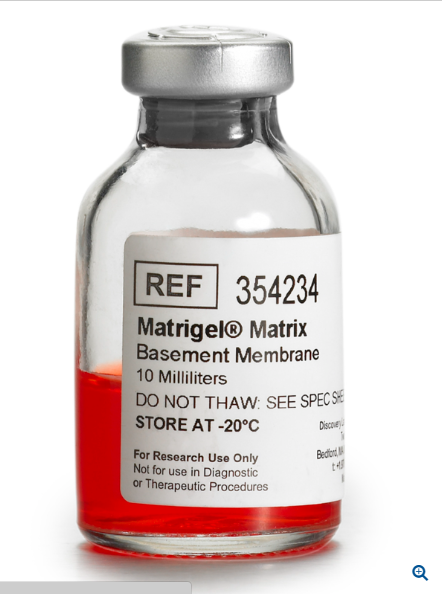
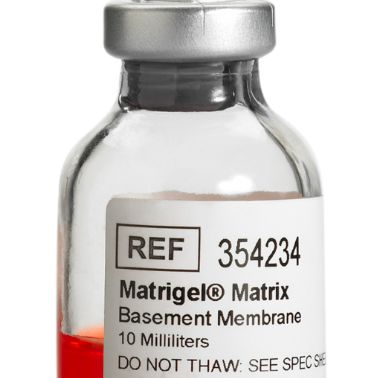
康宁Matrigel基质是分离自Engelbreth-Holm-Swarm (EHS) 小鼠肉瘤的可溶性基底膜提取物,该肿瘤富含细胞外基质蛋白,包括层粘连蛋白 (主要成分)、IV型胶原、硫酸乙酰肝素蛋白聚糖、巢蛋白和多种生长因子。
质量
- 通过小鼠抗体产物 (MAP) 检测进行常规小鼠菌落病原体筛选
- 对包括LDEV在内的多种病原体进行广泛的PCR检测,确保对生产过程中使用的原材料实施严格控制
- 细菌、真菌和支原体检测均为阴性
- 通过Lowry方法测定蛋白浓度
- 通过鲎阿米巴样细胞溶解物试验测定内毒素水平
- 在37℃下进行14天BD Matrigel基质凝胶稳定性测试
- 利用神经轴突生长试验测定各批次的生物活性。将鸡背根神经节接种到1.0mm厚的康宁Matrigel基质上,48小时后,在未添加神经生长因子的情况下,神经轴突生长试验需呈阳性反应
来源 Engelbreth-Holm-Swarm小鼠肿瘤
应用
- 细胞生长和分化
- 代谢/毒理学研究
- 侵袭实验
- 体外和体内 血管生成实验
- 体内血管生成研究和促进免疫抑制小鼠肿瘤形成
特性
- 经认证不含LDEV
- 全面的质量控制,远超行业标准
- 严格的功能验证
- 文献引用最多的基底膜基质
| 产品编号 | 产品名称 | 数量/包 | 数量/箱 | 品牌 | |||
|---|---|---|---|---|---|---|---|
| 354230 | Corning® Matrigel® 生长因子减量 (GFR) 基底膜基质,不含LDEV,10 mL | 1 /包 | 1 /箱 | Corning® | |||
| 354234 | Corning® Matrigel® 基底膜基质,不含LDEV,10 mL | 1 /包 | 1 /箱 | Corning® | |||
| 354248 | Corning® Matrigel® 基底膜基质,高浓度 (HC),不含LDEV,10 mL | 1 /包 | 1 /箱 | Corning® | |||
| 354262 | Corning® Matrigel® 基质,高浓度 (HC),不含酚红,不含LDEV,10 mL | 1 /包 | 1 /箱 | Corning® | |||
| 354263 | Corning® Matrigel® 基质,高浓度 (HC),生长因子减量(GFR),*不含LDEV,10 mL | 1 /包 | 1 /箱 | Corning® | |||
| 354277 | Corning® Matrigel® 基质,适用于hESC,不含LDEV,5 mL | 1 /包 | 1 /箱 | Corning® | |||
| 356230 | Corning® Matrigel® 生长因子减量(GFR) 基底膜基质,不含LDEV,5 mL | 1 /包 | 1 /箱 | Corning® | |||
| 356231 | Corning® Matrigel® 生长因子减量(GFR) 基底膜基质,不含酚红,不含LDEV,10 mL | 1 /包 | 1 /箱 | Corning® | |||
| 356234 | Corning® Matrigel® 基底膜基质,不含LDEV,5 mL | 1 /包 | 1 /箱 | Corning® | |||
| 356235 | Corning® Matrigel® 基底膜基质,不含LDEV,50 mL,1/包,5/箱 | 1 /包 | 5 /箱 | Corning® |
356238Corning® Matrigel® 生长因子减量(GFR) 基底膜基质,不含酚红,*不含LDEV,50 mL,1/包,5/箱 1 /包 5 /箱
356252Corning® Matrigel® 生长因子减量(GFR) 基底膜基质,不含LDEV,50 mL,1/包,5/箱 1 /包 5 /箱 Corning®
356253Corning® Matrigel® 生长因子减量(GFR) 基底膜基质,不含LDEV,100 mL,1/包,10/箱 1 /包 10 /箱 Corning®
356254Corning® Matrigel® 基底膜基质,不含LDEV,100 mL,1/包,10/箱 1 /包 10 /箱 Corning®
356255Corning® Matrigel® 类器官培养基质,不含酚红,不含LDEV,10 mL 1 /包 1 /箱 Corning®
356277Corning® Matrigel® 基质,适用于hESC,不含LDEV,25 mL,1/包,5/箱 1 /包 5 /箱 Corning®
356278Corning® Matrigel® 基质,适用于hESC,不含LDEV,50 mL,1/包,10/箱 1 /包 10 /箱 Corning®
Corning® 1g鼠尾I型胶原蛋白 (10 x 100mg) 既可用作组织培养表面的薄层包被,促进细胞粘附和增殖,也可用于制备凝胶,增强细胞特异性形态和功能的表达。
来源鼠尾肌腱
质量SDS-PAGE检测表明:纯度 = 90%已经过检测,能够促进HT-1080人纤维肉瘤细胞粘附和伸展已经过检测,1:10以下稀释能够形成坚固的凝胶;进一步稀释则会降低凝胶硬度细菌、真菌和支原体检测均为阴性
配方溶解于0.02 N乙酸中,浓度范围为3-4 mg/ml
制备和储存可在2°至8°C下稳定保存至少3个月。切勿冷冻。
操作可在5-10 µg/cm²生长表面的建议浓度下成胶或作为薄层包被,具体取决于细胞类型
| 产品编号 | 产品名称 | 数量/包 | 数量/箱 | 品牌 | |||
|---|---|---|---|---|---|---|---|
| 354231 | Corning® I型胶原蛋白,牛,30 mg | 1 /包 | 1 /每个 | Corning® | |||
| 354233 | Corning® IV型胶原蛋白,小鼠,1 mg | 1 /包 | 1 /每个 | Corning® | |||
| 354236 | Corning® I型胶原蛋白,鼠尾,100 mg | 1 /包 | 1 /每个 | Corning® | |||
| 354243 | Corning® I型胶原蛋白,人,0.25 mg | 1 /包 | 1 /每个 | Corning® | |||
| 354244 | Corning® III型胶原蛋白,人,0.25mg | 1 /包 | 1 /每个 | Corning® | |||
| 354245 | Corning® IV型胶原蛋白,人,0.25 mg | 1 /包 | 1 /每个 | Corning® | |||
| 354246 | Corning® V型胶原蛋白,人,0.25 mg | 1 /包 | 1 /每个 | Corning® | |||
| 354249 | Corning® I型胶原蛋白,高浓度,鼠尾,100 mg | 1 /包 | 1 /每个 | Corning® | |||
| 354257 | Corning® II型胶原蛋白,牛,5mg | 1 /包 | 1 /每个 | Corning® | |||
| 354261 | Corning® VI型胶原蛋白,人,500µg | 1 /包 | 1 /每个 | Corning® |
| 354265 | Corning® I型胶原蛋白,人,10 mg | 1 /包 | 1 /每个 | Corning® | |||
| 356233 | Corning® IV型胶原蛋白,小鼠,10 mg (10 X 1 mg) | 1 /包 | 10 /每个 | Corning® | |||
| 356236 | Corning® I型胶原蛋白,鼠尾,1g (10 X 100 mg) | 1 /包 | 1 /每个 | Corning® |
Corning® Fibronectin, human, 25mg (5 X 5mg), is used as a thin coating on tissue-culture surfaces to promote attachment, spreading, and proliferation of a variety of cell types. The principal functions of fibronectin appear to be in cellular migration during wound healing and development, regulation of cell growth and differentiation, and haemostasis/thrombosis.
Quality
- Purity = 90% by SDS-PAGE
- Tested for ability to promote attachment and spreading of BHK-21 cells
- found negative for bacteria, fungi, and mycoplasma
Source
Human plasma. Source material tested for hepatitis B antigen and HIV-1 antibody.
Molecular Weight
440 kD (unreduced form)
Preparation and Storage
Stable for three months at 2° to 8°C (lyophilized) or two weeks at -20°C (solubilized).
Handling
Recommended concentration - 1-5 µg/cm² of growth surface for coating or at 5 µg/ml as a media additive
Formulation
Lyophilized from CAPS buffer containing NaCl and CaCl2, pH 11.0
| 产品编号 | 产品名称 | 数量/包 | 数量/箱 | 品牌 | |||
|---|---|---|---|---|---|---|---|
| 354008 | Corning® Fibronectin, Human, 1 mg | 1 /包 | 1 /每个 | Corning® | |||
| 356008 | Corning® Fibronectin, Human, 5 mg | 1 /包 | 1 /每个 | Corning® | |||
| 356009 | Corning® Fibronectin, Human, 25 mg (5 X 5 mg) | 1 /包 | 1 /每个 | Corning® |
Corning Dispase, 100 mL, is a bacillus-derived neutral metalloprotease recommended for recovering cells cultured on Corning Matrigel Basement Membrane Matrix.
Molecular Weight
36kD
Source
Bacillus polymyxa-derived metallo protease
Quality
- Tested for ability to solubilize a 1mm thick layer of gelled Corning Matrigel Matrix after two hours at 37°C
- Tested and found negative for bacteria, fungi, and mycoplasma
Preparation and Storage
Stable for at least three months at -20°C. Avoid multiple freeze-thaws.
Handling
Recommended concentration - 10U/cm² of Corning Matrigel Matrix (e.g., 100U per 35mm dish).
Formulation
Frozen in HBSS, pH 7.4
| 产品编号 | 产品名称 | 数量/包 | 数量/箱 | 品牌 | |||
|---|---|---|---|---|---|---|---|
| 354235 | Corning® Dispase, 100 mL | 1 /包 | 1 /每个 | Corning® | |||
| 354253 | Corning® Cell Recovery Solution, 100 mL | 1 /包 | 1 /每个 | Corning® | |||
| 354270 | Corning® Cell Recovery Solution, 500 mL | 1 /包 | 1 /每个 | Corning® |
Corning® Cell-Tak™ 1 mg细胞和组织粘附剂可使细胞或组织粘附于多种材料表面,包括塑料、玻璃、金属、FEP聚合物和生物材料。
质量Dopa: 蛋白质比率 > 0.05
来源紫贻贝分泌的多酚蛋白
分子量110-140 kD
制备和储存可在2°至8°C下稳定保存至少3个月。切勿冷冻。
操作建议浓度——1-5 µg/cm²生长表面,具体取决于细胞类型 (产品附带包被指南)。
配方溶解于5%乙酸中
| 产品编号 | 产品名称 | 数量/包 | 数量/箱 | 品牌 | |||
|---|---|---|---|---|---|---|---|
| 354237 | Corning® 细胞外基质,人,1 mg | 1 /包 | 1 /每个 | Corning® | |||
| 354238 | Corning® 玻连蛋白,人,0.25mg | 1 /包 | 1 /每个 | Corning® | |||
| 354240 | Corning® Cell-Tak™ 细胞和组织粘附剂,1 mg | 1 /包 | 1 /每个 | Corning® | |||
| 354241 | Corning® Cell-Tak™ 细胞和组织粘附剂,5mg | 1 /包 | 1 /每个 | Corning® | |||
| 354242 | Corning® Cell-Tak™ 细胞和组织粘附剂,10 mg | 1 /包 | 1 /每个 | Corning® | |||
| 354250 | Corning® PuraMatrix™ 多肽水凝胶,5 mL | 1 /包 | 1 /每个 | Corning® |
Corning® 1mg小鼠层粘连蛋白可用作组织培养表面的薄层包被,或者作为培养基的可溶性添加剂。层粘连蛋白是基底膜的主要成分。它具有多种生物活性,如促进细胞粘附、迁移、趋化、生长和分化,包括神经轴突生长。
质量SDS-PAGE检测表明纯度>90% (含巢蛋白)已经过检测,能够诱导NG-108人神经母细胞瘤细胞的神经轴突生长细菌、真菌和支原体检测均为阴性
来源Engelbreth-Holm-Swarm (EHS) 小鼠肿瘤
配方冻存于0.05 M Tris-HCl、0.15 M NaCl中,pH 7.4
分子量900 kD (非还原型)
制备和储存可在-70°C下稳定保存至少3个月。
操作建议浓度:1-10 µg/cm²生长表面,具体取决于细胞类型
| 产品编号 | 产品名称 | 数量/包 | 数量/箱 | 品牌 | |||
|---|---|---|---|---|---|---|---|
| 354232 | Corning® 层粘连蛋白,小鼠,1 mg | 1 /包 | 1 /每个 | Corning® | |||
| 354239 | Corning® 超纯层粘连蛋白,小鼠,1 mg | 1 /包 | 1 /每个 | Corning® | |||
| 354259 | Corning® 高浓度层粘连蛋白/巢蛋白,10.5 mg | 1 /包 | 1 /每个 | Corning® |
Corning® Poly-D-Lysine, 20mg, is used to culture a wide variety of cell types, particularly neurons, glial cells, and transfected cells.
Source
Synthetic
Quality
- Shown to promote cell attachment and spreading of rat cerebellar granule cells
- Found negative for bacteria, fungi, and mycoplasma
Molecular Weight
500-550 kD
Preparation and Storage
Stable for three months at 2° to 8°C (lyophilized) or three months at -20°C (solubilized
Handling
Recommended concentration: 2.5-5 µg/cm² of growth surface depending on cell type
Formulation
Lyophilized from aqueous solution; reconstitute in dH20
| 产品编号 | 354210 |
| 数量/包 | 1 /包 |
| 数量/箱 | 1 /每个 |
| 品牌 | Corning® |
| 尺寸 | 20 mg |
荧光染料钙黄绿素乙酰氧基甲酯 (钙黄绿素AM) 可与康宁FluoroBlok细胞培养小室和普通细胞培养小室使用,在进行肿瘤细胞侵袭、内皮细胞迁移、内皮细胞小管形成实验以及其他细胞分析时标记细胞。
细胞活性指示剂钙黄绿素AM是一种非荧光细胞穿透性化合物,经细胞内酯酶水解后生成荧光阴离子钙黄绿素。康宁钙黄绿素AM荧光染料可分别用于培养前后荧光标记活细胞,进行动力学和终点实验。注:细胞耐受不同荧光染料的时间各异。虽然标记钙黄绿素AM的细胞暴露在染料中的时间不应超过8小时,但康宁DiIC12(3) 在标记数天后仍不会对细胞造成不良影响。
制备和储存 产品应置于干冰上运输。收到后应立即置于-20℃下保存。可自发货之日起稳定保存至少3个月。
质量
- 纯度:>95%
- 消光系数:>6,000 M-1cm-1
产品规格:500ug
| 产品编号 | 产品名称 | 数量/包 | 数量/箱 | 品牌 | |||
|---|---|---|---|---|---|---|---|
| 354216 | Corning® 钙黄绿素AM荧光染料,500µg,10x50µg | 1 /包 | 1 /每个 | Corning® | |||
| 354217 | Corning® 钙黄绿素AM荧光染料,1 mg | 1 /包 | 1 /每个 | Corning® | |||
| 354218 | Corning® DiIC12(3) 荧光染料,100 mg | 1 /包 | 1 /每个 | Corning® |
Corning® 20 mL ITS通用型培养添加剂含有成分确定的培养基中最常用的三种基本组分——胰岛素、人转铁蛋白和亚硒。浓缩后的添加剂可在减血清条件下刺激多种细胞的增殖。20 mL (20L等效),1/包
ITS Premix (354350和354231) 包含的组分及建议稀释度:胰岛素 (5ug/mL)、转铁蛋白 (5ug/mL) 和亚硒 (5ng/mL)
配方 康宁ITS Premix——由水溶液经低压冻干而成;溶液于20 mL (货号354350) 或5 mL (货号354351) dH2O中 (储液)
质量
- 已经过检测,能够在无血清培养基中促进HeLa细胞增殖
- 经过膜过滤 (0.2 µm膜),细菌、真菌和支原体检测均为阴性
制备和储存 康宁ITS Premix——可在2°至8℃下稳定保存至少3个月 (低压冻干),或者在-20℃下保存3个月 (溶解)。避免反复冻融。
提示 康宁ITS Premix——建议稀释度:1:1000 (在无血清培养基中稀释储液)
| 产品编号 | 产品名称 | 数量/包 | 数量/箱 | 品牌 | |||
|---|---|---|---|---|---|---|---|
| 354006 | Corning® 内皮细胞生长添加剂 (ECGS),15mg,1/包 | 1 /包 | 1 /每个 | Corning® | |||
| 354115 | Corning® T细胞培养添加剂,含ConA (IL-2培养添加剂),大鼠,100 mL,1/包 | ||||||
| 354123 | Corning® 牛脑垂体提取物 (BPE),15 mg,1/包 | 1 /包 | 1 /每个 | Corning® | |||
| 354350 | Corning® ITS Premix通用型培养添加剂,20 mL,1/包 | ||||||
| 354351 | Corning® ITS Premix通用型培养添加剂,5 mL,1/包 | ||||||
| 354352 | Corning® ITS+ Premix通用型培养添加剂,20 mL,1/包 | 1 /包 | 1 /每个 | Corning® | |||
| 355006 | Corning® MITO+ Serum Extender添加剂,5 mL,1/包 | 1 /包 | 1 /每个 | Corning® | |||
| 355100 | Corning® Nu-Serum™ 生长培养基添加剂,100 mL,1/包 | 1 /包 | 1 /每个 | Corning® | |||
| 355104 | Corning® Nu-Serum™ IV生长培养基添加剂,100 mL,1/包 | 1 /包 | 1 /每个 | Corning® | |||
| 355500 | Corning® Nu-Serum™ 生长培养基添加剂,500 mL,1/包 | 1 /包 | 1 /每个 | Corning® |
| 355504 | Corning® Nu-Serum™ IV生长培养基添加剂,500 mL,1/包 | ||||||
| 356006 | Corning® 内皮细胞生长添加剂 (ECGS),100 mg,1/包 | 1 /包 | 1 /每个 | Corning® | |||
| 356123 | Corning® 牛脑垂体提取物 (BPE),75mg,15mg/容器,5/包 | 1 /包 | 1 /每个 | Corning® |
Corning® 100µg/管人rLaminin-521是由α5、β2和γ1三条链构成的异源三聚体,可在哺乳动物细胞培养系统中表达。rLaminin-521 (人) 可支持人多能性干细胞 (hPSC) 在成分确定且无外源成分的环境中长期自我更新,包括胚胎干细胞 (hESC) 和诱导多能性干细胞 (iPSC)。rLaminin-521还具有其他优点,包括不依赖ROCK抑制剂的PSC单细胞扩增,有助于提高hPSC培养的简便性和效率。
特性
- 重组蛋白
- 易于自包被
- 提供0.1 mg分装,便于操作
- 与多种hPSC培养基和消化液兼容
- 支持未分化hPSC的扩增
- 适合无外源成分且成分确定的培养环境
| 产品编号 | 产品名称 | 数量/包 | 数量/箱 | 品牌 | |||
|---|---|---|---|---|---|---|---|
| 354221 | Corning® rLaminin-521,人,100μg/管 | 1 /包 | 1 /每个 | Corning® | |||
| 354222 | Corning® rLaminin-521,人,1 mg (10 x 100μg/管) | 1 /包 | 1 /每个 | Corning® | |||
| 354223 | Corning® rLaminin-521,人,5 mg (10 x 500μg/管) | 1 /包 | 1 /每个 | Corning® | |||
| 354224 | Corning® rLaminin-521,人,500µg管装 | 1 /包 | 1 /每个 | Corning® |
Corning® 内皮细胞培养基试剂盒包括康宁内皮细胞培养基 (500 mL)、表皮生长因子 (5µg)、内皮细胞生长添加剂 (100mg) 以及胰蛋白酶抑制剂 (50mg)。
仅适用于加利福尼亚州的客户:警告:请参阅安全技术说明书 (SDS) 第15部分或相应豁免函,了解有关加州第65号法案的更多信息。
| 产品编号 | 产品名称 | 数量/包 | 数量/箱 | 品牌 | |||
|---|---|---|---|---|---|---|---|
| 354151 | Corning® 人脐静脉内皮细胞,HUVEC-2细胞 (>5x10⁵个细胞),1支冻存管/包 | 1 /包 | 1 /每个 | Corning® | |||
| 355054 | Corning® 内皮细胞培养基试剂盒 | 1 /包 | 1 /每个 | Corning® |
Corning® BioCoat™ 肠上皮细胞分化环境是一种集成式系统,旨在创建体外肠道模型。该系统包含特别配制的无血清培养基、培养添加剂、丁酸钠以及康宁BioCoat纤维胶原包被细胞培养小室,采用便捷的单个试剂盒形式。
仅适用于加利福尼亚州的客户:警告:请参阅安全技术说明书 (SDS) 第15部分或相应豁免函,了解有关加州第65号法案的更多信息。
| 产品编号 | 产品名称 | 数量/包 | 数量/箱 | 品牌 | |||
|---|---|---|---|---|---|---|---|
| 355057 | Corning® 肠上皮细胞分化环境试剂盒 | 1 /包 | 1 /每个 | Corning® | |||
| 355058 | Corning® 肠分化培养基组合试剂盒 | 1 /包 | 1 /每个 | Corning® | |||
| 355357 | Corning® 肠上皮细胞分化培养基,250 mL,2/包 | 1 /包 | 1 /每个 | Corning® |
风险提示:丁香通仅作为第三方平台,为商家信息发布提供平台空间。用户咨询产品时请注意保护个人信息及财产安全,合理判断,谨慎选购商品,商家和用户对交易行为负责。对于医疗器械类产品,请先查证核实企业经营资质和医疗器械产品注册证情况。
 文献和实验
文献和实验In recent years, organoid cultures in Corning Matrigel Matrix have developed into a powerful new tool
for basic research and drug discovery. In particular, 3D organoids cultured from tumor-patient-derived
cells potentially will drive drug discovery towards more in-vivo like models and personalized medicine.
The selection below highlights some of the recent publications in which Matrigel was used.
1. Intestinal Epithelial Tuft Cells Initiate Type 2 Muosal Immunity to Helminth Parasites
Gerbe F, et al. Nature 529(7585):226-230, 2016.
This work aims to understand host defense mechanisms against parasite helminths. By employing organoid cultures from mouse intestinal crypts using Matrigel matrix, the data indicates that in the absence of tuft cells, IL-25 and IL-13 expressions remain low. Type 2 mucosal responses and worm expulsion are also delayed. This indicates a critical function of tuft cells in initiating mucosal type 2 responses following infection with helminths through IL-25 secretion.
2. Organoid Cultures for the Analysis of Cancer Phenotypes
Sachs, N and Clevers H. Curr Opin Genet Dev. 24:68-73, 2014.
This paper outlines a comprehensive overview on the benefits and drawbacks of cancer models utilizing cancer cell lines and primary patient-derived tumor xenografts, and proposes primary patient derived organoids as the preclini- cal cancer model suitable for high-throughput screens.
3. Organoid Models of Human and Mouse Ductal Pancreatic Cancer
Boj SF, et al. Cell 160(1-2):324-338, 2015.
Organoid models from normal and neoplastic murine and human pancreas tissues were used to investigate pancre- atic ductal adenocarcinoma pathogenesis using Corning Growth Factor Reduced Matrigel matrix. To overcome the challenges associated with the isolation of ductal fragments, digested material was directly embedded into Matrigel matrix and cultured using conditioned media. This approach resulted in isolation efficiency of 75% to 80% for human normal organoids. Organoids derived from these tissues survived cryopreservation and exhibited ductal- and disease stage-specific characteristics. This work established pancreatic organoids as a tractable and transplantable system to identify molecular pathways that correlate with disease progression in mice and humans, and that represent therapeutic and diagnostic opportunities.
Huch M, et al. Cell 160(1-2):299-312, 2015.
This work describes culture conditions for long-term expansion of adult bile duct-derived progenitor cells from human liver. Researchers demonstrate that primary human bile duct cells can readily be expanded in vitro as bipotent stem cells into 3D organoids using Corning Matrigel matrix. These cells were able to differentiate into functional hepatocyte cells in vitro and generate bona fide hepatocytes upon transplantation. Organoids cultured in vitro demon- strated genetic stability. The expanded cells preserve their genetic integrity over months in culture. Overall, the results open up experimental avenues for toxicology studies, gene therapy, regenerative medicine, and liver disease modeling.
5. Prospective Derivation of a Living Organoid Biobank of Colorectal Cancer Patients
van de Wetering M, et al. Cell 161(4):933-945, 2015.
3D organoid cultures derived from healthy and tumor tissue from colorectal cancer patients were successfully generated using Basement Membrane Extract (BME). Organoids generated were expanded and frozen to create a master cell bank. Upon thawing, cell survival was typically >80%. Using high throughput drug screening these organoids were assessed to identify clinically relevant biomarkers. This study has opened up avenues for further investigation of drug sensitivity in colorectal carcinoma.
6. Creation of Engineered Cardiac Tissue In vitro From Mouse Embryonic Stem Cells
Guo XM, et al. Circulation, 113(18):2229-2237, 2006.
In this study, researchers produced engineered sponta- neously contracting cardiac tissue constructs in vitro from the mouse embryonic stem (ES) cell-derived cardiomyocytes in the presence of type I collagen supplemented with Matrigel matrix. Data indicate that engineered cardiac tis- sue resemble both structurally and functionally to neonatal native cardiac muscle. Results suggest that ES cells can be used as a source for cardiac muscle tissue engineering for potential cardiovascular disease therapy.
7. Direct Transfection of Clonal Organoids in Matrigel Microbeads: A Promising Approach toward Organoid-Based Genetic Screens
Laperrousaz B, et al. Nucleic Acids Res, gky030, 2018. [Epub ahead of print].
To overcome the challenges associated with direct 3D transfection on already formed organoids, a novel approach for transgene expression in 3D organoids was used in this study. Researchers combined automatic generation of microencapsulated organoids in Corning Matrigel matrix microbeads with electroporation. Results demonstrate improved siRNA transfection efficiency in 3D organoids by modulating microbead size and Matrigel matrix concen- tration. Reduced amounts of Matrigel matrix and direct electroporation of encapsulated organoids showed up to 80% transfection efficiency in RWPE-1 organoids. This
setup is more cost effective than traditional 3D culture as it requires two to three times less Matrigel matrix to obtain the same amounts of organoids. This approach opens up new perspectives to study tissue development and tumori- genesis as well as applications in fundamental research and organoid/spheroid-based drug assays.
8. Oncogenic b-Catenin and PIK3CA instruct Network States and Cancer Phenotypes in Intestinal Organoids
Riemer P, et al. J Cell Biol 216(6):1567-1577, 2017.
In this study organoids from mouse small intestine were cultured in Corning Matrigel matrix and used to study cooperation of oncogenic Wnt– β-catenin and PI3K activities. By using a panel of pharmaceutical inhibitors in combina- tion with phenotypic assays and phosphoprotein profiling, this work demonstrates that survival and motility of organoid cells are associated with 4EBP1 and AKT phosphor- ylation. Data supports transgenic intestinal organoid as a tool towards the understanding oncogene activities and opportunities for the development of targeted therapies.
9. Biofabrication Enables Efficient Interrogation and Optimization of Sequential Culture of Endothelial cells, Fibroblasts and Cardiomyocytes for Formation of Vascular Cords in Cardiac Tissue Engineering
Iyer RK, et al., Biofabrication. 2012 September; 4(3):035002. doi:10.1088/1758-5082/4/3/035002.
In this study, researchers tested the hypothesis that first seeding the endothelial cells (ECs) on Matrigel matrix and then fibroblasts (FBs) 24 hours later to stabilize the endo- thelial network would enhance vascular cord formation in engineered cardiac organoids. Data supports that sequen- tial preculture of ECs prior to FBs and cardiomyocytes (CMs) promoted vascular cord formation on Matrigel matrix- coated poly(ethylene glycol) microchannels and enhanced architecture and contractile function of engineered heart tissues. The 8% EC group developed into functional cardiac organoids with excitation threshold comparable to organ- oids engineered using CMs and the whole heart cell isolates. This work suggests sequential preculture with 8% ECs may support engineering heart tissues that can enhance the vascularization potential of the tissue besides resembling characteristics of native myocardium.
10. The Use of Murine-derived Fundic Organoids in Studies of Gastric Physiology
Schumacher MA, et al. J Physiol 593(8):1809-1827, 2015.
Gastric fundic-derived organoid cultures were used to inves- tigate the expansion of fundic stem cells and maintenance of mature cell lineages of the fundus. Organoids maintained in Matrigel matrix and gastric organoid growth medium were proliferative and expressed high levels of stem cell markers CD44 and Lgr5. Gastric organoids co-cultured with immortalized stomach mesenchymal cells express mature cell lineages that include surface mucous pit, mucous neck, chief, endocrine, parietal, and CD44/Lgr5+ cells. Results support the feasibility of using fundic gastric organoids for the study of gastric physiology and disease.
Chiu LL, et al. Tissue Eng Part A, 17(11-12):1465-1477, 2011.
The effects of monophasic or biphasic electrical field stimulation on structure, function, and electrical excit- ability of engineered cardiac organoids (from enriched cardiomyocytes) was investigated. Organoids resembling cardiac myofibers were cultured on Matrigel matrix-coated microchannels fabricated of poly(ethylene glycol)-diacrylate. Data support that biphasic electrical field stimulation during cultivation resulted in the improved functional and structural properties of cardiac organoids. Furthermore, biphasic stimulation was also effective at improving electrical excitability of cardiac organoids based on mixed cell populations (fibroblasts, endothelial cells, and cardio- myocytes) by improving the three-dimensional organization of the cells, increasing cellular elongation and increased expression of Connexin-43.
12. Epithelial Cell-Specific Raptor is Required for Initiation of Type 2 Mucosal Immunity in Small Intestine
Aladegbami B, et al. Sci Rep 7(1):5580-5589, 2017.
Using Matrigel matrix for organoid culture of intestinal epithelium tuft cells, this study demonstrates enterocyte- specific Raptor is required for initiating a type 2 immune response to parasite infection which appears to function through the regulation of mTORC1 activity.
13. Three-Dimensional Gastrointestinal Organoid Culture in Combination with Nerves or Fibroblasts: A Method to Characterize the Gastrointestinal Stem Cell Niche
Pastula A, et al. Stem Cells Int., Article ID 3710836, 16 pages,
2016.
Researchers highlight the modification and establishment of three distinct 3D culture methods (organoid culture, multi-layered systems such as organotypic cell culture and culture of intestinal tissue fragments ex vivo) that can be used to analyze the role and function of different stem cell niche components in vitro. Differentiated as well as proliferative zones could be distinguished in small intestinal organoids cultured in Matrigel matrix. Differentiated cells showed a monolayer of polarized columnar epithelial cells, presence of lumen, and secretion of mucus into the lumen. Cells with proliferative activity were accumulated in areas where buds grew. Moreover, small intestinal organoids expressed Lgr5, which is a marker of intestinal stem cells. Overall, studies indicate these 3D culture methods mimic the in vivo physiological state of intestinal crypts.
14. Assay Establishment and Validation of a High-Throughput Screening Platform for Three-Dimensional Patient-Derived Colon Cancer Organoid Cultures
Boehnke K, et al. J Biomol Screen 21(9):931-941, 2016.
This study shows the establishment of primary organoid cultures from patient-derived colon cancer cells using Corning Growth Factor Reduced Matrigel matrix, and valida- tion as an automated drug sensitivity platform. Complex 3D structures were formed from single cells in 384-well microplates with regular organoid morphogenesis. The results demonstrate the feasibility of using patient-
derived tumor samples as disease-specific human models for high-throughput technologies in the drug discovery pipeline.
15. Six-Month Cultured Cerebral Organoids from Human ES Cells Contain Matured Neural Cells
Matsui TK, et al. Neurosci Lett. 670:75-82, 2018.
In this study, cerebral organoids induced from H9 human embryonic stem cells were cultured in Corning Growth Factor Reduced Matrigel matrix. Established cerebral organoids were cultivated for up to six months to study the effects of extended culture on these organoids. Results indicate the presence of matured oligodendrocytes, as well as functionally differentiated neurons in long-term human cerebral organoid cultures. These findings highlight the pos- sibility of human cerebral organoids for research of human brain development and various demyelinating diseases.
16. Prostaglandin E2 Supports Growth of Chicken Embryo Intestinal Organoids in Matrigel Matrix
Pierzchalska M, et al. Biotechniques 52(5):307-315, 2012.
Organoid formation from adult mouse intestinal epithelial cells require the use of serum-free medium supplemented with epithelial growth factor, Wnt agonist (R-spondin 1), and bone morphogenetic protein inhibitor (Noggin), which may limit use of the model in long-term or large-scale industrial and laboratory applications due to substantial increase in cost. This work demonstrates the feasibility to use chicken embryonic intestinal cells to create an organoid culture using Corning Matrigel matrix with a modified protocol. Prostaglandin E2 in the medium was as effective as R-spondin 1 in supporting the growth of organoids in Matrigel matrix thus providing a cost-effective alternative to R-spondin 1 and Noggin treatment. Organoids formed in Matrigel matrix show the appearance of empty spheres and comprise cells expressing intestinal cell markers cytokeratin, villin, and Sox-9. Long-term culture confirmed that epithe- lial spheroids remained viable and visible in Matrigel matrix after 5 weeks. This application opens up new perspectives for studies on avian gut physiology and new ways to investigate mechanisms of drugs and feed absorption.
17. Modeling Pancreatic Cancer with Organoids
Baker LA, et al. Trends Cancer 2(4):176-190, 2016.
This review outlines methods for modeling pancreatic ductal adenocarcinoma models using organoids cultured in Matrigel matrix. As each model system has unique benefits and drawbacks, in the end, organoids provide valuable insights for the development of personalized medicine.
18. Organoid Culture of Human Prostate Cancer Cell Lines LNCaP and C4-2B
Ma L, et al. Am J Clin Exp Urol. 5(3):25-33, 2017.
The present study demonstrates that LNCaP and C4-2B cells formed organoids in Corning Growth Factor Reduced, Phenol Red Free Matrigel matrix and defined culture conditions. Organoids contained luminal adenocarcinoma cells but not basal cells that express p63. The cells in the organoids responded to interleukin-17A treatment differ- ently compared to cells in the monolayer culture.
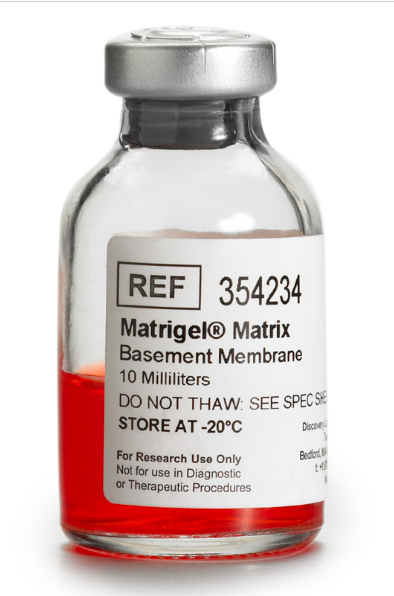
业务,涉及光纤、玻璃、陶瓷等各个领域。它的Life Science部门则作的是细胞培养耗材、移夜器、过滤等一系列的实验室产品;后Corning收购了Costar的细胞培养耗材这块业务,合称Corning Costar。 Corning(Costar)的质量是同类产品中最好的,几乎没听说过投诉它质量的;它的产品线也全,其它牌子有的几乎它都有(除了BD的IVF和BioCoat,以及Nunc的多层培养瓶个别几个产品),它自己也有一些有特色的东西,比如Costar的Transwell,Corning
Microarray Analysis of DNA Replication Timing
. Filter sterilized using 0.2-μm filter (CORNING) and stored in aliquots in dark at −20°C. 4. Propidium iodide FACS: Dilute 1 mg propidium iodide (Sigma) in 10 ml sterile water, 25 μl of 20% NP