

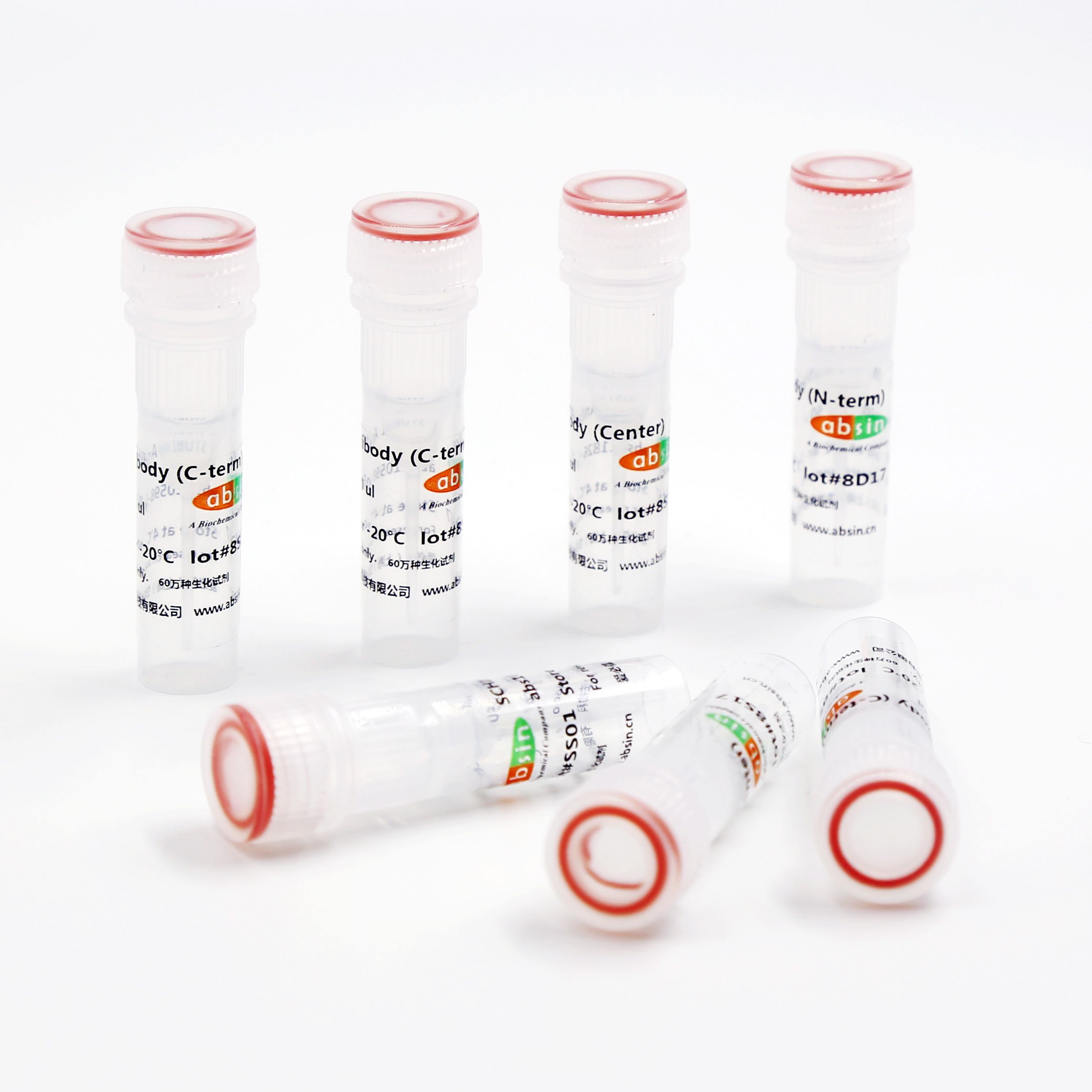
- ¥2300
- 爱必信(absin)
- abs159960
- 上海
- 2025年07月14日
- -
- -
- -

企业认证
相关产品推荐更多 >
Rabbit anti-5-HTR3 Polyclonal Antibody,5-HTR3 抗体
¥1500
Rabbit anti-LIG4 Polyclonal Antibody,LIG4抗体
¥1500Mouse anti-Neuron-specific beta-III Tubulin Monoclonal Antibody,Neuron-specific beta-III Tubulin抗体
¥2800Rabbit anti-ATP2A2 Polyclonal Antibody,ATP2A2抗体
¥1500Rabbit Anti-IL-29/IFNL1 Polyclonal Antibody,IL-29抗体, IFNL1抗体
¥2300
万千商家帮你免费找货
0 人在求购买到急需产品
相关阅读
AJE 润色服务限时 8 折起,权威机构信任 15+ 年Cytoscape 教程来了!快速实现顶刊同款通路网络图五大应用案例:Mustang Q 膜层析应用全解析1 个小工具,一次性搞定流程图、质粒图谱和信号通路图- 详细信息
- 文献和实验
- 技术资料
- 抗体名:
-
- 抗体英文名:
-
- 靶点:
-
- 浓度:
1.2mg/ml
- 应用范围:
-
- 宿主:
-
- 适应物种:
-
- 保质期:
-
- 抗原来源:
-
- 目录编号:
-
- 级别:
-
- 库存:
99
- 供应商:
爱必信(上海)生物科技有限公司
- 标记物:
-
- 克隆性:
-
- 保存条件:
Shipped at 4℃. Store at 20℃ for one year. Avoid repeated freeze/thaw cycles.
- 形态:
-
- 亚型:
-
- 免疫原:
-
- 规格:
100ul
| 概述 | |
| 宿主 | Human |
| 反应种属 | SARS-CoV-2 |
| 应用 | ELISA: 0.001-0.05ug/ml |
| 交叉反应 | Has cross-reactivity in ELISA with: Recombinant SARS-CoV-2 Spike RBD (BA.2/Omicron) protein C-10His (abs06002) Recombinant SARS-CoV-2 Omicron (BA.2.12.1) RBD Protein C-10His (abs06021) Recombinant SARS-CoV-2 Spike RBD (BA.4&BA.5/Omicron) protein C-10His(abs06003) No cross-reactivity in ELISA with: SARS-CoV-2 (BA.2.75/Omicron) RBD |
| 性能 | |
| 浓度 | 1.2mg/ml |
| 纯化方法 | Protein A affinity column |
| 克隆号 | R004 |
| 同种型 | IgG1 |
| 储存/保存方法 | Shipped at 4℃. Store at 20℃ for one year. Avoid repeated freeze/thaw cycles. |
| 存储溶液 | PBS, 40% Glycerol, 0.05%BSA, 0.03% Proclin 300 |
| 研究领域 | SARS-CoV-2 |
| 靶标 | |
| 背景说明 | Sars-cov-2 (2019-NCOV) infects human respiratory epithelial cells through binding to human ACE2 receptors. Spike protein is a large type I transmembrane protein containing two subunits S1 and S2.S1 mainly contains a receptor binding domain (RBD), which is responsible for recognizing cell surface receptors. S2 contains the basic elements required for membrane fusion. S protein plays a key role in inducing neutralizing antibody and T cell responses as well as protective immunity. |
| UniProt | P0DTC2 |
风险提示:丁香通仅作为第三方平台,为商家信息发布提供平台空间。用户咨询产品时请注意保护个人信息及财产安全,合理判断,谨慎选购商品,商家和用户对交易行为负责。对于医疗器械类产品,请先查证核实企业经营资质和医疗器械产品注册证情况。
 文献和实验
文献和实验a simple ELISA method to detect human anti-antibody response.
Human Monoclonal Antibodies: The Residual Challenge of Antibody Immunogenicity
One of the major reasons for seeking human monoclonal antibodies has been to eliminate immunogenicity seen with rodent antibodies. Thus far, there has yet been no approach which absolutely abolishes that risk for cell-binding antibodies
Generation of a Monoclonal Antibody Library Against Human Embryonic Stem Cells
Differentiated cell types derived from human embryonic stem cells (hESCs) may serve in the future to treat various human diseases and to model early human embryonic development in vitro. Fulfilling this potential, however, requires extensive
 技术资料
技术资料暂无技术资料 索取技术资料

