- 移动端


三一造血技术有限公司
10 年
手机商铺
商家活跃:
产品热度:
- NaN
- 0.09999999999999964
- 0.09999999999999964
- 1.0999999999999996
- 0.09999999999999964
推荐产品
技术资料/正文
The transplantation of rapamycin-treated senescent human mesenchymal stem cells with enhanced proangiogenic activity promotes neovascularization and ischemic limb salvage in mice
169 人阅读发布时间:2022-05-18 14:05
MATERIALS AND METHODS
Isolation of UCMSCs and culture conditions
Human umbilical cords (UCs; n = 5) were obtained from consenting patients who delivered full-term (38–40 weeks) infants by
cesarean section. The study was approved by the Ethics
Committee of Tongji Medical College, Huazhong University of
Science, and Technology and followed the principles of the
Declaration of Helsinki. The UCs were rinsed with phosphatebuffered saline (PBS; HyClone, Logan, UT, USA) to remove blood
cells. Subsequently, the samples were cut into 1 cm segments, and
the UC veins, arteries, and amnion were removed. The UCs were
then minced into 1–3 mm3 pieces. The minced pieces were placed
in a 55 cm2 culture dish and incubated in DMEM/F-12 (HyClone)
supplemented with 10% fetal bovine serum (FBS; Gibco, Carlsbad,
CA, USA). After 2 weeks, the UC tissue was removed, and the
adherent cells were passaged with 0.25% trypsin (Gibco) for 1 min
at 37 °C. The obtained cells were centrifuged at 250 ×g for 5 min
and subcultured at a density of 4000 cells/cm2 in α-MEM (HyClone)
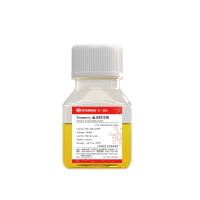
supplemented with 5% human platelet lysate (HPL; Stemery
Biotech, Fujian, China) and 100 U/mL penicillin/streptomycin
(Gibco). The concentration of HPL was determined by CCK-8
analysis (Supplementary Fig. S1). Cell passaging was performed
when the monolayer of adherent cells reached 70%–80%
confluence. All cells were maintained at 37 °C in a humidified
atmosphere with 5% CO2.
Isolation of UCMSCs and culture conditions
Human umbilical cords (UCs; n = 5) were obtained from consenting patients who delivered full-term (38–40 weeks) infants by
cesarean section. The study was approved by the Ethics
Committee of Tongji Medical College, Huazhong University of
Science, and Technology and followed the principles of the
Declaration of Helsinki. The UCs were rinsed with phosphatebuffered saline (PBS; HyClone, Logan, UT, USA) to remove blood
cells. Subsequently, the samples were cut into 1 cm segments, and
the UC veins, arteries, and amnion were removed. The UCs were
then minced into 1–3 mm3 pieces. The minced pieces were placed
in a 55 cm2 culture dish and incubated in DMEM/F-12 (HyClone)
supplemented with 10% fetal bovine serum (FBS; Gibco, Carlsbad,
CA, USA). After 2 weeks, the UC tissue was removed, and the
adherent cells were passaged with 0.25% trypsin (Gibco) for 1 min
at 37 °C. The obtained cells were centrifuged at 250 ×g for 5 min
and subcultured at a density of 4000 cells/cm2 in α-MEM (HyClone)
supplemented with 5% human platelet lysate (HPL; Stemery
Biotech, Fujian, China) and 100 U/mL penicillin/streptomycin
(Gibco). The concentration of HPL was determined by CCK-8
analysis (Supplementary Fig. S1). Cell passaging was performed
when the monolayer of adherent cells reached 70%–80%
confluence. All cells were maintained at 37 °C in a humidified
atmosphere with 5% CO2.
推荐产品
品牌:三一造血/Stemery|技术资料:1 篇
¥3600