


- ¥2200
- Biorigin
- BN40247R
- 2025年07月21日
- WB,
- Human,Mouse,Rat,Pig,

企业认证
相关产品推荐更多 >
万千商家帮你免费找货
0 人在求购买到急需产品
- 详细信息
- 文献和实验
- 技术资料
- 适应物种:
Human,Mouse,Rat,Pig,
- 应用范围:
WB,
- 抗体英文名:
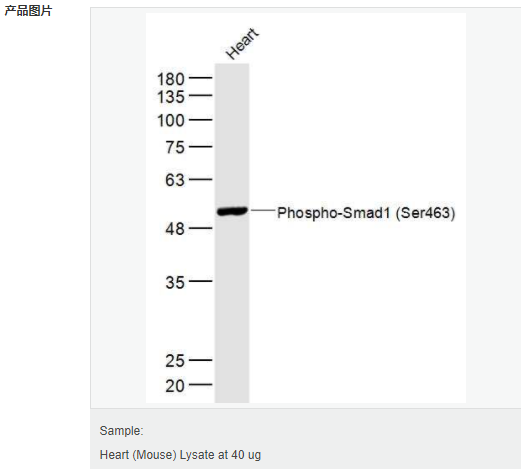
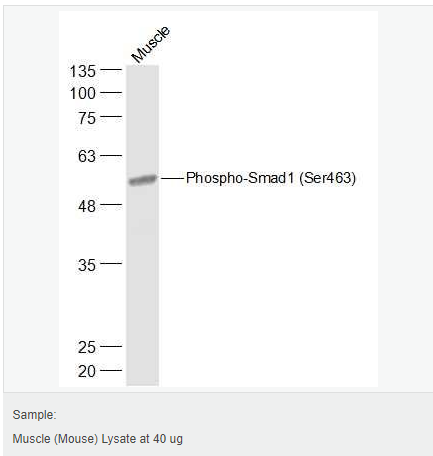
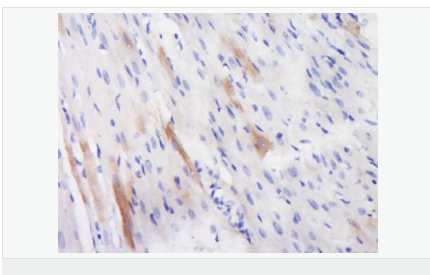
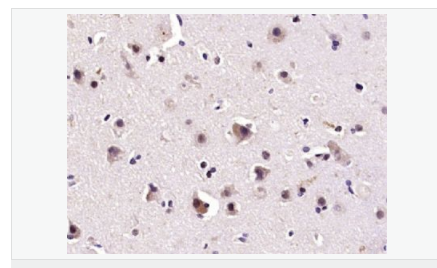
Phospho-Smad1 (Ser463)
- 规格:
100ul
| 英文名称 | Phospho-Smad1 (Ser463) |
| 中文名称 | 磷酸化细胞信号转导分子Smad-1抗体 |
| 别 名 | Smad1 (phospho S463); Smad1 (phospho Ser463); p-Smad1 (Ser463); Mothers against decapentaplegic homolog 1; BSP 1; BSP1; BSP-1; Dwarfin A; DwfA; hSMAD 1; hSMAD1; JV 41; JV4 1; JV4-1; JV41; MAD mothers against decapentaplegic homolog 1; Mad related protein 1; MADH 1; MADH1; Madr 1; MADR1; Mothers against decapentaplegic homolog 1; Mothers against DPP homolog 1; Sma and Mad related protein 1; SMAD 1; SMAD-1; SMAD family member 1; SMAD mothers against DPP homolog 1 Drosophila; Spinal muscular atrophy distal with upper limb predominance; TGF beta signaling protein 1; Transforming growth factor beta signaling protein 1; SMAD1_HUMAN; MAD homolog 1; Mothers against DPP homolog 1; Mad-related protein 1; SMAD family member 1; Smad1; Transforming growth factor-beta-signaling protein 1. |
| 产品类型 | 磷酸化抗体 |
| 研究领域 | 肿瘤 细胞生物 信号转导 干细胞 细胞凋亡 生长因子和激素 转录调节因子 |
| 抗体来源 | Rabbit |
| 克隆类型 | Polyclonal |
| 交叉反应 | Human, Mouse, Rat, (predicted: Pig, ) |
| 产品应用 | WB=1:500-2000 ELISA=1:5000-10000 IHC-P=1:100-500 IHC-F=1:100-500 ICC=1:100-500 IF=1:100-500 (石蜡切片需做抗原修复) not yet tested in other applications. optimal dilutions/concentrations should be determined by the end user. |
| 分 子 量 | 51kDa |
| 细胞定位 | 细胞核 细胞浆 |
| 性 状 | Liquid |
| 浓 度 | 1mg/ml |
| 免 疫 原 | KLH conjugated Synthesised phosphopeptide derived from human Smad1 around the phosphorylation site of Ser463:IS(p-S)VS |
| 亚 型 | IgG |
| 纯化方法 | affinity purified by Protein A |
| 储 存 液 | 0.01M TBS(pH7.4) with 1% BSA, 0.03% Proclin300 and 50% Glycerol. |
| 保存条件 | Shipped at 4℃. Store at -20 °C for one year. Avoid repeated freeze/thaw cycles. |
| PubMed | PubMed |
| 产品介绍 | The protein encoded by this gene belongs to the SMAD, a family of proteins similar to the gene products of the Drosophila gene 'mothers against decapentaplegic' (Mad) and the C. elegans gene Sma. SMAD proteins are signal transducers and transcriptional modulators that mediate multiple signaling pathways. This protein mediates the signals of the bone morphogenetic proteins (BMPs), which are involved in a range of biological activities including cell growth, apoptosis, morphogenesis, development and immune responses. In response to BMP ligands, this protein can be phosphorylated and activated by the BMP receptor kinase. The phosphorylated form of this protein forms a complex with SMAD4, which is important for its function in the transcription regulation. This protein is a target for SMAD-specific E3 ubiquitin ligases, such as SMURF1 and SMURF2, and undergoes ubiquitination and proteasome-mediated degradation. Alternatively spliced transcript variants encoding the same protein have been observed. [provided by RefSeq]. Function: Transcriptional modulator activated by BMP (bone morphogenetic proteins) type 1 receptor kinase. SMAD1 is a receptor-regulated SMAD (R-SMAD). SMAD1/OAZ1/PSMB4 complex mediates the degradation of the CREBBP/EP300 repressor SNIP1. Subunit: Interacts with HGS, NANOG and ZCCHC12. May form trimers with another SMAD1 and the co-SMAD SMAD4. Interacts with PEBP2-alpha subunit, CREB-binding protein (CBP), p300, SMURF1, SMURF2 and HOXC8. Associates with ZNF423 or ZNF521 in response to BMP2 leading to activate transcription of BMP target genes. Interacts with SKOR1. Interacts (via MH2 domain) with LEMD3. Binding to LEMD3 results in at least a partial reduction of receptor-mediated phosphorylation. Forms a ternary complex with PSMB4 and OAZ1 before PSMB4 is incorporated into the 20S proteasome. Subcellular Location: Cytoplasm. Nucleus. Note=Cytoplasmic in the absence of ligand. Migrates to the nucleus when complexed with SMAD4. Co-localizes with LEMD3 at the nucleus inner membrane. Tissue Specificity: Ubiquitous. Highest expression seen in the heart and skeletal muscle. Post-translational modifications: Phosphorylated on serine by BMP type 1 receptor kinase. Ubiquitin-mediated proteolysis by SMAD-specific E3 ubiquitin ligase SMURF1. DISEASE: Defects in SMAD1 may be a cause of primary pulmonary hypertension (PPH1) [MIM:178600]. A rare disorder characterized by plexiform lesions of proliferating endothelial cells in pulmonary arterioles. The lesions lead to elevated pulmonary arterial pression, right ventricular failure, and death. The disease can occur from infancy throughout life and it has a mean age at onset of 36 years. Penetrance is reduced. Although familial PPH1 is rare, cases secondary to known etiologies are more common and include those associated with the appetite-suppressant drugs. Similarity: Belongs to the dwarfin/SMAD family. Contains 1 MH1 (MAD homology 1) domain. Contains 1 MH2 (MAD homology 2) domain. SWISS: Q15797 Gene ID: 4086 Database links: Entrez Gene: 4086 Human Entrez Gene: 17125 Mouse Omim: 601595 Human SwissProt: Q15797 Human SwissProt: P70340 Mouse Unigene: 604588 Human Unigene: 223717 Mouse Unigene: 10635 Rat Important Note: This product as supplied is intended for research use only, not for use in human, therapeutic or diagnostic applications. |
风险提示:丁香通仅作为第三方平台,为商家信息发布提供平台空间。用户咨询产品时请注意保护个人信息及财产安全,合理判断,谨慎选购商品,商家和用户对交易行为负责。对于医疗器械类产品,请先查证核实企业经营资质和医疗器械产品注册证情况。
 文献和实验
文献和实验过程,影响细胞的生长速度,甚至诱导细胞的死亡。这种针对外源性信号所发生的各种分子活性的变化,以及将这种变化依次传递至效应分子,以改变细胞功能的过程称为信号转导(Signal Transduction),其最终目的是使机体在整体上对外界环境的变化发生最为适宜的反应。在物质代谢调节一章中曾涉及到神经-内分泌系统对代谢途径在整体水平上的调节,其实质就是机体内一部分细胞发出信号,另一部分细胞接收信号并将其转变为细胞功能上的变化的过程。所以,阐明细胞信号转导的机理就意味着认清细胞在整个生命过程中的增殖、分化、代谢
细胞通讯与细胞信号转导的分子机理 Cell Communication and Cell Signal Transduction 高等生物所处的环境无时无刻不在变化,机体功能上的协调统一要求有一个完善的细胞间相互识别、相互反应和相互作用的机制,这一机制可以称作细胞通讯(Cell Communication)。在这一系统中,细胞或者识别与之相接触的细胞,或者识别周围环境中存在的各种信号(来自于周围或远距离的细胞),并将其转变为细胞内各种分子功能上的变化
网络 第二十一章 细胞通讯与细胞信号转导的分子机理 Cell Communication and Cell Signal Transduction 高等生物所处的环境无时无刻不在变化,机体功能上的协调统一要求有一个完善的细胞间相互识别、相互反应和相互作用的机制,这一机制可以称作细胞通讯(Cell Communication)。在这一系统中,细胞
 技术资料
技术资料暂无技术资料 索取技术资料

