


- ¥1770
- 义翘神州
- VG40594-UT
- 北京
- 2025年08月12日

相关产品推荐更多 >

Human PD-L1/B7-H1/CD274 expression plasmid,C-Myc | 人 PD-L1/B7-H1/CD274 表达质粒,C-Myc
¥1770
Mouse LPL cDNA Clones
¥760
Human RPGR transcript variant A Gene ORF cDNA clone in cloning vector
¥920
Human ZNF492 Gene ORF cDNA clone expression plasmid
¥1890
Cynomolgus ITGB5 Gene ORF cDNA clone expression plasmid, C-Myc tag
¥1890
万千商家帮你免费找货
0 人在求购买到急需产品
- 详细信息
- 询价记录
- 文献和实验
- 技术资料
- 库存:
999
- 英文名:
SARS-CoV-2 (2019-nCoV) 3C-like proteinase/3CLpro Gene ORF cDNA clone expression plasmid
- 保质期:
3个月
- 供应商:
北京义翘神州科技股份有限公司
- 保存条件:
室温
- 规格:
1 Unit
基因
种属:2019-nCoV
NCBI 参考序列号:NC_045512.2(10055-10972nt)
基因长度:924 bp
序列特征:Identical with the Gene Bank Ref. ID sequence.
产品特征:Full length Clone DNA of SARS-CoV-2 (2019-nCoV) 3C-like proteinase/3CLpro.
质粒
启动子:Enhanced CMV mammalian cell promoter
载体:pCMV3-untagged
限制性酶切位点:KpnI + XbaI(6.1kb+0.93kb)
测序引物:T7(TAATACGACTCACTATAGGG) BGH(TAGAAGGCACAGTCGAGG)
质控:The plasmid is confirmed by full-length sequencing.
筛选
细菌筛选抗性:Ampicillin
细胞筛选抗性:Hygromycin
应用:Stable or Transient mammalian expression

北京义翘神州科技股份有限公司(Sino Biological Inc.)创建于2007年,是一家从事生物试剂研发、生产、销售并提供技术服务的生物科技公司,主要业务包括重组蛋白、抗体、基因和培养基等产品,以及重组蛋白、抗体的开发和生物分析检测等服务。
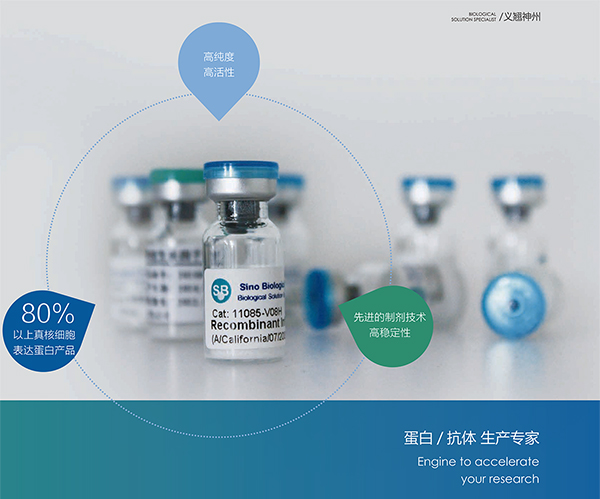
义翘神州为全球的药品研发企业和生命科学研究机构提供高质量的生物试剂产品和高水平的技术服务,能够覆盖生命科学研究的多个领域,为分子生物学、细胞生物学、免疫学、发育生物学、干细胞研究等基础科研方向和创新药物研发提供“一站式”生物试剂产品和技术服务。客户涵盖大学、科研院所、医药研发企业等国内外各类生物研发单位。目前公司已经在美国、欧洲等地建立了子公司,在上海建立分公司,已成为生物试剂行业国内领先的科技公司之一。

凭借多年病毒蛋白研究技术优势,义翘神州仅用11天就成功表达出新冠病毒重要靶点受体结合域蛋白。为了更好的支持新冠病毒研究,义翘神州已开发生产近百种新冠病毒相关科研试剂,包括重要靶点抗原蛋白、中和抗体、抗原蛋白检测试剂盒等。义翘神州还可以提供新冠假病毒中和检测服务,可用于筛选出具有中和活性的抗体或血清,支持在细胞水平上的评估。目前,这些科研试剂已被全球数百家研究机构用于疫苗和抗体开发及基础机制研究。

风险提示:丁香通仅作为第三方平台,为商家信息发布提供平台空间。用户咨询产品时请注意保护个人信息及财产安全,合理判断,谨慎选购商品,商家和用户对交易行为负责。对于医疗器械类产品,请先查证核实企业经营资质和医疗器械产品注册证情况。
- 作者
- 内容
- 询问日期
 文献和实验
文献和实验High-Throughput Construction of ORF Clones for Production of the Recombinant Proteins
Expression-ready cDNA clones, where the open reading frame (ORF) of the gene of interest is placed under the control of an appropriate promoter, are critical for functional characterization of the gene products. To create a resource of human
cDNA Expression Cloning in Mammalian Cells
protocols for expression cloning in mammalian cells. Either calcium phosphate? or liposome?mediated transfection of mammalian cells, or virus infection and liposome?mediated transfection are used to screen pools derived from a cDNA library. cDNA pools
Anatomy of a Comparative Gene Expression Study
will produce at least a partial human genome array. There are two other ways to produce arrayable DNA even for unknown genes: amplify clone inserts from human cDNA libraries, or synthesize oligonucleotides directly from known expressed sequence information


