- 询价
- YSKD
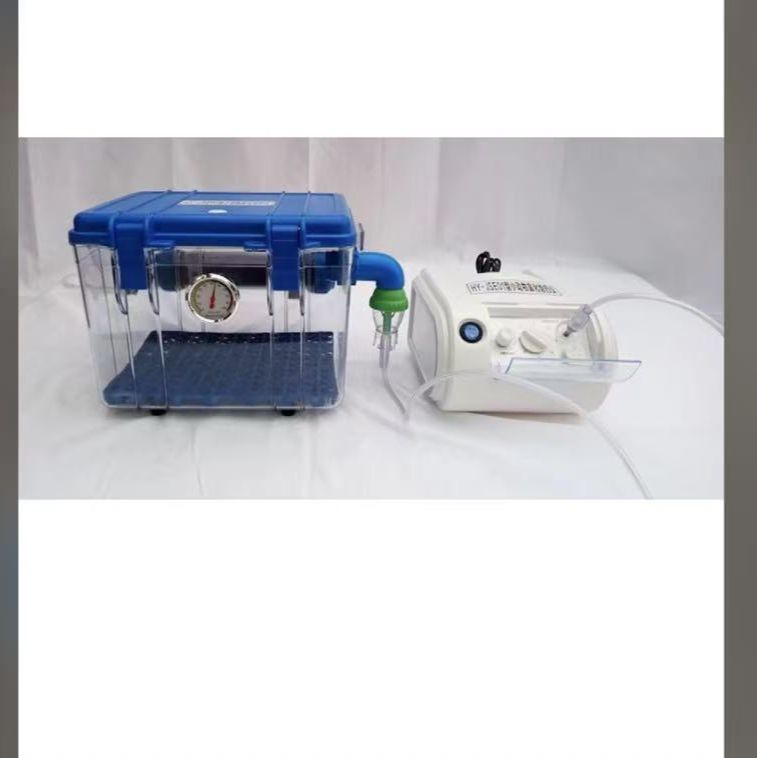
- 小动物雾化给药仪
- 北京
- 2026年01月06日

7 年金牌会员
企业认证
相关产品推荐更多 >
万千商家帮你免费找货
0 人在求购买到急需产品
- 详细信息
- 询价记录
- 文献和实验
- 技术资料
- 保修期:
12个月
- 现货状态:
现货
(一)产品用途
1. 精准模拟临床给药途径
该设备能直接将药物或造模剂递送至动物肺部,高度模拟人类吸入治疗(如哮喘、COPD)的真实场景。
2. 构建可靠疾病模型
通过雾化吸入特定诱导剂,可确保致病因子均匀、可控地作用于肺部,从而保证动物模型的一致性和稳定性。构建呼吸系统疾病动物模型(如哮喘、肺纤维化、肺部感染)
3. 用于吸入式新药研发全流程
药效学评价:在疾病模型中验证候选药物的治疗效果。
药代动力学研究:精准评估药物经肺部的吸收、分布和代谢特性。
毒理学研究:考察新药对呼吸系统的潜在刺激性或毒性,确保安全性。
4. 提升数据质量与可重复性
相比侵入性操作(如气管滴注),雾化给药能大幅减少动物的应激反应,避免应激对免疫和内分泌系统的干扰。确保了实验的高度可重复性和数据的准确性,符合动物伦理和科学规范。
5. 支持前沿领域探索
该仪器也是拓展肺部基因治疗、核酸药物递送和纳米靶向制剂等前沿研究的关键平台,用于评估新型治疗方式在肺部的沉积、渗透与效果。
(二)北京元森凯德研制生产,药学专用小动物雾化给药仪性能优势:
①精准可控的气溶胶发生:
采用先进的双流体雾化技术,可生成高度均一、稳定的气溶胶颗粒。MMAD 通常在 1-5 μm 范围内,确保药物能高效沉积于实验动物的特定呼吸道区域(如肺泡或支气管),完美模拟人体吸入给药过程。
②动物给药舱尺寸可定制:
提供多种规格的独立密闭给药舱,适配小鼠、大鼠、豚鼠等不同体型的实验动物。透明材质便于实时观察,并实现多只动物并行给药,确保实验条件的一致性,极大提升科研效率。
③操作简易,安全高效
可精确设定雾化时间、给药气流速率等关键参数。系统配备高效过滤器,对排出废气进行净化,有效防止药物气溶胶在实验室环境中扩散,保障科研人员的操作安全。
④ 多个知名学术机构购买,并且已经发表多篇高质量论文
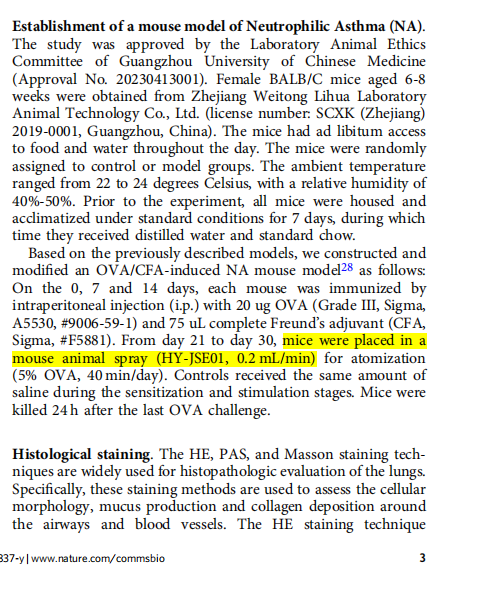
(1)广州中医药大学第一附属医院,COMMUNICATIONS BIOLOGY | (2024) 7:181 |,Bronchial epithelial transcriptomics and experimental validation reveal asthma severity[1]related neutrophilc signatures and potential treatments
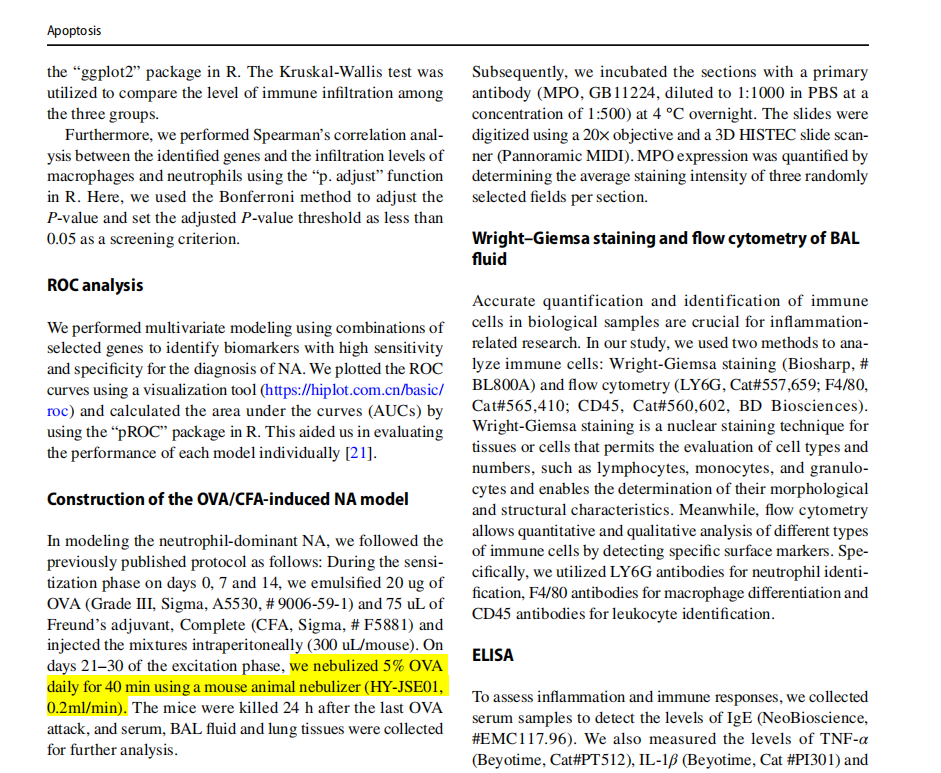
(2)广州中医药大学岭南医学研究中心,Apoptosis,ITGAM‑macrophage modulation as a potential strategy for treating neutrophilic Asthma: insights from bioinformatics analysis and in vivo
experiments
(3)上海交通大学医学院附属新华医院,Dovepress,
Active-Ingredient Screening and Synergistic Action Mechanism of Shegan Mixture for Anti-Asthma Effects Based on Network Pharmacology in a Mouse Model of Asthma
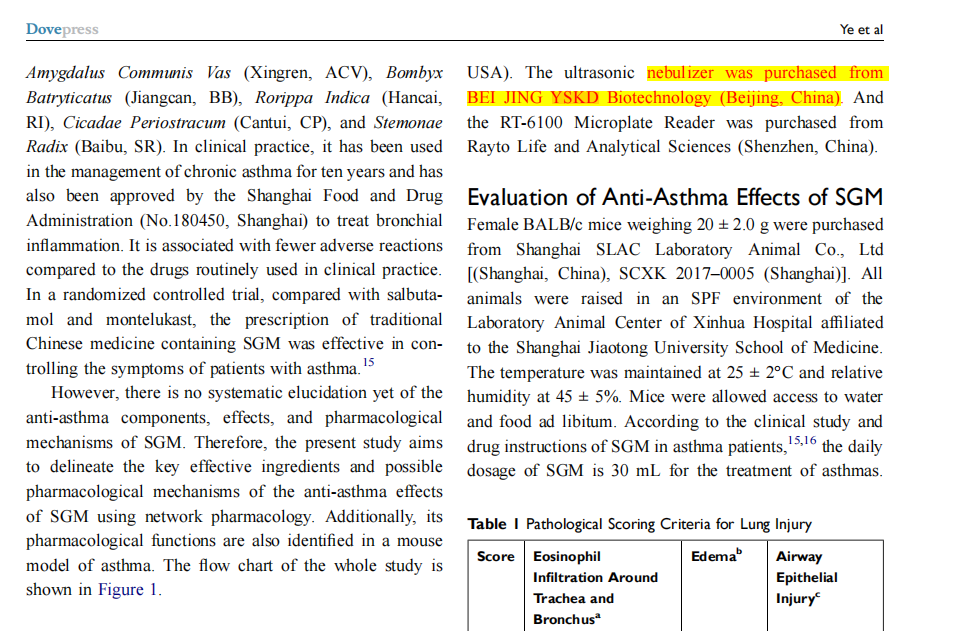
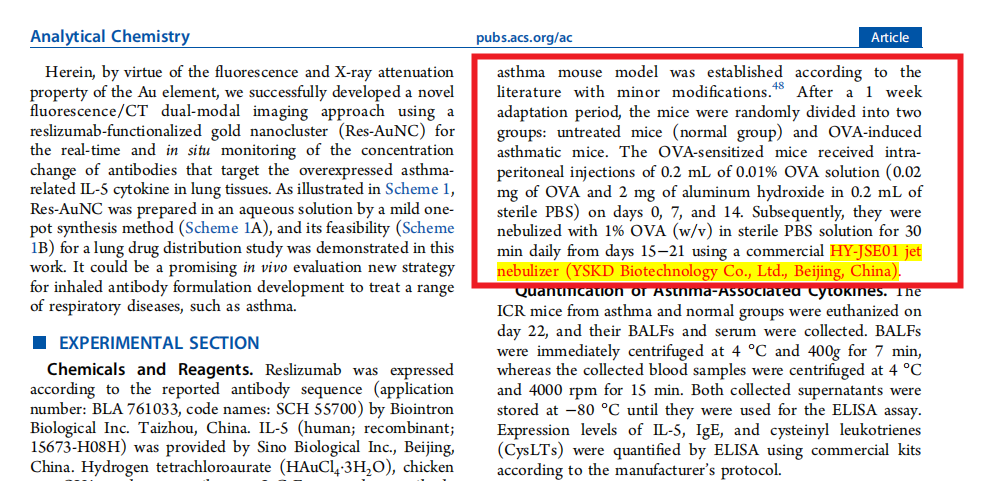
(4)福建医科大学药学院天然药物药理学重点实验室,使用北京元森凯德生物技术有限公司(BEIJING YSKD BIO-TECHNOLOGY CO.,LTD),简称元森凯德(YSKD)研制生产的小动物雾化给药仪HY-JSE01 jet nebulizer (YSKD Biotechnology Co., Ltd., Beijing, China),在中科院1区Top期刊Analytical Chemistry 发表用于新型抗哮喘吸入抗体肺组织分布研究的多功能金纳米簇高分论文。
1. 精准模拟临床给药途径
该设备能直接将药物或造模剂递送至动物肺部,高度模拟人类吸入治疗(如哮喘、COPD)的真实场景。
2. 构建可靠疾病模型
通过雾化吸入特定诱导剂,可确保致病因子均匀、可控地作用于肺部,从而保证动物模型的一致性和稳定性。构建呼吸系统疾病动物模型(如哮喘、肺纤维化、肺部感染)
3. 用于吸入式新药研发全流程
药效学评价:在疾病模型中验证候选药物的治疗效果。
药代动力学研究:精准评估药物经肺部的吸收、分布和代谢特性。
毒理学研究:考察新药对呼吸系统的潜在刺激性或毒性,确保安全性。
4. 提升数据质量与可重复性
相比侵入性操作(如气管滴注),雾化给药能大幅减少动物的应激反应,避免应激对免疫和内分泌系统的干扰。确保了实验的高度可重复性和数据的准确性,符合动物伦理和科学规范。
5. 支持前沿领域探索
该仪器也是拓展肺部基因治疗、核酸药物递送和纳米靶向制剂等前沿研究的关键平台,用于评估新型治疗方式在肺部的沉积、渗透与效果。
(二)北京元森凯德研制生产,药学专用小动物雾化给药仪性能优势:
①精准可控的气溶胶发生:
采用先进的双流体雾化技术,可生成高度均一、稳定的气溶胶颗粒。MMAD 通常在 1-5 μm 范围内,确保药物能高效沉积于实验动物的特定呼吸道区域(如肺泡或支气管),完美模拟人体吸入给药过程。
②动物给药舱尺寸可定制:
提供多种规格的独立密闭给药舱,适配小鼠、大鼠、豚鼠等不同体型的实验动物。透明材质便于实时观察,并实现多只动物并行给药,确保实验条件的一致性,极大提升科研效率。
③操作简易,安全高效
可精确设定雾化时间、给药气流速率等关键参数。系统配备高效过滤器,对排出废气进行净化,有效防止药物气溶胶在实验室环境中扩散,保障科研人员的操作安全。
④ 多个知名学术机构购买,并且已经发表多篇高质量论文
(1)广州中医药大学第一附属医院,COMMUNICATIONS BIOLOGY | (2024) 7:181 |,Bronchial epithelial transcriptomics and experimental validation reveal asthma severity[1]related neutrophilc signatures and potential treatments
(2)广州中医药大学岭南医学研究中心,Apoptosis,ITGAM‑macrophage modulation as a potential strategy for treating neutrophilic Asthma: insights from bioinformatics analysis and in vivo
experiments
(3)上海交通大学医学院附属新华医院,Dovepress,
Active-Ingredient Screening and Synergistic Action Mechanism of Shegan Mixture for Anti-Asthma Effects Based on Network Pharmacology in a Mouse Model of Asthma
(4)福建医科大学药学院天然药物药理学重点实验室,使用北京元森凯德生物技术有限公司(BEIJING YSKD BIO-TECHNOLOGY CO.,LTD),简称元森凯德(YSKD)研制生产的小动物雾化给药仪HY-JSE01 jet nebulizer (YSKD Biotechnology Co., Ltd., Beijing, China),在中科院1区Top期刊Analytical Chemistry 发表用于新型抗哮喘吸入抗体肺组织分布研究的多功能金纳米簇高分论文。
风险提示:丁香通仅作为第三方平台,为商家信息发布提供平台空间。用户咨询产品时请注意保护个人信息及财产安全,合理判断,谨慎选购商品,商家和用户对交易行为负责。对于医疗器械类产品,请先查证核实企业经营资质和医疗器械产品注册证情况。
- 作者
- 内容
- 询问日期
 文献和实验
文献和实验该产品被引用文献
Identification of molecular biomarkers associated with neutrophilic asthma (NA) phenotype may inform the discovery
of novel pathobiological mechanisms and the development of diagnostic markers. Three mRNA transcriptome datasets
extracted from induced sputum of asthma patients with various inflammatory types were used to screen for macrophage-
related molecular mechanisms and targets in NA. Furthermore, the predicted targets were also validated on an independent
dataset (N = 3) and animal model (N = 5). A significant increase in total cells, neutrophils and macrophages was observed
in bronchoalveolar lavage (BAL) fluid of NA mice induced by ovalbumin/freund’s adjuvant, complete (OVA/CFA). And
we also found elevated levels of neutrophil and macrophage infiltration in NA subtype in external datasets. NA mice had
increased secretion of IgE, IL-1β, TNF-α and IL-6 in serum and BAL fluid. MPO, an enzyme present in neutrophils, was also
highly expressed in NA mice. Then, weighted gene co-expression network analysis (WGCNA) identified 684 targets with
the strongest correlation with NA, and we obtained 609 macrophage-related specific differentially expressed genes (DEGs)
in NA by integrating macrophage-related genes. The top 10 genes with high degree values were obtained and their mRNA
levels and diagnostic performance were then determined by RT-qPCR and receiver operator characteristic (ROC) analysis.
Statistically significant correlations were found between macrophages and all key targets, with the strongest correlation
between ITGAM and macrophages in NA. Double-Immunofluorescence staining further confirmed the co-localization of
ITGAM and F4/80 in NA. ITGAM was identified as a critical target to distinguish NA from healthy/non-NA individuals,
which may provide a novel avenue to further uncover the mechanisms and therapy of NA.
Keywords Neutrophilic Asthma · Transcriptome · Macrophages · WGCNA · ITGAM
Qian Yan, Zixing Liu and Yujing Chen have contributed equally to
this work.
* Yong Jiang
jiangyongszzxy@163.com
* Shaofeng Zhan
zsfstone@163.com
* Xiufang Huang
huangxiufang@gzzyydx17.wecom.work
1
The First Affiliated Hospital of Guangzhou University
of Chinese Medicine, Guangzhou, China
2
Guangzhou University of Chinese Medicine, Guangzhou,
China
3
Shenzhen Hospital of Integrated Traditional Chinese
and Western Medicine, Shenzhen, China
4
Lingnan Medical Research Center of Guangzhou, University
of Chinese Medicine, Guangzhou, China
5
Guangdong Provincial Clinical Research Academy
of Chinese Medicine, Guangzhou, China
6
Haikou hospital of Chinese traditional medicine, Haikou,
China
7
Lingnan Medical Research Center of Guangzhou,
University of Chinese Medicine, the First Affiliated Hospital
of Guangzhou University of Chinese Medicine, 12 Airport
Road, Guangzhou 510405, People’s Republic of China
Apoptosis
1 3
Abbreviations
EA
Eosinophilic asthma
NA
Neutrophilic asthma
MA
Mixed-granulocytic asthma
PGA
Pauci-granulocytic asthma
NNA
Non-neutrophilic asthma
S100A9
S100calcium-binding protein A9
BAL
Bronchoalveolar lavage
MPO
Myeloperoxidase
ROC
Receiver operator characteristic
FC
Fold change
GO
Gene ontology
KEGG
Kyoto Encyclopedia of Genes and Genomes
WGCNA Weighted gene co-expression network analysis
PPI
Protein-protein interaction
AUCs
Areas under the curves
OVA
Ovalbumin
CFA
Freund’s adjuvant, complete
HE
Hematoxylin and eosin
PAS
Periodic acid-Schiff
PCA
Principal component analysis
BP
Biological processes
DEGs
Differentially expressed genes
GS
Gene Significance
MM
Module membership
SA
Severe asthma
Introduction
The symptoms of asthma include hyperreactivity of the air-
ways, reversible limitations of airflow, mucus overproduc-
tion and remodeling of the airway wall [1]. Over 300 million
people worldwide suffer from this condition, with significant
economic and health implications [2, 3]. It is necessary to
determine the asthma phenotype as it varies in phenotype
and response to treatment. Based on sputum inflamma-
tory cells counts, asthma patients can be categorized into
various inflammatory phenotypes, including eosinophilic
asthma (EA), neutrophilic asthma (NA, neutrophils ≥ 61%
and eosinophils < 3%), mixed-granulocytic asthma (MA) or
pauci-granulocytic asthma (PGA) [4]. Patients with NA are
commonly prone to developing steroid resistance and pro-
gressing to severe or refractory asthma [5]. Nonetheless, the
complete cellular and molecular mechanisms responsible for
NA remain to be comprehensively elucidated and suitable
biomarkers for NA phenotype classification and prediction
are still lacking.
In addition to eosinophils and neutrophils, there are other
cell types, such as macrophages, monocytes and epithelial
cells, all with their own characteristics [6]. Macrophages
play an important multifunctional role as innate immune
cells in the airways and their dysregulation is associated with
the development of asthma [7]. In addition to promoting
airway inflammation, macrophage polarization also con-
tributes to airway repair and remodeling processes [8]. The
cytokines IL-8 and IL-17 secreted by Th17 cells and TNF-α
primarily produced by macrophages, have been identified as
the primary inflammatory mediators involved in the devel-
opment of neutrophilic inflammation [9–11]. Fricker et al.
confirm that specific transcriptomic changes exhibited by
macrophages in sputum may be closely related to the neu-
trophil inflammatory response in NA by bulk RNA-Seq and
bioinformatic analyses [12]. A recent study utilizing gene
set variation analysis (GSVA) and whole sputum microar-
ray analysis find that changes in macrophage gene expres-
sion profiles may contribute to alterations in the sputum
transcriptomes of NA patients [13]. It has been found that
S100 calcium-binding protein A9 (S100A9) is significantly
increased in serum and bronchoalveolar lavage (BAL) fluid
samples of NA mice and that S100A9 activates M0 mac-
rophages to enhance the expression of CD68 and iNOS,
which can be reversed by the anti-S100A9 antibody [14].
The above studies suggest that macrophages may be an
important biomarker in the pathogenesis of NA. Neverthe-
less, more research is required to establish the pathogenesis
of lung macrophages in NA.
Despite the pathogenesis of NA is not fully compre-
hended, the accumulating relevant transcriptomic and bio-
informatic analyses provide a basis for assessing pathogen-
esis and immune targets. For example, Hern-Tze Tian Tan
et al. confirm the upregulation of NLRP3, IL-1β, caspase-1
and IL-1 pathway members in NA by whole-genome tran-
scriptome profiling of mouse model lungs [15]. Fricker et al.
confirm that phlegm macrophages may be closely related to
neutrophilic inflammatory responses in NA by bulk RNA-
seq and bioinformatic analyses [12]. However, no effective
biomarkers have been identified to evaluate the prognosis of
NA and to guide the subsequent therapeutic regimen of NA.
In this study, an NA mouse model was established to
observe high infiltration of neutrophils and macrophages
in BAL fluid. Meanwhile, induced sputum mRNA expres-
sion profiles were analyzed in asthma patients with different
inflammatory phenotypes and controls to identify potential
biomarkers, immune-related signal pathways and mecha-
nisms related to macrophages. The diagnostic performance
of potential gene signatures was verified by RT-qPCR on NA
mice and receiver operator characteristic (ROC) analysis on
independent validation datasets. The findings of this study
established a bioinformatics framework for unraveling the
molecular mechanisms and creating effective gene signa-
tures for the diagnosis and treatment of NA. The flow chart
was displayed in Fig
of novel pathobiological mechanisms and the development of diagnostic markers. Three mRNA transcriptome datasets
extracted from induced sputum of asthma patients with various inflammatory types were used to screen for macrophage-
related molecular mechanisms and targets in NA. Furthermore, the predicted targets were also validated on an independent
dataset (N = 3) and animal model (N = 5). A significant increase in total cells, neutrophils and macrophages was observed
in bronchoalveolar lavage (BAL) fluid of NA mice induced by ovalbumin/freund’s adjuvant, complete (OVA/CFA). And
we also found elevated levels of neutrophil and macrophage infiltration in NA subtype in external datasets. NA mice had
increased secretion of IgE, IL-1β, TNF-α and IL-6 in serum and BAL fluid. MPO, an enzyme present in neutrophils, was also
highly expressed in NA mice. Then, weighted gene co-expression network analysis (WGCNA) identified 684 targets with
the strongest correlation with NA, and we obtained 609 macrophage-related specific differentially expressed genes (DEGs)
in NA by integrating macrophage-related genes. The top 10 genes with high degree values were obtained and their mRNA
levels and diagnostic performance were then determined by RT-qPCR and receiver operator characteristic (ROC) analysis.
Statistically significant correlations were found between macrophages and all key targets, with the strongest correlation
between ITGAM and macrophages in NA. Double-Immunofluorescence staining further confirmed the co-localization of
ITGAM and F4/80 in NA. ITGAM was identified as a critical target to distinguish NA from healthy/non-NA individuals,
which may provide a novel avenue to further uncover the mechanisms and therapy of NA.
Keywords Neutrophilic Asthma · Transcriptome · Macrophages · WGCNA · ITGAM
Qian Yan, Zixing Liu and Yujing Chen have contributed equally to
this work.
* Yong Jiang
jiangyongszzxy@163.com
* Shaofeng Zhan
zsfstone@163.com
* Xiufang Huang
huangxiufang@gzzyydx17.wecom.work
1
The First Affiliated Hospital of Guangzhou University
of Chinese Medicine, Guangzhou, China
2
Guangzhou University of Chinese Medicine, Guangzhou,
China
3
Shenzhen Hospital of Integrated Traditional Chinese
and Western Medicine, Shenzhen, China
4
Lingnan Medical Research Center of Guangzhou, University
of Chinese Medicine, Guangzhou, China
5
Guangdong Provincial Clinical Research Academy
of Chinese Medicine, Guangzhou, China
6
Haikou hospital of Chinese traditional medicine, Haikou,
China
7
Lingnan Medical Research Center of Guangzhou,
University of Chinese Medicine, the First Affiliated Hospital
of Guangzhou University of Chinese Medicine, 12 Airport
Road, Guangzhou 510405, People’s Republic of China
Apoptosis
1 3
Abbreviations
EA
Eosinophilic asthma
NA
Neutrophilic asthma
MA
Mixed-granulocytic asthma
PGA
Pauci-granulocytic asthma
NNA
Non-neutrophilic asthma
S100A9
S100calcium-binding protein A9
BAL
Bronchoalveolar lavage
MPO
Myeloperoxidase
ROC
Receiver operator characteristic
FC
Fold change
GO
Gene ontology
KEGG
Kyoto Encyclopedia of Genes and Genomes
WGCNA Weighted gene co-expression network analysis
PPI
Protein-protein interaction
AUCs
Areas under the curves
OVA
Ovalbumin
CFA
Freund’s adjuvant, complete
HE
Hematoxylin and eosin
PAS
Periodic acid-Schiff
PCA
Principal component analysis
BP
Biological processes
DEGs
Differentially expressed genes
GS
Gene Significance
MM
Module membership
SA
Severe asthma
Introduction
The symptoms of asthma include hyperreactivity of the air-
ways, reversible limitations of airflow, mucus overproduc-
tion and remodeling of the airway wall [1]. Over 300 million
people worldwide suffer from this condition, with significant
economic and health implications [2, 3]. It is necessary to
determine the asthma phenotype as it varies in phenotype
and response to treatment. Based on sputum inflamma-
tory cells counts, asthma patients can be categorized into
various inflammatory phenotypes, including eosinophilic
asthma (EA), neutrophilic asthma (NA, neutrophils ≥ 61%
and eosinophils < 3%), mixed-granulocytic asthma (MA) or
pauci-granulocytic asthma (PGA) [4]. Patients with NA are
commonly prone to developing steroid resistance and pro-
gressing to severe or refractory asthma [5]. Nonetheless, the
complete cellular and molecular mechanisms responsible for
NA remain to be comprehensively elucidated and suitable
biomarkers for NA phenotype classification and prediction
are still lacking.
In addition to eosinophils and neutrophils, there are other
cell types, such as macrophages, monocytes and epithelial
cells, all with their own characteristics [6]. Macrophages
play an important multifunctional role as innate immune
cells in the airways and their dysregulation is associated with
the development of asthma [7]. In addition to promoting
airway inflammation, macrophage polarization also con-
tributes to airway repair and remodeling processes [8]. The
cytokines IL-8 and IL-17 secreted by Th17 cells and TNF-α
primarily produced by macrophages, have been identified as
the primary inflammatory mediators involved in the devel-
opment of neutrophilic inflammation [9–11]. Fricker et al.
confirm that specific transcriptomic changes exhibited by
macrophages in sputum may be closely related to the neu-
trophil inflammatory response in NA by bulk RNA-Seq and
bioinformatic analyses [12]. A recent study utilizing gene
set variation analysis (GSVA) and whole sputum microar-
ray analysis find that changes in macrophage gene expres-
sion profiles may contribute to alterations in the sputum
transcriptomes of NA patients [13]. It has been found that
S100 calcium-binding protein A9 (S100A9) is significantly
increased in serum and bronchoalveolar lavage (BAL) fluid
samples of NA mice and that S100A9 activates M0 mac-
rophages to enhance the expression of CD68 and iNOS,
which can be reversed by the anti-S100A9 antibody [14].
The above studies suggest that macrophages may be an
important biomarker in the pathogenesis of NA. Neverthe-
less, more research is required to establish the pathogenesis
of lung macrophages in NA.
Despite the pathogenesis of NA is not fully compre-
hended, the accumulating relevant transcriptomic and bio-
informatic analyses provide a basis for assessing pathogen-
esis and immune targets. For example, Hern-Tze Tian Tan
et al. confirm the upregulation of NLRP3, IL-1β, caspase-1
and IL-1 pathway members in NA by whole-genome tran-
scriptome profiling of mouse model lungs [15]. Fricker et al.
confirm that phlegm macrophages may be closely related to
neutrophilic inflammatory responses in NA by bulk RNA-
seq and bioinformatic analyses [12]. However, no effective
biomarkers have been identified to evaluate the prognosis of
NA and to guide the subsequent therapeutic regimen of NA.
In this study, an NA mouse model was established to
observe high infiltration of neutrophils and macrophages
in BAL fluid. Meanwhile, induced sputum mRNA expres-
sion profiles were analyzed in asthma patients with different
inflammatory phenotypes and controls to identify potential
biomarkers, immune-related signal pathways and mecha-
nisms related to macrophages. The diagnostic performance
of potential gene signatures was verified by RT-qPCR on NA
mice and receiver operator characteristic (ROC) analysis on
independent validation datasets. The findings of this study
established a bioinformatics framework for unraveling the
molecular mechanisms and creating effective gene signa-
tures for the diagnosis and treatment of NA. The flow chart
was displayed in Fig
相关实验
【公告】丁香通试用中心:10月免费试用装精选(10月18日有更新)
200ul低吸附盒装吸头 进口TS3000转染试剂 纳米微粒 非脂质体 其他推荐: 单组分TMB显色液 Peroxidase Conjugated Goat Anti-Rabbit IgG (Min Hu, Ms) 二抗 96通道个人型半自动移液系统 小动物气体麻醉机,大小鼠气体吸入式麻醉机 四通道实时荧光定量PCR检测系统 Tanon-5200化学发光成像系统(包邮) 优质微晶纤维素MCC(进口) 罗恩1-10ml电动移液器 EpiScript逆转录酶 western
自动原位杂交仪 吸入式小动物麻醉机 细胞计数仪 超微量分光光度计
大小鼠转棒仪该仪器用于研究药物对动作协调性和抗疲劳特性的影响,对相关药物筛选有重要价值。实验时将动物放置在滚筒上并避免滑落,转动滚筒后,如果动物滑落下来就会相应停止下面的传感平台进行结果记录,可以同时进行五个大鼠或小鼠实验,大鼠采用直径3.75英寸的滚筒,小鼠采用直径为1.25英寸的滚筒。仪器采用数字控制: 5个标准通道,测试时间可调; 启动速度可调,最终速度可调; 加速度可调,前进反转两种模式选择; 测量距离可记录,标准计算机打印口输出; RS232 串口输出。大小鼠疲劳测试
 技术资料
技术资料暂无技术资料 索取技术资料
文献支持
小动物雾化给药仪,小动物给药仪
询价