

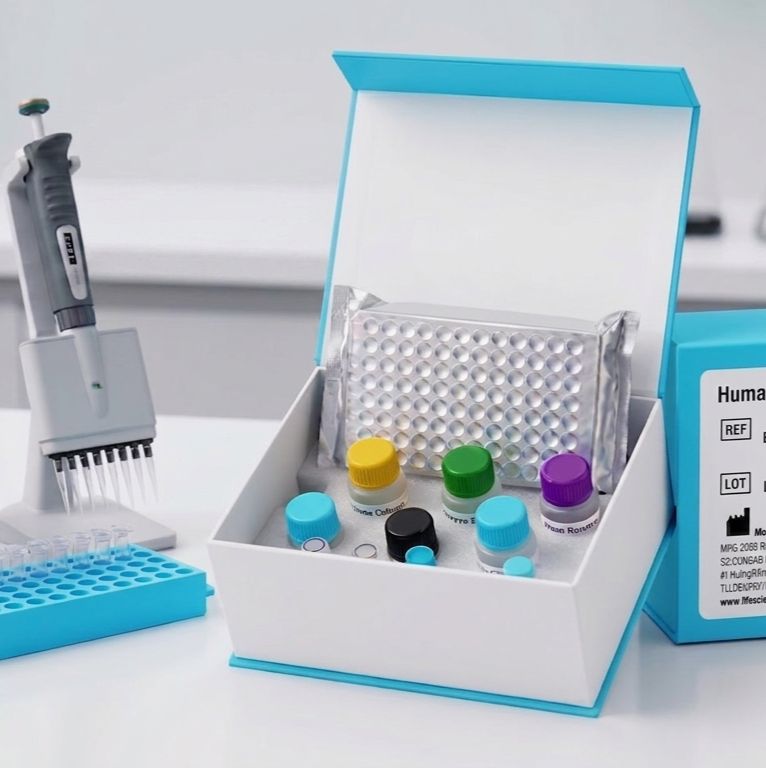
- ¥2890
- LSM Bio
- 0.31-20NG/ML
- 0.1NG/ML
- 国产(香港)
- EV0001
- 2026年09月27日

企业认证
相关产品推荐更多 >
万千商家帮你免费找货
0 人在求购买到急需产品
相关阅读
香烟烟雾如何加速声带纤维化?CD44-透明质酸轴是关键通路Takara 秋促来袭,提取+反转录+定量套装仅 1200 元abinScience 体内级抗体 全年锁价 低至 ¥1200阿拉丁 22万+ 科研级产品现货速发,品质严控、科研无忧- 详细信息
- 文献和实验
- 技术资料
- 库存:
20
- 供应商:
LSMBIO
- 检测范围:
0.31-20NG/ML
- 检测方法:
夹心法
- 应用:
夹心法ELISA体外定量检测人血清、血浆或其它相关生物液体中蛋白浓度
- 适应物种:
人
- 标记物:
Human Porphyromonas gingivalis IgG
- 样本:
人血清、血浆或其它相关生物液体中天然和重组蛋白
- 灵敏度:
0.1NG/ML
- 规格:
96T
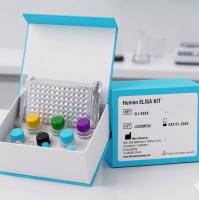
Human Porphyromonas gingivalis IgG ELISA KIT
EV0001
For the quantitative in vitro determination of Human Porphyromonasgingivalis IgG antibody concentrations in
serum - plasma - tissue homogenates - other biological fluids
FOR LABORATORY RESEARCH USE ONLY.
NOT FOR USE IN DIAGNOSTIC PROCEDURES.
This package insert must be read in its entirety before using this product.
ELISA
ENZYME LINKED IMMUNOSORBENT ASSAY
INTENDED USE AND TEST PRINCIPLE
This P.g-IgG ELISA kit is intended Laboratory for Research use only and is not for use in diagnostic or therapeutic procedures. The Stop Solution changes the color from blue to yellow and the intensity of the color is measured at 450 nm using a spectrophotometer. In order to measure the concentration of P.g-IgG in the sample, this P.g-IgG ELISA Kit includes a set of calibration standards. The calibration standards are assayed at the same time as the samples and allow the operator to produce a standard curve of Optical Density versus P.g-IgG concentration. The concentration of P.g-IgG in the samples is then determined by comparing the O.D. of the samples to the standard curve.
SAMPLE COLLECTION AND STORAGES
Serum - Use a serum separator tube and allow samples to clot for two hours at room temperature or overnight at 4鈩?before centrifugation for 20 minutes at approximately 1000×g. Assay freshly prepared serum immediately or store samples in aliquot at -20鈩?or -80鈩?for later use. Avoid repeated freeze/thaw cycles.
Plasma - Collect plasma using EDTA or heparin as an anticoagulant. Centrifuge samples for 15 minutes at 1000×g at 2-8鈩?within 30 minutes of collection. Remove plasma and assay immediately or store samples in aliquot at -20鈩?or -80鈩?for later use. Avoid repeated freeze/thaw cycles.
Tissue homogenates - For general information, hemolysis blood may affect the result, so you should rinse the tissues with ice-cold PBS (0.01M, pH=7.4) to remove excess blood thoroughly. Tissue pieces should be weighed and then minced to small pieces which will be homogenized in PBS (the volume depends on the weight of the tissue. 9mL PBS would be appropriate to 1 gram tissue pieces. Some protease inhibitor is recommended to add into the PBS.) with a glass homogenizer on ice. To further break the cells, you can sonicate the suspension with an ultrasonic cell disrupter or subject it to freeze-thaw cycles. The homogenates are then centrifugated for 5minutes at 5000×g to get the supernate.
Cell culture supernates and other biological fluids - Centrifuge samples for 20 minutes at 1000×g. Remove particulates and assay immediately or store samples in aliquot at -20鈩?or -80鈩?for later use. Avoid repeated freeze/thaw cycles.
MATERIALS REQUIRED BUT NOT SUPPLIED
1. 37 鈩?incubator
2. Standard microplate reader capable of measuring absorbance at 450 nm
3. Precision pipettes, disposable pipette tips and Absorbent paper
4. Distilled or deionized water
REAGENTS PROVIDED
All reagents provided are stored at 2-8°C. Refer to the expiration date on the label.
|
Name |
96 determinations |
Catalog Number |
|
MICROTITER PLATE |
12*8strips |
EV0001-1 |
|
STANDARD锛? vial锛?/p> |
0.3ml/vial |
EV0001-2 |
|
SAMPLE DILUENT |
6.0ml |
EV0001-3 |
|
ENZYME CONJUGATE |
10.0ml |
EV0001-4 |
|
WASH SOLUTION |
25ml |
EV0001-5 |
|
SUBSTRATE A |
6.0ml |
EV0001-6 |
|
SUBSTRATE B |
6.0ml |
EV0001-7 |
|
STOP SOLUTION |
6.0ml |
EV0001-8 |
|
Closure plate membrane |
2 |
EV0001-9 |
|
User manual |
1 |
1 |
|
Sealed bags |
1 |
1 |
Note:
1. Standard concentration was followed by: 20, 10, 5, 2.5, 1.25, 0.625 ng/mL.
2. If samples generate values higher than the highest standard, please dilute the samples with Sample Diluent and repeat the assay.
PRECAUTIONS
- Do not substitute reagents from one kit lot to another. Standard, conjugate and microtiter plates are matched for optimal performance. Use only the reagents supplied by manufacturer.
- Allow kit reagents and materials to reach room temperature (20-25°C) before use. Do not use water baths to thaw samples or reagents.
- Do not use kit components beyond their expiration date.
- Use only deionized or distilled water to dilute reagents.
- Do not remove microtiter plate from the storage bag until needed. Unused strips should be stored at 2-8°C in their pouch with the desiccant provided.
- Use fresh disposable pipette tips for each transfer to avoid contamination.
- Do not mix acid and sodium hypochlorite solutions.
- Serum and plasma should be handled as potentially hazardous and capable of transmitting disease. Disposable gloves must be worn during the assay procedure, since no known test method can offer complete assurance that products derived from Rat blood will not transmit infectious agents. Therefore, all blood derivatives should be considered potentially infectious and good laboratory practices should be followed.
- All samples should be disposed of in a manner that will inactivate viruses.
- Liquid Waste: Add sodium hypochlorite to a final concentration of 1.0%. The waste should be allowed to stand for a minimum of 30 minutes to inactivate the viruses before disposal.
- Substrate Solution is easily contaminated. If bluish prior to use, do not use.
- Substrate B contain 20% acetone, keep this reagent away from sources of heat or flame.
- Remove all kit reagents from refrigerator and allow them to reach room temperature ( 20-25°C).
REAGENT PREPARATION AND STORAGE
Wash Solution (1X) - Dilute 1 volume of Wash solution (20X) with 19 volumes of deionized or distilled water. Wash Solution is stable for 1 month at 2-8°C.
ASSAY PROCEDURE
1. Prepare all reagents before starting assay procedure. It is recommended that all Standards and Samples be added in duplicate to the Microtiter plate.
2. Add 50μl of Standard or Sample to the appropriate wells. Blank well doesn’t add anyting.
3. Add 100μl of Enzymeconjugate to standard wells and sample wells except the blank well, cover with an adhesive strip and incubate for 60 minutes at 37°C.
4. Wash the Microtiter Plate 4 times.
Manual Washing - Remove incubation mixture by aspirating contents of the plate into a sink or proper waste container. Using a squirt bottle, fill each well completely with Wash Solution (1X), then aspirate contents of the plate into a sink or proper waste container. Repeat this procedure for a total of four times. After final wash, invert plate, and blot dry by hitting plate onto absorbent paper or paper towels until no moisture appears. Note: Hold the sides of the plate frame firmly when washing the plate to assure that all strips remain securely in frame.
Automated Washing - Aspirate all wells, then wash plates four times using Wash Buffer (1X). Always adjust your washer to aspirate as much liquid as possible and set fill volume at 350μL/well/wash. After final wash, invert plate, and blot dry by hitting plate onto absorbent paper or paper towels until no moisture appears.
5. Add Substrate A 50μl and Substrate B 50μl to each well. Gently mix and incubate for 15 minutes at 37°C. Protect from light.
6. Add 50μl Stop Solution to each well. The color in the wells should change from blue to yellow. If the color in the wells is green or the color change does not appear uniform, gently tap the plate to ensure thorough mixing.
7. Read the Optical Density (O.D.) at 450 nm using a microtiter plate reader within 15 minutes.
CALCULATION OF RESULTS
- This standard curve is used to determine the amount in an unknown sample. The standard curve is generated by plotting the average O.D. (450 nm) obtained for each of the six standard concentrations on the vertical (X) axis versus the corresponding concentration on the horizontal (Y) axis.
- First, calculate the mean O.D. value for each standard and sample. All O.D. Values are subtracted by the mean value of the balnk well before result interpretation. Construct the standard curve using graph paper or statistical software.
- To determine the amount in each sample, first locate the O.D. value on the Y-axis and extend a horizontal line to the standard curve. At the point of intersection, draw a vertical line to the X-axis and read the corresponding concentration.
- Any variation in operator, pipetting and washing technique, incubation time or temperature, and kit age can cause variation in result. Each user should obtain their own standard curve.
- Intra-assay CV(%) is less than 10% and Inter-assay CV(%) is less than 15%.
- Assay range: 0.625 ng/mL – 20 ng/mL.
7. Sensitivity: The minimum detectable dose of Human P.g-IgG is typically less than 0.1 ng/mL.
8. Cross-reactivity: This assay recognizes recombinant and natural Human P.g-IgG. No significant cross-reactivity or interference was observed.
9. Storage: 2-8鈩?(Use frequently); six months (-20鈩?銆?/p>
10. Standard curve
FOR RESEARCH USE ONLY; NOT FOR THERAPEUTIC OR DIAGNOSTIC APPLICATIONS! PLEASE READ THROUGH ENTIRE PROCEDURE BEFORE BEGINNING!
风险提示:丁香通仅作为第三方平台,为商家信息发布提供平台空间。用户咨询产品时请注意保护个人信息及财产安全,合理判断,谨慎选购商品,商家和用户对交易行为负责。对于医疗器械类产品,请先查证核实企业经营资质和医疗器械产品注册证情况。
 文献和实验
文献和实验Quantification of Human IgG and Related Fc Fusion Proteins by a Human IgG/Fc Capture ELISA
of recombinant human IgGs after production and purification for further assays. Here, we describe a human IgG/Fc capture enzyme linked immunosorbent assay (ELISA) which is simple, robust, inexpensive and specific for all types of human IgGs and related Fc fusion
consists of a cooperation between monocytes and cytophilic antibodies able to bind to the Fc receptors present on the monocyte surface. Thus human IgG1 and IgG3 are the main isotypes effective in ADCI, whereas IgG2, IgG4, and IgM are ineffective
Reprogramming Fibroblasts with the CytoTune-iPS Reprogramming Kit
实验试剂 1. CytoTune™ Sendai Reprogramming Vectors Note: For successful reprogramming, you need all four reprogramming vectors. 2. Human neonatal foreskin fibroblast cells to reprogram 3. Gibco® Mouse
 技术资料
技术资料暂无技术资料 索取技术资料

