

- ¥5144
- RD
- FAB1517A
- 美国
- 2025年12月13日

企业认证
相关产品推荐更多 >

万千商家帮你免费找货
0 人在求购买到急需产品
- 详细信息
- 文献和实验
- 技术资料
- 克隆性:
多克隆
- 抗体英文名:
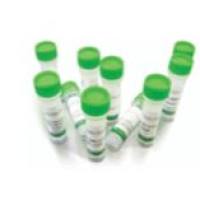
Human ULBP-3 APC-conjugated Antibody
- 抗体名:
Human ULBP-3抗体,APC标记
- 规格:
100T
货号: FAB1517A
Human ULBP-3 APC-conjugated Antibody Summary
Applications
Please Note: Optimal dilutions should be determined by each laboratory for each application. General Protocols are available in the Technical Information section on our website.
Data Example
 View Larger
Detection of ULBP‑3 in BaF3 Mouse Cell Line Transfected with Human ULBP-3 by Flow Cytometry. BaF3 mouse pro-B cell line transfected with human ULBP-3 was stained with Mouse Anti-Human ULBP‑3 APC‑conjugated Monoclonal Antibody (Catalog # FAB1517A, filled histogram) or isotype control antibody (Catalog # IC003A, open histogram). View our protocol for Staining Membrane-associated Proteins.
Preparation and Storage
- 12 months from date of receipt, 2 to 8 °C as supplied.
Background: ULBP-3
ULBP-3 is a member of a family of cell-surface proteins that function as ligands for human NKG2D. ULBP-3 has also been described under the names RaeT1N (retinoic acid early transcript), NKG2DL3, and ALCAN-gamma. The name ULBP-3 derives from the original identification of three proteins, ULBP-1, -2, and -3, as ligands for the human cytomegalovirus glycoprotein UL16; they were designated UL16 binding proteins (ULBP). The gene for ULBP-3 resides in a cluster of ten related genes, six of which encode potentially functional glycoproteins. Amino acid sequence identity within this family ranges from 30‑60%. These proteins are distantly related to MHC class I proteins, but they possess only the alpha 1 and alpha 2 Ig-like domains, and they have no capacity to bind peptide or interact with beta 2‑microglobulin. Some family members, including ULBP-3, are anchored to the membrane via a GPI-linkage, whereas others have transmembrane domains. ULBP-3 and several other family members are known to bind to human NKG2D, an activating receptor expressed on NK cells, NKT cells, gamma δ T cells, and CD8+ alpha beta T cells. Engagement of NKG2D results in the activation of cytolytic activity and/or cytokine production by these effector cells. The ULBPs are expressed on some tumor cells and have been implicated in tumor surveillance (1‑7).
- Cosman, D. et al. (2001) Immunity 14:123.
- Kubin, M. et al. (2001) Eur. J. Immunol. 31:1428.
- Sutherland, C. et al. (2002) J. Immunol. 168:671.
- Steinle, A. et al. (2001) Immunogenetics 53:279.
- Sutherland, C. et al. (2001) Immunol. Rev. 181:185.
- Pende, D. et al. (2002) Cancer Res. 62:6178.
- Radosavljevic, M. et al. (2002) Genomics 79:114.
- NKG2D and its Ligands (2002) http://www.RnDSystems.com/.
风险提示:丁香通仅作为第三方平台,为商家信息发布提供平台空间。用户咨询产品时请注意保护个人信息及财产安全,合理判断,谨慎选购商品,商家和用户对交易行为负责。对于医疗器械类产品,请先查证核实企业经营资质和医疗器械产品注册证情况。
 文献和实验
文献和实验随着蛋白组学的深入研究,抗体标记技术也被广泛用于医学病理学、免疫组织化学、分子生物学、生物制药等领域,但很多科研人员在选择多种标记的抗体时遇到困难,那么今天我们一起了解这四种常用的抗体标记方法,这些方法平时都用对了吗? 什么是抗体标记? 抗体标记是指将标记物(酶,荧光素,生物素等)共价连接到抗体上,与待检测物(如某些特定抗原)特异性反应形成多元复合物,并借助于仪器对试验结果直接镜检观察或进行自动化测定,以用于对抗原、抗体反应进行定性和定位研究或进行定性和定量测定。 荧
当FITC在碱性溶液中与抗体蛋白反应时,主要是蛋白质上赖氨酸的r氨基与荧光素的硫碳胺键(thiocarbmide)结合,形成FITC-蛋白质结合物,即荧光抗体或荧光结合物。一个IgG分子中有86个赖氨酸残基,一般最多能结合15~20个,一个IgG分子可结合2~8个分子的FITC,其反应式如下FITC-N=C=S + N-H2-蛋白质 → FITC-NS-C-N-H2-蛋白质常用Marsshall(1958)法标记荧光抗体,也可以根据条件采用Chadwick等标记法或Clark
: Type 1 (used for FITC, Cy5, and the initial preparation of the Cy5 and Cy7 tandem dyes); Type 2 (used for Biotin and Cascade Blue); Type 3 (used for conjugation of PE, APC, TR-BSA, and their derivatives); and Type 4 (used for the initial preparation
 技术资料
技术资料暂无技术资料 索取技术资料

