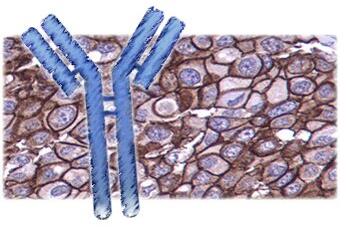
- ¥2980
- LMAI Bio
- LM-0255R-FITC
- 中国/美国/欧洲
- 2025年07月13日
- IF=1:50-200
- Human,
- Human,

9 年钻石会员
企业认证
相关产品推荐更多 >


万千商家帮你免费找货
0 人在求购买到急需产品
- 详细信息
- 技术资料
- 供应商:
上海联迈生物工程有限公司
- 库存:
大量
- 靶点:
详见说明书
- 级别:
1
- 目录编号:
LM-0255R-FITC
- 克隆性:
多克隆
- 抗原来源:
Rabbit
- 保质期:
1年
- 抗体英文名:
Anti-Estrogen receptor beta/FITC
- 抗体名:
Anti-Estrogen receptor beta/FITC
- 标记物:
FITC标记
- 宿主:
Human,
- 适应物种:
Human,
- 免疫原:
详见说明书
- 亚型:
IGg
- 形态:
粉末、液体、冻干粉
- 应用范围:
IF=1:50-200
- 浓度:
1mg/ml
- 保存条件:
-20 °C
- 规格:
100ul
FITC标记的雌激素受体β抗体
| 英文名称 | Anti-Estrogen receptor beta/FITC |
| 中文名称 | FITC标记的雌激素受体β抗体 |
| 别 名 | Estrogen receptor-beta; Estrogen receptor beta; ER BETA; ER-BETA; ER-beta; Erb; ESR 2; ESR 2; ESR B; ESR-B; ESR BETA; ESR-BETA; ESR2; ESR2; ESR2_HUMAN; ESRB; ESTRB; estrogen nuclear receptor beta variant a; estrogen nuclear receptor beta variant b; estrogen receptor 2 (ER beta); Estrogen Receptor 2; Estrogen Receptor-2; estrogen receptor beta 4; NR3A2; Nuclear receptor subfamily 3 group A member 2. |
| 规格价格 | 100ul/2980元 购买 大包装/询价 |
| 说 明 书 | 100ul |
| 研究领域 | 肿瘤 |
| 抗体来源 | Rabbit |
| 克隆类型 | Polyclonal |
| 交叉反应 | Human, |
| 产品应用 | IF=1:50-200 not yet tested in other applications. optimal dilutions/concentrations should be determined by the end user. |
| 分 子 量 | 58kDa |
| 性 状 | Lyophilized or Liquid |
| 浓 度 | 1mg/ml |
| 免 疫 原 | KLH conjugated synthetic peptide derived from human ER-Beta |
| 亚 型 | IgG |
| 纯化方法 | affinity purified by Protein A |
| 储 存 液 | 0.01M TBS(pH7.4) with 1% BSA, 0.03% Proclin300 and 50% Glycerol. |
| 保存条件 | Store at -20 °C for one year. Avoid repeated freeze/thaw cycles. The lyophilized antibody is stable at room temperature for at least one month and for greater than a year when kept at -20°C. When reconstituted in sterile pH 7.4 0.01M PBS or diluent of antibody the antibody is stable for at least two weeks at 2-4 °C. |
| 产品介绍 | background: This gene encodes a member of the family of estrogenreceptors and superfamily of nuclear receptor transcriptionfactors. The gene product contains an N-terminal DNA binding domainand C-terminal ligand binding domain and is localized to thenucleus, cytoplasm, and mitochondria. Upon binding to17beta-estradiol or related ligands, the encoded protein formshomo- or hetero-dimers that interact with specific DNA sequences toactivate transcription. Some isoforms dominantly inhibit theactivity of other estrogen receptor family members. Severalalternatively spliced transcript variants of this gene have beendescribed, but the full-length nature of some of these variants hasnot been fully characterized. [provided by RefSeq, Jul 2008]. Function: Nuclear hormone receptor. Binds estrogens with an affinity similar to that of ESR1, and activates expression of reporter genes containing estrogen response elements (ERE) in an estrogen-dependent manner. Isoform beta-cx lacks ligand binding ability and has no or only very low ere binding activity resulting in the loss of ligand-dependent transactivation ability. DNA-binding by ESR1 and ESR2 is rapidly lost at 37 degrees Celsius in the absence of ligand while in the presence of 17 beta-estradiol and 4-hydroxy-tamoxifen loss in DNA-binding at elevated temperature is more gradual. Subunit: Binds DNA as a homodimer. Can form a heterodimer with ESR1. Interacts with NCOA3, NCOA5 and NCOA6 coactivators, leading to a strong increase of transcription of target genes. Interacts with PELP1 and UBE1C. Isoform beta-2/cx preferentially forms a heterodimer with ESR1 rather than ESR2 and inhibits DNA-binding by ESR1. Interacts with AKAP13. Interacts with DNTTIP2. Interacts with isoform 4 of TXNRD1. Interacts with CCDC62 in the presence of estradiol/E2; this interaction seems to enhance the transcription of target genes, including cyclin-D1/CCND1 AP-1 promoter. Interacts with DYX1C1. Interacts with PRMT2. Subcellular Location: Nucleus. Tissue Specificity: Tissue specificityIsoform beta-1 is expressed in testis and ovary, and at a lower level in heart, brain, placenta, liver, skeletal muscle, spleen, thymus, prostate, colon, bone marrow, mammary gland and uterus. Also found in uterine bone, breast, and ovarian tumor cell lines, but not in colon and liver tumors. Isoform beta-2 is expressed in spleen, thymus, testis and ovary and at a lower level in skeletal muscle, prostate, colon, small intestine, leukocytes, bone marrow, mammary gland and uterus. Isoform beta-3 is found in testis. Isoform beta-4 is expressed in testis, and at a lower level in spleen, thymus, ovary, mammary gland and uterus. Isoform beta-5 is expressed in testis, placenta, skeletal muscle, spleen and leukocytes, and at a lower level in heart, lung, liver, kidney, pancreas, thymus, prostate, colon, small intestine, bone marrow, mammary gland and uterus. Not expressed in brain. Similarity: Belongs to the nuclear hormone receptor family. NR3 subfamily. Contains 1 nuclear receptor DNA-binding domain. Database links: Entrez Gene: 2100 Human Omim: 601663 Human SwissProt: Q92731 Human Unigene: 660607 Human Important Note: This product as supplied is intended for research use only, not for use in human, therapeutic or diagnostic applications. |
风险提示:丁香通仅作为第三方平台,为商家信息发布提供平台空间。用户咨询产品时请注意保护个人信息及财产安全,合理判断,谨慎选购商品,商家和用户对交易行为负责。对于医疗器械类产品,请先查证核实企业经营资质和医疗器械产品注册证情况。
 技术资料
技术资料暂无技术资料 索取技术资料
FITC标记的雌激素受体β抗体
¥2980