

- 询价
- Moor Instruments

- 0000
- 英国
- 2026年10月18日

企业认证
万千商家帮你免费找货
0 人在求购买到急需产品
相关阅读
源叶生物 十万种现货试剂速发,品质稳、品类全,实验不再等!Takara 秋促来袭,提取+反转录+定量套装仅 1200 元abinScience 体内级抗体 全年锁价 低至 ¥1200阿拉丁 22万+ 科研级产品现货速发,品质严控、科研无忧- 详细信息
- 询价记录
- 文献和实验
- 技术资料
- 供应商:
Gene&I

利用激光多普勒技术判断烧伤创面的损伤程度、预后情况判断。
临床实验证明:
bi扫描发现血流灌注量丰富的创面14天之内就会愈合良好
bi扫描发现灌注量中等的创面愈合期在14天-21天之间
bi扫描发现灌注量很低的烧伤创面明确提示医生可能需要手术、愈合期在21天以上
本结果经全球烧伤科临床医学专家验证准确
专业软件帮助轻松分析监测结果!
注:影响烧伤愈后的因素很多,请根据多种情况分析判断!
introduction
the moorldi2-bi (moorldi2 burns imager) uses the laser doppler technique to predict the healing potential (hp) of a burn wound.
clinical trials have shown that burn wounds heal within 14 days where there is high ld blood flow, between days 14 and 21 with ‘medium’ blood flow, and take longer than 21 days where there is low ld blood flow (the latter usually indicating that surgery is required).
with the introduction of moorldi2-bi laser doppler imager different regions of a mixed depth burn can be mapped in a single image. a full resolution scan includes 65,536 individual laser doppler measurements and these are displayed alongside a corresponding ccd image, as a colour coded image.
accuracy of moorldi2-bi
since the development of the moorldi, a number of publications have shown the higher accuracy of ldi in burn depth assessment.
niazi et al. (1993) first evaluated the technique of burn depth measurement using ldi. they found that the commonest error (in four out of 17 cases) was overestimation of burn depth by the clinician. in only two cases did they underestimate burn depth. by comparison, when they used ldi to measure burn depth this was correct in all cases (4 superficial dermal and 13 deep-dermal or sub-dermal burns).
pape et al. (2001) published an audit of the use of ldi in the assessment of burn depth. they reported that the ldi allowed accurate assessment of burn depth in 97% of burns, compared with 73% for clinical observation alone. these findings were similar to those reported by monstrey et al. (2001, abstract) who reported ldi accuracy of 93.3�96.6% compared to 61�67% for clinical evaluation, when ldi scanning was performed at day 3 and day 5 post-burn, respectively.
jeng et al. (2001) stated that use of the ldi enabled them to make earlier and more ob-jective determination of the need to excise and graft burns. in a separate study, pape and byrne (2001) presented evidence that the use of ldi avoided unnecessary surgery, resulting in a reduction of both costs and workload.
in 2002 holland et al. also reported that the moorldi was an accurate method for the prediction of burn wound healing in children (holland et al., 2002). this study involved 57 children with a mean age of 1 year and 10 months. the sensitivity and the specificity of the moorldi were higher than clinical evaluation:
sensitivity ldi � 0.90; clinical evaluation � 0.66.
specificity ldi � 0.96; clinical evaluation � 0.71 (holland et al., 2002)
equipment required
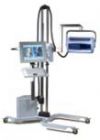
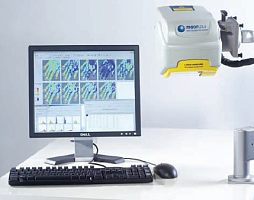
the moorldi2-bi package includes the moorldi2-bi scan head, scan controller, touch-screen panel pc, all mounted on a mobile clinical stand that can be used in the ward, operating theatre, consulting room or special laser room. full installation, clinical training and certification is included together with a premium service contract.
summary
the moorldi2-bi can help the burn surgeon by indicating the healing potential (hp) of burn wounds. the current clinical practice is to report burn depth. for example, some burn surgeons use the latarjet classification (first-degree, superficial second-degree, deep second-degree and third-degree). we have introduced the term healing potential (hp) when interpreting moorldi2-bi burn scan images because healing is the recordable outcome measure relevant to large areas of burn, whereas assessment of depth (using biopsy) is only available at discreet points.
a multi-centre study was carried out using the moorldi2-bi to analyse the ranges of blood flow that correlated with healing within 3 specified time-periods; by post-burn day 14, between post-burn day 14 and 21, and greater than 21 days.
the hp categories are:
hp 14: the wound has the potential to heal within 14 days of the burn injury
hp 14-21: the wound has the potential to heal between 14 to 21 days post burn
hp >21: the wound will take longer than 21 days to heal
the actual healing time of the wound will, however, depend upon other factors that can prolong wound healing (e.g. wound infection or use of inotropes). thus, the moorldi2-bi can provide an indication of the potential of the wound to heal but the actual healing time is dependent upon other clinical, biological and environmental factors.
use of the moorldi2-bi has been shown to avoid unnecessary surgery in patients with superficial dermal wounds and promote early surgery for deep dermal wounds.
the moorldi2 laser doppler blood perfusion imagers use a near infra-red laser beam (785nm in the standard moorldi2-ir imager) or a visible red 633nm laser beam (moorldi2-vr imager). in the moorldi2-2λ dual wavelength system 633 and 830nm lasers are combined to allow simultaneous imaging with the two wavelengths.
the imagers are able to map tissue blood flow over areas from 5cm x 5cm up to 50cm x 50cm with 256 x 256 pixel resolution; - each pixel being an actual measurement. at high scan rates, over 64,000 measurements are made in less than 5 minutes.
the moorldi2 is suitable for a wide range of clinical and research investigations and measurement of blood flow in the microcirculation. the moorldi2 range features a ccd camera which produces a colour image of the scanned area, making the positioning and comparison of images easier. the moorldi2-hr highest resolution version is available with resolution to 100 microns.
风险提示:丁香通仅作为第三方平台,为商家信息发布提供平台空间。用户咨询产品时请注意保护个人信息及财产安全,合理判断,谨慎选购商品,商家和用户对交易行为负责。对于医疗器械类产品,请先查证核实企业经营资质和医疗器械产品注册证情况。
 询价记录
询价记录 暂无询价记录
 文献和实验
文献和实验技术原理与方法|将硅油物镜配合共聚焦激光扫描显微镜用于透明化标本的深层组织观察
SCALEVIEW-A2 的折射率,从而减少了因折射率不匹配而引起的球差,因此硅油物镜的性能更好。这让用户可以捕捉到更明亮的图像。 此外,硅油物镜比水浸物镜具有更高的数值孔径(NA),因此与使用水浸物镜相比,研究人员可以获得更清晰的内部组织和更高分辨率的图像。 成像系统: 显微镜:奥伟登(Evident)FV1200 共聚焦激光扫描显微镜 *奥伟登(Evident)现已推出全新共聚焦显微镜 物镜:UPLSAPO60XS2(60X, NA:1.30, W.D.:0.3 毫米) 图像数据
的不足,同时不可避免地降低了系统的灵敏度。 成像系统的灵敏度与物镜对光子的收集效率直接相关,物镜的数值孔径对光子采集率的影响是非线性的,光子采集效率CE=arcsinNA/360×100%,如图2。 大多数物镜系统受技术限制,物镜数值孔径仅为0.30,光采集效率为2.3%。一般CCD成像系统所使用的物镜镜头数值孔径均低于0.25,而共聚焦成像系统物镜的数值孔径可达到0.7~0.8,收集效率为15%~20%。光子收集效率是一般CCD成像系统的7~10倍。 三、应用 激光共聚焦生物芯片扫描
一样,各种脏器也会因新陈代谢不正常而出现疾病和衰老等。临床上通过监测血管血流的变化可以对糖尿病、高血压、动脉硬化、老年痴呆及肿瘤等疾病进行早期诊断或者是术后追踪。因此,监测血管的血流在生命科学基础研究、疾病的临床诊断以及药物研发等方面都具有重要的意义。目前,监测血流的技术有多种,比如超声多普勒、点式和扫描式激光多普勒等等,但这些技术均有一定的局限性,比如采样速度较慢、空间分辨率低、不能不能监测大面积血流、操作复杂、输出结果不直观、性价比低等等,而激光散斑成像技术则克服了这些局限性。它的基本原理是:当目标
 技术资料
技术资料暂无技术资料 索取技术资料

