

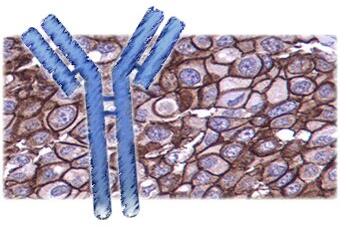
- ¥2980
- LMAI Bio
- LM-2363R-FITC
- 中国/美国/欧洲
- 2025年07月10日
- IF=1:50-200
- Human, Mouse, Rat, Chicken, Dog, Pig, Cow, Horse, Rabbit,
- Human, Mouse, Rat, Chicken, Dog, Pig, Cow, Horse, Rabbit,

企业认证
相关产品推荐更多 >
万千商家帮你免费找货
0 人在求购买到急需产品
相关阅读
源叶生物 十万种现货试剂速发,品质稳、品类全,实验不再等!Takara 秋促来袭,提取+反转录+定量套装仅 1200 元abinScience 体内级抗体 全年锁价 低至 ¥1200阿拉丁 22万+ 科研级产品现货速发,品质严控、科研无忧- 详细信息
- 文献和实验
- 技术资料
- 供应商:
上海联迈生物工程有限公司
- 库存:
大量
- 靶点:
详见说明书
- 级别:
1
- 目录编号:
LM-2363R-FITC
- 克隆性:
多克隆
- 抗原来源:
Rabbit
- 保质期:
1年
- 抗体英文名:
Anti-ETBR/FITC
- 抗体名:
Anti-ETBR/FITC
- 标记物:
FITC标记
- 宿主:
Human, Mouse, Rat, Chicken, Dog, Pig, Cow, Horse, Rabbit,
- 适应物种:
Human, Mouse, Rat, Chicken, Dog, Pig, Cow, Horse, Rabbit,
- 免疫原:
详见说明书
- 亚型:
IGg
- 形态:
粉末、液体、冻干粉
- 应用范围:
IF=1:50-200
- 浓度:
1mg/ml
- 保存条件:
-20 °C
- 规格:
100ul
| 英文名称 | Anti-ETBR/FITC |
| 中文名称 | FITC标记的内皮素B受体抗体 |
| 别 名 | ABCDS; Ednra; Ednrb; EDNRB_HUMAN; Endothelin B receptor; Endothelin B receptor precursor; Endothelin receptor Non selective type; Endothelin receptor non-selective type; Endothelin receptor type B; ET B; ET-B; ET-BR; ETB; ETRB; Hirschsprung disease 2; HSCR; HSCR2; EDNRB; HSCR; WS4A. |
| 规格价格 | 100ul/2980元 购买 大包装/询价 |
| 说 明 书 | 100ul |
| 研究领域 | 心血管 免疫学 神经生物学 生长因子和激素 |
| 抗体来源 | Rabbit |
| 克隆类型 | Polyclonal |
| 交叉反应 | Human, Mouse, Rat, Chicken, Dog, Pig, Cow, Horse, Rabbit, |
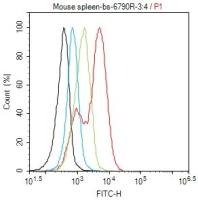
| 产品应用 | IF=1:50-200 not yet tested in other applications. optimal dilutions/concentrations should be determined by the end user. |
| 分 子 量 | 50kDa |
| 细胞定位 | 细胞膜 |
| 性 状 | Lyophilized or Liquid |
| 浓 度 | 1mg/ml |
| 免 疫 原 | KLH conjugated synthetic peptide derived from human EDNRB |
| 亚 型 | IgG |
| 纯化方法 | affinity purified by Protein A |
| 储 存 液 | 0.01M TBS(pH7.4) with 1% BSA, 0.03% Proclin300 and 50% Glycerol. |
| 保存条件 | Store at -20 °C for one year. Avoid repeated freeze/thaw cycles. The lyophilized antibody is stable at room temperature for at least one month and for greater than a year when kept at -20°C. When reconstituted in sterile pH 7.4 0.01M PBS or diluent of antibody the antibody is stable for at least two weeks at 2-4 °C. |
| 产品介绍 | background: Endothelin receptor type B (ETRB) is a G protein-coupled receptor that activates a phosphatidylinoitol-calcium second messenger system. Its ligand, endothelin, consists of a family of three potent vasoactive peptides: ET1, ET2, and ET3. A splice variant (SVR), differing in the intracellular C terminal domain, has been described for this receptor. Both WT and the variant bind ET1. However, they exhibit different responses upon binding - suggesting that these two variants are functionally distinct. Function: Non-specific receptor for endothelin 1, 2, and 3. Mediates its action by association with G proteins that activate a phosphatidylinositol-calcium second messenger system. Subcellular Location: Cell membrane; Multi-pass membrane protein. Tissue Specificity: Expressed in placental stem villi vessels, but not in cultured placental villi smooth muscle cells. Post-translational modifications: Palmitoylation of Cys-402 was confirmed by the palmitoylation of Cys-402 in a deletion mutant lacking both Cys-403 and Cys-405. DISEASE: Defects in EDNRB are a cause of Waardenburg syndrome type 4A (WS4A) [MIM:277580]; also known as Waardenburg-Shah syndrome. WS4A is characterized by the association of Waardenburg features (depigmentation and deafness) and the absence of enteric ganglia in the distal part of the intestine (Hirschsprung disease). Defects in EDNRB are the cause of Hirschsprung disease type 2 (HSCR2) [MIM:600155]; also known as aganglionic megacolon (MGC). HSCR2 is a congenital disorder characterized by absence of enteric ganglia along a variable length of the intestine. It is the most common cause of congenital intestinal obstruction. Early symptoms range from complete acute neonatal obstruction, characterized by vomiting, abdominal distention and failure to pass stool, to chronic constipation in the older child. Defects in EDNRB are the cause of ABCD syndrome (ABCDS) [MIM:600501]. ABCD syndrome is an autosomal recessive syndrome characterized by albinism, black lock at temporal occipital region, bilateral deafness, aganglionosis of the large intestine and total absence of neurocytes and nerve fibers in the small intestine. Similarity: Belongs to the G-protein coupled receptor 1 family. Endothelin receptor subfamily. EDNRB sub-subfamily. Database links: Entrez Gene: 408082 Chicken Entrez Gene: 281750 Cow Entrez Gene: 1910 Human Entrez Gene: 13618 Mouse Entrez Gene: 100009477 Rabbit Entrez Gene: 50672 Rat Omim: 131244 Human SwissProt: P28088 Cow SwissProt: P24530 Human SwissProt: P48302 Mouse SwissProt: P35463 Pig SwissProt: Q9N0W7 Rabbit SwissProt: P21451 Rat Unigene: 487 Cow Unigene: 82002 Human Unigene: 229532 Mouse Unigene: 27603 Pig Unigene: 6857 Rabbit Unigene: 11412 Rat Important Note: This product as supplied is intended for research use only, not for use in human, therapeutic or diagnostic applications. |
风险提示:丁香通仅作为第三方平台,为商家信息发布提供平台空间。用户咨询产品时请注意保护个人信息及财产安全,合理判断,谨慎选购商品,商家和用户对交易行为负责。对于医疗器械类产品,请先查证核实企业经营资质和医疗器械产品注册证情况。
 文献和实验
文献和实验nm)的带通滤片(BP, Band Pass)。 b. 以eFluorTM605NC为例:其荧光发射峰有335nm, 405nm和407nm,最大发射波长为605nm ,流式细胞仪检测时需605/40 (即检测波长范围为605± 20nm)的带通滤片。 注释: 表中数值表示各荧光检测通道间的荧光补偿值(compensation),单位为%。 b. 以FITC和PE为例:假如我们用FLi-%FLj,表示从第i通道扣除从第j通道漏过来的荧光时,设置的荧光补偿值;那么流式细胞仪的FL1通道检测
双重染色法免疫荧光组织化学染色步骤若在同一标本中有A和B两种抗原需要同时显示,A抗原的抗体用FITC标记,B抗原的抗体用TRITC标记,可采用以下染色方法:免疫荧光细胞化学双重染鱼法原代培养胚胎14天大鼠端脑细胞:在骨发生形态蛋白―{诱导下,乙酰胆碱转移酶(呈绿色荧光)和同源域蛋白Islet―1(呈红色荧光)共存于细胞质内(激光扫描共聚焦显微镜观察)1.一步双染色法先将两种荧光标{己抗体按适当比例混合(A+B),按直接法进行染色。2.二步双染色法先用TRITC标记的A抗体进行免疫荧光染色,再用
min。②荧光素的准备 根据欲标记的蛋白质总量,按每毫克免疫球蛋白加0.01mg荧光色素,用分析天平准确称取所需的异硫氰酸荧光素粉末。也可用下述公式计算出免疫球蛋白、荧光素的量,还可以算出需加缓冲液的量。a.蛋白溶液:含量Amg/m1;容积Bml。b.总蛋白量(AXB)=Crag。c.C/20~C/10=Dmg(如蛋白含量低于20mg/ml,用C/10;如高于20mg/ml,用C/20)。d.荧光素FITC的量:(1/50~2/100)XC=Emg。e.巳0.5mol/L(pH9.5)碳酸盐缓冲
 技术资料
技术资料暂无技术资料 索取技术资料

