


- ¥845.30
- SIGMA
- L2630
- 美国
- 2026年08月26日

企业认证
相关产品推荐更多 >
万千商家帮你免费找货
0 人在求购买到急需产品
相关阅读
源叶生物 十万种现货试剂速发,品质稳、品类全,实验不再等!Takara 秋促来袭,提取+反转录+定量套装仅 1200 元abinScience 体内级抗体 全年锁价 低至 ¥1200阿拉丁 22万+ 科研级产品现货速发,品质严控、科研无忧- 详细信息
- 文献和实验
- 技术资料
- 库存:
大量
- 英文名:
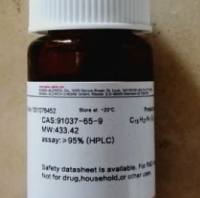
Lipopolysaccharides from Escherichia coli O111:B4
- CAS号:
297-473-0
- 保质期:
2年
- 供应商:
上海瓦兰生物
- 保存条件:
2-8℃
- 规格:
10MG
性质
| Related Categories | Carbohydrates A to Z, Carbohydrates H-L, Complex Lipids, Glycolipids, Lipopolysaccharides, 更多... |
| Quality Level | PREMIUM |
| form | lyophilized powder |
| purified by | phenol extraction |
| storage temp. | 2-8°C |
产品描述
Application
Lipopolysaccharides (LPSs) are characteristic components of the cell wall of Gram-negative bacteria. LPS and its lipid A moiety stimulate cells of the innate immune system by the Toll-like receptor 4 (TLR4), a member of the Toll-like receptor protein family, which recognizes common pathogen-associated molecular-patterns (PAMPs).
Lipopolysaccharides (LPSs) from Escherichia coli O111:B4 have been used for the stimulation of macrophages.[3][5] They have been used for LPS preconditioning in mice.[4]
包装
10, 25, 100 mg in poly bottle
Preparation Note
The product is soluble in water (5 mg/ml) or cell culture medium (1 mg/ml) yielding a hazy, faint yellow solution. A more concentrated, though still hazy, solution (20 mg/ml) has been achieved in aqueous saline after vortexing and warming to 70-80 oC. Lipopolysaccharides are molecules that form micelles in every solvent. Hazy solutions are observed in water and phosphate buffered saline. Organic solvents do not give clearer solutions. Methanol yields a turbid suspension with floaters, while water yields a homogeneously hazy solution.
General description
Lipopolysaccharides (LPSs) are characteristic components of the cell wall of Gram-negative bacteria. A typical LPS molecule has lipid A (a glucosamine-based phospholipid), a relatively short core oligosaccharide and a distal polysaccharide (O-antigen). LPSs contribute to the integrity of the outer membrane, and protect the cell against the action of bile salts and lipophilic antibiotics. They stimulate host cells via TLR2 and TLR4 (toll like receptors). This stimulation results in the generation of various proinflammatory cytokines, such as TNFα (tumor necrosis factor), IL-1 (interleukin 1) and IL-6.[1][2]
This product is phenol extracted from Escherichia coli serotype O111:B4. The source strain is from a private collection. This LPS serotype has been used to stimulate B-cells and induce NOS (nitric oxide synthase) in human hepatocytes.
风险提示:丁香通仅作为第三方平台,为商家信息发布提供平台空间。用户咨询产品时请注意保护个人信息及财产安全,合理判断,谨慎选购商品,商家和用户对交易行为负责。对于医疗器械类产品,请先查证核实企业经营资质和医疗器械产品注册证情况。
 文献和实验
文献和实验Expression of Chemokines in Escherichia coli
Escherichia coli is one of the most powerful and versatile hosts for highlevel protein production. Its well-characterized genetics and biochemistry have led to the development of many different systems for heterologous protein
DNA Ligation and Escherichia coli Transformation
The generation of recombinant clones usually involves joining together covalently (also called ligating) two or more restriction fragments. This can be done with the enzyme DNA ligase. There are two major sources of the enzyme: Escherichia, coli
Purification of Recombinant Calpastatin Expressed in Escherichia coli
in attempts to assess the role of calpain in degradation of target proteins in cell lysates. However, these reagents are not strictly specific for calpain (for instance, cathepsins B, H, and L are inhibited by E-64, and the proteasome is inhibited by calpain
 技术资料
技术资料资料下载:
u=166885053,811269710&fm=26&gp=0.jpg 附 (下载 0 次)
请 [登录] 后再下载,该资料由上海瓦兰生物科技有限公司提供,您的下载记录将同步给资料所有人,用于资料服务和业务跟进。

