

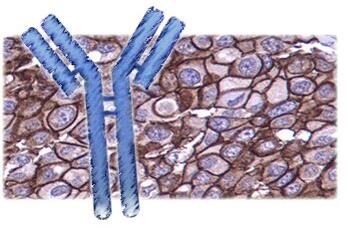
- ¥2980
- LMAI Bio
- LM-5829R-FITC
- 中国/美国/欧洲
- 2026年05月29日
- 详见说明书
- Human, Mouse, Rat, Dog, Pig, Cow, Horse, Rabbit, Guinea Pig, G
- Human, Mouse, Rat, Dog, Pig, Cow, Horse, Rabbit, Guinea Pig, G

企业认证
相关产品推荐更多 >


万千商家帮你免费找货
0 人在求购买到急需产品
相关阅读
源叶生物 十万种现货试剂速发,品质稳、品类全,实验不再等!Takara 秋促来袭,提取+反转录+定量套装仅 1200 元abinScience 体内级抗体 全年锁价 低至 ¥1200阿拉丁 22万+ 科研级产品现货速发,品质严控、科研无忧- 详细信息
- 文献和实验
- 技术资料
- 供应商:
上海联迈生物工程有限公司
- 库存:
大量
- 靶点:
详见说明书
- 级别:
1
- 目录编号:
LM-5829R-FITC
- 克隆性:
多克隆
- 抗原来源:
Rabbit
- 保质期:
1年
- 抗体英文名:
Anti-NG2/FITC
- 抗体名:
Anti-NG2/FITC
- 标记物:
FITC标记
- 宿主:
Human, Mouse, Rat, Dog, Pig, Cow, Horse, Rabbit, Guinea Pig, G
- 适应物种:
Human, Mouse, Rat, Dog, Pig, Cow, Horse, Rabbit, Guinea Pig, G
- 免疫原:
详见说明书
- 亚型:
IGg
- 形态:
粉末、液体、冻干粉
- 应用范围:
详见说明书
- 浓度:
1mg/ml
- 保存条件:
-20 °C
- 规格:
100ul
| 英文名称 | Anti-NG2/FITC |
| 中文名称 | FITC标记的黑色素瘤硫酸软骨素蛋白多糖抗体 |
| 别 名 | MELCSPG; AN2; AN2 proteoglycan; Chondroitin sulfate proteoglycan 4 (melanoma-associated); Chondroitin sulfate proteoglycan 4; CSPG4; Cspg4 chondroitin sulfate proteoglycan 4; HMW-MAA; HSN tumor-specific antigen; MCSP; MCSPG; MEL-CSPG; Melanoma chondroitin sulfate proteoglycan; Melanoma-associated chondroitin sulfate proteoglycan; MSK16; CSPG4_HUMAN. |
| 规格价格 | 100ul/2980元 购买 大包装/询价 |
| 说 明 书 | 100ul |
| 研究领域 | 肿瘤 细胞生物 免疫学 神经生物学 细胞粘附分子 |
| 抗体来源 | Rabbit |
| 克隆类型 | Polyclonal |
| 交叉反应 | Human, Mouse, Rat, Dog, Pig, Cow, Horse, Rabbit, Guinea Pig, G |
| 产品应用 | not yet tested in other applications. optimal dilutions/concentrations should be determined by the end user. |
| 分 子 量 | 248kDa |
| 细胞定位 | 细胞膜 |
| 性 状 | Lyophilized or Liquid |
| 浓 度 | 1mg/ml |
| 免 疫 原 | KLH conjugated synthetic peptide derived from human MCSPG |
| 亚 型 | IgG |
| 纯化方法 | affinity purified by Protein A |
| 储 存 液 | 0.01M TBS(pH7.4) with 1% BSA, 0.03% Proclin300 and 50% Glycerol. |
| 保存条件 | Store at -20 °C for one year. Avoid repeated freeze/thaw cycles. The lyophilized antibody is stable at room temperature for at least one month and for greater than a year when kept at -20°C. When reconstituted in sterile pH 7.4 0.01M PBS or diluent of antibody the antibody is stable for at least two weeks at 2-4 °C. |
| 产品介绍 | background: Proteoglycans (PGs) are a family of proteins composed of different polypeptide chains containing glycosaminoglycan (GAG) modifications. They vary in their cellular locations and have diverse structure and functions. NG2 is a proteoglycan found in the nervous system, comprising a large integral membrane PG with a core protein of 300 kDa and at least one covalently attached chondroitin sulfate (CS) GAG chain. In the CNS this protein is expressed mainly on the surfaces of developing and adult oligodendrocyte precursor cells, but is also associated with developing chondrocytes, cardiomyocytes, pericytes and several human tumours. NG2 also stimulates alpha-4, beta-1 integrin-mediated adhesion and spreading by recruiting and activating a signaling cascade through CDC42, ACK1 and BCAR1. May activate FAK and ERK1/ERK2 signaling cascades. Function: Proteoglycan playing a role in cell proliferation and migration which stimulates endothelial cells motility during microvascular morphogenesis. May also inhibit neurite outgrowth and growth cone collapse during axon regeneration. Cell surface receptor for collagen alpha 2(VI) which may confer cells ability to migrate on that substrate. Binds through its extracellular N-terminus growth factors, extracellular matrix proteases modulating their activity. May regulate MPP16-dependent degradation and invasion of type I collagen participating in melanoma cells invasion properties. May modulate the plasminogen system by enhancing plasminogen activation and inhibiting angiostatin. Functions also as a signal transducing protein by binding through its cytoplasmic C-terminus scaffolding and signaling proteins. May promote retraction fiber formation and cell polarization through Rho GTPase activation. May stimulate alpha-4, beta-1 integrin-mediated adhesion and spreading by recruiting and activating a signaling cascade through CDC42, ACK1 and BCAR1. May activate FAK and ERK1/ERK2 signaling cascades. Subunit: Interacts with the first PDZ domain of MPDZ. Interacts with PRKCA. Binds TNC, laminin-1, COL5A1 and COL6A2. Interacts with PLG and angiostatin. Binds FGF2 and PDGFA. Interacts with GRIP1, GRIP2 and GRIA2. Forms a ternary complex with GRIP1 and GRIA2 (By similarity). Interacts with LGALS3 and the integrin composed of ITGB1 and ITGA3. Interacts with ITGA4 through its chondroitin sulfate glycosaminoglycan. Interacts with BCAR1, CDC42 and ACK1. Interacts with MMP16. Subcellular Location: Apical cell membrane. Cell projection > lamellipodium membrane. Localized at the apical plasma membrane it relocalizes to the lamellipodia of astrocytoma upon phosphorylation by PRKCA. Localizes to the retraction fibers. Localizes to the plasma membrane of oligodendrocytes. Tissue Specificity: Detected only in malignant melanoma cells. Post-translational modifications: O-glycosylated; contains glycosaminoglycan chondroitin sulfate which are required for proper localization and function in stress fiber formation (By similarity). Involved in interaction with MMP16 and ITGA4. Phosphorylation by PRKCA regulates its subcellular location and function in cell motility (By similarity). Similarity: Contains 15 CSPG (NG2) repeats. Contains 2 laminin G-like domains. Database links: Entrez Gene: 1464 Human Entrez Gene: 121021 Mouse Omim: 601172 Human SwissProt: Q6UVK1 Human SwissProt: Q8VHY0 Mouse Unigene: 513044 Human Unigene: 41329 Mouse Important Note: This product as supplied is intended for research use only, not for use in human, therapeutic or diagnostic applications. |
风险提示:丁香通仅作为第三方平台,为商家信息发布提供平台空间。用户咨询产品时请注意保护个人信息及财产安全,合理判断,谨慎选购商品,商家和用户对交易行为负责。对于医疗器械类产品,请先查证核实企业经营资质和医疗器械产品注册证情况。
 文献和实验
文献和实验抗体二抗上连接有荧光染料。直接标记染色背景低,实验程序少尽量减少实验工序和过程,以保证实验的真实和准确性。因此在条件允许的范围内,建议尽量用直接标记的抗体进行实验。 3、流式抗体荧光标记的选择: 如果实验中检测单一指标:不同荧光标记在不同的仪器上强度不同。以某仪器为例:PE >APC >PE-Cy5 >PerCP >FITC >PerCP-Cy5.5,通常来说,PE最强,适用于弱表达抗原。FITC强度较弱,适用于强表达抗原,使用范围比较广。用户需根据检测的目标蛋白进行具体选择。 如果同时检测多个
当FITC在碱性溶液中与抗体蛋白反应时,主要是蛋白质上赖氨酸的r氨基与荧光素的硫碳胺键(thiocarbmide)结合,形成FITC-蛋白质结合物,即荧光抗体或荧光结合物。一个IgG分子中有86个赖氨酸残基,一般最多能结合15~20个,一个IgG分子可结合2~8个分子的FITC,其反应式如下FITC-N=C=S + N-H2-蛋白质 → FITC-NS-C-N-H2-蛋白质常用Marsshall(1958)法标记荧光抗体,也可以根据条件采用Chadwick等标记法或Clark
Nature 重磅:肿瘤微生物来源的多肽可作为免疫治疗的新靶点
细菌样本中发现了将近 300 种多肽。在同一个人的不同肿瘤中和不同人的肿瘤中发现了一些多肽的存在。图片来源:Nature为了验证细菌肽是否真的由黑色素瘤细胞呈现,而不是被抗原呈递细胞 (APCs) 的免疫细胞检测、吸收并将病原体呈现给免疫系统的其他细胞。研究人员使用一种免疫细胞标记蛋白来区分两个黑色素瘤样本中的细胞为 APCs 和肿瘤细胞。免疫肽组学结果显示,两组细胞均含有细菌肽,也都可以呈递一些细菌肽。表明同一肽既可以通过 APCs 呈递来启动免疫反应,也可以成为免疫系统攻击肿瘤细胞的靶点
 技术资料
技术资料暂无技术资料 索取技术资料

