

- ¥7.30 - 17.60
- 西浓科技
- Nylon Suture for Mouse
- 2026年04月27日

企业认证
相关产品推荐更多 >

万千商家帮你免费找货
0 人在求购买到急需产品
- 详细信息
- 询价记录
- 文献和实验
- 技术资料
- 库存:
大量
- 现货状态:
现货
- 规格:
A1/A2
| 规格: | A1 | 产品价格: | ¥7.3 |
|---|---|---|---|
| 规格: | A2 | 产品价格: | ¥17.6 |
北京西浓科技有限公司成立于2014年,注册于北京市中关村高科技园区,专注于各种实验动物的脑缺血模型的技术开发、技术咨询和相关产品的生产、销售,致力于为广大客户提供优质的与MCAO模型相关的一站式服务。创始人具有雄厚的猴、狗、兔、大鼠、小鼠等实验动物的模型制备技术,其中对大鼠/小鼠的大脑中动脉线栓模型(MCAO模型)具有20多年的制备经验,研发的主要产品MCAO线栓已上市销售近20年,已被美国、加拿大、香港、中国大陆等的科研机构、大学、医院广泛采用,近百篇研究论文发表于国内外数十种优秀专业期刊(部分论文见附录),丁香通点击量高达56123次(截至2018.10.22)。MCAO线栓业务以前由北京沙东生物技术有限公司经营,从2014年开始将由西浓科技独立接管经营与MCAO业务相关的研发、生产、销售及售后服务,之前的联系电话、邮箱等不变,并启用全国统一的服务热线400-863-6007,公司官网为www.mcao-model.com.cn。请认准公司商标“西浓科技/CINONTECH”,这是我们对优质产品及技术服务的承诺!
MCAO栓线
国内最早实行标准化、规模化、商品化的MCAO栓线(以发表论文数量为证)。MCAO栓线(MCAO Monofilaments)是制备大鼠/小鼠(或其它实验动物)局部脑缺血模型的非常关键的实验材料,本产品是用柔韧适度的单丝尼龙线,经显微操作烧制而成,其头端光滑、大小一致,易进入颅内又不至于刺破血管,使用本产品可大大提高模型制备的成功率,及脑缺血范围的稳定性(这段话的原始出处是我们的产品介绍,但目前已经被多家公司剽窃使用)。MCAO栓线,我们有最多最全的种类(4大类):硅胶包被栓线、无包被双球栓线、多聚赖氨酸包被栓线、无包被单球栓线;最多的级别(6个级别):A1、A2、A3、A4、A5、A6,分别满足不同研究目或经济条件的需要。国内外其他厂家目前只是单一品种(硅胶包被栓线)。
各类栓线特点:
硅胶包被栓线:在尼龙线头端2-5mm的一段包被硅橡胶,硅胶直径与动物体重相匹配,一般用较细的尼龙线制作(4-0、5-0)。
无包被双球栓线:本公司独家产品,在尼龙线前端间隔2-5mm分别采用特殊工艺烧制两个与动物体重相匹配的球状物,无任何包被,一般用较细的尼龙线制作(4-0、5-0)。
无包被单球栓线:本公司独家产品,根据动物体重匹配使用不同直径的尼龙线(如2-0、3-0、4-0),并将尼龙线顶端烧制成一个与动物体重相匹配的圆球形,无任何包被。
多聚赖氨酸包被栓线:本公司独家产品,根据动物体重匹配使用不同直径的尼龙线(如2-0、3-0、4-0),并将尼龙线顶端烧制成一个与动物体重相匹配的圆球形,栓线经过0.1%多聚赖氨酸的包被处理。
各类栓线的优缺点:
硅胶栓线:成本较高,梗死面积相对大而稳定,模型症状较重,适于短时间的急性期观察研究、不适于长时间的缺血或永久性缺血研究;硅胶易脱落不便消毒和多次重复使用;硅胶成份复杂,组织相容性差,刺激血管内皮。栓线较细、较软,但可降低蛛网膜下腔出血概率。
无包被双球栓线:成本略高,梗死面积相对大而稳定,模型症状较重、适于短时间的急性期观察研究、不适于长时间的缺血或永久性缺血研究;纯尼龙材料、无包被,组织相容性好,可多次重复使用。栓线较细、较软,但可降低蛛网膜下腔出血概率。
无包被的单球栓线:成本较低,梗死面积相对小,模型症状较轻、适于长时间的缺血或永久性缺血研究;纯尼龙材料、无包被,组织相容性好,便于消毒可多次重复使用。栓线相对较粗、较硬,但对初学者可增加蛛网膜下腔出血概率。
赖氨酸包被的栓线:成本适中,梗死面积及稳定性与硅胶栓线和双球栓线相似,模型症状较重、但多聚赖氨酸可能会刺激血管内皮,也不便多次重复使用。栓线相对较粗、较硬,但对初学者可增加蛛网膜下腔出血概率。
六个级别介绍:
产品分六个级别,每个级别分若干型号和规格。
A1级:无包被的单球栓线,无标记、未消毒,需要用户自己消毒、做标记;
A2级:无包被的单球栓线,有标记*、已消毒,可以直接使用;
A3级:多聚赖氨酸包被栓线#、无标记、已消毒,需要用户自己做标记;
A4级:多聚赖氨酸包被栓线,有标记、已消毒,即买即用型,不需任何处理。
A5级:硅胶包被栓线,有标记、已消毒,即买即用型,不需任何处理。
A6级:无包被双球栓线,无包被、有标记*、已消毒,可以直接使用。
- 大鼠线栓的标记在距头端19-20mm处,小鼠线栓的标记在距头端9-10mm处.
# 前端20mm(大鼠线栓)或10mm(小鼠线栓)包被多聚-L-赖氨酸(包被后不会改变栓线的直经)。栓线包被多聚-L-赖氨酸可以提高MCAO模型的稳定性。
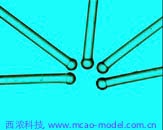
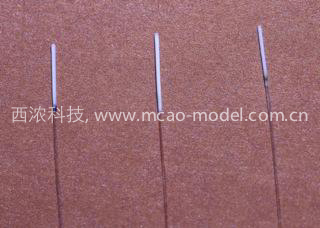
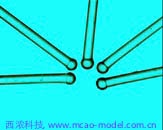
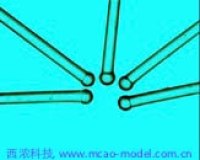
A1/A2/A3/A4栓线 A5栓线
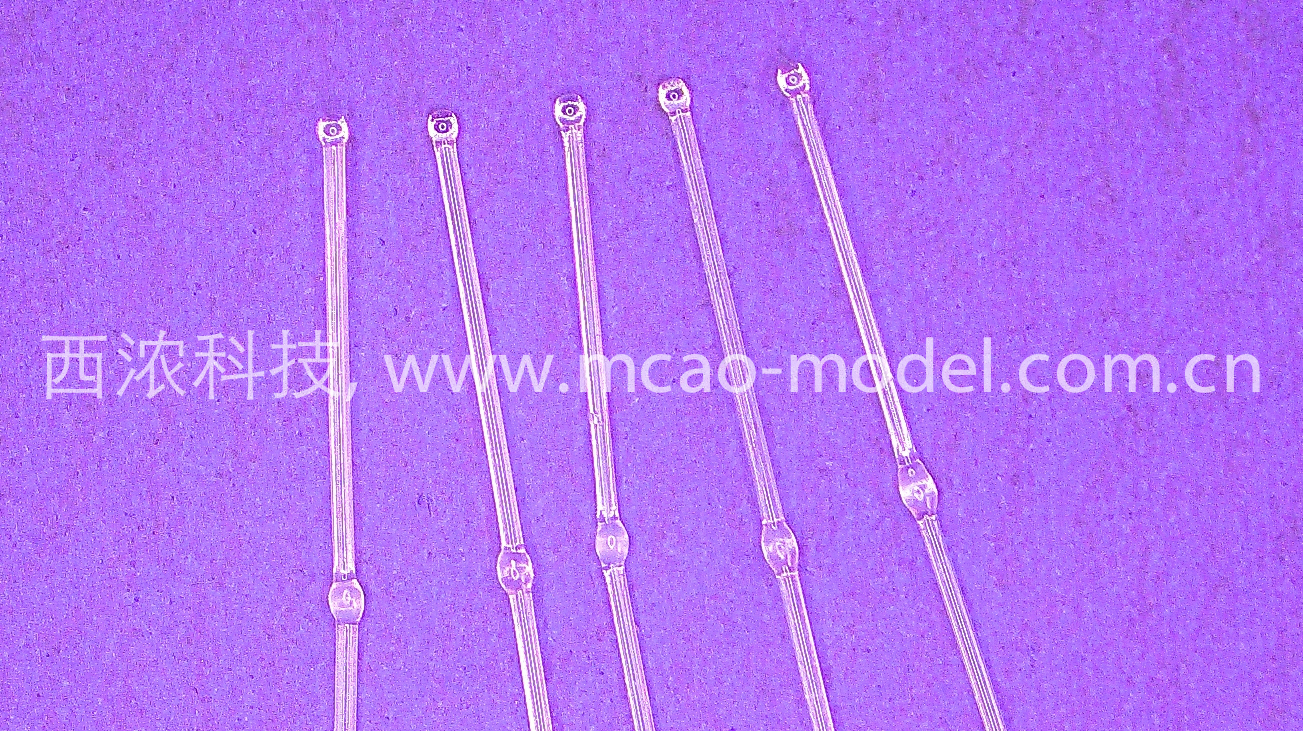
A6栓线
附录:使用我们的MCAO栓线最近发表的部分SCI英文论文
(论文中的“Beijing Sunbio Biotech Co. Ltd.”既是西浓科技的前身)
1. Lin J, Zheng C, Zhang X, et al. Effects of Tetramethylpyrazine on Functional Recovery and Neuronal Dendritic Plasticity after Experimental Stroke. Evidence-Based Complementary and Alternative Medicine. Volume 2015, Article ID 394926, 10 pages.
2. Lian T, Qu D, Zhao X, et al. Identification of Site-Specific Stroke Biomarker Candidates by Laser Capture Microdissection and Labeled Reference Peptide. Int. J. Mol. Sci. 2015, 16, 13427-13441.
3. Lin M, Sun W, Gong W, et al. Methylophiopogonanone A Protects against Cerebral Ischemia/Reperfusion Injury and Attenuates Blood-Brain Barrier Disruption In Vitro. PLOS ONE, April 21, 2015.
4. Zhou F, Gao S, Wang L, et al. Human adipose-derived stem cells partially rescue the stroke syndromes by promoting spatial learning and memory in mouse middle cerebral artery occlusion model. Stem Cell Research & Therapy (2015) 6:92.
5. Wen Y, Zhang X, Dong L, et al. Acetylbritannilactone Modulates MicroRNA-155-Mediated Inflammatory Response in Ischemic Cerebral Tissues. Mol Med. 2015; 21(1): 197–209.
6. Yao H, Gao M, Ma J, et al. Transdifferentiation-Induced Neural Stem Cells Promote Recovery of Middle Cerebral Artery Stroke Rats. PLoS One. 2015; 10(9): e0137211.
7. Fang L, Gao H, Zhang W, et al. Resveratrol alleviates nerve injury after cerebral ischemia and reperfusion in mice by inhibiting inflammation and apoptosis. Int J Clin Exp Med. 2015; 8(3): 3219–3226.
8. Hua K, Sheng X, Li TT, et al. The edaravone and 3-n-butylphthalide ring-opening derivative 10b effectively attenuates cerebral ischemia injury in rats. Acta Pharmacol Sin. 2015 Aug; 36(8): 917–927.
9. Lan Z, Xu X, Xu W, et al. Discovery of 3-n-butyl-2,3-dihydro-1H-isoindol-1-one as a potential anti-ischemic stroke agent. Drug Des Devel Ther. 2015; 9: 3377–3391.
10. Li X, Li C, Wei LY, et al. Hydrogen sulfide intervention in focal cerebral ischemia/reperfusion injury in rats.Neural Regen Res. 2015 Jun; 10(6): 932–937.
11. Jiang M, Li J, Peng Q, et al . Neuroprotective effects of bilobalide on cerebral ischemia and reperfusion injury are associated with inhibition of pro-inflammatory mediator production and down-regulation of JNK1/2 and p38 MAPK activation. J Neuroinflammation. 2014; 11: 167.
12. Feng R, et al. Pre-ischemic exercise alleviates oxidative damage following ischemic stroke in rats. Exp Ther Med. 2014 Oct; 8(4): 1325–1329.
13. Nie B, et al. A Statistical Parametric Mapping Toolbox Used for Voxel-Wise Analysis of FDG-PET Images of Rat Brain. PLoS One. 2014; 9(9): e108295.
14. Wang Z, et al. PET Demonstrates Functional Recovery after Treatment by Danhong Injection in a Rat Model of Cerebral Ischemic-Reperfusion Injury. Evid Based Complement Alternat Med. 2014; 2014: 430757.
15. Yu S, et al. An Active Component of Achyranthes bidentataPolypeptides Provides Neuroprotection through Inhibition of Mitochondrial-Dependent Apoptotic Pathway in Cultured Neurons and in Animal Models of Cerebral Ischemia. PLoS One. 2014; 9(10): e109923.
16. Sun J, et al. Gradually Increased Training Intensity Benefits Rehabilitation Outcome after Stroke by BDNF Upregulation and Stress Suppression. Biomed Res Int. 2014; 2014: 925762.
17. Li H, et al. Isoflurane postconditioning reduces ischemia-induced nuclear factor-κB activation and interleukin 1β production to provide neuroprotection in rats and mice. Neurobiol Dis. 2013 Jun; 54: 216–224.
18. Zhang N, et al. Chrysophanol Inhibits NALP3 Inflammasome Activation and Ameliorates Cerebral Ischemia/Reperfusion in Mice. Mediators Inflamm. 2014; 2014: 370530.
19. Luo Y, Yang YP, Li WH, et al. Neuroprotective effects of madecassoside against focal cerebral ischemia reperfusion injury in rats. Brain Research. Available online 13 April 2014.
20. Wang ZX, Huang WQ, Zuo ZY. Perioperative aspirin improves neurological outcome after focal brain ischemia possibly via inhibition of Notch 1 in rat. Journal of Neuroinflammation 2014, 11:56.
21. Sun L, Qiang R, Yang Y, et al. L-Serine Treatment May Improve Neurorestoration of Rats after Permanent Focal Cerebral Ischemia Potentially Through Improvement of Neurorepair. PLoS ONE 2014, 9(3): e93405. doi: 10.1371/journal.pone.009340.
22. Li L, et al. Glutamate transporter type 3 mediates isoflurane preconditioning-induced acute phase of neuroprotection in mice. Brain Res Bull. 2013 Sep; 98: 23–29.
23. Zhu X, et al. Electroacupuncture preconditioning-induced neuroprotection may be mediated by glutamate transporter type 2. Neurochem Int. 2013 Oct; 63(4): 302–308.
24. Lin Y, Zhang JC, Fu J, et al. Journal of Cerebral Blood Flow & Metabolism (2013) 33, 253–262;
25. An S, Kuang YY, Shen T, et al. Brain-targeting delivery for RNAi neuroprotection against cerebral ischemia reperfusion injury. Biomaterials 34 (2013) 8949-8959.
26. Fu J, Xue R, Gu JF, et al. Neuroprotective effect of calcitriol on ischemic/reperfusion injury through the NR3A/CREB pathways in the rat hippocampus. Molecular Medicine Reports. 2013, 1708-1714.
27. Cheng FF, Lu Y, Zhong XG. Baicalin's Therapeutic Time Window of Neuroprotection during Transient Focal Cerebral Ischemia and Its Antioxidative Effects In Vitro and In Vivo. Evidence-Based Complementary and Alternative Medicine, vol.2013, PP.1-11, 2013.
28. Chen XY, Sun XC, Su HX. Upregulation of myeloid cell leukemia-1 potentially modulates beclin-1-dependent autophagy in ischemic stroke in rats. BMC Neuroscience, 2013, 14:56.
29. Dong BB, Cai M, Fang ZP. Hemopexin induces neuroprotection in the rat subjected to focal cerebral ischemia. BMC Neuroscience 2013, 14:58.
30. Lan R, Xiang J, Zhang Y. PI3K/Akt Pathway Contributes to Neurovascular Unit Protection of Xiao-Xu-Ming Decoction against Focal Cerebral Ischemia and Reperfusion Injury in Rats. Evidence-Based Complementary and Alternative Medicine, Volume 2013.
31. Li JJ, Sheng WL, Feng CZ. Pyrrolidine dithiocarbamate attenuates brain Aβ increase and improves long-term neurological outcome in rats after transient focal brain ischemia. Neurobiol Dis. 2012; 45(1): 564–572.
32. Guo JY, Ding J, Yuan F. Dose-Dependent Protective Effect of Bisperoxovanadium against Acute Cerebral Ischemia in a Rat Model of Ischemia/Reperfusion Injury. Int. J. Mol. Sci. 2013, 14, 12013-12022.
33. Li LL, Zuo ZY. Isoflurane postconditioning induces neuroprotection via Akt activation and attenuation of increased mitochondrial membrane permeability. Neuroscience. 2011 December 29; 199: 44–50.
34. Li H, Yin JB, Li LL, et al. Isoflurance postconditioning reduces ischemia-induced nuclear factor-kB activation and interleukin 1β production to provide neuroprotection in rats and mice. Neurobiology of Disease. Available online 8 January 2013.
35. Zhu SP, Li Y, Lu HY, et al. Imaging the Early Cerebral Blood Flow Changes in Rat Middle Cerebral Artery Occlusion Stroke Model. 34th Annual International Conference of the IEEE EMBS San Diego, California USA, 28 August - 1 September, 2012.
36. Cheng FF, Zhong XG, Lu Y, et al. Refined Qingkailing ProtectsMCAOMice from Endoplasmic Reticulum Stress-Induced Apoptosis with a Broad Time Window. Evidence-Based Complementary and Alternative Medicine. 2012, Article ID 567872, 12 pages.
37. Zhai FG, Zhang XP, Guan Y, et al. Expression profiles of microRNAs after focal cerebral ischemia/reperfusion injury in rats. Neural Regen Res. 2012; 7(12):917-923.
38. Li LL, Zuo ZY. Glutamate transporter type 3 knockout reduces brain tolerance to focal brain ischemia in mice.Journal of Cerebral Blood Flow & Metabolism . 2011; 31:1283-1292.
39. Ding H, Yan C-Z, Shi H, Zhao Y-S, Chang S-Y, et al. Hepcidin Is Involved in Iron Regulation in the Ischemic Brain. PLoS ONE.2011, 6(9): e25324.
40. Han QQ, Li B, Feng H, et al. The promotion of cerebral ischemia recovery in rats by laminin-binding BDNF. Biomaterials. 2011; 32(22):5077-5085.
41. Xu HY, Zhang CW, Zhang CX. Effect of propofol pretreatment on apoptosis in rat brain cortex after focal cerebral ischemia and reperfusion. Neural Regen Res. 2011;6(14):1086-1090.
42. Liu K, Li Z, Wu T, et al. Role of Rho Kinase in Microvascular Damage Following Cerebral Ischemia Reperfusion in Rats. Int. J. Mol. Sci. 2011; 12: 1222-1231.
43. Yang L, Zhang BS, Yin L, et al. Tanshinone IIA Prevented Brain Iron Dyshomeostasis in Cerebral Ischemic Rats. Cell Physiol Biochem, 2011; 27:23-30.
44. Sun L, Ai J, Wang N, et al. Cerebral Ischemia Elicits Aberration in Myocardium Contractile Function and Intracellular Calcium Handling. Cell Physiol Biochem 2010; 26:421-430.
45. Zhang F, Wu Y, Jia J et al. Pre-Ischemic Treadmill Training Induces Tolerance to Brain Ischemia: Involvement of Glutamate and ERK1/2. Molecules. 2010;15: 5246-5257.
46. Wu Y, Ye XH, Guo PP, et al. Neuroprotective Effect of Lipoxin A4 Methy Ester in a Rat Model of Permanent Focal Cerebral Ischemia. J Mol Neurosci. 2010; 22:226-234.
47. Li LL, Zuo ZY. Isoflurane preconditioning improves short-term and long-term neurological outcome after focal brain ischemia in adult rats. J Neuroscience.2009; 164:497-506.
48. Xing BZ, Chen H, Zhang M. PhD. Ischemic Postconditioning Inhibits Apoptosis after Focal Cerebral Ischemia/Reperfusion Injury in the Rat. Stroke. 2008; 39:2362-2369.
49. Xing BZ, Chen H, Zhang M, et al. Ischemic post-conditioning protects brain and reduces inflammation in a rat model of focal cerebral ischemia/reperfusion. Journal of Neurochemistry. 2008; 105(5):1737-1745.
风险提示:丁香通仅作为第三方平台,为商家信息发布提供平台空间。用户咨询产品时请注意保护个人信息及财产安全,合理判断,谨慎选购商品,商家和用户对交易行为负责。对于医疗器械类产品,请先查证核实企业经营资质和医疗器械产品注册证情况。
- 作者
- 内容
- 询问日期
 文献和实验
文献和实验用于各种动物细胞株,可在 - 80℃长期保存(>5 年)。配方成分明确,不含动物来源性蛋白,不含血清,可减少各类病菌、病毒和支原体等污染,保证冻存细胞的安全,细胞存活率和活力高,批次差异小。3 DongAo 大 / 小鼠脑缺血 MCAO 模型尼龙栓线MCAO 线栓是制备实验动物局部脑缺血模型的非常关键的实验材料,本产品是用柔韧适度的单丝尼龙线,经显微操作烧制而成,其头端光滑、大小一致,易进入颅内又不至于刺破血管,使用本产品可大大提高模型制备的成功率,及脑缺血范围的稳定性。4 NEST 1.2mL 冻存
后还是有梗死灶的。 附:一般文献上的MCAO制作方法+评分标准 局灶性脑缺血再灌注模型的制备根据longa提出的可逆性大脑中动脉闭塞(MCAo)线栓法并根据大鼠脑解剖结构图加以改进制作局灶性脑缺血再灌注模型,以10%水合氯醛0.3ml/kg腹腔麻醉,颈正中切口,暴露颈总动脉(CCA)、颈外动脉(ECA)及翼腭动脉,将0.26mm单丝尼龙鱼线头端0.5cm用石蜡包被,并于20mm长处标记,全部大鼠均通过右侧CCA切口处插入,翼腭动脉短暂夹闭以防误插,栓线长度自CCA分叉处约18~20
肿瘤就不再生长。甚至于研究者用规范的实验技术试图人工诱发肿瘤,这些小鼠仍然不长肿瘤。 在目前的研究中,Costa实验室的科学家用遗传改造的小鼠建立了Foxm1b基因与肝癌的模型,实验证明该基因是癌细胞生长的要素。Foxm1b在许多不同类型癌细胞中表达,这使我们相信它在其它非肝癌中促进肿瘤生长的关键作用。科学家还创造出一种原始药物将阻断Foxm1b活性,其Foxm1b蛋白产品可饿死癌细胞,阻止它的增殖。p19ARF是一种与以往不同的抑制肿瘤蛋白药物,通过连接一系列精氨酸,p19ARF可以抑制Foxm
 技术资料
技术资料暂无技术资料 索取技术资料

