

- ¥780 - 2200
- LMAI Bio
- LM-6763R
- 进口/国产
- 2026年03月09日
- WB=1:500-2000 ELISA=1:500-1000 IHC-P=1:400-800 IHC-F=1:400-800 Flow-Cyt=1ug/Test IF=1:100-500 (石蜡切片需做抗原修复)
- Rabbit
- Human, Mouse, Rat, Dog, Cow, Horse, Rabbit,

企业认证
相关产品推荐更多 >


万千商家帮你免费找货
0 人在求购买到急需产品
- 详细信息
- 文献和实验
- 技术资料
- 供应商:
上海联迈生物工程有限公司
- 库存:
大量
- 目录编号:
LM-6763R
- 克隆性:
多克隆
- 抗原来源:
Rabbit
- 保质期:
1年
- 抗体英文名:
MSR1
- 抗体名:
巨噬细胞清道夫受体1抗体
- 宿主:
Rabbit
- 适应物种:
Human, Mouse, Rat, Dog, Cow, Horse, Rabbit,
- 免疫原:
KLH conjugated synthetic peptide derived from human MSR1/CD204:211-320/451 <Extracellular>
- 亚型:
IgG
- 形态:
Lyophilized or Liquid
- 应用范围:
WB=1:500-2000 ELISA=1:500-1000 IHC-P=1:400-800 IHC-F=1:400-800 Flow-Cyt=1ug/Test IF=1:100-500 (石蜡切片需做抗原修复)
- 浓度:
1mg/ml
- 保存条件:
Store at -20 °C
- 规格:
50ul 100ul 200ul
| 英文名称 | MSR1 |
| 中文名称 | 巨噬细胞清道夫受体1抗体 |
| 别 名 | CD204; SP-A; CD204 antigen; Macrophage acetylated LDL receptor I and II; Macrophage scavenger receptor 1; Macrophage Scavenger Receptor I; Macrophage scavenger receptor type III; Macrophage scavenger receptor types I and II; Msr 1; MSR1; MSRE_HUMAN; phSR1; phSR2; SCARA 1; SCARA1; Scavenger receptor class A member 1; Scavenger receptor type A; Scvr; SR A; SRA. |
| 规格价格 | 50ul/780元 购买 100ul/1380元 购买 200ul/2200元 购买 大包装/询价 |
| 说 明 书 | 50ul 100ul 200ul |
| 研究领域 | 心血管 细胞生物 信号转导 |
| 抗体来源 | Rabbit |
| 克隆类型 | Polyclonal |
| 交叉反应 | Human, Mouse, Rat, Dog, Cow, Horse, Rabbit, |
| 产品应用 | WB=1:500-2000 ELISA=1:500-1000 IHC-P=1:400-800 IHC-F=1:400-800 Flow-Cyt=1ug/Test IF=1:100-500 (石蜡切片需做抗原修复) not yet tested in other applications. optimal dilutions/concentrations should be determined by the end user. |
| 分 子 量 | 50kDa |
| 细胞定位 | 细胞膜 |
| 性 状 | Lyophilized or Liquid |
| 浓 度 | 1mg/ml |
| 免 疫 原 | KLH conjugated synthetic peptide derived from human MSR1/CD204:211-320/451 <Extracellular> |
| 亚 型 | IgG |
| 纯化方法 | affinity purified by Protein A |
| 储 存 液 | 0.01M TBS(pH7.4) with 1% BSA, 0.03% Proclin300 and 50% Glycerol. |
| 保存条件 | Store at -20 °C for one year. Avoid repeated freeze/thaw cycles. The lyophilized antibody is stable at room temperature for at least one month and for greater than a year when kept at -20°C. When reconstituted in sterile pH 7.4 0.01M PBS or diluent of antibody the antibody is stable for at least two weeks at 2-4 °C. |
| PubMed | PubMed |
| 产品介绍 | background: This gene encodes the class A macrophage scavenger receptors, which include three different types (1, 2, 3) generated by alternative splicing of this gene. These receptors or isoforms are macrophage-specific trimeric integral membrane glycoproteins and have been implicated in many macrophage-associated physiological and pathological processes including atherosclerosis, Alzheimer's disease, and host defense. The isoforms type 1 and type 2 are functional receptors and are able to mediate the endocytosis of modified low density lipoproteins (LDLs). The isoform type 3 does not internalize modified LDL (acetyl-LDL) despite having the domain shown to mediate this function in the types 1 and 2 isoforms. It has an altered intracellular processing and is trapped within the endoplasmic reticulum, making it unable to perform endocytosis. The isoform type 3 can inhibit the function of isoforms type 1 and type 2 when co-expressed, indicating a dominant negative effect and suggesting a mechanism for regulation of scavenger receptor activity in macrophages. [provided by RefSeq, Jul 2008] Function: Membrane glycoproteins implicated in the pathologic deposition of cholesterol in arterial walls during atherogenesis. Two types of receptor subunits exist. These receptors mediate the endocytosis of a diverse group of macromolecules, including modified low density lipoproteins (LDL). Isoform III does not internalize actetylated LDL. Subunit: Homotrimer. Subcellular Location: Membrane; Single-pass type II membrane protein. Tissue Specificity: Isoform I, isoform II and isoform III are expressed in monocyte-derived macrophages. DISEASE: Defects in MSR1 may be a cause of prostate cancer (PC)[MIM:176807]. A malignancy originating in tissues of the prostate.Most prostate cancers are adenocarcinomas that develop in the aciniof the prostatic ducts. Other rare histopathologic types ofprostate cancer that occur in approximately 5% of patients includesmall cell carcinoma, mucinous carcinoma, prostatic ductalcarcinoma, transitional cell carcinoma, squamous cell carcinoma,basal cell carcinoma, adenoid cystic carcinoma (basaloid),signet-ring cell carcinoma and neuroendocrine carcinoma. Note=MSR1variants may play a role in susceptibility to prostate cancer. MSR1variants have been found in individuals with prostate cancer andco-segregate with the disease in some families. Defects in MSR1 may be a cause of Barrett esophagus (BE)[MIM:614266]. A condition characterized by a metaplastic change inwhich normal esophageal squamous epithelium is replaced by acolumnar and intestinal-type epithelium. Patients with Barrettesophagus have an increased risk of esophageal adenocarcinoma. Themain cause of Barrett esophagus is gastroesophageal reflux. Theretrograde movement of acid and bile salts from the stomach intothe esophagus causes prolonged injury to the esophageal epitheliumand induces chronic esophagitis, which in turn is believed totrigger the pathologic changes. Note=Genetic variants in MSR1 havebeen found in individuals with Barrett esophagus and are thought tocontribute to disease susceptibility. Similarity: Contains 1 collagen-like domain. Contains 1 SRCR domain. SWISS: P21757 Gene ID: 4481 Database links: Entrez Gene: 281311 Cow Entrez Gene: 4481 Human Entrez Gene: 498638 Rat Omim: 153622 Human SwissProt: P21758 Cow SwissProt: P21757 Human Unigene: 147635 Human Unigene: 231068 Rat Important Note: This product as supplied is intended for research use only, not for use in human, therapeutic or diagnostic applications. |
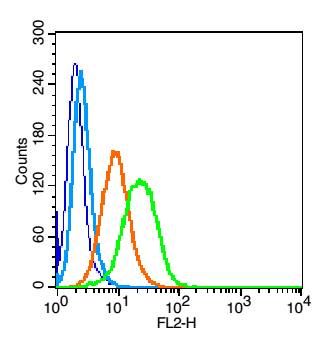
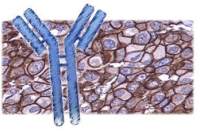
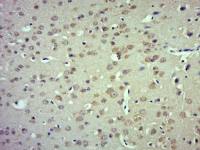
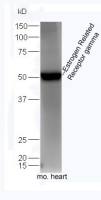
| 产品图片 | 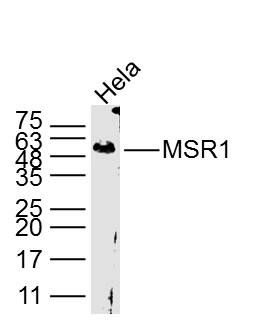 Sample: Hela Cell (Human) Lysate at 40 ug Primary: Anti-MSR1 (bs-6763R) at 1/300 dilution Secondary: IRDye800CW Goat Anti-Rabbit IgG at 1/20000 dilution Predicted band size: 50 kD Observed band size: 50 kD 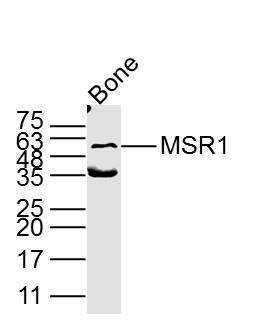 Sample: Bone (Mouse) Lysate at 40 ug Primary: Anti-MSR1 (bs-6763R) at 1/300 dilution Secondary: IRDye800CW Goat Anti-Rabbit IgG at 1/20000 dilution Predicted band size: 50 kD Observed band size: 50 kD 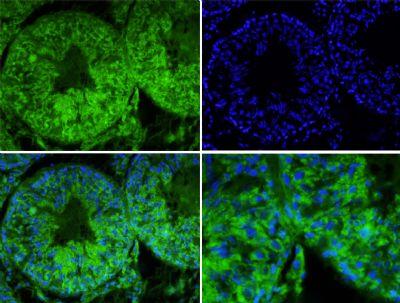 Tissue/cell: mouse testis tissue;4% Paraformaldehyde-fixed and paraffin-embedded; Antigen retrieval: citrate buffer ( 0.01M, pH 6.0 ), Boiling bathing for 15min; Blocking buffer (normal goat serum,C-0005) at 37℃ for 20 min; Incubation: Anti-MSR1 Polyclonal Antibody, FITC conjugated(bs-6763R-FITC) 1:100, 60 minutes at 37°C. DAPI(5ug/ml,blue,C-0033) was used to stain the cell nuclei 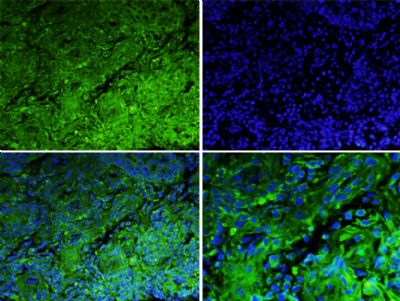 Tissue/cell: human colon carcinoma;4% Paraformaldehyde-fixed and paraffin-embedded; Antigen retrieval: citrate buffer ( 0.01M, pH 6.0 ), Boiling bathing for 15min; Blocking buffer (normal goat serum,C-0005) at 37℃ for 20 min; Incubation: Anti-MSR1 Polyclonal Antibody, FITC conjugated(bs-6763R-FITC) 1:100, 60 minutes at 37°C. DAPI(5ug/ml,blue,C-0033) was used to stain the cell nuclei 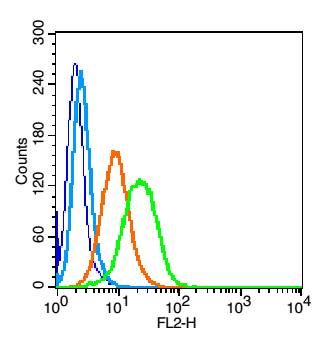 Blank control(Blue): U937(fixed with 2% paraformaldehyde (10 min)). Primary Antibody:Rabbit Anti-MSR1 antibody(bs-6763R), Dilution: 1μg in 100 μL 1X PBS containing 0.5% BSA; Isotype Control Antibody: Rabbit IgG(orange) ,used under the same conditions ); Secondary Antibody: Goat anti-rabbit IgG-PE(white blue), Dilution: 1:200 in 1 X PBS containing 0.5% BSA. |
风险提示:丁香通仅作为第三方平台,为商家信息发布提供平台空间。用户咨询产品时请注意保护个人信息及财产安全,合理判断,谨慎选购商品,商家和用户对交易行为负责。对于医疗器械类产品,请先查证核实企业经营资质和医疗器械产品注册证情况。
 文献和实验
文献和实验单核/巨噬细胞的分化成熟及组织分布 单核/巨噬细胞均来源于骨髓干细胞。发育成单核细胞后,进入血流分布于各种器官组织,并有不同的命名。如图2-12 单核巨噬细胞的组织分布 成熟的单核吞噬细胞表达多种表面分子.其中受体多达数十种,如免疫球蛋白的Fc受体FcyRI(CD64)、FcγRⅡ(CD32)、FcγRⅢ(CDl6),补体受体CRl和CR3和各种模式识别受体(包括甘露糖受体、清道夫受体、TLR),以及多种细胞因子、激素、神经肽、多糖、糖蛋白和脂蛋白的受体(图2―13),介导单核/
肿瘤微环境(TumorMicroenvironment,TME)作为肿瘤发生、发展及转移的核心调控单元,具有深刻的生物学意义。其构成极为复杂,涵盖肿瘤细胞、免疫细胞(如 T 细胞、B 细胞、巨噬细胞等)、基质细胞(如成纤维细胞、内皮细胞等)、神经细胞,以及细胞外基质(ECM)和各类信号分子(包括细胞因子、趋化因子、生长因子等)。TME 不仅为肿瘤细胞提供物理支架,更通过精密的细胞间通讯(如配体-受体介导的信号传递)及复杂的信号网络,全方位调控肿瘤的生物学行为。例如,免疫细胞可被肿瘤细胞募集并发
清道夫受体 (scavenger receptor , SR) 是固有免疫中一类重要的模式识别受体,分为多种类型,主要为SRA和SRB,可能还包括SRC等,其中各自又由不同的分子组成。 注:M。:单核细胞;P1t:血小板;LTA:淋巴毒素。;LDL:低密度脂蛋白。MARCO:带胶原结构的巨噬细胞受体;LOX-1:凝集素样氧化低密度脂蛋白受体;SREC:内 皮细胞表达的清道夫受体。 SPA为三聚体缠绕的糖蛋白跨膜分子,各带有5个不同的结构域。其中胶原样结构
 技术资料
技术资料暂无技术资料 索取技术资料

