


R&D Systems货号7666-MB-005重组小鼠TG
F-beta 1 Protein上海睿安生物R&D Systems-Tocris官方正式授权代理19121878899- ¥5097.01
- R&D Systems
- 7666-MB-005
- made in USA
- 2026年08月08日

企业认证
相关产品推荐更多 >
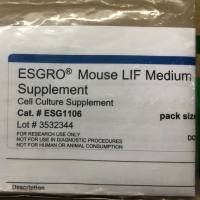
Millipore货号ESG1106现货ESGRO重组小鼠LIF蛋白19121878899上海睿安生物
¥4238.44
R&D Systems货号4517-SE-010热销Recombinant Mouse Neutrophil Elastase/ELA2 Protein,CF上海睿安生物19121878899
¥4998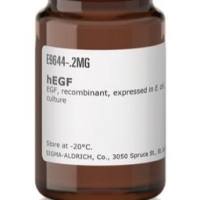
Sigma-Aldrich货号E9644重组人表皮细胞生长因子(human Epidermal Growth Factor)(别名:EGF)上海睿安生物191-2187-8899默克Merck-Sigma-Roche-Millipore官方正式授权代理商
¥2242.07
Millipore ESG1107上海睿安生物ESGRO重组小鼠LIF蛋白13611631389
¥17507.82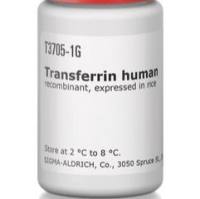
Sigma-Aldrich货号T3705转铁蛋白Human(别名:奥普替林™)19121878899上海睿安生物Merck-Sigma-Millipore-Roche官方正式授权代理商
¥7265.81
万千商家帮你免费找货
0 人在求购买到急需产品
相关阅读
香烟烟雾如何加速声带纤维化?CD44-透明质酸轴是关键通路Takara 秋促来袭,提取+反转录+定量套装仅 1200 元五大应用案例:Mustang Q 膜层析应用全解析1 个小工具,一次性搞定流程图、质粒图谱和信号通路图- 详细信息
- 文献和实验
- 技术资料
- 英文名:
Recombinant Mouse TGF-beta 1 Protein
- 保质期:
1年
- 保存条件:
-20°C
- 库存:
100⁺支
- 供应商:
上海睿安生物19121878899
- 规格:
5μg/支
R&D Systems货号7666-MB-005重组小鼠TGF-beta 1 Protein上海睿安生物R&D Systems-Tocris官方正式授权代理19121878899
Recombinant Mouse TGF-beta 1 Protein Summary
- R&D Systems CHO-derived Recombinant Mouse TGF-beta 1 Protein(7666-MB)
- Quality control testing to verify active proteins with lot specific assays by in-house scientists
- All R&D Systems proteins are covered with a 100% guarantee
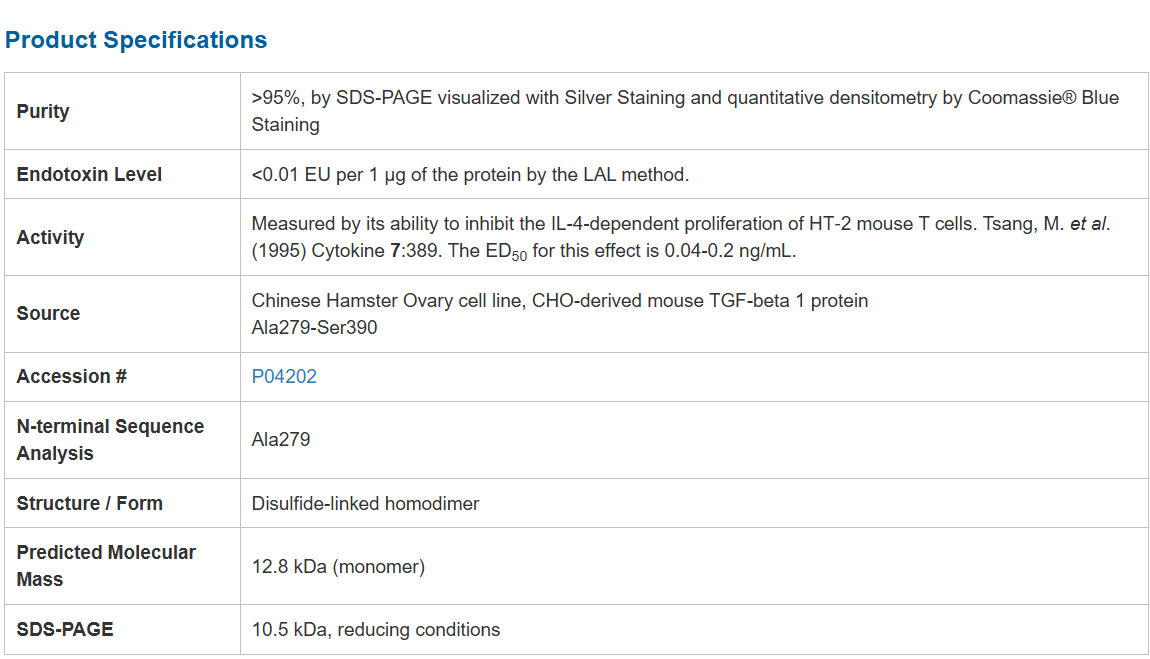
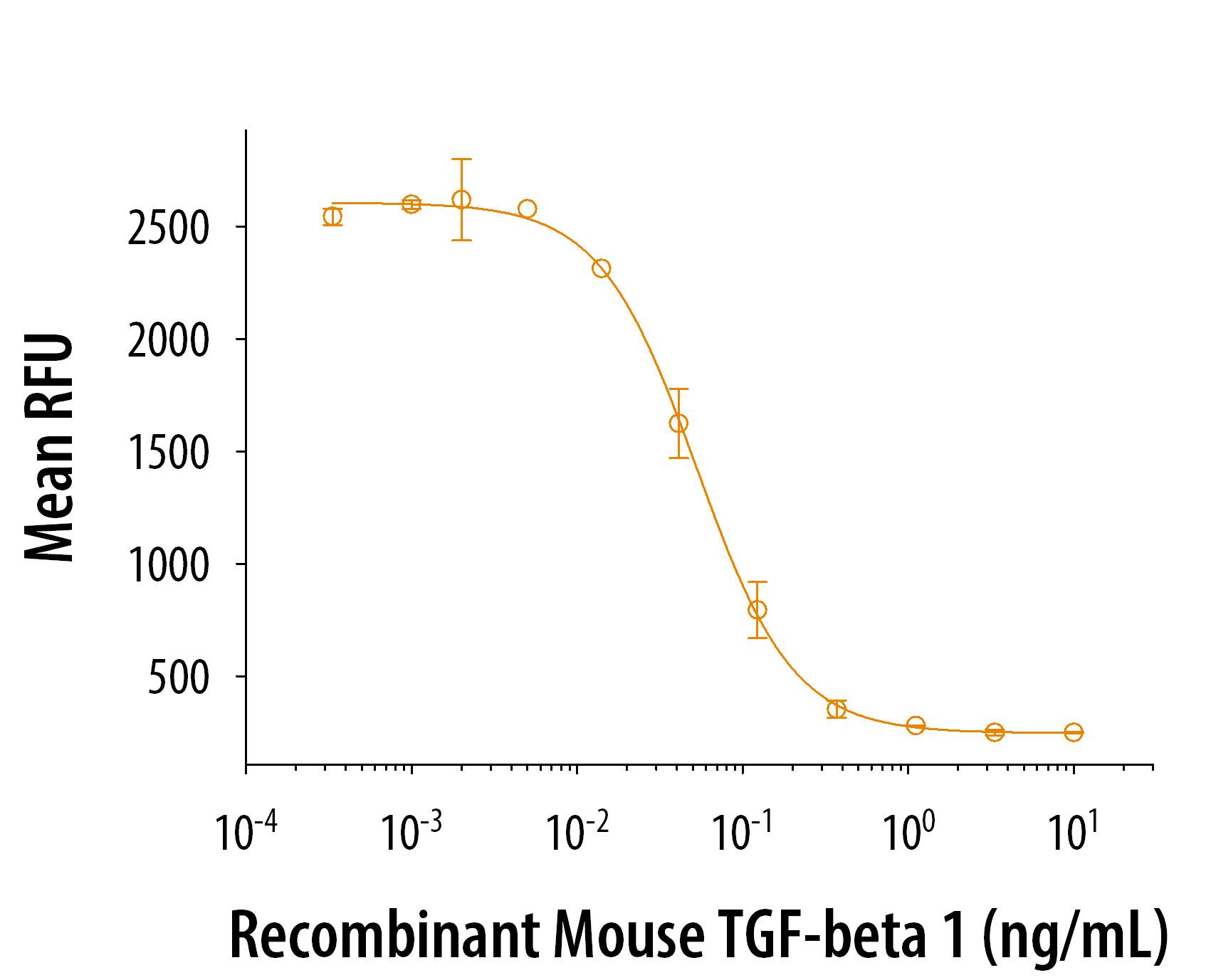
Recombinant mouse TGF-beta 1(7666-MB) inhibits IL-4-dependent proliferation in the HT-2 mouse T cell line. The ED50 for this effect is 0.04-0.2 ng/mL.
Background: TGF-beta 1
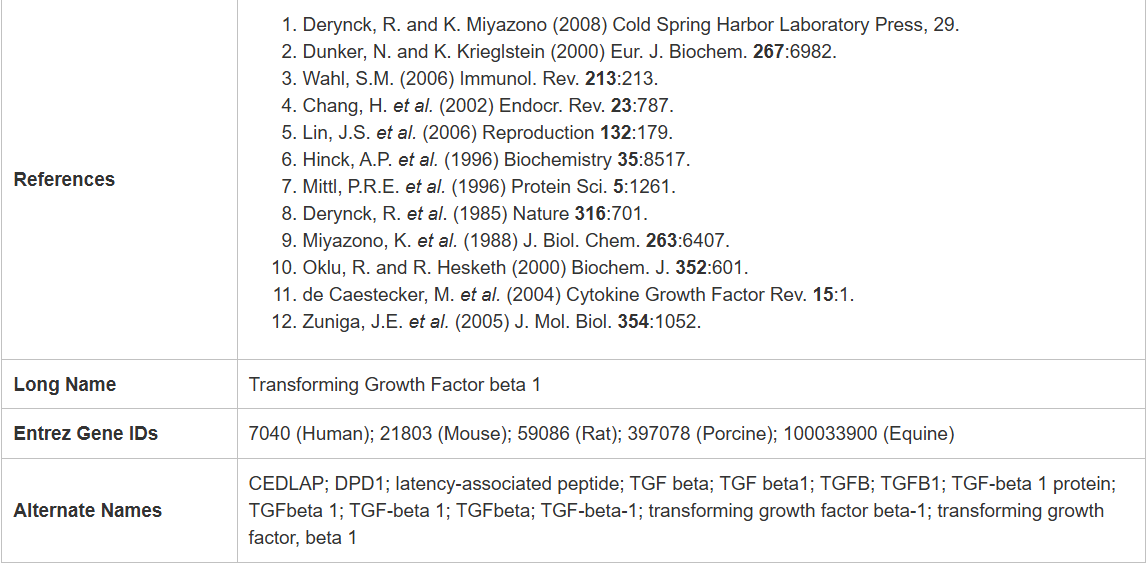
TGF-beta 1 (transforming growth factor beta 1) is one of three closely related mammalian members of the large TGF‑ beta superfamily that share a characteristic cystine knot structure (1‑7). TGF‑ beta 1, -2 and -3 are highly pleiotropic cytokines that are proposed to act as cellular switches that regulate processes such as immune function, proliferation and epithelial‑mesenchymal transition (1‑4). Each TGF‑ beta isoform has some non‑redundant functions; for TGF‑ beta 1, mice with targeted deletion show defects in hematopoiesis and endothelial differentiation, and die of overwhelming inflammation (2). Human or mouse TGF‑ beta 1 cDNA encodes a 390 amino acid (aa) precursor that contains a 29 aa signal peptide and a 361 aa proprotein (8). A furin‑like convertase processes the proprotein to generate an N‑terminal 249 aa latency‑associated peptide (LAP) and a C‑terminal 112 aa mature TGF‑ beta 1 (8, 9). Disulfide‑linked homodimers of LAP and TGF‑ beta 1 remain non‑covalently associated after secretion, forming the small latent TGF‑ beta 1 complex (8‑10). Covalent linkage of LAP to one of three latent TGF‑ beta binding proteins (LTBPs) creates a large latent complex that may interact with the extracellular matrix (9, 10). TGF‑ beta is activated from latency by pathways that include actions of the protease plasmin, matrix metalloproteases, thrombospondin 1 and a subset of integrins (10). Mature mouse TGF‑ beta 1 shares 99‑100% aa sequence identity with human, rat, equine, porcine, canine and bovine TGF‑ beta 1. It demonstrates cross‑species activity (1). TGF‑ beta 1 signaling begins with high‑affinity binding to a type II ser/thr kinase receptor termed TGF‑ beta RII. This receptor then phosphorylates and activates a second ser/thr kinase receptor, TGF‑ beta RI (also called activin receptor‑like kinase (ALK) ‑5), or alternatively, ALK‑1. This complex phosphorylates and activates Smad proteins that regulate transcription (3, 11, 12). Contributions of the accessory receptors betaglycan (also known as TGF‑ beta RIII) and endoglin, or use of Smad‑independent signaling pathways, allow for disparate actions observed in response to TGF‑ beta in different contexts (11).
风险提示:丁香通仅作为第三方平台,为商家信息发布提供平台空间。用户咨询产品时请注意保护个人信息及财产安全,合理判断,谨慎选购商品,商家和用户对交易行为负责。对于医疗器械类产品,请先查证核实企业经营资质和医疗器械产品注册证情况。
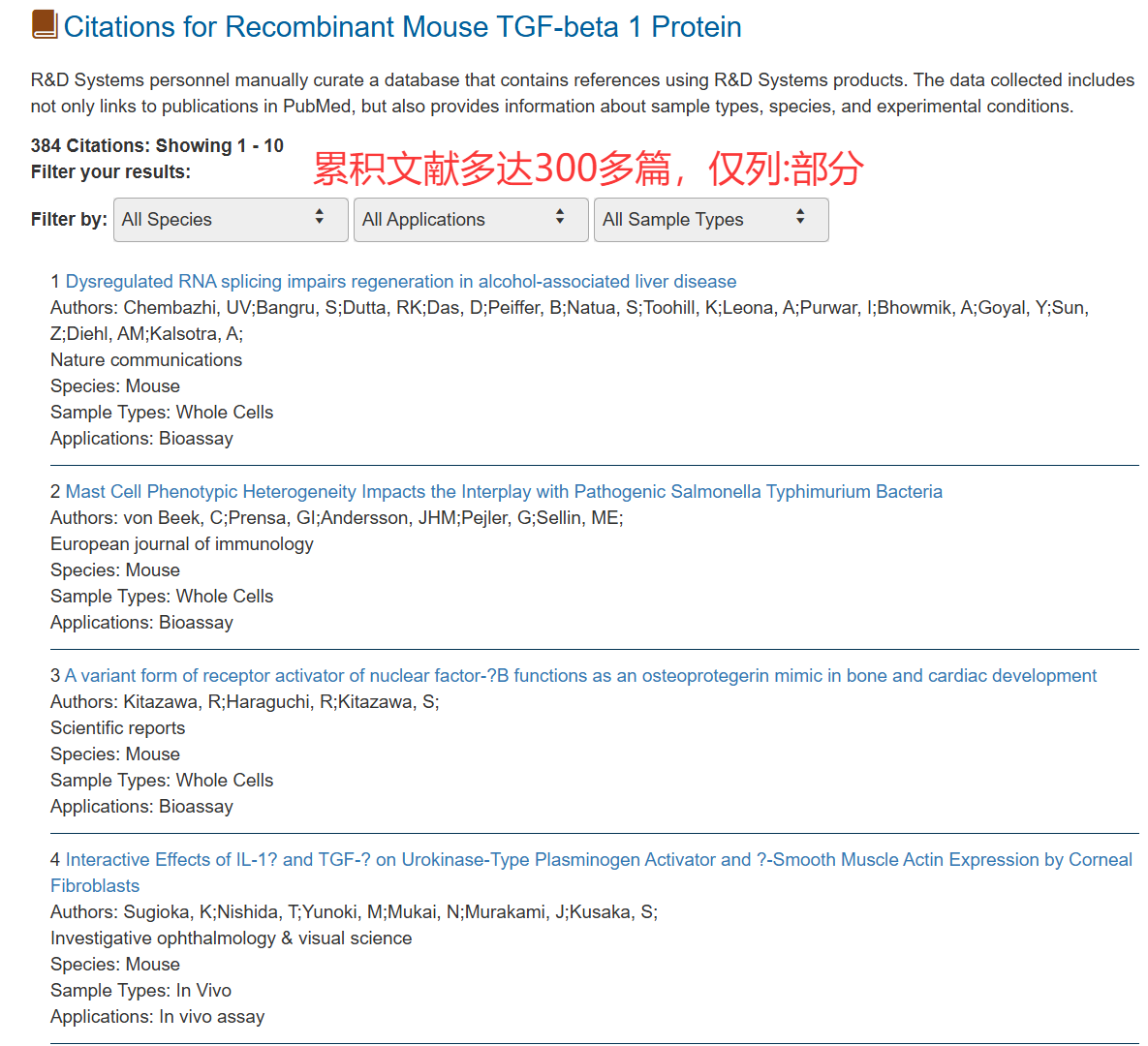
 文献和实验
文献和实验R&D Systems货号7666-MB-005重组小鼠TGF-beta 1 Protein上海睿安生物R&D Systems-Tocris官方正式授权代理19121878899
Recombinant Mouse TGF-beta 1 Protein Summary
- R&D Systems CHO-derived Recombinant Mouse TGF-beta 1 Protein(7666-MB)
- Quality control testing to verify active proteins with lot specific assays by in-house scientists
- All R&D Systems proteins are covered with a 100% guarantee
Recombinant mouse TGF-beta 1(7666-MB) inhibits IL-4-dependent proliferation in the HT-2 mouse T cell line. The ED50 for this effect is 0.04-0.2 ng/mL.
Background: TGF-beta 1
TGF-beta 1 (transforming growth factor beta 1) is one of three closely related mammalian members of the large TGF‑ beta superfamily that share a characteristic cystine knot structure (1‑7). TGF‑ beta 1, -2 and -3 are highly pleiotropic cytokines that are proposed to act as cellular switches that regulate processes such as immune function, proliferation and epithelial‑mesenchymal transition (1‑4). Each TGF‑ beta isoform has some non‑redundant functions; for TGF‑ beta 1, mice with targeted deletion show defects in hematopoiesis and endothelial differentiation, and die of overwhelming inflammation (2). Human or mouse TGF‑ beta 1 cDNA encodes a 390 amino acid (aa) precursor that contains a 29 aa signal peptide and a 361 aa proprotein (8). A furin‑like convertase processes the proprotein to generate an N‑terminal 249 aa latency‑associated peptide (LAP) and a C‑terminal 112 aa mature TGF‑ beta 1 (8, 9). Disulfide‑linked homodimers of LAP and TGF‑ beta 1 remain non‑covalently associated after secretion, forming the small latent TGF‑ beta 1 complex (8‑10). Covalent linkage of LAP to one of three latent TGF‑ beta binding proteins (LTBPs) creates a large latent complex that may interact with the extracellular matrix (9, 10). TGF‑ beta is activated from latency by pathways that include actions of the protease plasmin, matrix metalloproteases, thrombospondin 1 and a subset of integrins (10). Mature mouse TGF‑ beta 1 shares 99‑100% aa sequence identity with human, rat, equine, porcine, canine and bovine TGF‑ beta 1. It demonstrates cross‑species activity (1). TGF‑ beta 1 signaling begins with high‑affinity binding to a type II ser/thr kinase receptor termed TGF‑ beta RII. This receptor then phosphorylates and activates a second ser/thr kinase receptor, TGF‑ beta RI (also called activin receptor‑like kinase (ALK) ‑5), or alternatively, ALK‑1. This complex phosphorylates and activates Smad proteins that regulate transcription (3, 11, 12). Contributions of the accessory receptors betaglycan (also known as TGF‑ beta RIII) and endoglin, or use of Smad‑independent signaling pathways, allow for disparate actions observed in response to TGF‑ beta in different contexts (11).
R&D Systems:如何提高MSC的扩增且不损失其分化潜能
。人MSCs (hMSCs ) 购于Cambr e x ( Lonz a ,Walkersville),先根据供应商的说明书培养,然后用StemXVivo人/小鼠骨髓间充质干细胞扩增培养基( 目录# C C M 0 0 4 ; R & DSystems,Minneapolis)培养。为了测试不同批次FBS的扩增潜能,每种F B S 以终浓度为1 0 % 或2 0 % 加入含有谷氨酰胺, 丙酮酸钠( I r v i n e S c i e n t i c , S a n t a A n a ) 的α
Overview of Biacore Systems and Their Applications
of protein protein interactions with surface plasmon resonance biosensors. J. Immunol. Methods 200:121‐133. Karlsson, R., Kullman‐Magnusson, M., Hämäläinen, M.D., Remaeus
芯片试剂盒里有缓冲液、检测抗体、和带有捕获抗体的膜,这些捕获抗体经过精心选择,有高度特异性,它们在硝酸纤维素膜上重复点样两次。经多项研究证实,蛋白芯片能简化鉴定蛋白所需的筛选过程。通过监控蛋白水平和一些蛋白翻译后修饰的变化,能迅速靶定目标分子,以便进一步的研究。 二、R&D Systems蛋白芯片及其原理试验操作步骤简单介绍 以“检测人的特定位点42种受体酪氨酸激酶(RTKs)的相对磷酸化水平”的Proteome Profiler Phospho-RTK Antibody Array(货号
 技术资料
技术资料需要更多技术资料 索取更多技术资料

