

- ¥1380 - 2200
- LMAI Bio
- LM-17643R
- 进口/国产
- 2026年10月13日
- ELISA=1:500-1000 IHC-P=1:400-800 IHC-F=1:400-800 ICC=1:100-500 IF=1:100-500 (石蜡切片需做抗原修复)
- Rabbit
- Human, Mouse, Rat, Cow, Horse,

企业认证
相关产品推荐更多 >

万千商家帮你免费找货
0 人在求购买到急需产品
相关阅读
源叶生物 十万种现货试剂速发,品质稳、品类全,实验不再等!Takara 秋促来袭,提取+反转录+定量套装仅 1200 元abinScience 体内级抗体 全年锁价 低至 ¥1200阿拉丁 22万+ 科研级产品现货速发,品质严控、科研无忧- 详细信息
- 文献和实验
- 技术资料
- 供应商:
上海联迈生物工程有限公司
- 库存:
大量
- 目录编号:
LM-17643R
- 克隆性:
多克隆
- 抗原来源:
Rabbit
- 保质期:
1年
- 抗体英文名:
SPCS3
- 抗体名:
信号肽复合物亚基3抗体
- 宿主:
Rabbit
- 适应物种:
Human, Mouse, Rat, Cow, Horse,
- 免疫原:
KLH conjugated synthetic peptide derived from human SPCS3:51-120/180
- 亚型:
IgG
- 形态:
Lyophilized or Liquid
- 应用范围:
ELISA=1:500-1000 IHC-P=1:400-800 IHC-F=1:400-800 ICC=1:100-500 IF=1:100-500 (石蜡切片需做抗原修复)
- 浓度:
1mg/ml
- 保存条件:
Store at -20 °C
- 规格:
100ul 200ul
| 英文名称 | SPCS3 |
| 中文名称 | 信号肽复合物亚基3抗体 |
| 别 名 | DKFZp564J1864; FLJ22649; Microsomal signal peptidase 22/23 kDa subunit; Microsomal signal peptidase 23 kDa subunit; PRO3567; Signal peptidase complex subunit 3; Signal peptidase complex subunit 3 homolog (S. cerevisiae); Signal peptidase complex subunit 3 homolog; SPase 22 kDa subunit; SPase 22/23 kDa subunit; SPC22; SPC22/23; SPC3; UNQ1841; YLR066W. |
| 规格价格 | 100ul/1380元 购买 200ul/2200元 购买 大包装/询价 |
| 说 明 书 | 100ul 200ul |
| 研究领域 | 细胞生物 信号转导 表观遗传学 |
| 抗体来源 | Rabbit |
| 克隆类型 | Polyclonal |
| 交叉反应 | Human, Mouse, Rat, Cow, Horse, |
| 产品应用 | ELISA=1:500-1000 IHC-P=1:400-800 IHC-F=1:400-800 ICC=1:100-500 IF=1:100-500 (石蜡切片需做抗原修复) not yet tested in other applications. optimal dilutions/concentrations should be determined by the end user. |
| 分 子 量 | 20kDa |
| 细胞定位 | 细胞浆 |
| 性 状 | Lyophilized or Liquid |
| 浓 度 | 1mg/ml |
| 免 疫 原 | KLH conjugated synthetic peptide derived from human SPCS3:51-120/180 |
| 亚 型 | IgG |
| 纯化方法 | affinity purified by Protein A |
| 储 存 液 | 0.01M TBS(pH7.4) with 1% BSA, 0.03% Proclin300 and 50% Glycerol. |
| 保存条件 | Store at -20 °C for one year. Avoid repeated freeze/thaw cycles. The lyophilized antibody is stable at room temperature for at least one month and for greater than a year when kept at -20°C. When reconstituted in sterile pH 7.4 0.01M PBS or diluent of antibody the antibody is stable for at least two weeks at 2-4 °C. |
| PubMed | PubMed |
| 产品介绍 | background: SPCS3 (signal peptidase complex subunit 3), also known as SPC3, is a 180 amino acid single-pass type II membrane protein that localizes to both the microsome and the endoplasmic reticulum (ER) and belongs to the SPCS (signal peptidase complex subunit) family. Existing as a component of the microsomal signal peptidase complex which consists of five members, SPCS3 functions to remove signal peptides from proteins that are translated to the lumen of the ER. The gene encoding SPCS3 maps to human chromosome 4, which encodes nearly 6% of the human genome and has the largest gene deserts (regions of the genome with no protein encoding genes) of all of the human chromosomes. Defects in some of the genes located on chromosome 4 are associated with Huntington's disease, Ellis-van Creveld syndrome, methylmalonic acidemia and polycystic kidney disease. Function: A component of the microsomal signal peptidase complex which removes signal peptides from nascent proteins as they are translocated into the lumen of the endoplasmic reticulum. Subunit: Component of the microsomal signal peptidase complex which consists of five members: SEC11A, SEC11C, SPCS1, SPCS2 and SPCS3. Subcellular Location: Endoplasmic reticulum and Microsome membrane;: Single-pass type II membrane protein Similarity: Belongs to the SPCS3 family. SWISS: P61009 Gene ID: 60559 Database links: Entrez Gene: 767917 Cow Entrez Gene: 404005 Dog Entrez Gene: 60559 Human Entrez Gene: 76219 Mouse Entrez Gene: 76976 Mouse Entrez Gene: 100360464 Rat Entrez Gene: 317409 Rat SwissProt: Q3SZU5 Cow SwissProt: P61008 Dog SwissProt: P61009 Human SwissProt: Q9D365 Mouse SwissProt: Q568Z4 Rat Unigene: 6322 Cow Unigene: 3875 Dog Unigene: 42194 Human Unigene: 328305 Mouse Unigene: 482965 Mouse Unigene: 162344 Rat Important Note: This product as supplied is intended for research use only, not for use in human, therapeutic or diagnostic applications. |
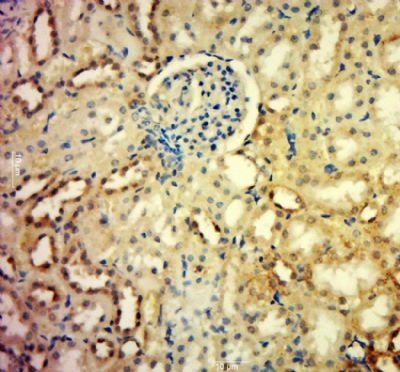
| 产品图片 | 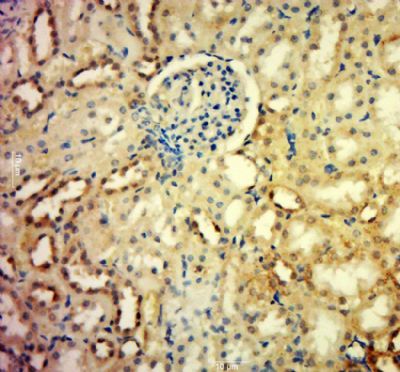 Paraformaldehyde-fixed, paraffin embedded (Rat kidney); Antigen retrieval by boiling in sodium citrate buffer (pH6.0) for 15min; Block endogenous peroxidase by 3% hydrogen peroxide for 20 minutes; Blocking buffer (normal goat serum) at 37°C for 30min; Antibody incubation with (SPCS3) Polyclonal Antibody, Unconjugated (bs-17643R) at 1:500 overnight at 4°C, followed by a conjugated secondary (sp-0023) for 20 minutes and DAB staining. |
风险提示:丁香通仅作为第三方平台,为商家信息发布提供平台空间。用户咨询产品时请注意保护个人信息及财产安全,合理判断,谨慎选购商品,商家和用户对交易行为负责。对于医疗器械类产品,请先查证核实企业经营资质和医疗器械产品注册证情况。
 文献和实验
文献和实验【热门靶点解析】GDF-8的生物学功能、疾病关联及相关产品推荐
肌肉流失。其前体蛋白经信号肽酶切除信号肽后形成Pro-GDF-8,再由Furin蛋白酶切割生成潜伏型GDF-8;最终经BMP-1/Tolloid类金属蛋白酶作用,释放出具有生物活性的成熟同源二聚体。该活性形式可结合细胞膜上的激活素II型受体(ActRII),招募I型受体形成复合物,激活Smad2/3和抑制AKT等信号通路,促进蛋白降解相关基因表达,抑制蛋白质合成,从而导致骨骼肌萎缩。因此,GDF-8是肌肉质量调控的关键因子。 MSTN相关疾病 MSTN在多种疾病中发挥重要作用。在肌肉
一、ELISA的原理 ELISA的基础是抗原或抗体的固相化及抗原或抗体的酶标记。结合在固相载体表面的抗原或抗体仍保持其免疫学活性,酶标记的抗原或抗体既保留其免疫学活性,又保留酶的活性。在测定时,受检标本(测定其中的抗体或抗原)与固相载体表面的抗原或抗体起反应。用洗涤的方法使固相载体上形成的抗原抗体复合物与液体中的其他物质分开。再加入酶标记的抗原或抗体,也通过反应而结合在固相载体上。此时固相上的酶量与标本中受检物质的量呈一定的比例。加入酶反应的底物后,底物被酶催化成为有色产物,产物的量与标本中
蛋白表达分析的金标准方法:WB(Western Blot)实验解析
表达目标蛋白。 优点:可无限传代、表达水平稳定、适配大规模工业化发酵,是治疗性蛋白、抗体药物生产标准工艺; 适用:重组药物、长效量产蛋白、动物体内长效功能实验; 缺点:构建周期长达1–3个月,筛选、单克隆化流程繁琐,前期研发成本高。 二、哺乳动物细胞转染方法分类及各自优势 1. 脂质体转染 机制:阳离子脂质体带正电,静电结合带负电质粒DNA形成纳米复合物;吸附于细胞膜后通过胞吞进入细胞,依靠质子海绵效应逃离内体,释放DNA入核完成表达[3]。 如图一为脂质体递送基因的途径。①直接融合途径:与质膜立即
 技术资料
技术资料暂无技术资料 索取技术资料

